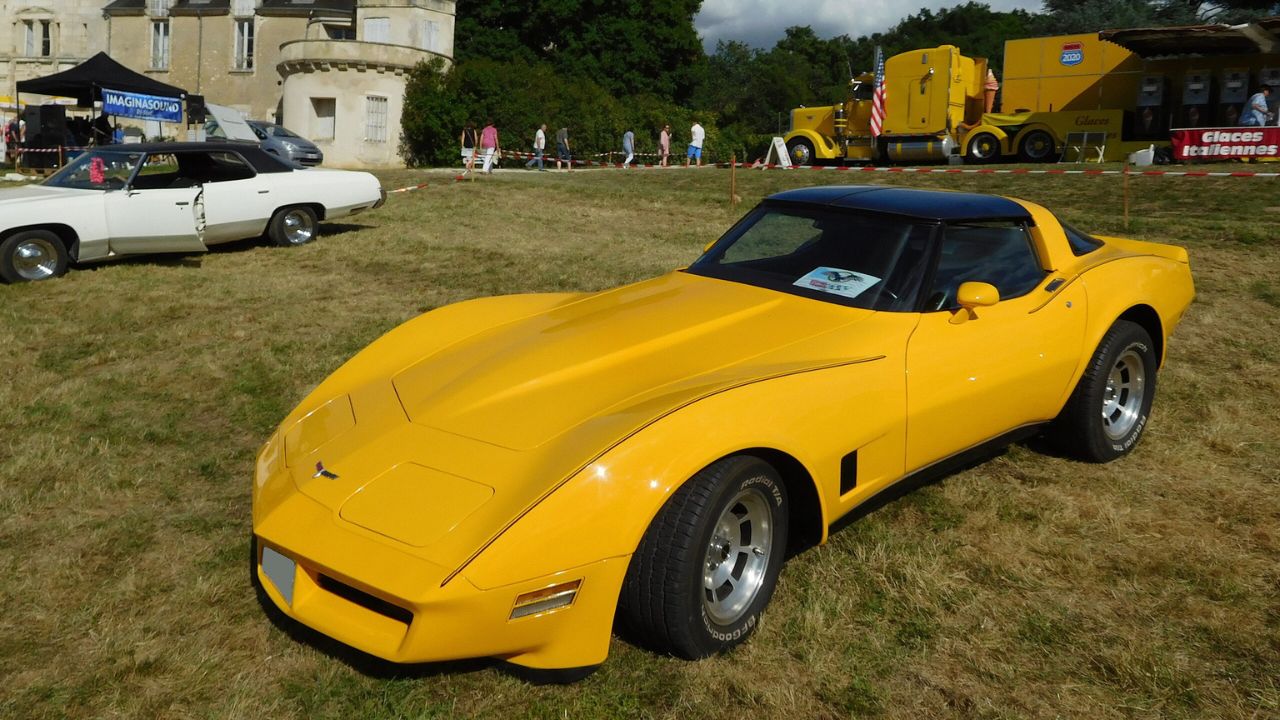
During the fuel crisis of the late 1970s, General Motors quietly explored a radical shift in Corvette engineering, including experimental turbocharged V6 configurations intended to replace or supplement the traditional V8 formula. As fuel economy pressures reshaped the industry, engineers briefly considered whether the iconic American sports car could survive a future defined by efficiency rather than displacement.
The idea marked one of the most unusual chapters in Corvette development history, reflecting how even performance-focused nameplates were forced to adapt to economic and regulatory realities.
What happened
In the aftermath of the 1973 oil crisis and the continued fuel concerns of the late 1970s, automakers were under pressure to dramatically improve efficiency. For the Corvette, which had long been defined by large-displacement V8 engines, this created a serious engineering challenge: how to maintain performance while meeting stricter fuel economy expectations.
During this period, GM engineers studied alternative powertrains, including smaller-displacement engines enhanced by forced induction. Among the most intriguing concepts was a turbocharged V6 setup, designed to deliver V8-like power output while improving fuel consumption and reducing emissions.
These experimental ideas were part of broader internal studies that also included smaller V8s, electronic fuel injection systems, and early attempts at emissions-compliant performance tuning. While the turbo V6 Corvette never reached production, it represented a serious exploration of downsizing long before it became a mainstream industry strategy decades later.
The concept aligned with other experimental work across GM at the time, where turbocharging was being tested on several production vehicles, including select Buick and Pontiac models. The Corvette studies drew from that same engineering direction, attempting to preserve acceleration and top-end performance through boost rather than displacement.
Why it matters
The turbo V6 Corvette concept is important because it shows how close the model came to a fundamentally different identity. Instead of the large V8s that defined its legacy, the Corvette could have evolved into a lighter, forced-induction sports car much earlier in its history.
That possibility highlights how external pressures—fuel shortages, emissions regulations, and rising fuel costs—can reshape even the most iconic performance vehicles. What is now a modern trend of downsized turbocharged engines was already being explored nearly 50 years ago in prototype form.
It also underscores GM’s willingness during that era to experiment across its lineup. While the Corvette ultimately retained its V8 identity, other GM divisions successfully brought turbocharged engines to market, proving that the technology was viable even if it wasn’t adopted for the flagship sports car at the time.
What to watch next
Looking back, the late-1970s turbo V6 experiments can be seen as an early preview of modern performance engineering, where smaller engines paired with turbochargers now dominate much of the sports and luxury car market.
Today’s Corvette continues to evolve with changing technology, including mid-engine layouts and advanced electronics, but it has largely remained committed to V8 power—at least for now. However, the industry’s ongoing shift toward hybridization and electrification suggests that future Corvette generations may revisit some of the same questions GM engineers faced decades ago.
Whether through turbocharging, hybrid assist, or full electrification, the balance between performance and efficiency remains the same challenge that first pushed GM to explore radical Corvette alternatives during the fuel crunch era.
More from Fast Lane Only