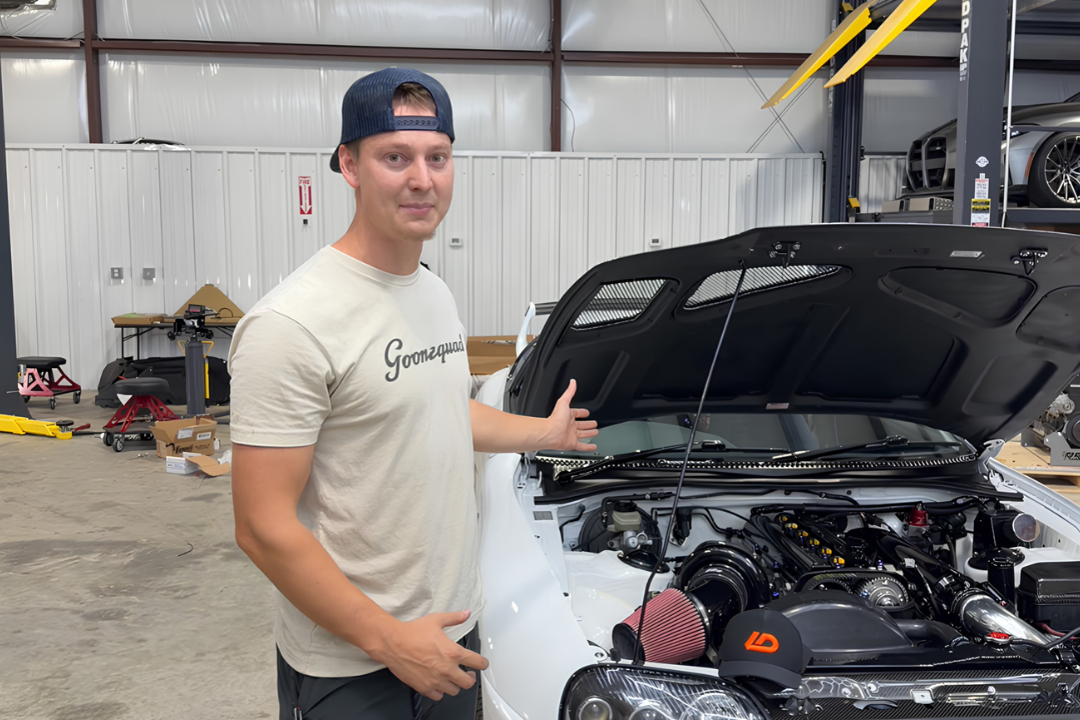
There’s a special kind of heartbreak reserved for a car that runs perfectly right up until the moment you actually need it to. Simon and Vitali of Goonzquad had spent weeks buttoning up a heavily built RHD Toyota Supra, complete with a high-mount single turbo and the old motor’s clutch still doing duty until a replacement could be fitted, ready for a 500-mile break-in drive that was supposed to be a formality. Then, less than ten minutes after topping off the tank, the clutch pedal sank straight to the floor and stayed there.
The build leading up to that moment had been going about as smoothly as a high-horsepower 2JZ project ever does. The team had already fitted a new vented hood to feed cold air to the turbo, restored a discontinued windshield wiper cowl by hand since replacement parts no longer exist, and swapped in upgraded Supra Turbo front brakes. They’d even sorted through a wheel fitment headache, discovering that their preferred 15-inch Weld Racing beadlock wheels wouldn’t clear the larger Turbo brake calipers and settling on a smaller caliper setup as the workable compromise. Door panels went in, speakers got wired up, and the car was finally ready for the one thing every freshly built engine actually needs: miles.
That’s when things fell apart in the most anticlimactic way possible.
The breakdown that wasn’t supposed to happen
The plan was straightforward. Put the Supra through an 800-kilometer break-in drive on a conservative tune, no boost, just enough driving to seat everything properly before the real tuning could begin. The car ran great through the early miles, drawing attention on the road the way a visibly serious Supra tends to do, and the team stopped for fuel with the trip barely underway. Everything still felt fine.
Then it wasn’t. The clutch pedal, which had been working normally minutes earlier, suddenly sank all the way to the floor and stuck there, leaving the car stranded at the gas station and requiring a tow back to the shop. It was the kind of failure that doesn’t offer much of a diagnosis on its own, since a clutch pedal going soft can point to several different culprits, from a bad master cylinder to a failing hydraulic throw-out bearing, and there was no way to tell which one from the side of the road.
Turning a breakdown into an upgrade
Rather than treat the failure as a pure setback, the team used it as an excuse to knock out several planned upgrades at once. Since the transmission was already coming out to investigate the clutch issue, they decided it was finally time to retire the old motor’s clutch for good, installing a new heavy-duty clutch and flywheel built for the car’s new motor along with a sequential shifter designed to eliminate missed shifts at the kind of horsepower this build is ultimately targeting. The downpipe and dump tubes came off at the same time, headed out for a Cerakote thermal coating to help manage heat in an engine bay that runs considerably hotter than the Supra’s original setup was ever designed for.
With the new clutch, flywheel, and shifter installed and the hydraulic system freshly bled, the pedal still sank to the floor. The problem hadn’t been the clutch at all.
A destroyed O-ring hiding in plain sight
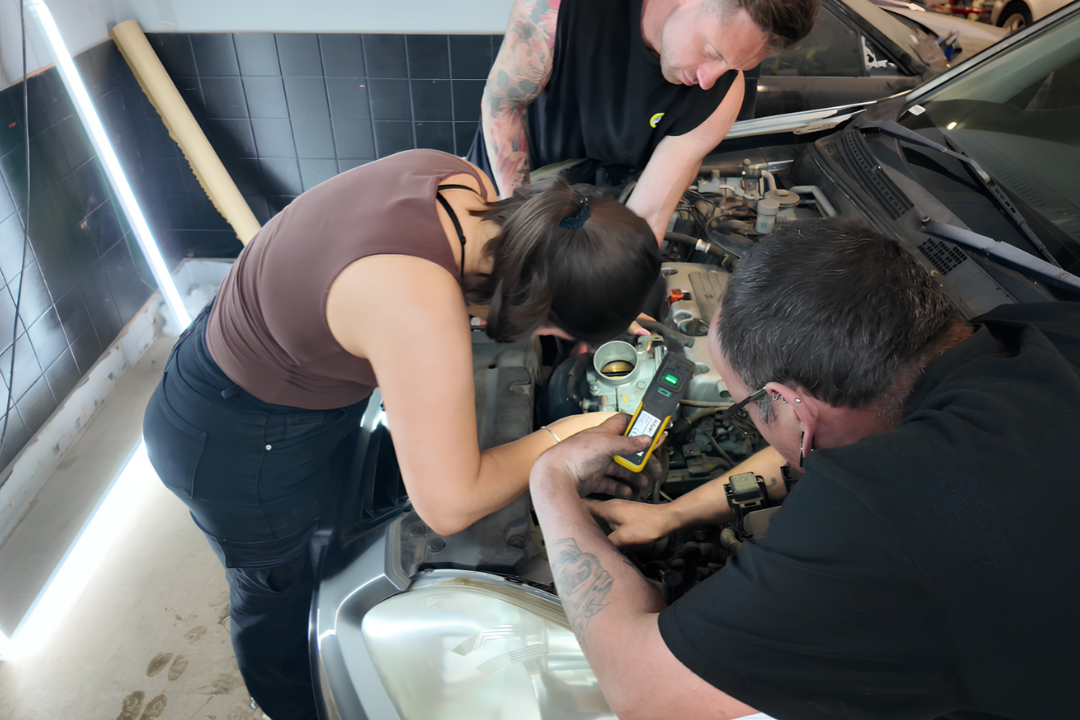
It took a visit from 2JZ specialist Aleek to actually crack the case. After the team had already replaced nearly everything else in the clutch system, Aleek traced the fault to the master cylinder itself, where a small rubber O-ring seal had failed completely, letting fluid leak out internally and robbing the system of the pressure needed to keep the pedal up. It was a small, easily overlooked part responsible for grounding an entire road trip and triggering a much larger teardown than anyone had planned for that day.
Finding the right replacement came with its own wrinkle. A spare master cylinder was on hand, but built for a left-hand-drive car, it simply didn’t have the clearance to fit the Supra’s right-hand-drive layout. A correct RHD unit had to be sourced and installed before the clutch pedal finally held pressure the way it was supposed to, closing out a repair that started as a mystery and ended with a single worn-out seal.
Back on the road, with more still to prove
With the new master cylinder in place, the sequential shifter finally got its first real test, and by all accounts it delivered exactly the smoother, more positive shifting the team had installed it for. The car went home for a weekend of lower-key driving to keep chipping away at the break-in miles, though the full 800 kilometers still hadn’t been completed by the time the episode wrapped. One of the Weld Racing beadlocks finally went on back at the shop, filling the wheel gap exactly as aggressively as intended, with the other three still to come.
None of that changes what the whole ordeal really proved. A build this ambitious, running this much boost potential on a 2JZ pushed well past its original design intent, doesn’t fail in dramatic, obvious ways nearly as often as it fails in small, stupid ones. Sometimes the thing standing between a finished build and the open road isn’t the turbo, the transmission, or the tune. It’s a rubber ring smaller than a coin, quietly giving out at the worst possible moment.
More from Fast Lane Only
- Unboxing the WWII Jeep in a Crate
- 15 rare Chevys collectors are quietly buying
- 10 underrated V8s still worth hunting down
- Police notice this before you even roll window down
*Research for this article included AI assistance, with all final content reviewed by human editors.