Porsche built about 76,000 examples of the 356 between 1948 and 1965, and roughly half of them survive. Then the Porsche 911 took over, and it has carried the brand ever since, through air-cooled and water-cooled generations, turbos and track specials.
Ask ten Porsche fans to name the best one, and you’ll hear about the 1973 Carrera RS or the 959. Those are fair answers. However, some of our favorites sit a step away from the spotlight, such as a lightweight special Porsche made only in tiny numbers, a stripped-out front-engine coupe or a roadster that weighed less than anything else in the showroom.
These are our picks, eight Porsches we’d rank among the best the company has built. That ranking is our opinion, and plenty of enthusiasts would order it differently. The engines, ratings, production numbers and race results below, though, come from Porsche histories and collector-market references.
1. Porsche 356 B 1600 GS Carrera GTL Abarth
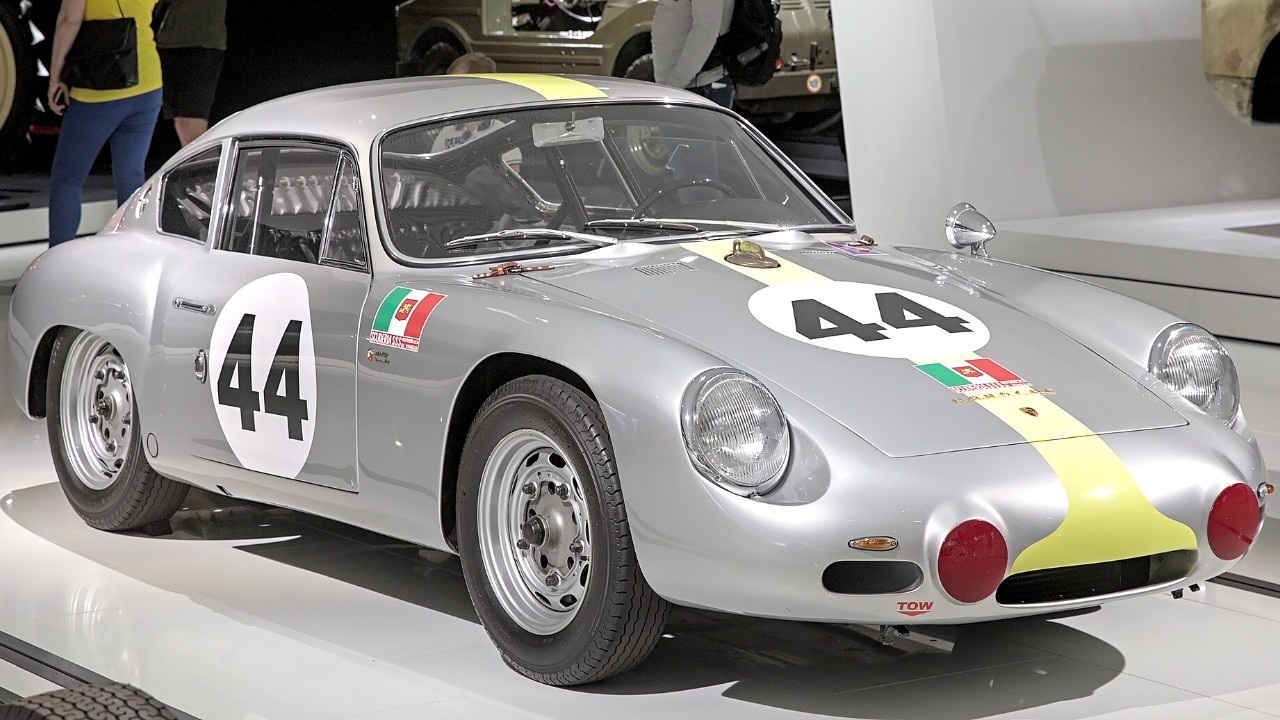
By 1960, Porsche wanted a lighter 356 to meet FIA rules for GT racing. So it turned to Italy. Carlo Abarth took the job, Franco Scaglione drew the first designs, and Rocco Motto built the aluminum bodies. According to Stuttcars’ history of the GTL Abarth, Porsche committed to 20 orders.
The result was smaller than a Reutter-bodied 356 in every dimension. It also cut drag from 0.398 to 0.365 Cd and weighed 1,762 pounds, close to the FIA’s minimum. Power came from a 1,582 cc Type 692/3a flat-four with twin overhead cams, rated at 165 bhp at 7,400 rpm.
It delivered on track. One GTL finished 10th overall and first in class at Le Mans. Then, in 1962, car 1018 took class wins at the Nürburgring 1000 km and at Le Mans, while car 1013 won the 1600 cc class at Sebring. In our view, no 356 shows Porsche’s racing instincts more clearly. It’s the rare case where a supplier’s body made a Porsche better, and the class wins prove it.
2. 1972 Porsche 911S 2.4
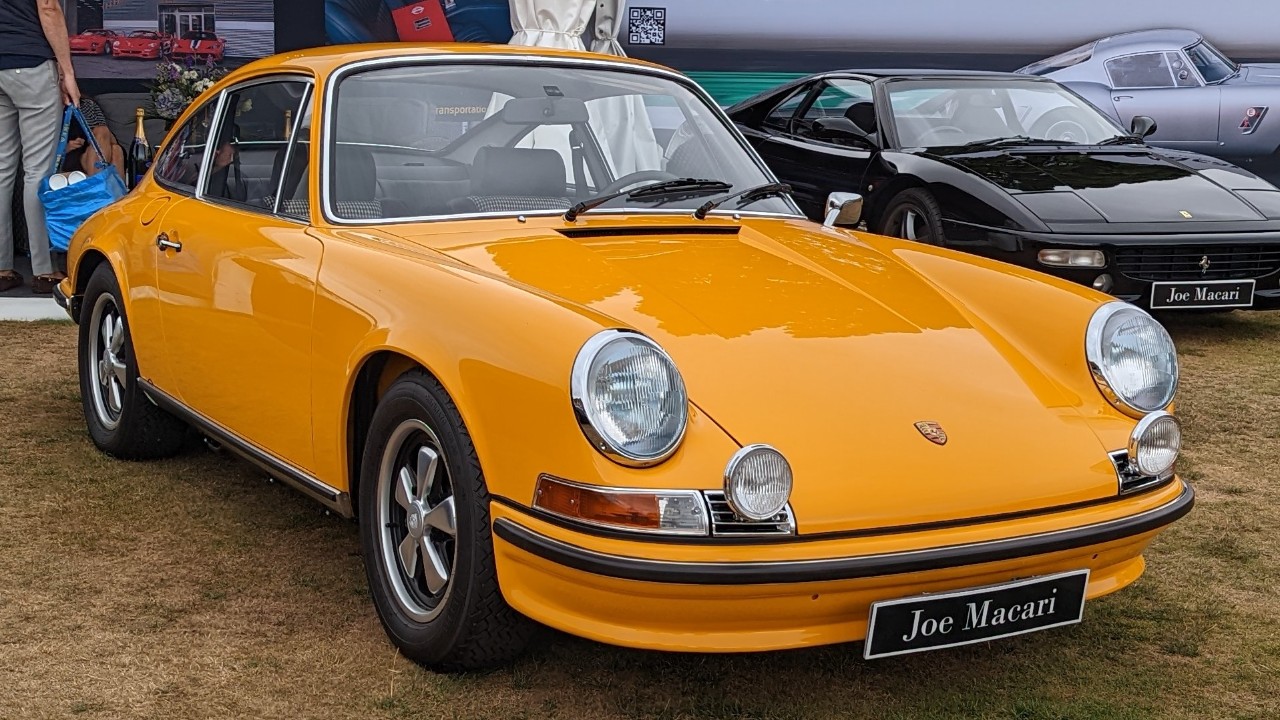
For 1972, every 911 got a larger engine. The new flat-six displaced 2,341 cc, closer to 2.3 liters than 2.4, yet Porsche marketed it as the 2.4. In the top 911S, mechanical fuel injection helped it make 190 PS.
The 1972 car also has a quirk that collectors love. Porsche moved the oil tank from behind the right rear wheel to a spot in front of it. That shifted about 8.5 liters of oil inside the wheelbase, which helped balance. To reach the tank, Porsche added an oil filler door on the right rear quarter panel. However, Porsche dropped the idea after just one year.
The 2.4 cars also introduced the 915 gearbox, derived from the transmission in the 908 race car. Still, the engine is the heart of the 911S. In our opinion, a high-revving, injected 2.4 in a narrow-body 911 is about as pure as the early cars get. For that reason, we’d rank the 1972 911S above many later, faster 911s. It’s light, it’s sharp, and it rewards a driver who keeps the revs up.
3. Porsche 911 Turbo 930 3.3
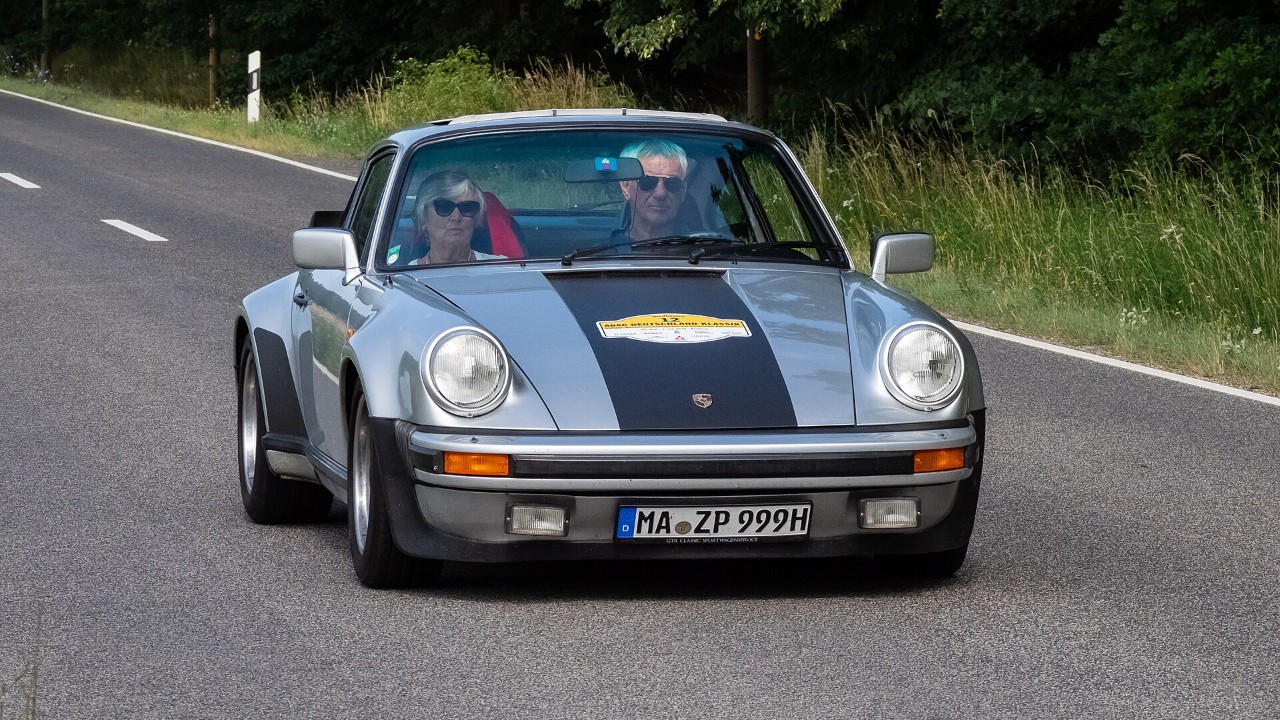
The 930 Turbo arrived for 1975 with a 3.0-liter engine and 260 PS. Then, for 1978, Porsche enlarged it to 3,299 cc and added an air-to-air intercooler. Output jumped to 300 PS at 5,500 rpm, and Car and Driver recorded 0-60 mph in 4.9 seconds.
The 3.3 became the long-running version, with 18,770 built through 1989. By comparison, Porsche made just 2,819 of the 3.0-liter cars. A US-market 1978 car could reach 165 mph. The 930 kept a four-speed gearbox for most of its life, however, and critics knocked it for that. Only the 1989 cars got the five-speed Getrag G50.
The 930 also earned a darker nickname, the Widowmaker, for its handling, as we explained in our story on why drivers called the 930 the Widowmaker. So why rank it among the best? Because it turned the Porsche 911 into a supercar people could actually buy. In our view, the intercooled 3.3 is the definitive early turbo car, and a 1989 G50 example is the one to find.
4. 1989 Porsche 944 Turbo
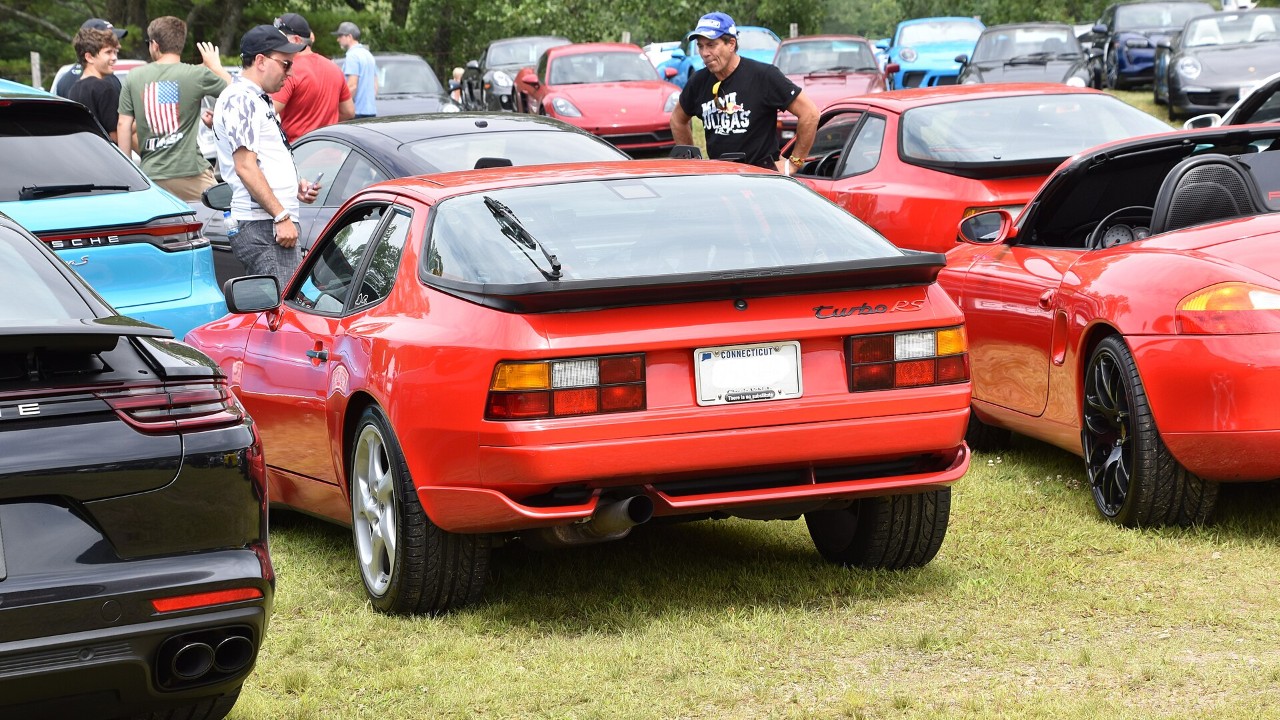
Porsche launched the 944 Turbo S for 1988 with 250 PS from a larger KKK K26-8 turbocharger and revised engine mapping. According to Stuttcars’ profile of the Turbo S, it also got 12-inch front brakes from the 928 S4 with Brembo four-piston calipers. Its M030 suspension added progressive springs, thicker anti-roll bars and adjustable Koni shocks.
Porsche built 1,635 Turbo S cars for 1988, and Silver Rose became its signature paint. For 1989, Porsche dropped the S name and made the 250-PS engine standard on every 944 Turbo. However, the M030 suspension and Club Sport wheels stayed optional.
That’s why we rank it so highly. The 944 Turbo’s transaxle layout gave it a near 50/50 weight balance, and the Turbo S engine gave it real pace. Car and Driver ran a Turbo S from 0-60 mph in 5.5 seconds, and Porsche rated its top speed at 162 mph. In our view, this is the best-balanced Porsche of the 1980s. Turbo owners know these cars need regular care, though, as we covered in why 944 Turbo owners prioritize preventative maintenance.
5. Porsche 968 Club Sport
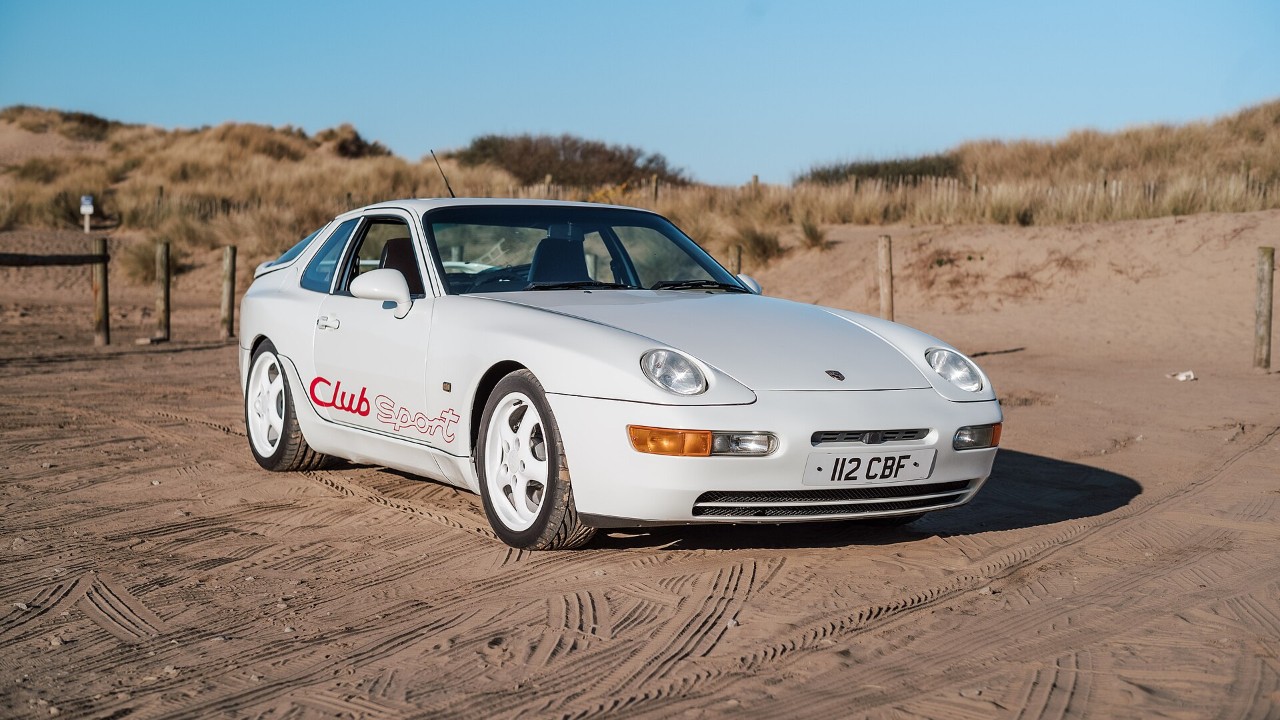
The 968 Club Sport arrived in October 1992 and stayed on sale through 1995. Porsche stripped about 100 kg from the regular 968 for a declared weight of 1,320 kg. Out went the rear seats, power windows, power seats, the airbag steering wheel, the rear wiper and some sound deadening.
In their place came manual Recaro racing seats, a three-spoke wheel, 17-inch wheels and suspension lowered by 20 mm. The 3.0-liter four kept its 240 PS. Then came the twist: Classic Driver notes the Club Sport was cheaper than the regular 968 coupés and convertibles, and it became Porsche’s entry-level model.
Porsche built 1,538 cars across the Club Sport and the UK-only 968 Sport, and 1,232 of them were registered as Club Sports. Even so, Performance Car magazine named the Club Sport its Performance Car of the Year for 1993. In our opinion, it’s the purest front-engine Porsche ever sold. Classic Driver adds that good examples are now rare and sell for more than better-equipped 968s.
6. Porsche 911 993 Carrera 4S
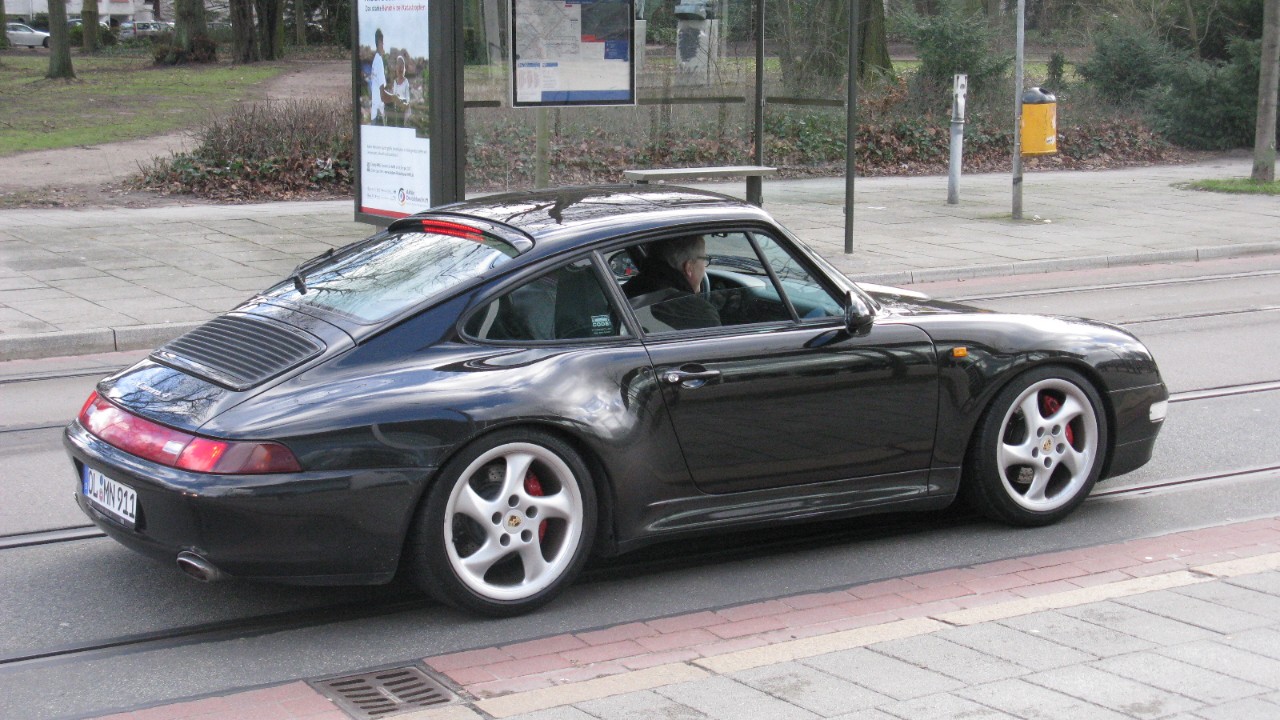
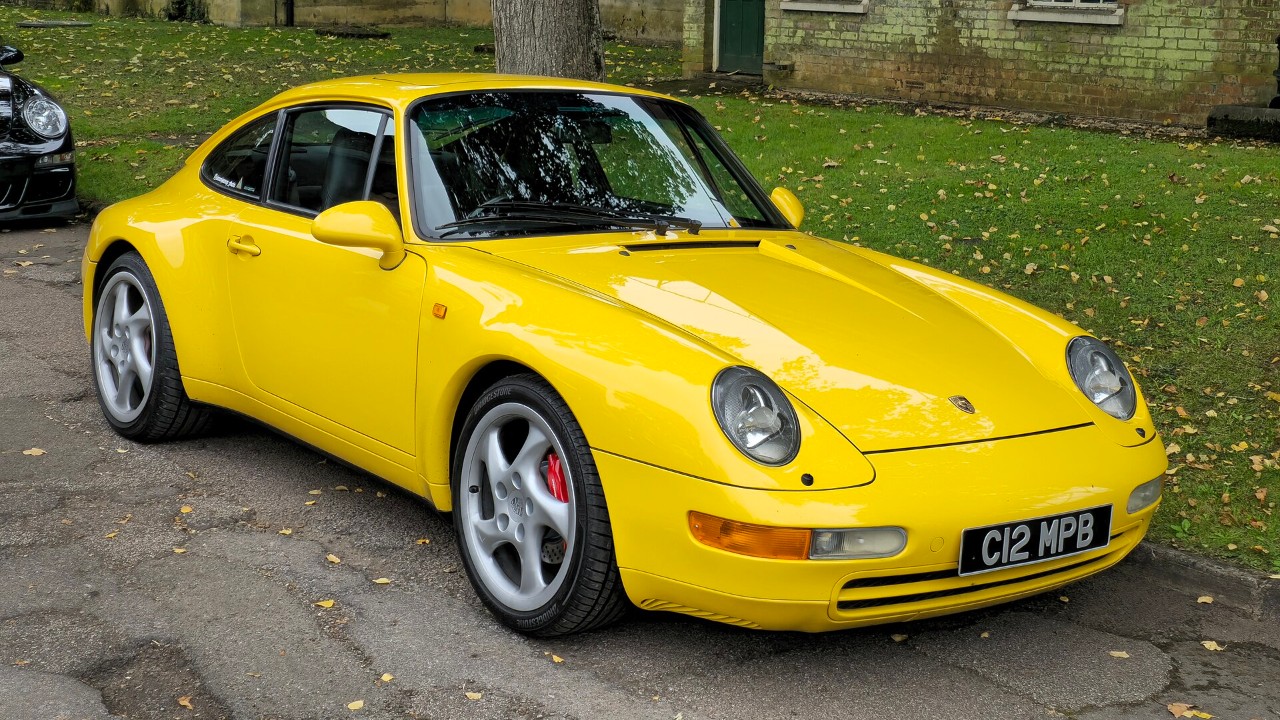
The 993 was the last air-cooled 911, and the Carrera 4S was its best all-rounder. Introduced for 1996, it shared the Turbo’s wider bodyshell but kept the 285-PS naturally aspirated 3.6-liter flat-six. Its all-wheel-drive system used a viscous coupling, which sent between 5% and 50% of the power to the front wheels.
The wide body brought Turbo looks without turbo costs. It also cost a little top speed, about 5 km/h compared with the narrow cars, because of the extra drag. The 993 generation also brought an alloy multi-link rear suspension that reduced lift-off oversteer, a big step for a rear-engine car.
Porsche built 6,948 Carrera 4S cars. Then, on March 31, 1998, the very last 993 rolled off the line, and it was a Riviera Blue Carrera 4S. That makes the car the final air-cooled 911 built for road use. In our view, the C4S blends the 993’s beauty, all-weather grip and air-cooled sound better than any other version. For the bigger picture, see our story on why the 1996 993 became the last of its kind.
7. 1999 Porsche 911 996 GT3
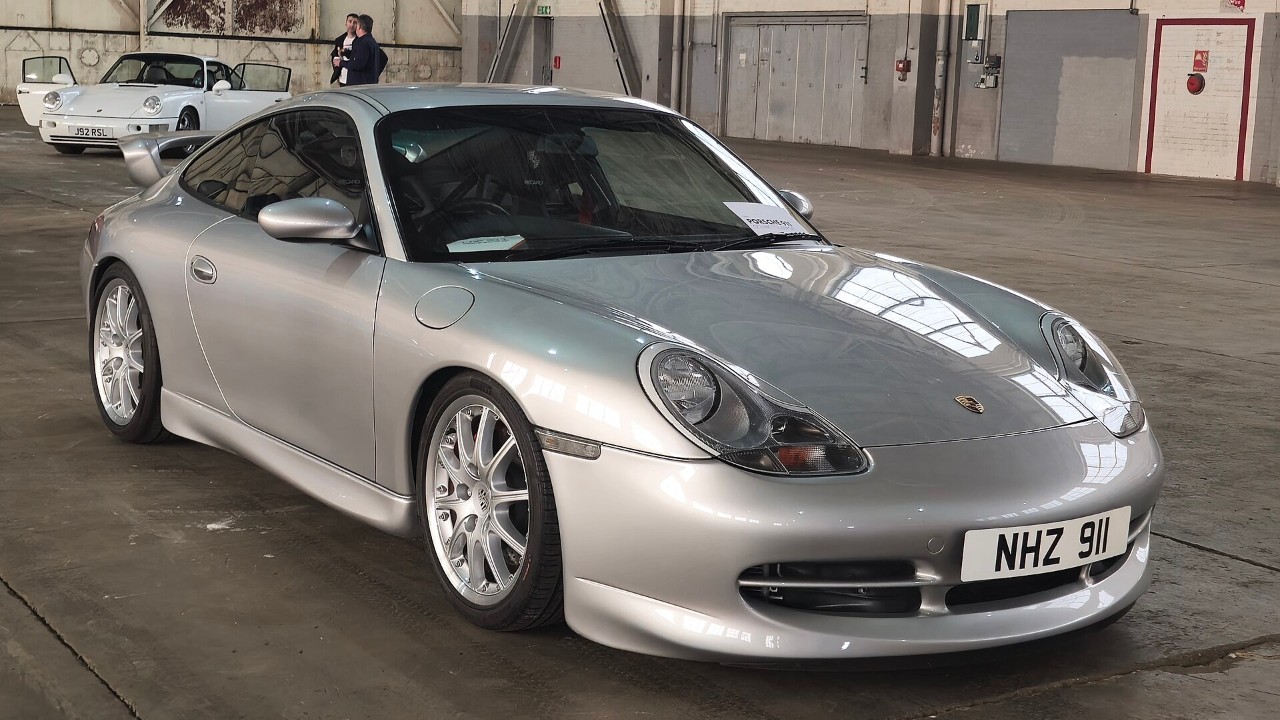
The 996 was the first water-cooled 911, a major break from three decades of air cooling. Then Porsche introduced the GT3 in 1999. It went on sale in every major market except North America, which had to wait for the second version.
The secret was the engine. The GT3’s naturally aspirated 3.6-liter flat-six made 360 PS, and it came from the engine Porsche developed for the 911 GT1 race car. Unlike the regular 996 engine, it used dry-sump lubrication. Porsche also stripped equipment from the car to save weight, which made the GT3 feel focused rather than plush.
That engine, now known among fans as the Mezger, turned the 996 story around. In our view, that gave the 996 generation a version every enthusiast wanted. In our opinion, the first GT3 is one of the most important cars Porsche has ever built, because it launched a line that continues today. For an American buyer, it’s also the forbidden fruit, since Porsche never sold the first GT3 in the US.
8. Porsche Boxster Spyder (987)
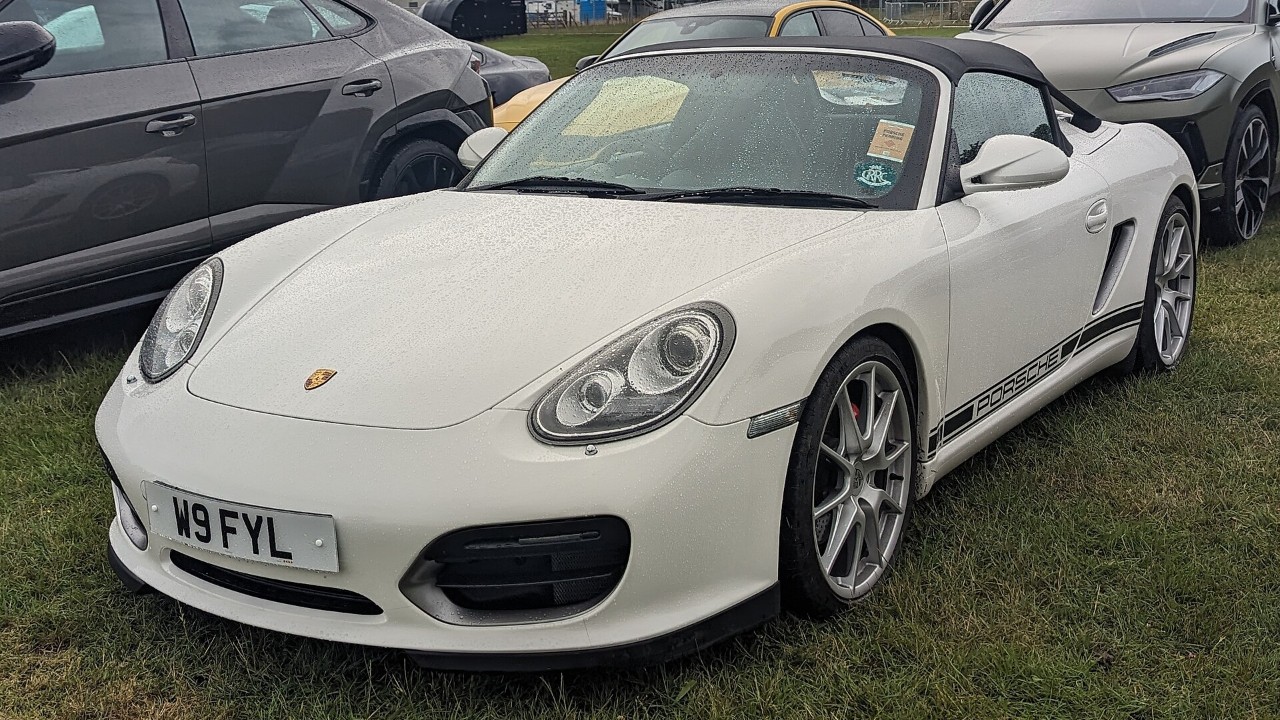
Porsche announced the Boxster Spyder on November 5, 2009, at the Los Angeles Motor Show. It reached buyers worldwide in February 2010 as a 2011 model. At 1,275 kg, it weighed 80 kg less than a Boxster S and was the lightest Porsche on the market at the time.
To get there, Porsche used aluminum doors and an aluminum rear deck. It also removed the powered soft-top mechanism, the radio, the door handles, the air conditioning, storage compartments and cup holders. Buyers got a manually operated canvas top instead, and some deleted items could return as options. The 3.4-liter flat-six made 320 PS, 10 hp more than the Boxster S, with a six-speed manual as standard.
The suspension was also firmer and almost an inch lower than other Boxsters. In our view, the Spyder is the modern heir to the 968 Club Sport and the 911S 2.4: light, simple and built for drivers. It’s also proof that a mid-engine roadster could stand alongside any 911. Porsche offered a seven-speed PDK as an option, but we’d take the manual every time.
More from Fast Lane Only