In 1964, Ducati built a 1,257 cc V4 touring bike meant to take police contracts from Harley-Davidson. However, the Ducati Apollo never reached production, and only one prototype survives. That’s the side of Ducati most riders never hear about, long before the superbikes and the red race paint.
Today, the brand means Panigales, Monsters and MotoGP wins. However, the company spent its first decades building small singles, budget scooters and bikes made to order for an American importer. Many of them sold well, then slipped out of memory once the big twins took over.
These are our picks, seven Ducatis we think most people forgot existed. That “forgot” verdict is our opinion. The engines, figures, prices and build counts below, though, come from museum records, period histories and auction results.
1. Ducati Apollo
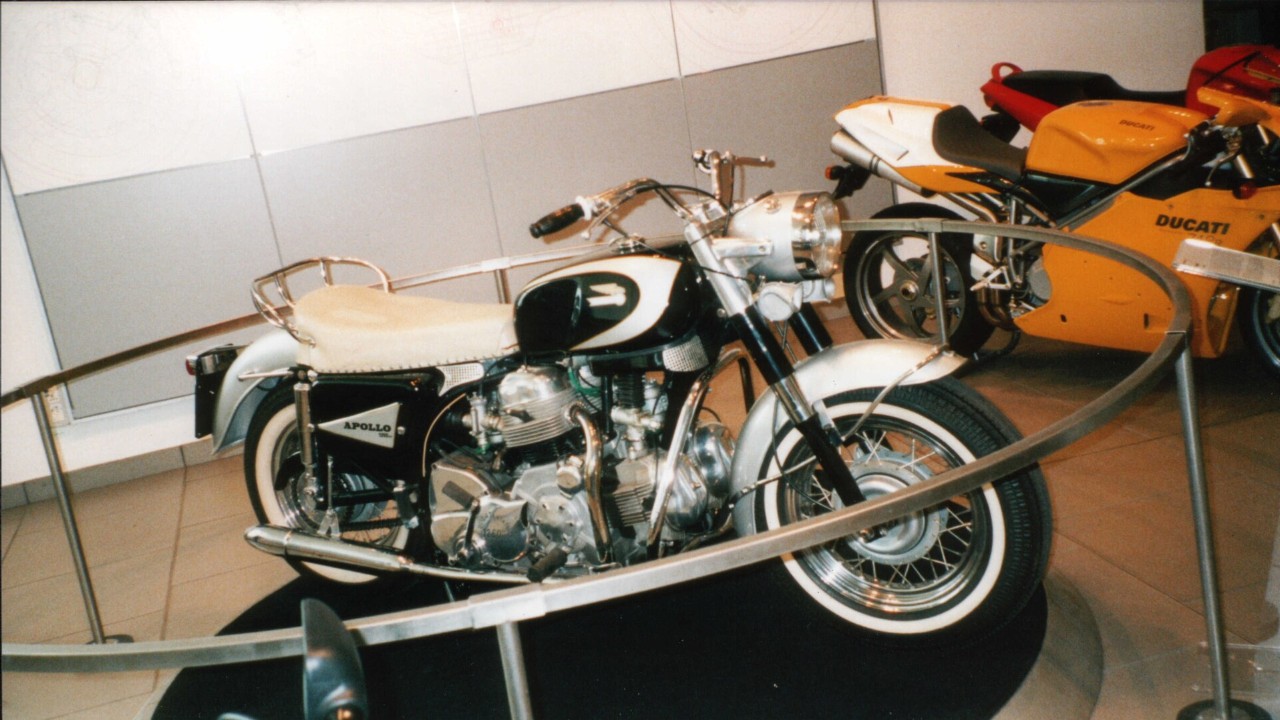
The Ducati Apollo began with an American request. Berliner Motor Corporation, Ducati’s U.S. distributor, approached the factory in 1959 and agreed to fund part of the development in 1961. At first, the plan was a big touring bike that could rival Harley-Davidson for police contracts. The prototype’s air-cooled V4 displaced 1,257 cc, first made 100 bhp at 7,000 rpm and could top 120 mph.
That power was the problem. Tires of the day couldn’t cope, and one came apart at speed on the Autostrada during testing. Ducati detuned the engine to 80 bhp, then to 65 bhp, before the tires finally held up. By then, British and BMW twins could outrun it, so the market shrank to police forces. The Italian government then withdrew its funding, judging that such a limited market didn’t justify the tooling.
Ducati built two prototypes and two spare engines, and the bike appeared at the Earls Court show in November 1964. Only one prototype survives, in Hiroaki Iwashita’s museum in Yufuin, Japan. In our view, it’s the most important Ducati that most fans have never seen.
2. 1965 Ducati Brio scooter
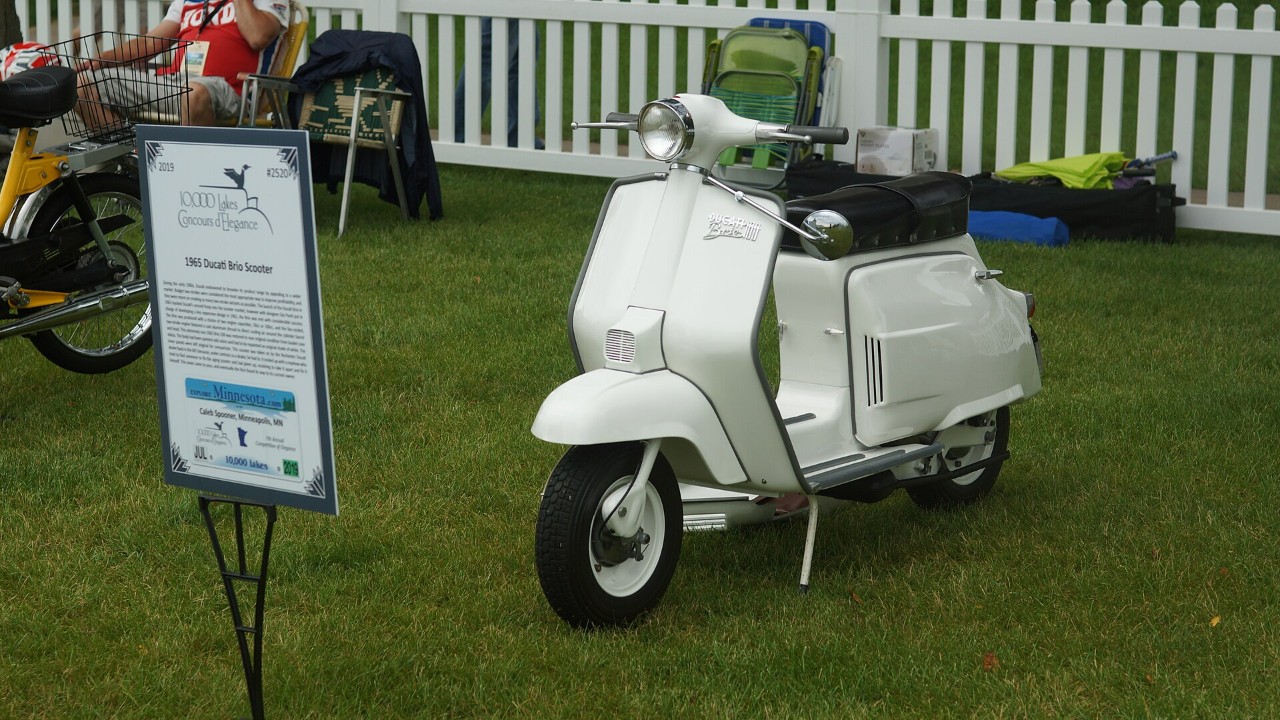
Ducati’s first scooter, the Cruiser, aimed at the luxury market. Ten years later, in 1963, the company tried again with the Brio, a basic two-stroke styled by designer Gio Ponti. According to MCNews, the 48 cc version came first, with a fan-cooled engine making 1.5 hp. For 1964, a 100 cc Brio followed, with seven horsepower at 5,200 rpm and a top speed of 76 km/h.
Unfortunately, timing worked against it. The Brio arrived after the first scooter boom had faded, and it offered nothing that Vespa and Lambretta didn’t already sell. As a result, sales were poor, and Ducati dropped it in 1968. Before then, the 100 became the 100/25 for 1966 with higher compression, while the 48 grew into the 50 Brio for 1967. Every Brio kept a three-speed gearbox. Some even crossed the Atlantic, and MCNews says Ghost Motorcycles in New York sold them.
Survivors do turn up now and then. RM Sotheby’s sold an unrestored 1965 Brio 100 in Monaco in 2012 for €1,755. We think that’s a small price for a Ducati almost nobody remembers.
3. Ducati Elite 200
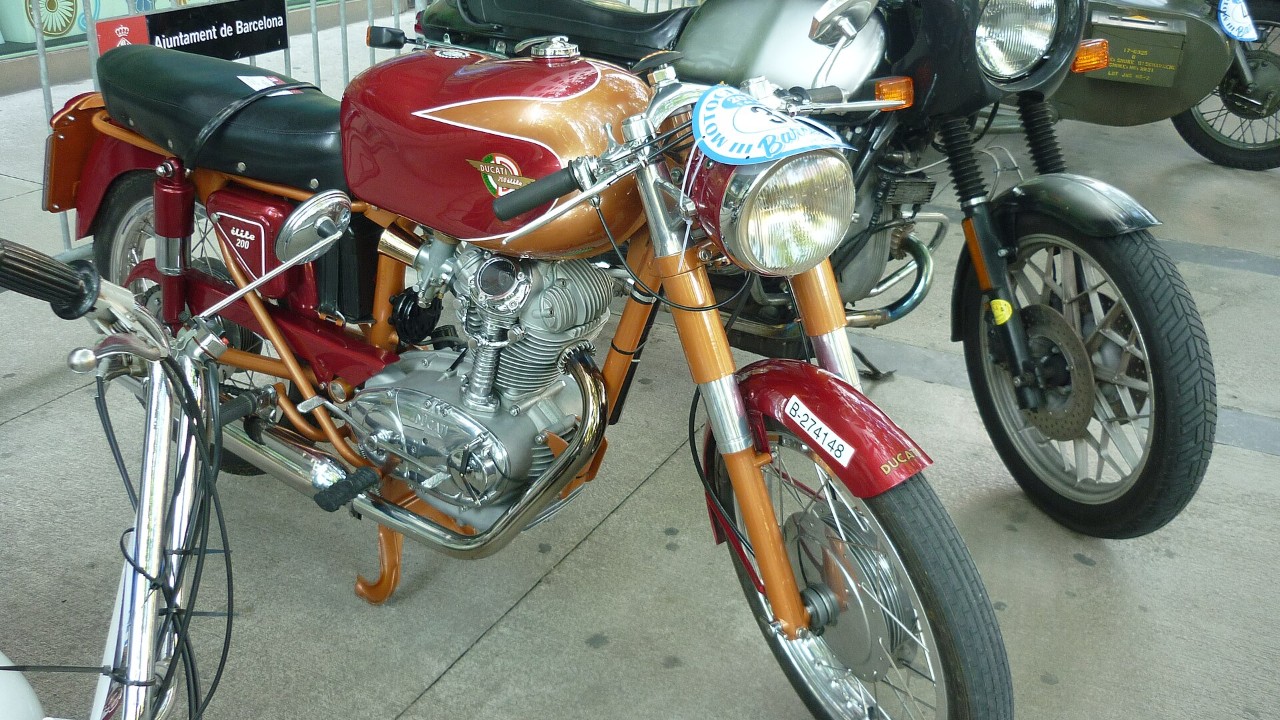
Ducati launched the Elite 200 in late 1959 as a lightweight sport-touring single. Its 200 cc engine used an overhead camshaft driven by bevel gears, and it grew out of the 175. According to inSella, it made 18 hp at 7,500 rpm, and the brochures claimed 140 km/h.
Still, the styling did much of the selling. The Elite had rounded lines, chrome trim and a metallic cherry-red tank borrowed from the 175 Sport, complete with hooks for maps or bags. An ochre-yellow frame and a headlight painted to match finished the look. Meanwhile, the instruments stopped at a speedometer and an odometer, and the list price was 248,000 lire.
Sales were modest at home but better abroad, especially in the United States. Ducati built the Elite largely unchanged for more than seven years, until 1966. A Supersport version went to the U.S. market, and the Diana later took the Elite’s place. Today, inSella puts values at roughly €6,000 to €10,000, depending on condition. In our view, it’s one of the prettiest small Ducatis ever made, and one of the least discussed.
4. 1957 Ducati 175 Sport
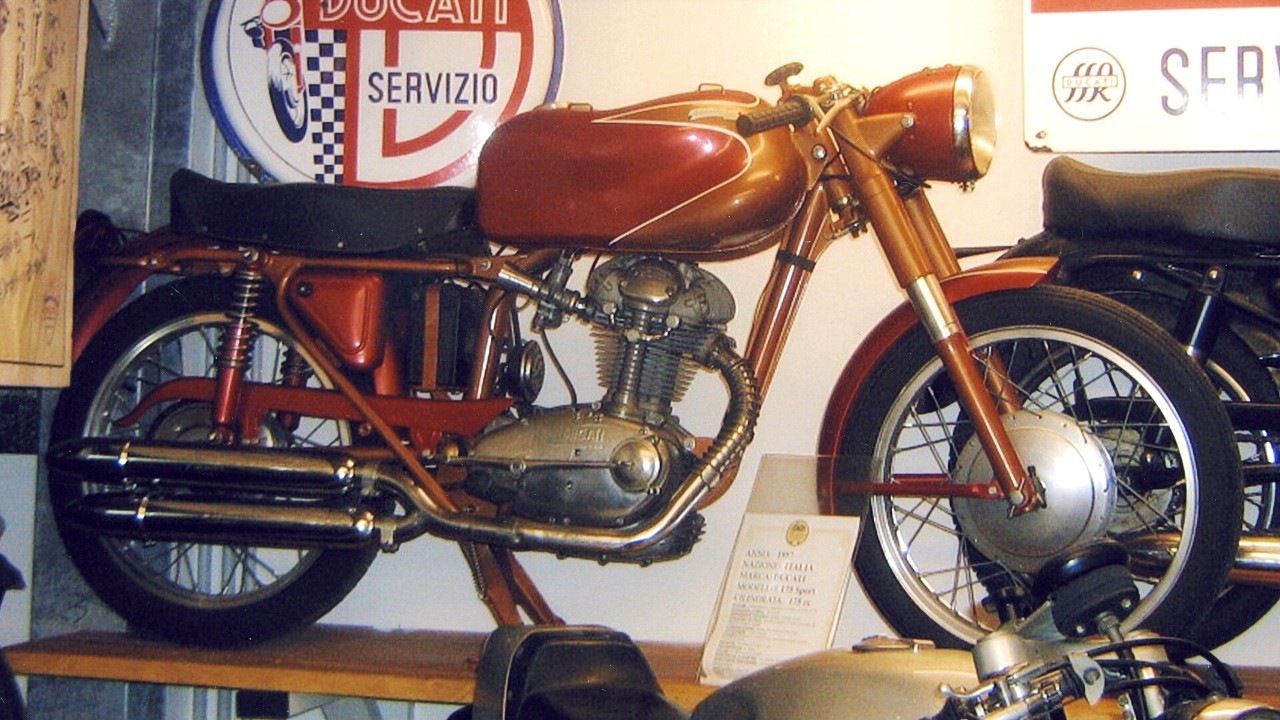
The 175 arrived after the Cucciolo engine had sold well and Ducati decided to aim higher. Its single displaced 174.5 cc and used bevel-gear valve drive. According to the Nicolis Museum, the 1957 Sport made 11 hp, weighed 102 kg and reached 115 km/h. The Sport version came after the T and TS models, with its own tank and handlebar. Ducati gave the 175 range a reworked frame for comfort but kept the refined engine.
Earlier, Ducati had first shown its overhead-cam singles at the Milan show in late 1956, in 100, 125, 175 and 200 cc sizes. Fabio Taglioni, Ducati’s chief designer from 1954, had already produced the Gran Sport 100, nicknamed Marianna. At the same time, the company targeted long road events like the Motogiro and the Milano-Taranto, because results there helped sell bikes.
The 175 also became the base for the later 200 models, including the Elite on this list. Our take: the 175 Sport was the bridge between Ducati’s racing ambitions and its everyday road bikes. That makes it far more important than its small engine suggests, even if few riders today could pick one out.
5. 1977 Ducati Darmah SD900
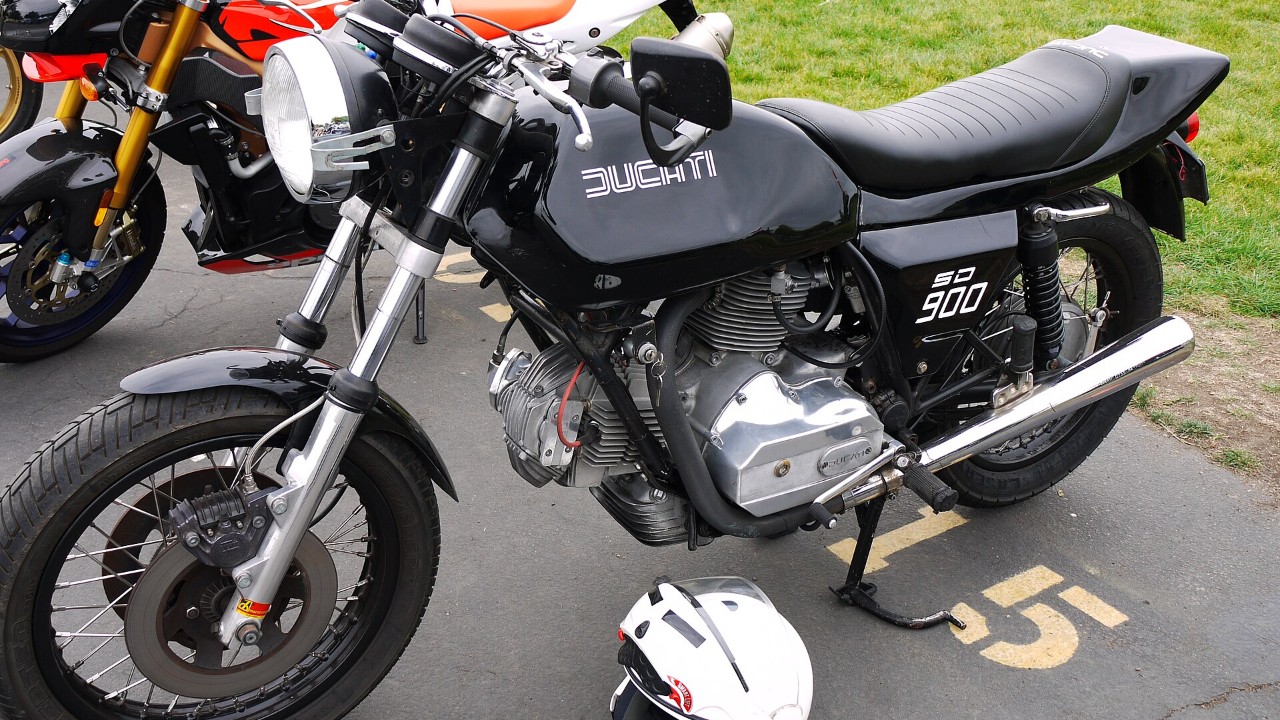
Ducati introduced the 900 SD Darmah in 1977. According to MCNews, 1,610 of that original model were built, and almost 5,600 Darmahs of all versions followed through 1982. Its 864 cc 90-degree V-twin used desmodromic valves, two per cylinder. Leo Tartarini, the man behind Italjet, styled it. Twin 32 mm Dell’Orto carburetors fed the engine, and Old Bike Mag lists dry weight at 216 kg.
Above all, the Darmah aimed at comfort and convenience. It had electric starting, which needed a 200-watt alternator and a bigger battery, plus Bosch electronic ignition. The name came from a mythical tiger-like beast. Still, Old Bike Mag lists real flaws: heavy steering at low speeds, a cramped riding position and a battery that refused to stay charged. Throttle cables could jam if a nylon sleeve came loose. The 15-litre tank also limited range, and Ducati recalled the Campagnolo and Speedline wheels for cracking.
Our take: the Darmah tamed the bevel-drive twin for everyday riders, then got lost behind louder sports models. Old Bike Mag still called it “Heaven on a stick” on open, twisting roads.
6. 1972 Ducati 450 Scrambler
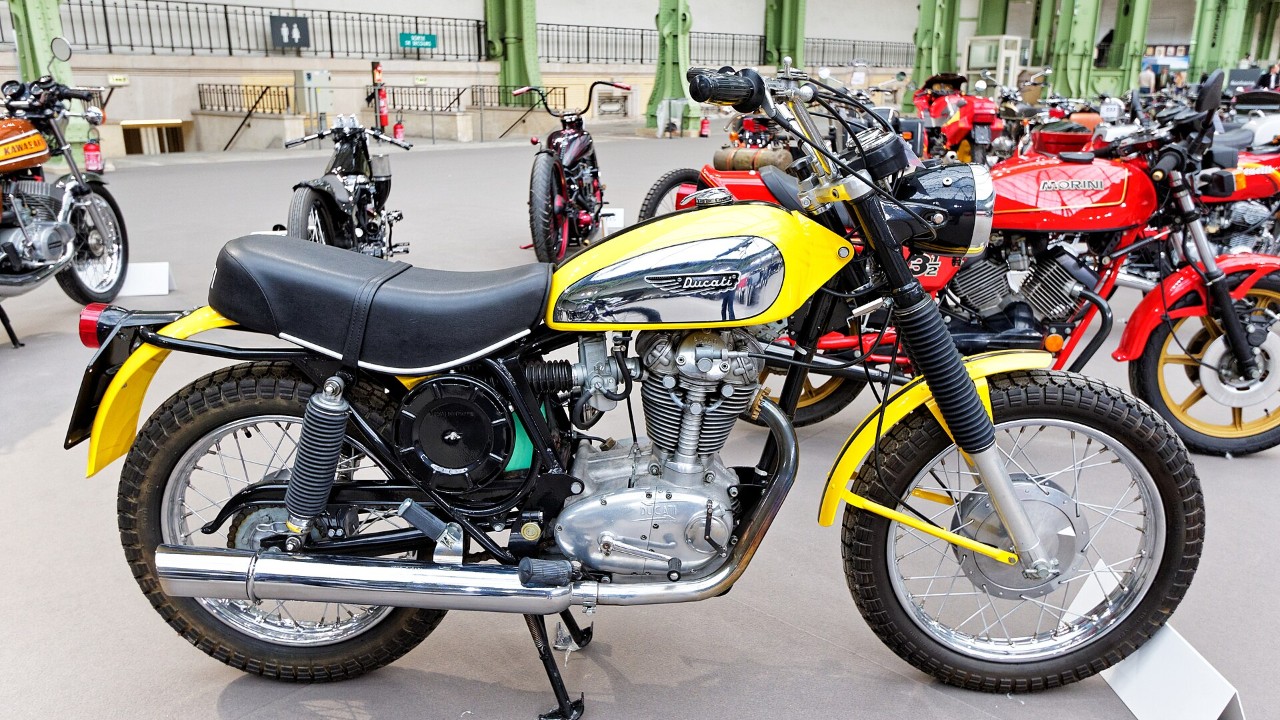
In 1968, the dirt bike market was booming, and Berliner wanted a bigger Ducati scrambler to fight the BSA 441 Victor. Ducati already sold 250 and 350 Scramblers, so it stretched its overhead-cam single as far as it could go. The result displaced 436 cc, the largest size that engine could reach.
The 450 Scrambler went on sale in 1969 and stayed in production until 1974. In that time, Ducati built around 11,000, and MotoTrans also produced it under licence in Spain. Racers also used it in flat track, enduro and scrambles events. For 1973, Ducati added electronic ignition and a double-sided front brake. A 29 mm Dell’Orto, a five-speed gearbox and a wider chain than other models completed the spec.
Even after Ducati stopped making overhead-cam singles in 1974, the bike lingered. Britain’s importer, Coburn & Hughes, kept selling leftover stock until early 1976, some as the Mark 4. In our view, this was the toughest of Ducati’s road singles, and today’s Ducati fans rarely mention it. We’ve rounded up more forgotten two-wheelers in our list of classic bikes you’ve probably never seen.
7. 1964 Ducati 125 Bronco
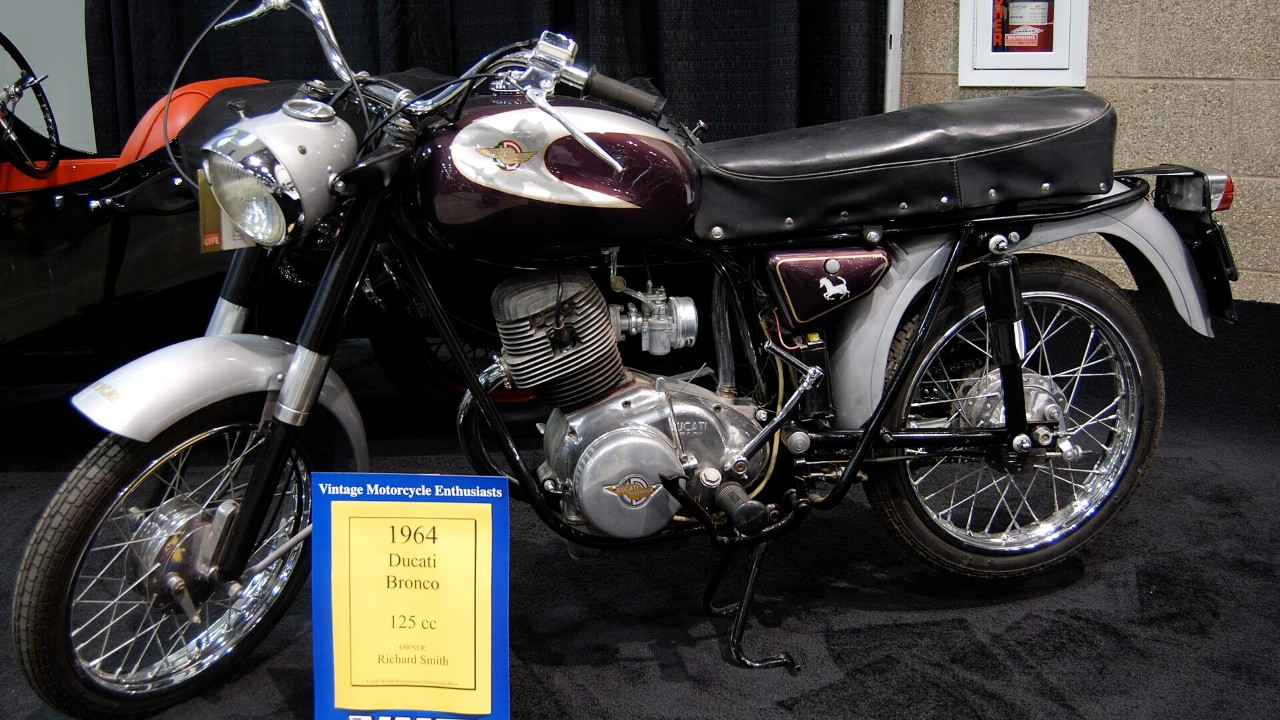
The 125 Bronco was a Ducati built mainly for one customer, the Berliner Motor Corporation. Ducati produced it from 1960 to 1966, using a 124.4 cc overhead-valve pushrod single instead of its famous overhead-cam design. It made 6.5 bhp at 6,500 rpm and topped out at 53 mph. A four-speed gearbox and a 13-litre tank rounded out the package. Smaller 85 and 98 cc Broncos also existed in the early 1960s.
The details show who it was for. The Bronco had an upright touring handlebar, a dual seat and a prancing-horse decal on each toolbox side. Meanwhile, a 6-volt battery let the flywheel magneto power the lights and horn. In 1965, Berliner advertised it at $379 and called it “America’s most popular and reliable lightweight motorcycle.”
That was ad copy, of course, not a measured fact. Still, it shows how much Ducati’s early export business leaned on one American distributor. Our take: it’s the plainest Ducati on this list, and maybe the most important for the brand’s American story. For more small bikes that punched above their size, see our vintage motorcycles list.
More from Fast Lane Only