Most people judge a used SUV by its miles. A five-year-old luxury model with about 70,000 miles sounds like a safe bet, especially with a twin-turbo V6 under the hood. However, one 2021 Lincoln Aviator engine shows how little the odometer can tell you when the oil gets ignored.
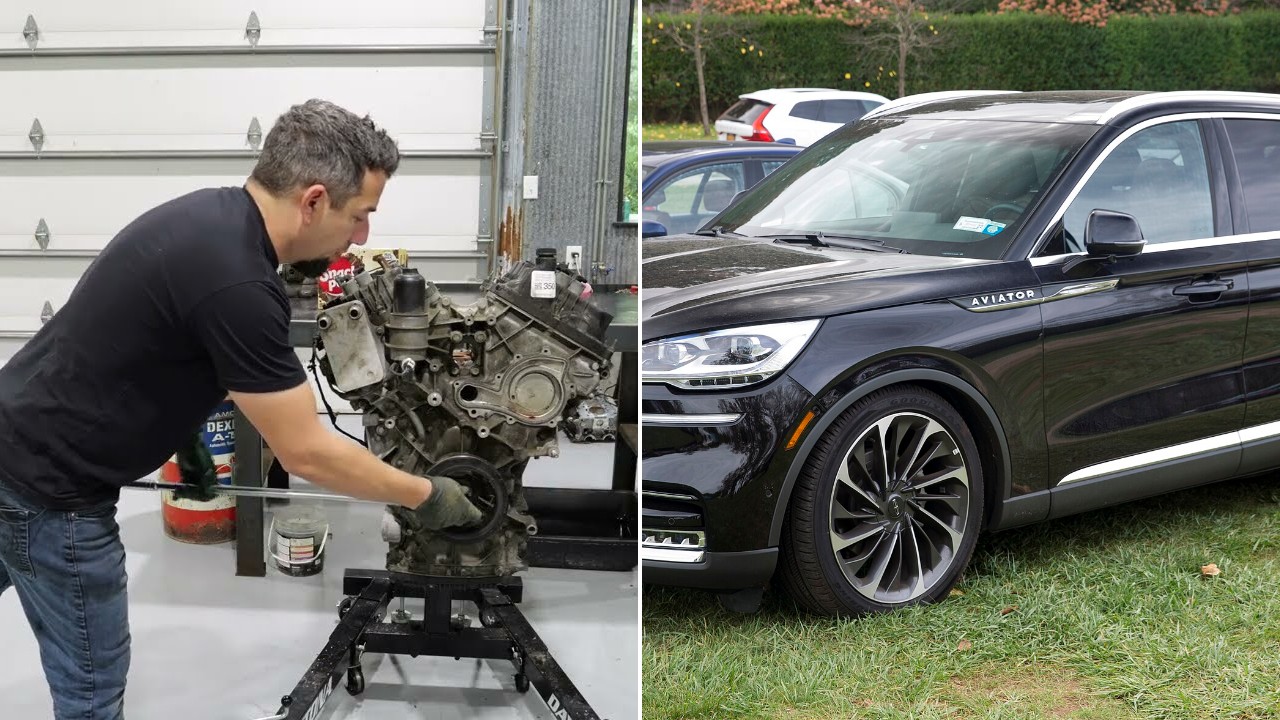
The engine landed on the bench of a parts seller and mechanic who posts as @I_Do_Cars. A salvage yard had sold a good used engine to replace it, so this one came back to him as a core. He admits his video title calls it a Ford Explorer engine. In fact, it came out of a Lincoln Aviator, which he describes as the same vehicle underneath.
What The Carfax Showed On This Lincoln Aviator
First, he checked the mileage. He found the last eight digits of the VIN stamped on the lower block, ran the full VIN and pulled a Carfax report. The history matched about 70,000 miles.
The service record was another story. He says it showed long gaps in maintenance and only two recorded oil changes. On top of that, there were two visits with long lists of replaced parts, which he calls a red flag on a vehicle that young.
He also explains the engine itself. It is the 3.0-liter EcoBoost twin-turbo V6, built on the same family as the 2.7-liter used in the F-150. According to him, it makes about 400 horsepower from the factory and uses direct injection only.
Sludge Under Every Cover
The engine still turned over by hand, so he started taking it apart. Under the first valve cover, he found thick sludge coating everything.
“This looks terrible for 70k. Terrible.”
He says he has seen engines with 250,000 or 300,000 miles that looked far better inside. Next, he pulled the variable cam timing solenoids. Their small screens catch debris floating in the oil, and these were packed with sludge and bits of bearing.
That detail matters for buyers, he explains, because you can often reach those solenoids without removing a valve cover. Meanwhile, the oil filter looked even worse. It was full of fine, shiny powder that he believes came from the bearings.
Bearing Shavings And A Spun Rod Bearing
Behind the timing cover, every part wore a coat of dark varnish, and a silver paste sat in the bottom. The oil pump belt looked fine to him. Still, he notes that it sheds gritty material as it ages, and that grit ends up in the oil.
Then he flipped the block and pulled the oil pan.
“Those are bearing shavings.”
The pickup screen was clogged with debris, too. Once the rod caps came off, the cause became clear. The bearing on cylinder number six had spun. He says the damage came from debris running through the oil system rather than from a total lack of oil, since the shells were still thick. Fortunately for the next owner of these parts, the crankshaft and cylinder walls looked better than he expected.
Even so, he does not hold back on the previous owner, who is never named or identified.
“If you can afford a brand new Lincoln, you can afford to change its oil.”
He adds one important caveat. He believes the oil was probably changed more than twice, maybe three times. Some owners change their own oil, and many shops never report to Carfax. So a gap in the history is a warning sign, not proof.
How To Avoid Buying An Engine Like This One
His advice applies to almost any late-model car, not just a Lincoln Aviator. Here is what we took from it:
- Treat big gaps in a vehicle history report as a reason to dig deeper, not as the whole story.
- Ask the seller for receipts, especially if they say they changed the oil themselves.
- Get a pre-purchase inspection on any expensive used vehicle, even one with low miles.
- Ask the shop to check an accessible cam timing solenoid screen for sludge or metal.
- Remember that “lifetime” fluids still wear out. Oil changes are the cheapest insurance an engine has.
In his words, a shop that pulls one of those screens can save a customer from a large repair bill.
“pull a VCT solenoid and save a customer from a $15,000 repair bill.”
Where Things Stand
This engine will not run again as it is. However, he says the cylinder heads look good enough to sell, and the block may be usable. He remains a fan of this engine family overall, and he stresses that this one was simply a poor example. Clearly, it was not maintained and failed far too early.
More from Fast Lane Only