There is a particular kind of engineering logic that only makes sense once you already have a roughly 200-horsepower motorcycle engine sitting inside a child’s plastic truck bed. At that point, worrying about tire quality feels almost quaint. And yet that is exactly the upgrade at the center of BUM’s latest build, a project that takes a Hayabusa-powered plastic truck and finally gives it wheels that will not shake apart at speed.
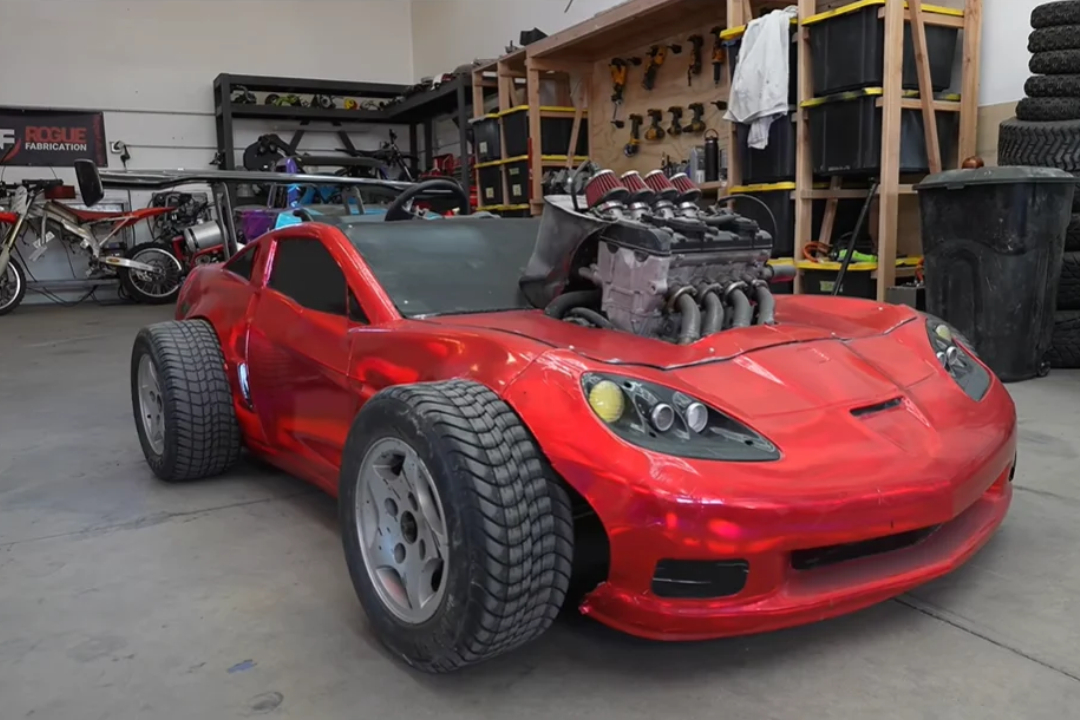
This is not the team’s first attempt at turning a kid’s ride-on toy into something that can actually be driven. A year earlier, they built a similar project out of a plastic Corvette bed powered by a 130-horsepower motorcycle engine, and that build taught them plenty about what not to do a second time. Wheels that stuck out at awkward angles, a drive chain running dangerously close to the driver’s leg, and a frame that literally melted the plastic body around it were all problems baked into the Corvette from the start.
So when a matching truck bed from the same manufacturer turned up on Facebook Marketplace, the team saw a chance to build the sequel properly. This time the engine would make closer to 200 horsepower courtesy of a Suzuki Hayabusa motor, and this time the fixes would be designed in from the first cut of steel rather than patched on after the fact.
A frame built to solve last year’s mistakes
The Corvette’s biggest flaw traced back to a single decision. Because the frame had been built out to the edges of the bed, there was no room left up front for proper steering, which forced the wheels into a wide, awkward stance nobody had planned for. The truck build started from the opposite instinct, with a narrow frame designed around A-arms on both sides and a rear hoop shaped to let a solid axle move freely.
Getting there took roughly 80 feet of round steel tubing, considerably more material than any previous BUM project, bent and test-fit repeatedly until the shape matched what the suspension would eventually need. Slipping the raw frame into the plastic shell for the first fit check produced the kind of tight, snug result the team had been chasing since the Corvette went together with far less certainty.
Ditching the chain for something closer to a real car
The Corvette’s engine sat mounted the way it would inside a motorcycle, oriented sideways in what is technically called a transverse layout. That setup meant keeping the motorcycle’s original chain drive, which put a fast-spinning chain right next to the driver’s leg at highway speed, a detail the team was blunt about disliking.
The truck flips that layout entirely, mounting the Hayabusa engine longitudinally, front to back, the same basic orientation you would find in a Miata or a 240SX. That change sets up a driveshaft running straight back to a solid rear axle instead of a chain, and it also opens up cabin space that never existed in the Corvette. Where the previous build had the driver essentially straddling a sideways motorcycle engine, the truck offers enough room for real foot pegs and pedal placement, tested early using a rolling office chair standing in for the eventual seat.
Mounting an engine putting out an estimated 200 horsepower still needed to be solid, and the team built three mounting points out of scrap one-inch tubing with washers welded to the ends, all positioned on top of the engine rather than underneath it. That placement means the whole body can lift off later for service without disturbing the mounts themselves, a small detail that should save real time down the road.
Locking the body down after last year’s melted frame
One of the stranger failures on the Corvette involved coolant. Hot fluid running through the steel frame ended up melting the plastic channels the body relied on for support, leaving the Corvette’s shell visibly sagging where those tubes had failed. The truck’s body mounting system was built specifically to avoid a repeat, using steel tubing that passes through drilled holes in the plastic and locks down with U-bolt clamps rather than relying on plastic channels to hold anything in place.
The difference showed up immediately once the mounts went in. The body sat rigid against the frame in a way the Corvette never managed, giving the team confidence that flexing and flapping at speed would not be a repeat problem this time around.
The wheel upgrade that actually matters
Every previous BUM build has leaned on secondhand parts, right down to the plastic bed and the motorcycle engine itself. The wheels and tires broke that pattern. Instead of another marketplace find, the team bought a brand new set of speed-rated golf cart and mini racing wheels from Odyssey Motorsports, a local golf cart supply shop just down the road from their shop.
That purchase directly targets one of the Corvette’s more alarming issues. The tires on that build had come from a contact at a bar, and they were old enough to be dry rotted and badly unbalanced, a combination that showed up as violent shaking during a speed test against a Lamborghini. Trading that setup for new, speed-rated tires is a genuine safety upgrade, even if the phrase feels slightly absurd applied to a plastic truck bed carrying a superbike engine.
Fitting the new wheels meant cutting through the truck’s double-layered plastic wheel arches with an oscillating multi-tool, carefully enough to leave room for steering travel without removing so much material that the panels lost their shape. Once the trimmed body went back on over the new wheels, the fitment tucked in tight rather than sticking out the way the Corvette’s setup always had.
Still missing the piece that decides everything
For all the progress, the truck remains a chassis and a body without a way to put power to the ground. The rear axle is still undecided, with the team weighing whether a shortened car axle can handle this much output or whether a golf cart axle might not be strong enough for the job. Suspension components are designed for but not yet installed, and the driveshaft connecting the longitudinal engine to that eventual axle has not been fabricated.
None of that changes what the wheel upgrade already proves. A build that once shook apart on cheap bar tires now sits on new, speed-rated rubber built for exactly this kind of output. Whatever axle ends up finishing the job, this truck is rolling into its next phase in noticeably better shape than the Corvette ever was.
More from Fast Lane Only
- Unboxing the WWII Jeep in a Crate
- 15 rare Chevys collectors are quietly buying
- 10 underrated V8s still worth hunting down
- Police notice this before you even roll window down
*Research for this article included AI assistance, with all final content reviewed by human editors.