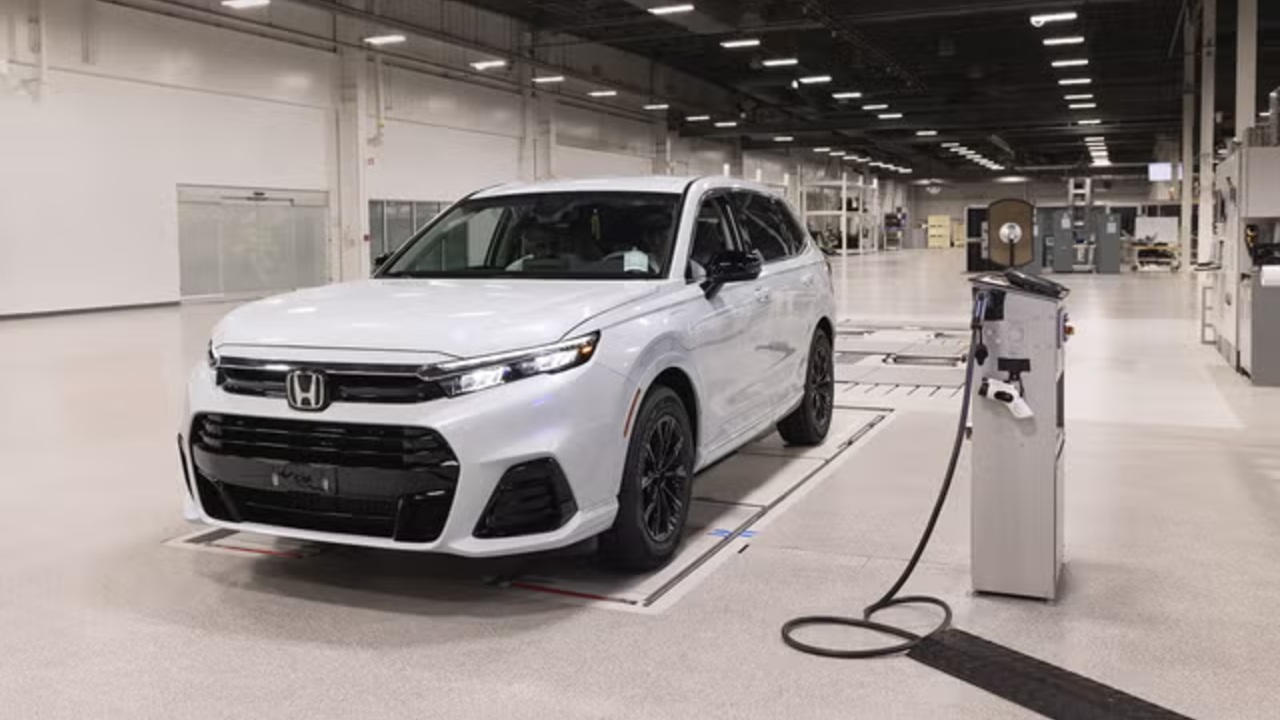
Honda has decided to halt its joint fuel cell system production with General Motors in the United States, abruptly closing a chapter that once symbolized cross-Pacific cooperation on zero-emission technology. The move will wind down output at the Michigan facility that has been building hydrogen fuel cell stacks for both companies and will push Honda toward a more independent path for its hydrogen strategy.
The decision underscores how quickly the economics and politics of clean propulsion are shifting, even for long term advocates of hydrogen. It also raises fresh questions about the future of fuel cell vehicles in North America, just as battery electric models dominate automakers’ investment plans.
From flagship partnership to orderly shutdown
When Honda and General Motors created their fuel cell joint venture in the United States, the project was framed as a way to share costs and accelerate commercialization of hydrogen technology. The Michigan plant was set up to produce fuel cell systems that would serve both companies’ vehicles, pooling engineering from Honda Motor and US based General Motors into a single production line. According to Honda Motor, that collaboration delivered technical progress and cost reductions in the current generation of fuel cell stacks before the partners began reassessing its future.
Honda now says it will discontinue production of its current fuel cell systems at the Michigan facility before the end of 2026, effectively ending the joint manufacturing program with GM in the United States. Company statements describe extensive discussions between Honda and GM about whether to extend the collaboration, but the two sides ultimately agreed to stop building the current US built unit and close out the fuel cell joint venture production in the country. Reporting on the decision notes that the Michigan plant will cease output of the shared fuel cell systems as Honda prepares a next generation design that will not be produced with GM.
Why Honda is resetting its hydrogen strategy
Honda is not abandoning hydrogen technology, but it is clearly reshaping how it pursues it. Executives have framed the end of joint production with GM as part of a broader reset of Honda’s hydrogen strategy, with plans to develop and manufacture the next generation of fuel cell systems independently. Company materials describe fuel cells as one of the new core businesses of Honda, alongside electrification of its broader lineup, and indicate that the automaker wants tighter control over product planning, cost structure, and integration with its own vehicles and non automotive applications.
Several reports point to limited demand for fuel cell vehicles as a key factor behind the decision to stop building the current system in the United States. Market analysis of hydrogen notes that uptake of fuel cell electric vehicles, including passenger cars and commercial models, has lagged expectations, particularly in North America where hydrogen refueling infrastructure remains sparse. Honda Motor has acknowledged that the existing fuel cell system, which was co developed with GM, achieved notable cost reductions, but the company appears to have concluded that continuing to invest in that architecture through a joint venture would not align with its long term business priorities.
A broader unraveling of Honda and GM’s green tech ties
The fuel cell split does not come in isolation. Honda and GM have been steadily unwinding a series of green technology collaborations that once spanned electric vehicles as well as hydrogen. Earlier, Honda Pulls Out of Joint Venture with GM on Electric SUVs, ending plans for a shared family of affordable battery powered crossovers that had been announced as a major plank of both companies’ EV strategies. That decision signaled that the two automakers were reassessing the economics of joint development in a market where pricing pressure and investment needs are both intense.
Commentary on the relationship has described how Honda and GM continue to drift apart, with the fuel cell partnership now following the electric SUV program onto the chopping block. Analysts note that Honda, a Japanese automaker with a long history of in house engineering, appears increasingly inclined to go its own way on key technologies rather than rely on shared platforms. The end of US fuel cell production with General Motors fits that pattern, tying up loose ends from a period when both companies saw more value in pooling their bets on alternative powertrains.
Implications for Michigan, GM, and the hydrogen market
The decision to stop fuel cell system production in Michigan carries immediate consequences for the local operation that hosted the joint venture. Honda Motor has confirmed that the Michigan based plant will wind down output of the current fuel cell systems before the end of 2026, although detailed workforce and investment impacts are not fully specified in the available reporting. The facility had been a tangible symbol of US Japan industrial cooperation in advanced propulsion, and its transition will be closely watched by regional stakeholders who have promoted hydrogen related activities as a source of future growth.
For General Motors, the end of joint production with Honda removes one avenue for monetizing its fuel cell technology, which the company has also targeted at commercial and stationary applications. Market focused reports describe how Honda Motor and US based General Motors will end US fuel cell production in 2026 amid limited demand for fuel cell vehicles, suggesting that GM, like Honda, is recalibrating where hydrogen fits into its portfolio. The broader hydrogen market, tracked under categories such as Market Hydrogen, has seen growing interest in industrial and heavy duty uses, but passenger car adoption remains constrained by infrastructure gaps and cost, a backdrop that makes large scale automotive fuel cell manufacturing harder to justify.
Honda’s next steps: independent hydrogen development and new partners
Honda’s decision to close out the GM joint venture is paired with a commitment to pursue hydrogen on its own terms. Company statements indicate that Honda Ends GM Fuel Cell Partnership, Shifts to Independent Hydrogen Development Honda, with plans for a new generation of fuel cell systems that will be developed and produced independently rather than through the Michigan based collaboration. The automaker has set long term goals to decarbonize its products and operations by 2050, and it continues to view hydrogen as a tool for that objective, particularly in commercial vehicles, stationary power, and potentially in markets where refueling networks are more advanced.
At the same time, Honda is not closing the door on all external cooperation around hydrogen. Reporting on its activities highlights a collaboration between Neoenergia and Honda for green hydrogen mobility, illustrating that the company is exploring partnerships that align more directly with its strategic priorities and regional opportunities. By ending the US fuel cell joint venture with GM before the end of 2026 while cultivating new relationships in areas such as green hydrogen production and infrastructure, Honda is attempting to reposition itself in a hydrogen ecosystem that is shifting away from early passenger car experiments and toward more targeted, commercially grounded deployments.
More from Fast Lane Only