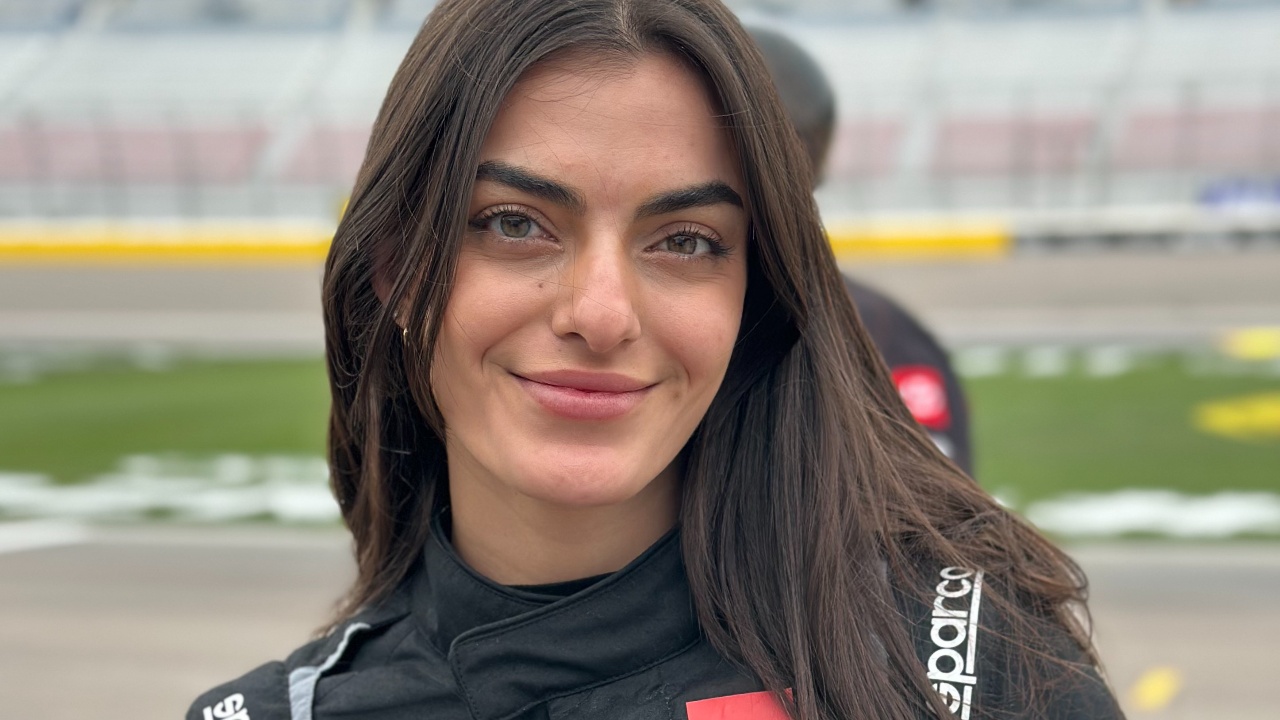
Toni Breidinger’s latest move in the NASCAR Craftsman Truck Serie is as much a branding statement as it is a competitive gamble. By aligning her new truck ride with Raising Cane’s, she is signaling that her growing profile on the track and her commercial appeal off it are meant to work in tandem, not in parallel. The partnership positions her as a driver eager to carry a sponsor’s identity into some of the sport’s most visible events while she chases results that match the ambition.
Her upcoming slate of races, beginning with the truck event at Daytona in Feb, gives that relationship an immediate stage. For Breidinger, who has steadily climbed the stock car ladder, the chance to represent a national brand in a full truck program is both validation and a test of whether her marketing power and race craft can rise together in a series that rarely forgives inexperience.
From rising prospect to full-time truck competitor
Breidinger’s trajectory into a full-time truck seat has been building over several seasons, but the current step marks a clear escalation in expectations. After years of part-time opportunities, she is now locked into a defined program that starts with the NASCAR Craftsman Truck Serie race at Daytona, then continues through a schedule that includes Texas Motor Speedway, Dover, Nashville and North Wilkesboro. That kind of continuity is critical in a discipline where chemistry with a team and familiarity with a truck can be the difference between running mid-pack and contending for top tens, and it underscores why her new role is being treated as a significant career inflection point.
The decision to commit to this slate reflects a broader confidence in Breidinger’s ability to handle the grind of a national series. The Daytona opener in Feb is not just another date on the calendar, it is the most volatile race of the year, where pack racing and superspeedway chaos can either catapult a driver into the spotlight or send a promising season sideways before it properly begins. Following that with stops at Texas Motor Speedway and the varied challenges of Dover, Nashville and North Wilkesboro means she will be tested on high-speed intermediates, concrete ovals and a historic short track, a mix that will quickly reveal whether her skill set is ready for the demands of a full truck campaign.
TRICON Garage and the strategic team switch
The competitive context around Breidinger’s move is defined by her alignment with Tricon Garage for her first full-time NASCAR Craf truck effort. Announced in Nov, the shift places her inside an organization that has become a central player in the Truck Series talent pipeline, with the infrastructure and engineering depth to support a driver who is still refining her craft at this level. For Breidinger, the change is more than a new logo on the hauler, it is a bet that Tricon Garage for can provide the technical base and race-to-race feedback loop she needs to convert raw pace into consistent finishes.
That Nov announcement also slotted her into the broader silly season narrative, where Tony Brideer’s elevation to the NASCAR Craftsman Truck Serie was framed as another domino in a shifting driver market. By choosing Tricon Garage for her first full-time truck campaign, she is aligning with a group that has shown a willingness to invest in drivers over multiple seasons, rather than treating them as short-term placeholders. The combination of a stable team environment and a clearly defined schedule, starting at Daytona and running through tracks like Texas Motor Speedway, gives her a platform to grow rather than forcing her to audition for her own seat every weekend.
Raising Cane’s and a sponsor-driven identity
If the team switch provides the competitive backbone of Breidinger’s new chapter, the Raising Cane’s partnership supplies its public-facing identity. Breidinger has already built a reputation as a driver with a notably diverse sponsor portfolio, including Canes, Celsius, Victoria’s Secret and Sunoco, a mix that reflects both mainstream consumer brands and motorsports stalwarts. Being “proud to represent Raising Cane’s” in her new truck role is not a throwaway line, it is a recognition that the sponsor is central to how she will be presented to fans, broadcasters and potential future partners throughout the season.
That alignment matters because Breidinger, or Toni Breidinger as she is often formally referenced, has become a case study in how a driver can leverage commercial relationships to secure competitive opportunities. The presence of Canes alongside lifestyle brands like Celsius and Victoria’s Secret, as well as a racing fixture like Sunoco, shows that her appeal crosses traditional motorsports boundaries. In the context of a full-time NASCAR Craf truck program with Tricon Garage for, the Raising Cane’s backing signals that her value proposition to teams is not limited to what she does behind the wheel, but also includes the audience she brings and the marketing narratives she can support.
Visibility, representation and the business of being Toni Breidinger
Breidinger’s new truck role is also a continuation of her emergence as one of the most visible women in American stock car racing. Her presence in the NASCAR Craftsman Truck Serie, particularly with a schedule that includes high-profile venues like Daytona and Texas Motor Speedway, places her in front of large national audiences at a time when the sport is still working to broaden its demographic reach. The fact that Breidinger is frequently cited as bringing attention to women in motorsports is not incidental, it is part of how sponsors like Canes and Victoria’s Secret evaluate the impact of their investment.
Her growing list of backers, from Celsius to Sunoco, underscores that companies see value in associating with a driver who is both competitive and symbolically important. Breidinger’s ability to secure these deals has helped her move into better equipment, such as the Tricon Garage for truck she will campaign starting at Daytona, and it has also positioned her as a reference point for younger female drivers looking to understand how to navigate the commercial side of the sport. In that sense, her pride in representing Raising Cane’s is intertwined with a broader responsibility, she is not only racing for results, but also carrying the expectations of fans who see her as proof that the NASCAR ladder can accommodate different stories and backgrounds.
Competitive stakes for the 2026 truck slate
All of the branding and representation narratives surrounding Breidinger’s new role ultimately funnel into a simple competitive question, how will she perform across the 2026 truck slate that begins at Daytona in Feb. The schedule laid out for her, which includes Texas Motor Speedway, Dover, Nashville and North Wilkesboro, is demanding even for established veterans. Daytona will test her superspeedway instincts, Texas will require comfort with high-speed aero balance, Dover will punish any hesitation on a concrete surface that rewards commitment, Nashville will demand precision over a long run and North Wilkesboro will expose race craft in tight quarters.
For Breidinger, the partnership with Raising Cane’s and the backing of Tricon Garage for provide tools, not guarantees. The expectation is that she will make the most of every opportunity, a phrase that has followed her as she has climbed into the NASCAR Craftsman Truck Serie and now faces the reality of a season where every mistake is magnified and every strong run can reshape perceptions. If she can translate the confidence of her sponsors, from Canes and Celsius to Victoria’s Secret and Sunoco, into steady progress on the timing sheets, her pride in representing Raising Cane’s will be matched by tangible results that justify the faith placed in her by both her team and her commercial partners.
More from Fast Lane Only