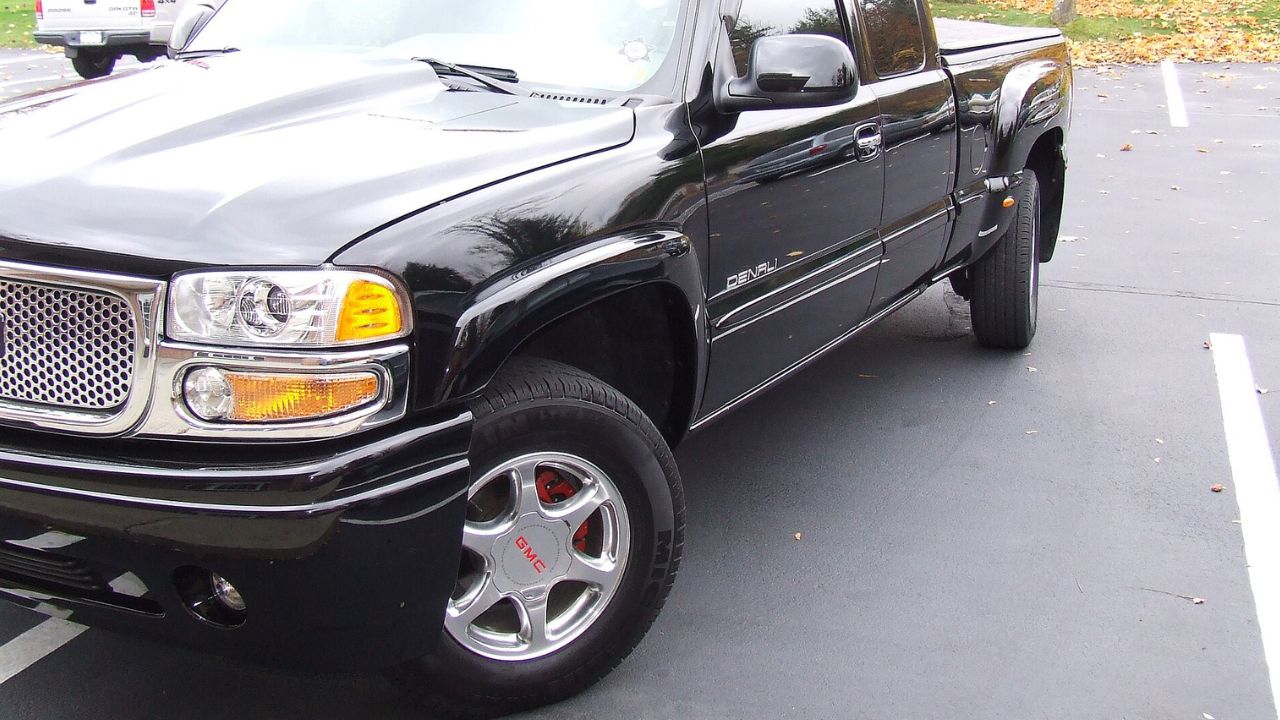
When General Motors introduced Quadrasteer in the early 2000s, it looked like a breakthrough that could redefine full-size pickup trucks. The system allowed the rear wheels to steer along with the front wheels, dramatically improving maneuverability and stability. On paper, it solved one of the biggest drawbacks of large trucks. In practice, however, high cost and limited consumer understanding kept it from becoming a long-term success.
GM Tried to Solve a Real Truck Problem
Full-size pickups have always excelled at towing, hauling, and durability, but their large size makes them difficult to maneuver in tight spaces. Parking lots, job sites, and narrow streets often highlight their biggest weakness: a wide turning radius.
Quadrasteer was designed to address exactly that issue. At low speeds, the rear wheels turned opposite the front wheels, reducing the turning circle and making parking dramatically easier. At highway speeds, the rear wheels turned in the same direction as the front wheels, improving lane-change stability and towing control.
General Motors offered the system on select GMC and Chevrolet trucks, aiming to enhance both convenience and safety without sacrificing capability.
For engineers, it was a sophisticated solution to a long-standing limitation.
The Technology Worked Better Than Expected
When drivers experienced Quadrasteer-equipped trucks, the results were often impressive. Large pickups suddenly felt far more agile, with turning performance closer to that of a midsize vehicle. Parking in tight urban environments became noticeably easier, and trailer handling improved significantly.
The system used electronic controls, sensors, and actuators to manage rear-wheel movement seamlessly. Drivers could also disable or adjust the system depending on conditions, giving them flexibility in how it operated.
Automotive journalists praised Quadrasteer for making full-size trucks feel more manageable without compromising their core strengths. In many ways, it demonstrated a clear path toward improving large vehicle usability through advanced engineering.
Despite the positive feedback, the system struggled to gain traction with everyday buyers.
Cost Became the Biggest Barrier
The main reason Quadrasteer failed to spread widely was its price. The system added several thousand dollars to the cost of a truck, making it a premium option in a segment where buyers are often highly sensitive to value.
Many truck customers prioritize durability, towing capacity, and affordability over advanced features. While Quadrasteer clearly improved driving convenience, it was not seen as essential for most buyers.
Dealers also found it difficult to explain the benefits in a way that justified the additional expense. Unlike features such as four-wheel drive or towing packages, rear-wheel steering required firsthand experience to fully appreciate.
As a result, adoption remained limited despite strong engineering reviews.
A System Ahead of Its Market
Quadrasteer arrived at a time when the automotive industry was not yet ready to embrace such complex steering systems in mainstream trucks. Manufacturing costs were high, consumer awareness was low, and competing priorities—such as engine improvements, safety features, and emissions compliance—took precedence.
Even though the system worked well, GM ultimately discontinued it after only a few model years. However, the idea itself did not disappear. Modern vehicles, including luxury sedans, SUVs, and performance cars, now use refined versions of rear-wheel steering that operate more smoothly and cost-effectively thanks to advances in electronics and manufacturing.
Today’s systems achieve many of the same benefits Quadrasteer promised, but at a scale and price point that make them far more practical.
Looking back, GM’s Quadrasteer system became one of its shortest-lived ideas not because it failed technically, but because it was ahead of its time. It solved a real problem in a way that made sense only when the market was finally ready to value what it offered.
More from Fast Lane Only
- Unboxing the WWII Jeep in a Crate
- 15 rare Chevys collectors are quietly buying
- 10 underrated V8s still worth hunting down
- Police notice this before you even roll window down
*Research for this article included AI assistance, with all final content reviewed by human editors