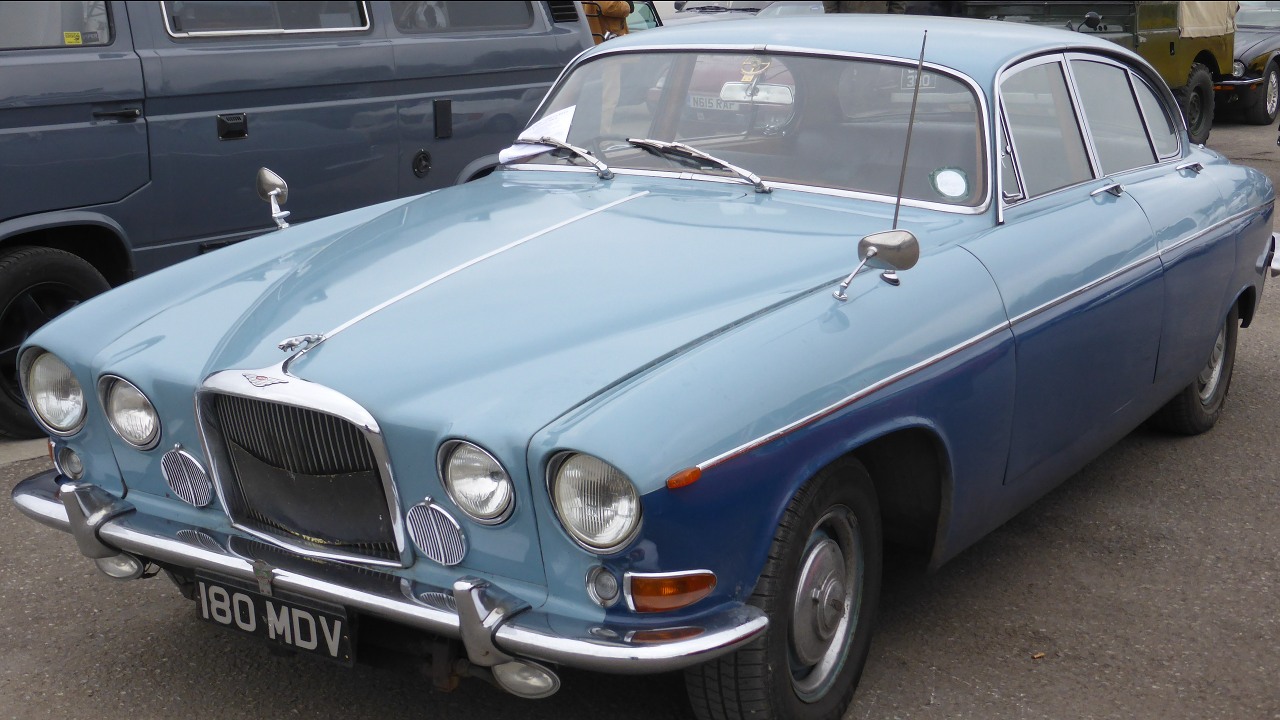
The 1966 Jaguar Mark X sat at a crossroads for British luxury, chasing a more refined, modern identity while still carrying the weight and glamour of the old-world limousine. It was vast, technically ambitious, and subtly reworked in its final years to smooth away early rough edges. By the time it evolved into the 420G, the big saloon showed how far Jaguar was willing to go to align comfort, performance, and quiet sophistication.
From flagship experiment to 420G
The Jaguar Mark X, also known as Mark Ten, was conceived as a statement car, a large luxury saloon built by a British manufacturer that wanted to compete head on with American and European prestige brands. The Jaguar Mark was the company’s biggest road car, and its scale alone signalled a new ambition, with a body that was longer and wider than its predecessors and a cabin aimed at chauffeur-driven owners as much as enthusiastic drivers. According to period specifications, the Mark Ten was later renamed the Jaguar 420G, a change that arrived for the London Motor Show in October 1966 and marked a subtle repositioning of the car rather than a clean-sheet replacement.
That renaming did more than tidy up the badge. For the London Motor Show, Jaguar used the 420G label to underline incremental improvements in trim and presentation, including revised exterior details and more upmarket interior options that pushed the car further into limousine territory. Contemporary descriptions of the Jaguar Mark X note that it was a large, luxury saloon car manufactured by a British automaker, with the 420G identity helping to distance the updated model from both its predecessor’s styling and technology and from the smaller, unrelated 420. The shift in name and detail design showed Jaguar edging its big saloon toward a calmer, more mature expression of luxury, even as the basic platform remained the same.
Chasing comfort with advanced engineering
Refinement in the Mark X was not just a matter of leather and wood, it was engineered into the chassis and suspension. The car introduced a sophisticated independent rear suspension that would go on to influence other Jaguar models, paired with power-assisted steering and disc brakes to keep its considerable mass under control. One detailed development account describes the Mark X and later 420G as boasting innovative engineering that delivered exceptional ride quality, impressive performance, and the unmistakable Jaguar character, all while contributing to the development of Jaguar’s V12 engine. In other words, the search for a smoother, quieter flagship also served as a test bed for future drivetrains and suspension layouts.
That focus on comfort extended to the way the car isolated occupants from the road. Reports on surviving 1966 Jaguar Mark X 4.2 examples highlight extensive mechanical work over the years, including attention to the power steering and independent rear suspension, which were central to the car’s ability to glide over poor surfaces. One such car is noted as having had its motor rebuilt and its steering and suspension carefully maintained, a reminder that the refinement Jaguar promised depended on complex hardware that needed expert care. The engineering ambition of the Mark X, from its rear suspension to its power assistance, was central to its character as a luxury saloon that aimed to feel as composed as it looked imposing.
Power, pace, and the refinement of speed
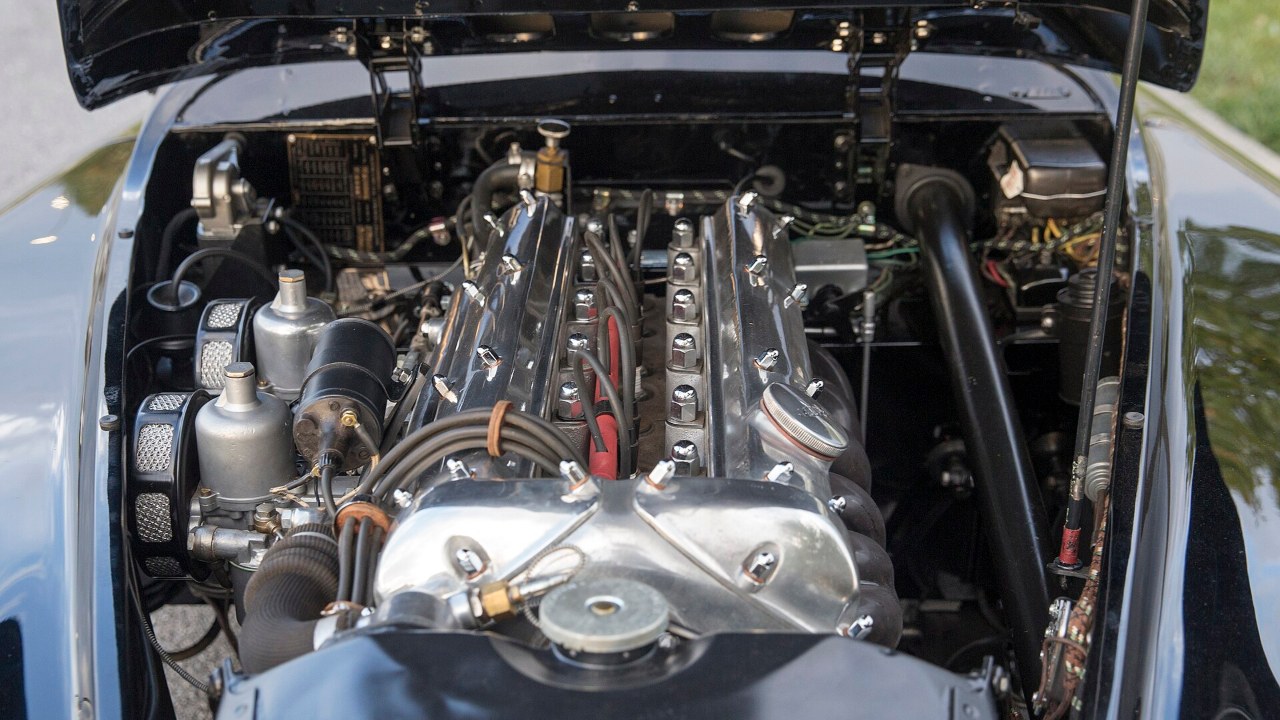
Under the sculpted bonnet, the Mark X relied on Jaguar’s proven straight six to deliver both performance and smoothness. Earlier versions used a triple carbureted 3.8 liter twin cam straight six making 265 (gross) horsepower, a specification that placed the car firmly among the more powerful saloons of its era. Under this earlier model’s sculpted hood sits that 3.8 engine, and contemporary accounts praise the combination of torque and refinement, even if the car’s size meant it was more about effortless surge than razor sharp acceleration. The later 4.2 liter version, which powered many 1966 cars, continued this theme, trading some rev-hungry character for stronger low and mid range pull that better suited a heavy luxury saloon.
Jaguar’s broader saloon range of the period shows how the company thought about speed and civility together. One analysis of a smaller Jag saloon from the same family notes that it could reach 60 in 8.5 seconds and achieve a 125 m top speed, making it one of the fastest four door cars of its time. That performance benchmark helps frame the Mark X: while the big car was heavier and more comfort oriented, it shared engines and engineering philosophy with these quicker siblings, so its refinement was never about being slow. Instead, the Mark Ten used its power to deliver quiet, unhurried progress, with the straight six working in the background rather than dominating the experience, a different expression of the same mechanical capability.
Designing a big cat for America
Styling and sheer size were central to how the Mark X pursued a more refined image, particularly in export markets. Commentators have described the Jaguar Mark 10 as a big cat built for America, noting that it was huge and, at one point, the widest car on sale in the United States. In that context, the car was often compared with contemporary Cadillac models, with some observers saying the Jaguar Mark 10 put the Cadillac into Coventry, a playful nod to Jaguar’s home city and its attempt to outdo American luxury on its own turf. The low roofline, broad track, and flowing rear haunches gave the car a distinctive presence that combined British restraint with a scale more familiar to US buyers.
From a modern perspective, some writers have suggested that, when size matters, the Mark X can look almost out of proportion compared with earlier Jaguars, yet they also note that the car’s width and stance were deliberate choices to improve stability and cabin space. When comparing the Jaguar MkVIIM vs MkX, one analysis points out that, yet from a 2021 perspective, you could be forgiven for thinking there is a mismatch between the earlier car’s upright formality and the later car’s sprawling, low slung shape. That contrast underlines how the Mark X represented a break from traditional Jaguar saloon design, chasing a more contemporary, international look that aimed to feel sophisticated rather than merely grand.
Legacy, renaming, and the quiet fade into history
By the time the Mark X became the 420G, Jaguar was already thinking about how to integrate the lessons from its flagship into the rest of the range. Having released the Mark X with its many technical refinements, Jaguar boss Sir William Lyons expected the Mark 2 would need updates to retain its place in the market, a logic that led to models like the S Type and the smaller 420. The big car’s independent rear suspension, power assisted controls, and emphasis on cabin comfort filtered down, helping to make later mid size Jaguars feel more sophisticated. In that sense, the Mark Ten’s pursuit of refinement had an impact well beyond its own sales figures.
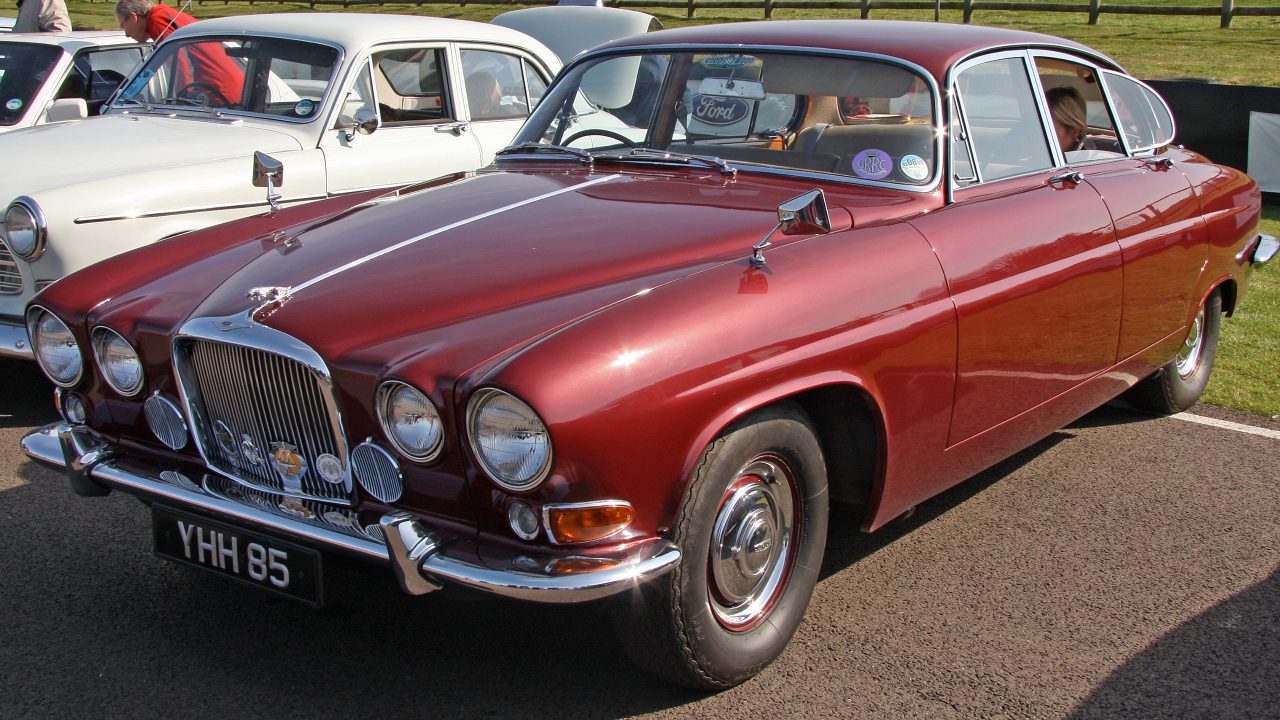
The renaming to 420G in 1966 also brought specific cosmetic and equipment changes that nudged the car further upmarket. In 1966 the Mark X was renamed the 420G, and with the new name came a few changes which included the option of a two tone color scheme, additional chrome trim on the flanks, full wheel covers instead of simple hubcaps, and revised badging at the rear. These details, combined with the already plush interior, reinforced the car’s role as a range topping limousine even as newer models arrived beneath it. Over time, however, the sheer size and complexity that once made the Mark X feel so advanced contributed to its fade into obscurity, with some modern commentators describing it as a forgotten big cat, a car that quietly shaped Jaguar’s approach to refinement before slipping out of the spotlight.
More from Fast Lane Only: