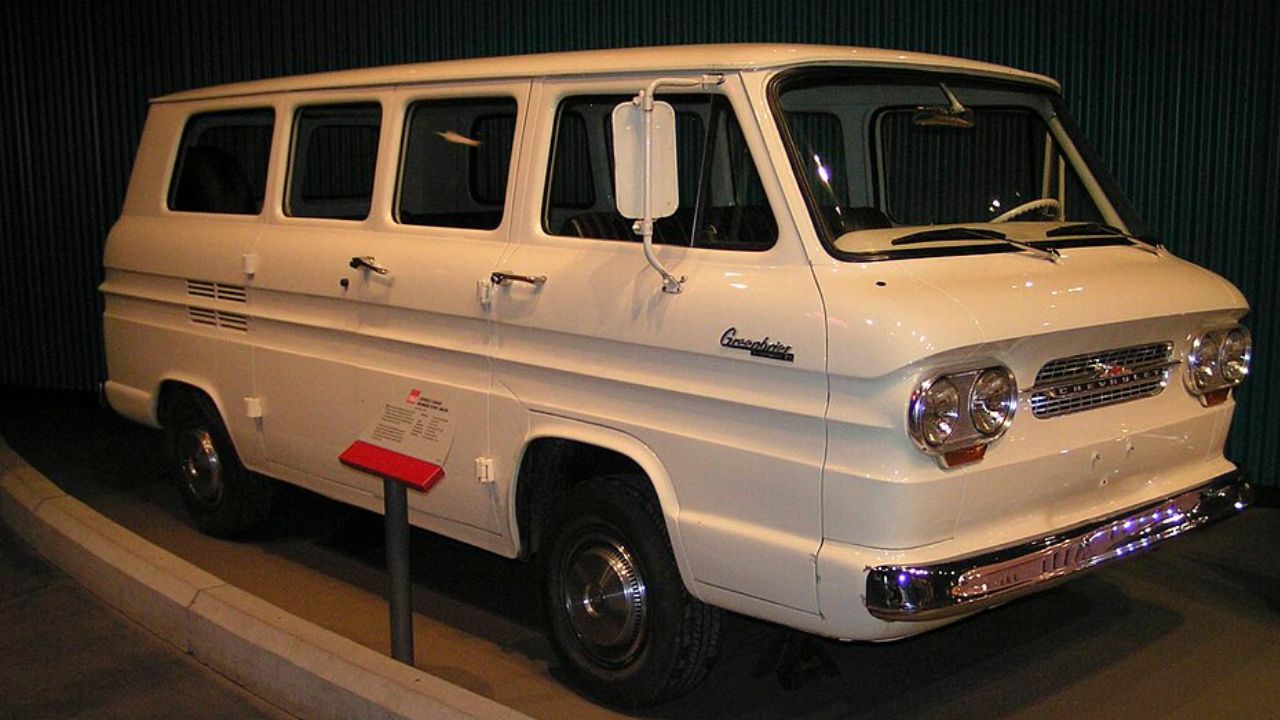
The Chevrolet Corvair Greenbrier was unlike almost every other American utility vehicle of the early 1960s. Instead of a large front-mounted engine and truck-based chassis, it featured a rear-mounted, air-cooled flat-six engine and a compact, forward-control design. While its unconventional engineering puzzled some buyers, it also made the Greenbrier one of General Motors’ most distinctive and versatile utility vehicles.
GM Took an Unconventional Approach to Utility Transport
When Chevrolet introduced the Corvair-based commercial lineup, the company wanted to offer something different from traditional full-size vans and pickup trucks. The Greenbrier adopted the Corvair passenger car’s rear-engine layout, allowing engineers to eliminate the bulky engine compartment at the front of the vehicle.
Without a large engine occupying valuable space, designers created a flat floor and roomy cabin that maximized passenger and cargo capacity. The forward-control driving position also improved visibility, making the vehicle easier to maneuver through city streets and crowded job sites.
Rather than competing directly with larger commercial vehicles, the Greenbrier targeted customers who needed practicality in a smaller, more maneuverable package. Its unusual engineering immediately set it apart from nearly every American utility vehicle on the market.
Although unconventional, the design offered genuine advantages for many types of work.
Its Flexible Interior Served Businesses and Families
One of the Greenbrier’s greatest strengths was its adaptable interior. Available with multiple seating arrangements, it could carry passengers during one trip and cargo during the next. Large side doors and a spacious rear opening made loading equipment, tools, or luggage quick and convenient.
Small businesses appreciated the generous cargo space for deliveries, maintenance work, and service calls. Electricians, plumbers, florists, and repair technicians found that the compact van could easily transport supplies while remaining easier to park than full-size commercial trucks.
Families also discovered the Greenbrier’s versatility. The roomy cabin accommodated road trips, camping gear, and recreational equipment while offering comfortable seating for several passengers. It served as both an everyday people mover and a practical weekend adventure vehicle.
This combination of commercial utility and family usability was relatively uncommon during the early 1960s.
The Rear Engine Delivered Unexpected Benefits
The Greenbrier’s rear-mounted, air-cooled engine was one of its defining characteristics. By placing the drivetrain behind the rear axle, Chevrolet created a nearly unobstructed cargo area that improved interior packaging compared with many front-engine competitors.
The air-cooled design also eliminated the need for a conventional radiator and coolant system, reducing mechanical complexity in certain areas. Owners appreciated the flat cargo floor and low loading height, both of which made transporting bulky items more convenient.
Weight over the driven rear wheels also improved traction under some conditions, particularly when carrying cargo. Combined with the vehicle’s compact dimensions, this gave the Greenbrier respectable capability for a wide range of everyday tasks.
While the unusual layout required mechanics to think differently during servicing, it contributed significantly to the vehicle’s distinctive character.
An Unusual Idea That Left a Lasting Impression
The Chevrolet Corvair Greenbrier remained in production for only a few years, but its influence extended beyond its modest sales numbers. It demonstrated that utility vehicles did not have to follow conventional design formulas to succeed. Instead, thoughtful engineering could create practical solutions using entirely different approaches.
Today, surviving Greenbriers are popular among collectors who appreciate their distinctive styling, innovative engineering, and rarity. Restored examples frequently appear at classic car shows, where they stand out among more traditional American vans and trucks.
The vehicle also represents a fascinating chapter in Chevrolet’s willingness to experiment during an era of rapid automotive innovation. While later utility vehicles largely returned to front-engine layouts, the Greenbrier proved there was room for bold engineering ideas in the commercial vehicle market.
Looking back, the Chevrolet Corvair Greenbrier became one of GM’s oddest utility vehicles because it challenged nearly every convention of its time. Its rear-engine design, adaptable interior, and practical versatility created a vehicle that was as innovative as it was unconventional, earning it a unique place in automotive history.
More from Fast Lane Only
- Unboxing the WWII Jeep in a Crate
- 15 rare Chevys collectors are quietly buying
- 10 underrated V8s still worth hunting down
- Police notice this before you even roll window down
*Research for this article included AI assistance, with all final content reviewed by human editors