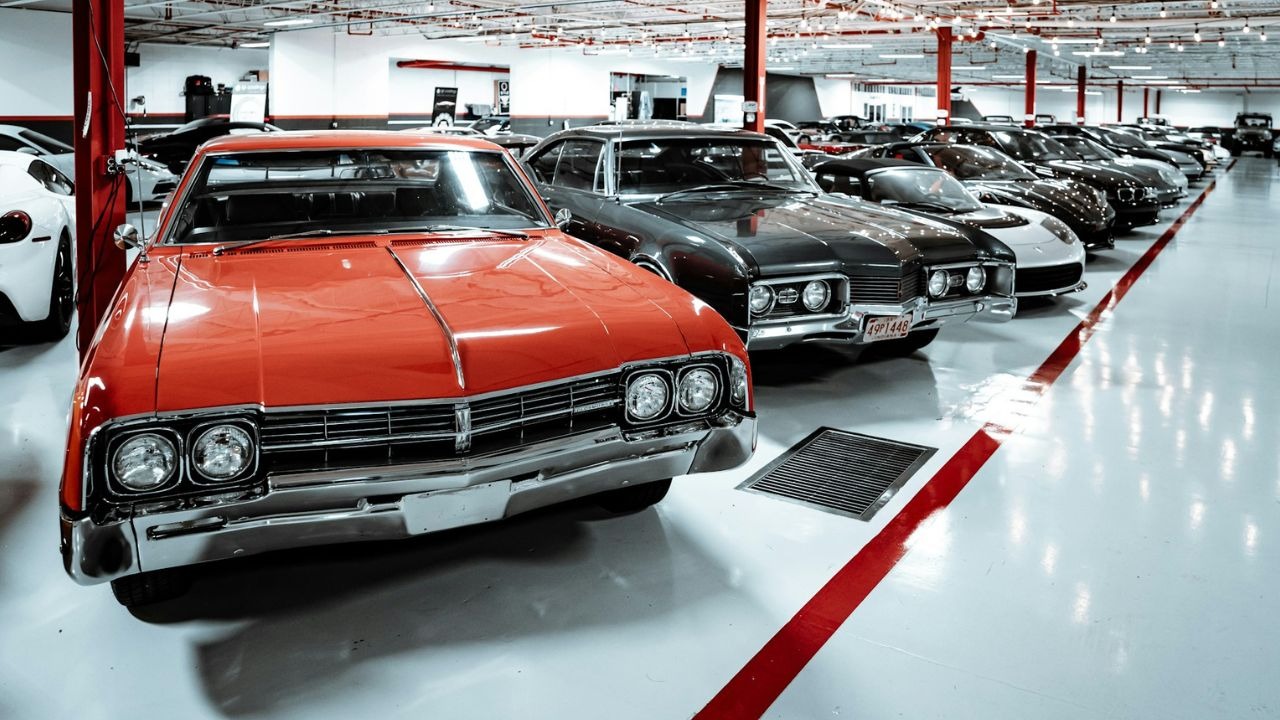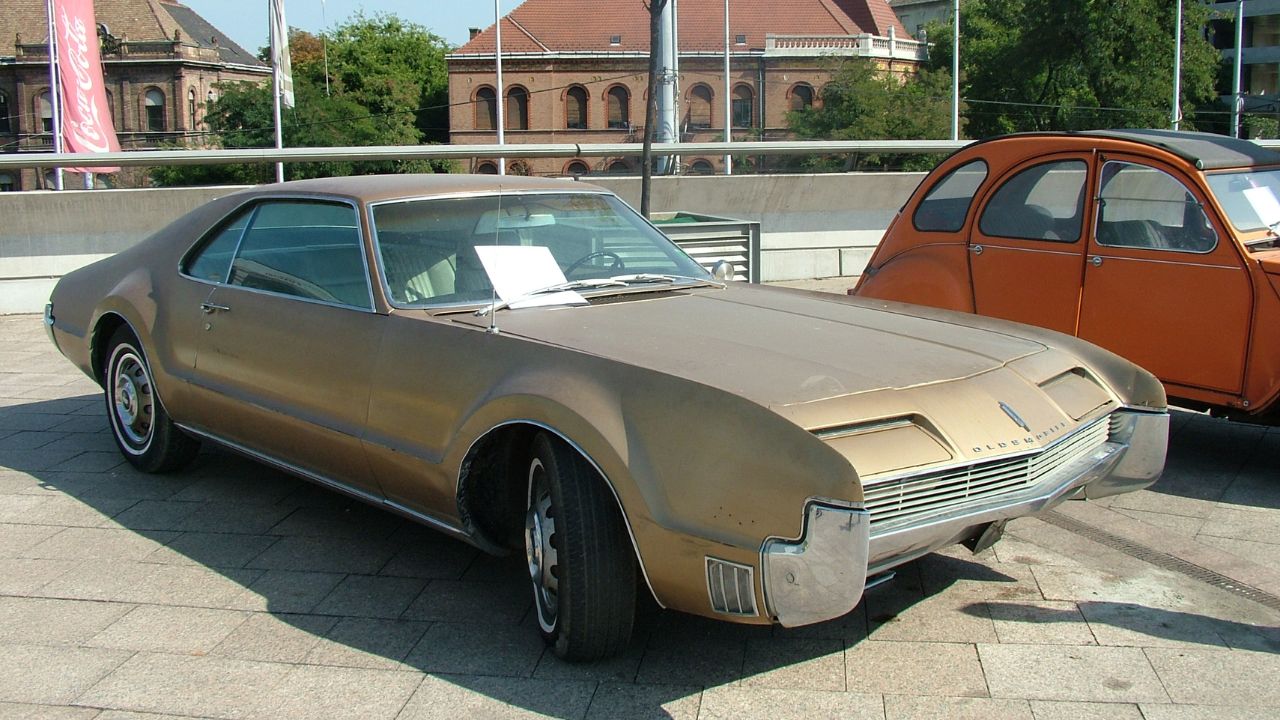
When the 1966 Oldsmobile Toronado debuted, it immediately stood apart from nearly every other American personal luxury car. At a time when rear-wheel drive dominated the industry, Oldsmobile introduced a bold front-wheel-drive coupe with advanced engineering hidden beneath its sleek styling. The Toronado wasn’t created simply to be different—it represented a carefully planned effort to improve packaging, handling, and interior space while showcasing General Motors’ engineering capabilities.
Front-Wheel Drive Changed the Entire Design
The Toronado’s most revolutionary feature was its front-wheel-drive system. Although front-wheel drive had appeared on a few earlier American cars, it had virtually disappeared from the market by the mid-1960s. Oldsmobile revived the concept with a completely new approach capable of handling the power of a large V8 engine.
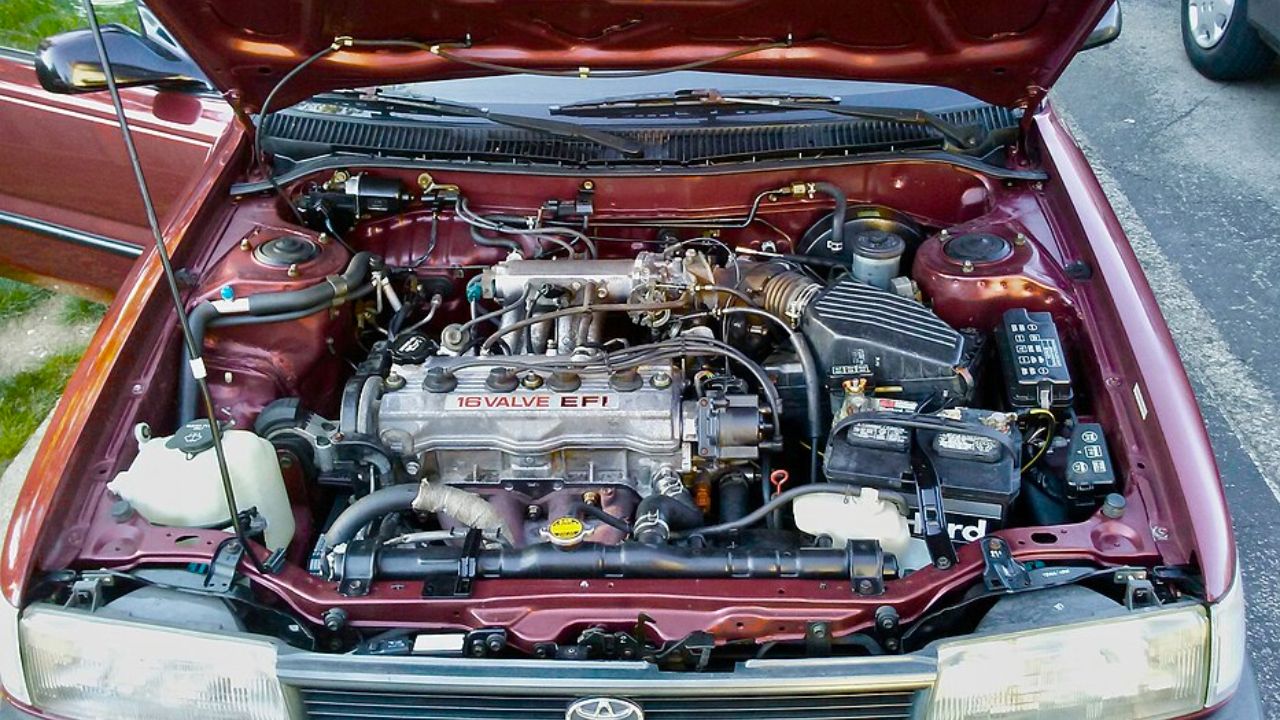
Engineers developed an innovative transmission arrangement known as the Unitized Power Package, which used a heavy-duty chain drive to transfer power from the longitudinally mounted engine to the transmission. This allowed the Toronado to retain a conventional V8 layout while delivering power to the front wheels.
The system demonstrated that front-wheel drive could work in a powerful, full-size American automobile.
It challenged long-standing engineering assumptions.
The Layout Improved Space and Comfort
Choosing front-wheel drive brought packaging advantages beyond simple novelty. Without the need for a driveshaft running to a rear differential, engineers were able to create a flatter floor inside the cabin, improving passenger comfort and increasing usable interior space.
The absence of a large transmission tunnel also made the front seating area feel more open, complementing the Toronado’s luxurious character. Meanwhile, the car’s long hood and clean body lines remained largely unchanged, allowing Oldsmobile to preserve the proportions buyers expected from a premium American coupe.
The engineering changes were largely invisible, yet they significantly improved everyday usability.
Innovation was carefully blended with familiar styling.
Performance and Refinement Went Together
Although luxury was a major priority, the Toronado also delivered impressive performance. Its large-displacement V8 provided strong acceleration, while the front-wheel-drive layout offered confident traction on wet and slippery roads compared with many rear-wheel-drive competitors.
The advanced suspension and carefully engineered chassis gave the Toronado stable, predictable handling for a vehicle of its size. Engineers worked extensively to minimize torque steer and ensure the unconventional drivetrain operated smoothly under a wide range of driving conditions.
Rather than pursuing radical sports car performance, Oldsmobile focused on combining innovation with the comfort and refinement expected of a premium personal luxury coupe.
The result was unlike anything else in American showrooms.
A Bold Idea That Influenced Future Designs
The success of the Toronado proved that front-wheel drive could be practical in large, powerful automobiles. Its engineering directly influenced later General Motors models, including the Cadillac Eldorado, and helped encourage broader acceptance of front-wheel-drive technology across the industry.
Today, the 1966 Toronado is admired not only for its distinctive styling but also for its groundbreaking engineering. Collectors appreciate it as one of the most technically ambitious American cars of its era, representing a time when manufacturers were willing to experiment with bold new ideas.
Looking back, the 1966 Oldsmobile Toronado took a different engineering path because Oldsmobile chose innovation over convention. By successfully combining a powerful V8 with an advanced front-wheel-drive system, it demonstrated that thoughtful engineering could redefine what an American luxury car was capable of achieving.
More from Fast Lane Only
- Unboxing the WWII Jeep in a Crate
- 15 rare Chevys collectors are quietly buying
- 10 underrated V8s still worth hunting down
- Police notice this before you even roll window down
*Research for this article included AI assistance, with all final content reviewed by human editors