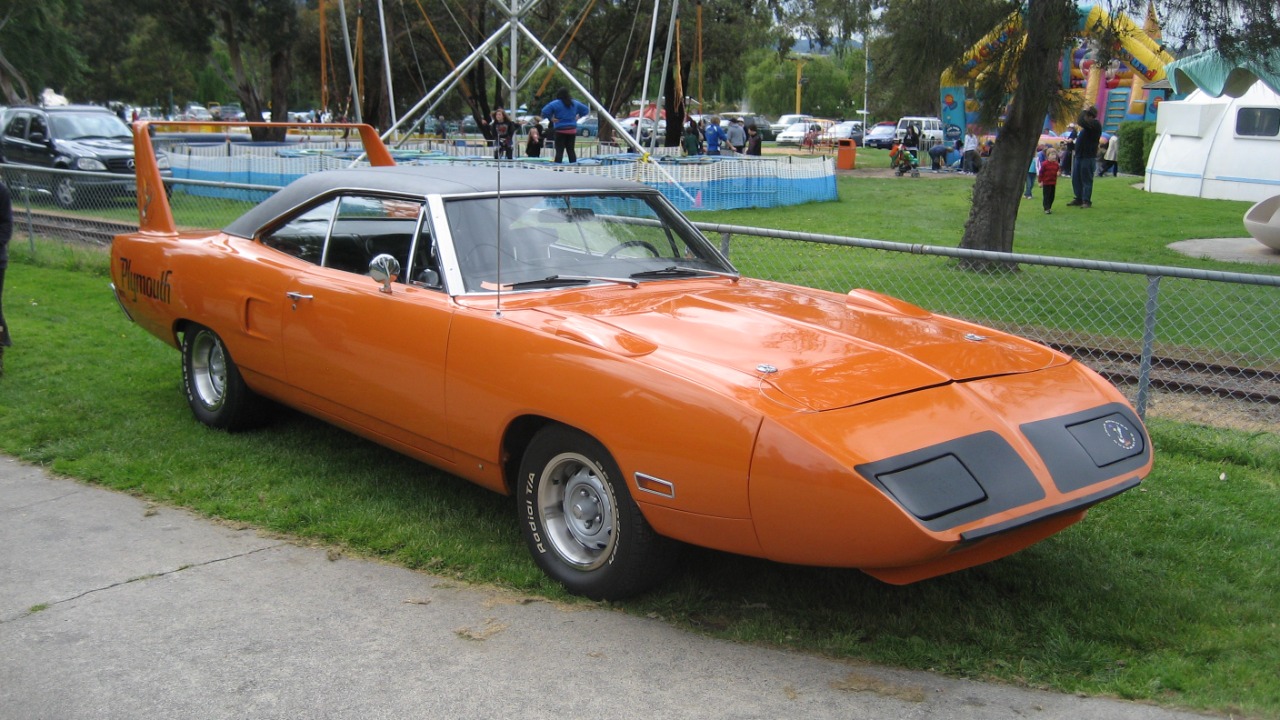
The 1970 Plymouth Superbird stands as a testament to the audacity and innovation of American muscle car design. With its radical aesthetics and high-performance capabilities, it dominated the NASCAR circuit and captured the hearts of car enthusiasts worldwide.
Background of the Plymouth Superbird
The Plymouth brand has a storied history that intertwines with the rise of American muscle cars during the 1960s and 1970s. Originally launched in 1928, Plymouth gained recognition for delivering affordable yet powerful vehicles. By the late 1960s, the muscle car craze was in full swing, and Plymouth sought to make its mark with models like the Plymouth Road Runner. This car, introduced in 1968, was designed as a no-frills performance vehicle, featuring a powerful engine at a competitive price. It quickly became a favorite among speed enthusiasts.
As NASCAR regulations evolved, manufacturers were encouraged to produce cars that were not only fast but also aerodynamically efficient. In response to these changes, the Superbird was developed as a modified version of the Road Runner. The Superbird’s design was a direct attempt to comply with the NASCAR rule requiring a certain number of street versions of the car for it to qualify for racing. This led to a limited production run of just 1,920 units, making it a rare find today.
Design and Aesthetics
The Superbird is instantly recognizable thanks to its unique aerodynamic shape, which was meticulously designed to enhance performance. The elongated nose and sloped windshield were not just for show; they helped reduce drag and improve speed on the racetrack. The most striking feature, however, is undoubtedly the massive rear wing, which was engineered to provide downforce at high speeds. This wing was not only functional but also made a bold statement about the car’s racing pedigree.
Color options for the Superbird were vibrant and culturally significant during the 1970s. The model was offered in eye-catching hues like “Plum Crazy” and “Moulin Rouge,” which appealed to the sensibilities of the era. These colors were emblematic of the free-spirited attitude of the time, aligning perfectly with the Superbird’s flamboyant design. The striking aesthetics of the car contributed to its cult status, making it a symbol of the muscle car era.
Engineering Marvels
Under the hood, the 1970 Plymouth Superbird boasted powerful engine options that cemented its reputation on the racetrack. The highlight was the legendary 426 HEMI V8 engine, which produced a staggering 425 horsepower and allowed the car to reach impressive speeds. The Superbird also offered a less potent version with the 440 cubic inch V8 engine, which provided a solid performance for those who sought a balance between power and drivability.
The engineering behind the Superbird extended beyond its engine. The car featured innovative suspension and braking systems designed for speed and stability, which were critical for high-speed racing. The suspension allowed for better handling, especially on the oval tracks where the Superbird would compete. Additionally, the use of lightweight materials in its construction helped enhance its overall performance, making it one of the most formidable cars of its time.
NASCAR Legacy
The Superbird made a significant impact during the 1970 NASCAR season. Driven by notable racers such as Richard Petty, the car quickly became a dominant force on the circuit. Petty secured multiple victories with the Superbird, solidifying its reputation as a racing legend. The car’s success led to a renewed interest in Plymouth as a serious contender in the world of NASCAR.
However, the Superbird’s dominance came with consequences. Its aerodynamic design and performance advantages prompted NASCAR to implement regulations that effectively banned aero cars from competitive racing. This decision marked a turning point in the sport, as it led to the decline of vehicles like the Superbird in favor of more standardized racing models. Despite this, the Superbird’s legacy in NASCAR remains influential, having changed the landscape of stock car racing forever.
Market Reception and Sales Figures
Upon its release in 1970, the Plymouth Superbird received a mixed reception from the public. While many car enthusiasts celebrated its bold design and performance capabilities, others were put off by its unconventional appearance. As a result, sales figures were lower than expected, with only 1,920 units produced. This rarity has contributed to its status as a collector’s item, with prices for well-preserved models skyrocketing in recent years.
Over the years, the Superbird has developed a niche market among collectors and enthusiasts. Its unique history, combined with its limited production, makes it a sought-after vehicle for those passionate about American muscle cars. When compared to other muscle cars of the era, such as the Chevrolet Camaro or Ford Mustang, the Superbird stands out not only for its performance but also for its distinctive style and engineering.
Technological Innovations
The 1970 Plymouth Superbird introduced several advancements in automotive technology that were ahead of its time. One of the key innovations was the use of wind tunnel testing during the design process, which helped optimize its aerodynamic profile. This focus on aerodynamics was groundbreaking and paved the way for future muscle cars that prioritized speed and efficiency.
Furthermore, the Superbird showcased advancements in engineering that would influence the design of modern performance vehicles. The integration of advanced suspension systems and braking technology not only improved the Superbird’s performance but also set a new standard for safety and handling in high-speed cars. These innovations have had a lasting impact on the automotive industry, as manufacturers continue to seek ways to improve performance through technology.
Pop Culture Impact
The Superbird’s influence extends beyond the racetrack and into popular culture. It has made memorable appearances in movies and television shows, often symbolizing the raw power and freedom associated with the muscle car era. Films like “The Fast and the Furious” series have featured variations of the Superbird, capturing the imagination of new generations of car enthusiasts.
Moreover, the Superbird has become a symbol of American automotive culture, representing the rebellious spirit of the 1970s. Its unique design and racing history have inspired a vibrant custom car culture, with enthusiasts modifying and restoring Superbirds to their former glory. Events celebrating American muscle cars often feature the Superbird prominently, reflecting its lasting legacy in the car community.
Collectibility and Value
The 1970 Plymouth Superbird’s value has seen a remarkable increase in recent years, driven by its rarity and historical significance. Factors influencing its value include its condition, originality, and the presence of rare options such as the HEMI engine. Well-preserved Superbirds have commanded impressive prices at auctions, with some fetching over $1 million. This trend highlights the car’s desirability among collectors, who view it as an investment as much as a piece of automotive history.
Notable auctions have showcased the Superbird’s appeal, with record sales occurring as enthusiasts compete to own a piece of this iconic vehicle. Restoration and preservation also play a critical role in maintaining the Superbird’s legacy. Many owners take great care to restore these cars to their original specifications, ensuring that future generations can appreciate their unique history and engineering.
Legacy and Influence on Modern Performance Cars
The legacy of the 1970 Plymouth Superbird continues to shape the design philosophy of modern muscle cars. Its emphasis on aerodynamics and performance has inspired contemporary manufacturers to push the boundaries of automotive engineering. The principles established with the Superbird can be seen in modern high-performance vehicles, such as the Dodge Charger and Ford Mustang, which blend power and style in ways that pay homage to their predecessors.
As car enthusiasts celebrate the Superbird’s history, events and gatherings dedicated to the model keep its spirit alive. Car shows and rallies often spotlight the Superbird, attracting enthusiasts eager to share their passion for this legendary vehicle. The ongoing enthusiasm for the Superbird serves as a reminder of its impact not just on racing, but on the entire automotive landscape.
More from Fast Lane Only