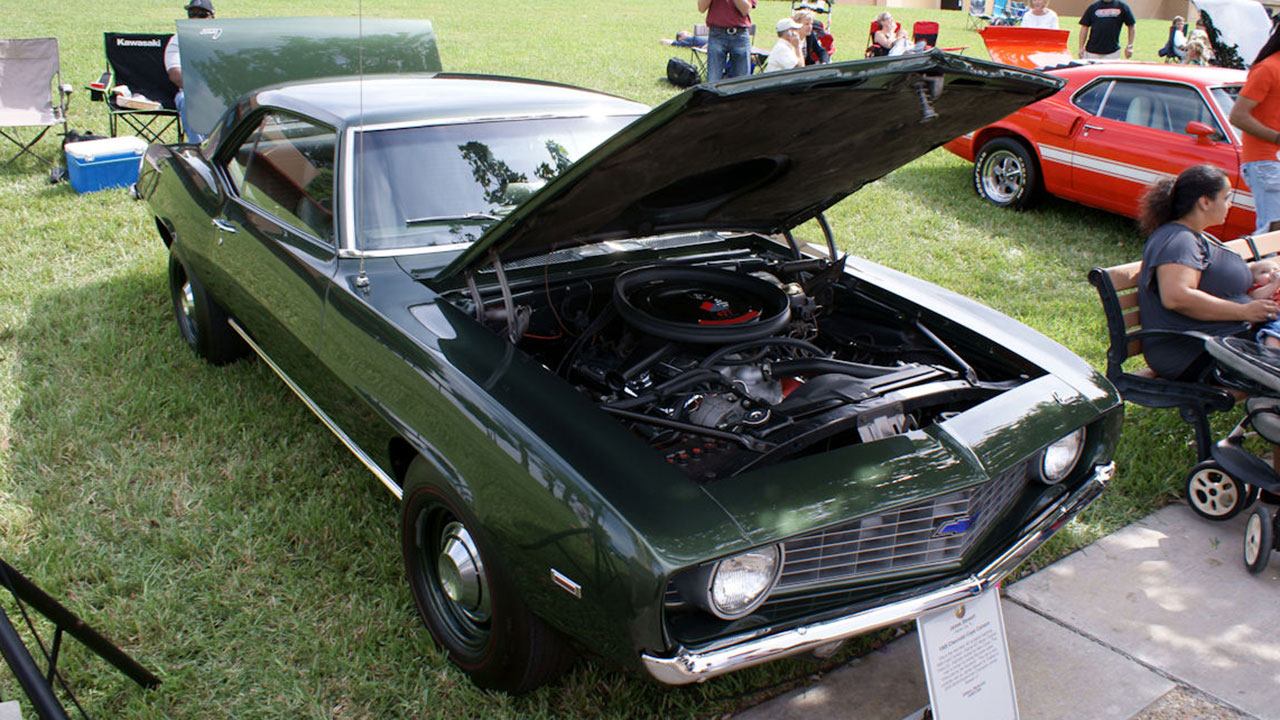
The 1969 Chevrolet COPO Camaro is a legendary vehicle that was never meant to hit the streets. Born out of a combination of corporate strategy and customer demand, this muscle car’s existence is a fascinating tale of ambition, regulation, and rebellion. Its story reflects broader trends in the American automotive industry during the late 1960s, highlighting the interplay between corporate decision-making and consumer desires.
Historical Context of the COPO Camaro
The muscle car era of the late 1960s is often celebrated as a golden age of American automotive culture. This vibrant period saw an explosion of power-centric vehicles that appealed to a generation eager for speed and performance. Car manufacturers, including Ford, Chrysler, and Chevrolet, were locked in fierce competition to capture the hearts and wallets of young consumers. The Chevrolet Camaro, introduced in 1967 as a response to the Ford Mustang, quickly became a key player in this growing segment.
In the competitive landscape of American automotive manufacturers, Chevrolet found itself needing a powerful performance vehicle to keep pace with rivals. The company’s existing offerings, like the Chevelle and the Corvette, were already well-regarded, but there was a burgeoning demand for a high-performance variant of the Camaro. This need was further exacerbated by the rising popularity of drag racing and street racing, creating an environment ripe for innovation and risk-taking within the industry.
The COPO Program Explained
COPO, or Central Office Production Order, was a system within General Motors designed primarily for fleet buyers and dealerships. It allowed for the customization of vehicles according to specific customer requirements. The program was not originally intended for performance enthusiasts but rather for fulfilling unique requests from dealers who needed specialized vehicles for their customers.
What made COPO orders unique was their ability to bypass certain production limitations. Dealers could request specific combinations of engines and features that were not typically available on standard production models. This flexibility was crucial during an era when consumers were becoming increasingly vocal about their performance preferences. It set the stage for the creation of the COPO Camaro, as dealers began to demand high-performance options to meet the expectations of muscle car enthusiasts.
Birth of the COPO Camaro
The birth of the COPO Camaro was largely driven by dealer demand for high-performance vehicles. Key figures within Chevrolet, including engineers and performance-oriented dealers, recognized the potential market for a variant of the Camaro that could compete with the likes of the Ford Mustang and the Pontiac GTO. The pivotal moment came when Chevrolet made the bold decision to offer a 427 cubic inch engine in the Camaro, a move that would significantly elevate its performance capabilities.
One of the most significant contributors to this decision was the response from dealers who were eager to tap into the growing muscle car market. They lobbied for more powerful engines, resulting in the introduction of the COPO 9560 and 9561 packages. These packages not only included the powerful 427 engine but also featured lightweight components and performance enhancements that set the COPO Camaro apart from its standard counterparts.
Regulatory Challenges and Loopholes
The late 1960s were marked by stringent automotive regulations, particularly concerning emissions and safety standards. These regulations posed significant challenges for manufacturers like Chevrolet, which sought to push the boundaries of performance. However, Chevrolet’s engineers were adept at navigating these legalities, allowing the COPO Camaro to be produced while still adhering to the existing regulations.
The National Hot Rod Association (NHRA) played a pivotal role in shaping the specifications of the COPO Camaro, providing guidelines that defined acceptable performance modifications. Chevrolet worked closely with the NHRA to ensure that the COPO Camaro met the necessary criteria for competitive racing while still delivering the high performance that enthusiasts craved. This collaboration allowed Chevrolet to exploit loopholes in the regulations, ultimately facilitating the production of a car that, by all accounts, should not have existed in the form that it did.
Performance and Specifications
The COPO Camaro was equipped with a range of engine options, most notably the monstrous 427 cubic inch V8 engine that became its trademark. This engine was capable of producing an astonishing 425 horsepower and 460 lb-ft of torque, allowing the COPO Camaro to accelerate from 0 to 60 mph in a matter of seconds. The car’s performance metrics were formidable, setting it apart from standard Camaro models and making it a formidable contender in both street and drag racing.
When compared to its competitors of the time, such as the Ford Mustang and the Pontiac GTO, the COPO Camaro held its ground and often outperformed them in terms of acceleration and top speed. The unique combination of engineering and dealer-driven customization made it a standout in the muscle car arena. Enthusiasts and racers alike were drawn to its raw power and aggressive styling, cementing its status as a legend within the automotive community.
Reception and Impact
The initial reception of the COPO Camaro was a mix of excitement and skepticism. Automotive journalists and enthusiasts alike were intrigued by the prospect of a factory-built muscle car with such high performance. Media coverage highlighted its impressive specifications and the unique circumstances surrounding its creation, leading to a surge in interest among consumers. Many saw it as the pinnacle of Chevrolet’s engineering prowess during the muscle car era.
As the COPO Camaro began to make its mark on the streets and racetracks, it quickly influenced the muscle car segment. Its success reinforced Chevrolet’s position as a leader in performance vehicles, helping to shape the brand’s reputation for producing powerful cars. Anecdotes from drivers and racers who experienced the COPO firsthand often recount thrilling tales of its capabilities, further embedding its legacy in the annals of automotive history. The COPO Camaro became a symbol of rebellion against the constraints of traditional manufacturing, showcasing how consumer demand could reshape corporate strategy.
Legacy of the COPO Camaro
The cultural significance of the COPO Camaro in automotive history cannot be overstated. It represents a pivotal moment when manufacturers began to recognize the value of performance and customization in appealing to consumers. The introduction of the COPO Camaro set a precedent for future muscle cars and influenced the standards of performance in subsequent generations of vehicles.
Following the COPO’s introduction, muscle car production saw changes in both manufacturing processes and performance expectations. The desire for high-performance vehicles led to further innovations in engine technology and design. Today, the COPO Camaro remains highly sought after in the collector market, with its rarity and storied history driving up values at auctions. Recent sales have seen COPO Camaros fetching record prices, underscoring their enduring appeal and significance in the automotive world, as seen in [this article](https://www.autoevolution.com/news/1969-chevrolet-camaro-sells-for-record-143m-becomes-the-most-expensive-zl1-one-ever-270099.html).
Modern Collectibility and Value
As the years have passed, the 1969 Chevrolet COPO Camaro has become a highly collectible item among automotive enthusiasts and collectors alike. Recent auctions have highlighted the car’s increasing value, with some models selling for staggering amounts. The rarity of the COPO Camaro, combined with its status as a symbol of an era defined by performance, has made it a coveted piece of automotive history.
Factors contributing to the car’s high value include its unique specifications, historical significance, and the nostalgia associated with the muscle car era. Collectors are keenly aware of the COPO Camaro’s role in shaping the landscape of American performance vehicles, and this has fueled interest in acquiring these models. The legacy of the COPO has also influenced modern Chevrolet performance vehicles, with the company continuing to produce high-performance variants that pay homage to its storied past.
The 1969 Chevrolet COPO Camaro stands as an unintended icon of performance and rebellion in the automotive world. Its existence has broader implications for the industry, showcasing how consumer demand can lead to unexpected innovations. The fascination with this car, a vehicle that was never meant to be, endures, and it continues to capture the imaginations of enthusiasts around the globe.
More from Fast Lane Only