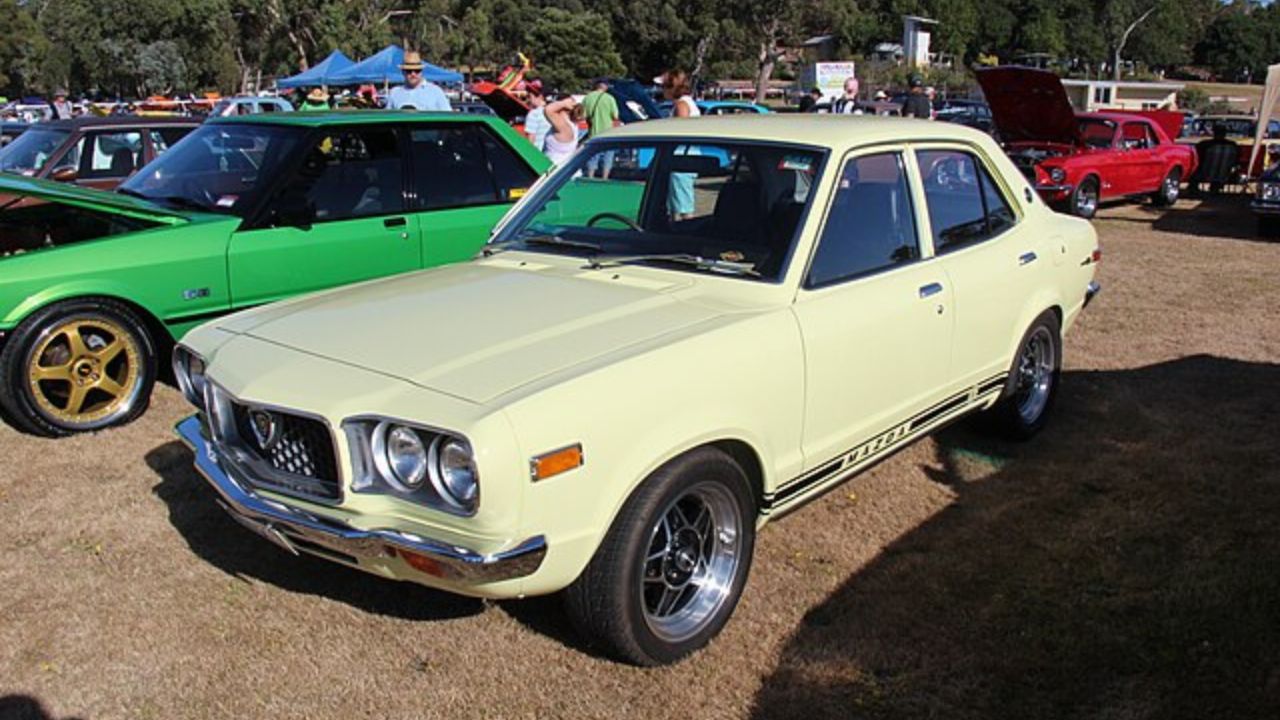
In the early 1970s, performance cars were at a crossroads. Rising fuel prices and tightening emissions standards were beginning to reshape the automotive landscape, yet enthusiasts still wanted cars that were fun to drive. While many manufacturers relied on larger engines to deliver excitement, Mazda took a dramatically different approach.
The 1972 Mazda RX-3 introduced American buyers to the unique world of rotary-powered performance. Lightweight, agile, and unlike anything else on the road, it proved that driving enjoyment didn’t have to come from a big V8. Instead, it came from an engine that loved to rev and a chassis that rewarded every twist of the steering wheel.
For many drivers, the RX-3 was their first taste of rotary power—and they never forgot it.
A New Kind of Sports Car
The RX-3 was based on Mazda’s compact Grand Familia platform, but it was far more than an economy car with a sporty badge. Available as a coupe, sedan, and wagon in many markets, the RX-3 combined everyday practicality with genuine performance credentials.
Its clean styling featured a long hood, short rear deck, and crisp body lines that reflected the simple, purposeful design trends of the era. It looked sporty without relying on oversized spoilers or flashy graphics.
Most importantly, it was light. That low curb weight became one of the RX-3’s greatest strengths.
The Rotary Engine Takes Center Stage
The heart of the RX-3 was Mazda’s innovative twin-rotor engine.
Instead of using conventional pistons, the rotary engine generated power with spinning triangular rotors inside an oval-shaped housing. The design was compact, smooth, and capable of producing impressive power for its size.
The 1972 RX-3 was powered by Mazda’s 10A rotary engine, a 982cc twin-rotor that delivered lively acceleration and a distinctive exhaust note unlike any piston engine.
Drivers quickly discovered that the rotary rewarded high engine speeds. While it produced modest low-end torque, it came alive as the revs climbed, creating a driving experience that felt eager and energetic.
Small Car, Big Personality
The RX-3 wasn’t built to dominate with brute force. Instead, it excelled through balance and responsiveness.
Its lightweight construction, rear-wheel-drive layout, and well-tuned suspension made it enjoyable on winding roads, while the compact dimensions gave drivers confidence in tight corners.
The precise steering and willing engine created a level of driver engagement that rivaled many more expensive sports cars.
For enthusiasts, the RX-3 delivered smiles that far outweighed its modest size.
Winning on the Track
The RX-3’s reputation grew quickly thanks to its success in motorsports.
Around the world, rotary-powered Mazdas earned victories in touring car racing, proving the engine’s durability and competitive potential. The RX-3 became especially popular among racers who appreciated its combination of light weight, reliability, and high-revving performance.
Those achievements helped strengthen Mazda’s image as an innovative company willing to challenge established performance brands.
The lessons learned on the racetrack also enhanced the RX-3’s appeal in the showroom.
A Cult Classic Is Born
Although the RX-3 never matched the sales numbers of larger Japanese compacts, it developed a passionate following that continues today.
Many cars were modified for racing or spirited street driving, making original examples increasingly difficult to find. As a result, well-preserved RX-3s have become highly sought after by collectors, particularly those retaining their original rotary engines and factory equipment.
Its rarity, motorsport heritage, and distinctive engineering have only increased its desirability over the years.
The Legacy Lives On
The 1972 Mazda RX-3 helped establish Mazda as the world’s leading champion of rotary-engine technology. It introduced countless buyers to a completely different way of thinking about performance, showing that lightweight engineering and innovative design could be just as exciting as raw displacement.
Today, the RX-3 remains one of the defining rotary-powered classics. Its influence can be seen in the generations of RX models that followed, and its reputation continues to grow among enthusiasts who appreciate cars that dare to be different.
More from Fast Lane Only