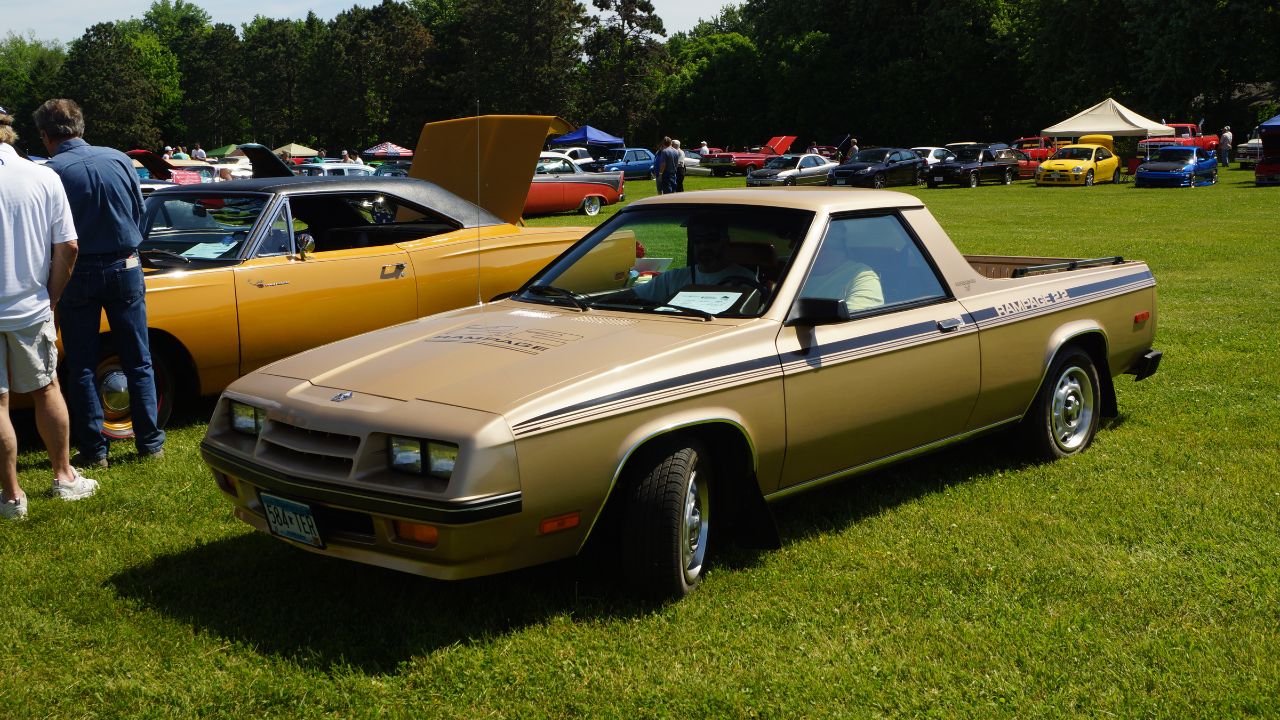
By the early 1980s, compact pickup trucks were becoming increasingly popular. Buyers wanted practical vehicles that were easier to park, more fuel-efficient, and less expensive to own than full-size trucks. Most automakers answered the call with traditional body-on-frame pickups that prioritized hauling over comfort.
Dodge took a different path.
Instead of building another conventional compact truck, it created the Rampage—a front-wheel-drive coupe utility that borrowed much of its engineering from the Dodge Omni. The result was a vehicle that blended the driving manners of a compact car with the utility of a pickup, offering something unlike anything else on American roads.
The 1984 Dodge Rampage wasn’t built to replace a hardworking farm truck. It was designed for people who needed everyday practicality without sacrificing fuel economy or drivability.
A New Spin on the Pickup Formula
The Rampage made its debut for the 1982 model year, but by 1984 it had settled into its role as one of Dodge’s most distinctive offerings.
Built on Chrysler’s L-body platform, the Rampage featured unibody construction rather than the body-on-frame design found in most pickups. Its front-wheel-drive layout improved traction in poor weather and created a lower cargo floor, making it easier to load bulky items.
The compact bed wasn’t intended for heavy construction work, but it handled everything from gardening supplies and bicycles to furniture and weekend project materials with ease.
For many suburban and urban buyers, that was more than enough capability.
Small Engine, Big Practicality
Power came from Chrysler’s dependable 2.2-liter inline-four engine, producing enough horsepower to move the lightweight Rampage confidently through city streets and onto the highway.
While it wasn’t quick by performance standards, the Rampage focused on efficiency rather than speed. Buyers could choose between a manual or automatic transmission, and fuel economy was one of its biggest selling points during a decade when gasoline prices remained an important concern.
Its car-based suspension also delivered a smoother, quieter ride than many compact trucks of the era, making daily commuting far more enjoyable.
More Comfortable Than the Average Pickup
Step inside the Rampage, and it felt much more like a compact hatchback than a work truck.
The cabin offered supportive seats, straightforward controls, and good outward visibility. Air conditioning, an upgraded sound system, and other comfort features were available, giving buyers amenities that many entry-level pickups lacked.
Because it shared components with Chrysler’s passenger cars, replacement parts were also relatively easy to find and maintain.
The Rampage proved that utility didn’t have to come with a rough ride or a stripped-down interior.
A Niche That Was Ahead of Its Time
Despite its clever design, the Rampage struggled to find a large audience.
Traditional truck buyers often preferred rear-wheel drive and higher towing capacities, while many car buyers weren’t convinced they needed an open cargo bed. The Rampage occupied a narrow space between two markets, making it difficult to define.
Production ended after the 1984 model year, giving the Rampage a relatively short lifespan. Yet its concept never truly disappeared.
Decades later, car-based utility vehicles like the Ford Maverick and Hyundai Santa Cruz would embrace many of the same ideas—combining passenger-car comfort with practical cargo space for everyday life.
More Than an Automotive Curiosity
Today, the Dodge Rampage has developed a loyal following among collectors who appreciate unusual vehicles that challenged convention.
Its limited production, distinctive styling, and practical design make it a standout at classic car shows, where it often draws curious onlookers who have never seen one in person.
Well-preserved examples have become increasingly difficult to find, adding to the Rampage’s appeal among enthusiasts who enjoy owning something different from the usual classic truck.
A Legacy of Practical Innovation
The 1984 Dodge Rampage didn’t set sales records, nor did it redefine the pickup market overnight. What it did accomplish was proving there was room to rethink what a truck could be.
By blending the comfort of a compact car with the usefulness of a pickup bed, Dodge created a vehicle that anticipated modern lifestyle trucks by decades. The Rampage may have arrived before buyers were ready for it, but its creative approach continues to earn admiration from collectors and automotive historians alike.
More from Fast Lane Only