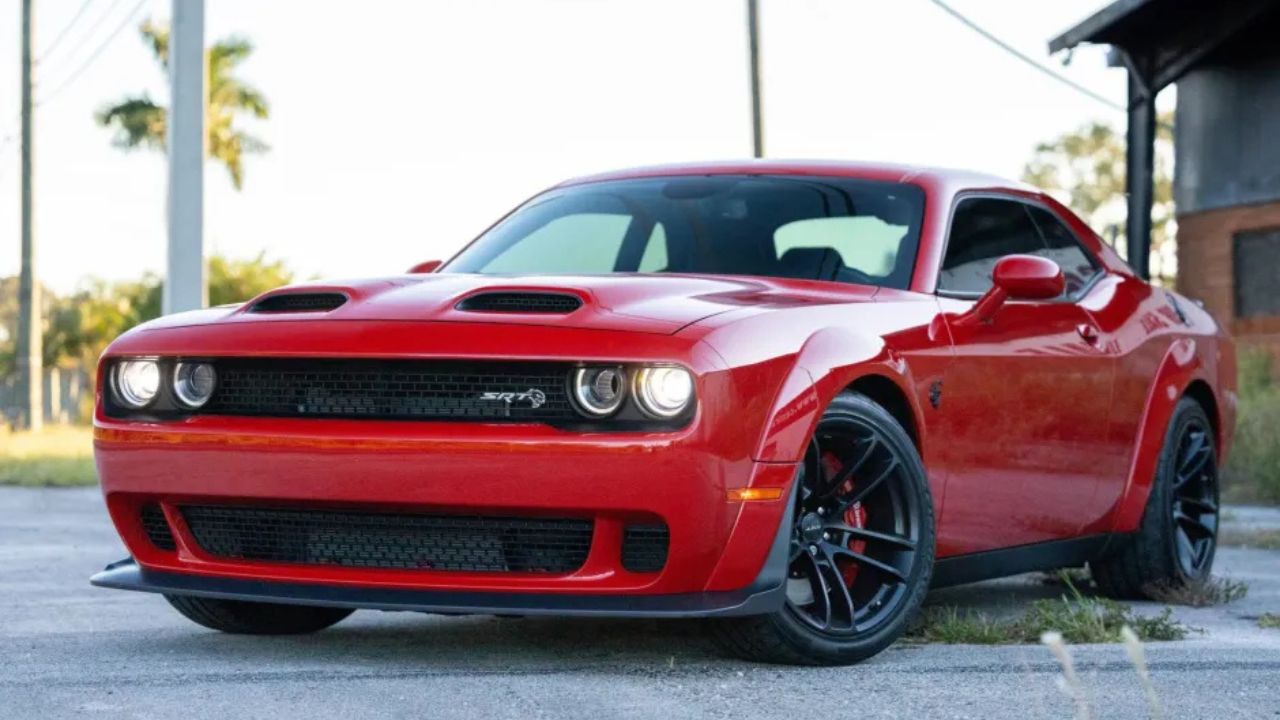
Dodge has built its modern identity around loud, unapologetic performance, and a single badge has come to symbolize that attitude more than any other. The snarling, horned face that marks Hellcat models looks like pure marketing bravado, yet its roots stretch back through decades of shifting names, logos, and corporate strategy. The story behind that emblem traces how Dodge went from a sleepy mainstream brand to a muscle-car cult and then to a company trying to carry that bravado into an electric future.
The journey of this badge mirrors how American carmakers have used symbols to sell power, rebellion, and nostalgia. What began as a simple trim label evolved into a visual shorthand for supercharged excess, and that evolution helps explain how Dodge plans to keep its identity alive as engines get quieter and regulations get tighter.
The long road from plain nameplate to Hellcat icon
Dodge did not start with monsters on its fenders. Early performance models relied on straightforward wordmarks like “Super Bee” and “R/T,” paired with simple stripes or block lettering. The brand’s first real experiment with a more aggressive creature identity came with the Viper in the early 1990s, which introduced a stylized snake head that slowly morphed from cartoonish to menacing as the car grew more serious. That shift hinted at a larger realization inside Dodge: in a crowded market, attitude needed a face.
The modern saga begins with the return of the Challenger and Charger as retro-styled muscle cars. At first, the performance hierarchy was familiar, with “R/T” and “SRT” badges differentiating hotter versions. The real break came when engineers bolted a supercharger onto the 6.2‑liter Hemi V8 and created a car that needed a new identity. Internal code names eventually gave way to a public label that sounded more like a comic-book villain than a trim level: Hellcat. The name invited a logo that could match its aggression, and designers responded with the angular, forward-leaning cat’s head that now defines the badge.
That logo did more than decorate the fender. It gave Dodge a mascot that could live on T‑shirts, dealer banners, and social media avatars. The Hellcat head joined a long American tradition in which brands turn animals and characters into shorthand for attitude, much as beer companies have used eagles, mountains, and stylized typography to sell a lifestyle through their distinctive logos. For Dodge, the snarling cat offered a quick visual promise: this car is not subtle, and neither are you.
Over time, the emblem itself evolved. Early versions were small and tucked near the front wheels, almost a secret handshake among enthusiasts. As demand surged and waiting lists grew, Dodge leaned into the symbol, enlarging it, adding red accents for hotter variants, and using it in animations and promotional videos. The badge became a modular language. A standard Hellcat head signaled one level of power, while red eyes and extra details hinted at even more extreme versions that pushed horsepower figures further into supercar territory.
From curiosity to cultural shorthand for excess
The leap from niche performance label to cultural reference point came quickly. When the first supercharged Charger and Challenger models arrived, their output figures instantly placed them among the most powerful mass-produced American cars. That raw number, combined with a price that undercut many European exotics, turned the Hellcat name into a talking point well beyond traditional muscle-car circles. Late-night hosts joked about it, social media feeds filled with burnout clips, and law-enforcement agencies complained about the difficulty of catching drivers who treated public roads like drag strips.
The badge helped crystallize that narrative. It was simple enough to recognize at a glance in grainy video, yet distinctive enough to stand apart from generic performance branding. When enthusiasts posted street-racing clips or dyno runs, the camera often lingered on the cat’s head before the action started. The emblem became a pre-roll for chaos, a visual warning that whatever followed would be loud, smoky, and probably not EPA-approved.
Inside Dodge, the logo’s success validated a broader strategy that treated the brand as the muscle-car division of a larger conglomerate. While corporate parents juggled minivans, compact crossovers, and European city cars, Dodge leaned into a narrow identity built on a few aging platforms and a lot of attitude. The Hellcat badge allowed marketing teams to punch above their weight. One symbol tied together multiple body styles, from sedans to coupes to SUVs, under a single banner of excess.
The emblem also traveled beyond the cars themselves. Aftermarket tuners adopted it as shorthand for their own high-horsepower builds, sometimes applying modified versions of the logo to cars that had never seen a factory supercharger. Toy manufacturers and video-game developers licensed the badge for digital garages and die-cast models, making the cat’s head familiar to teenagers long before they could afford a real one. In that sense, the logo functioned like a sports-team mascot, cultivating fans who might buy merchandise years before they ever visited a showroom.
Why the badge’s backstory matters in a quieter, greener era
The history behind this symbol matters now because the environment that created it is fading. Tightening emissions rules and corporate fuel-economy targets are pushing large-displacement V8s toward retirement. Dodge has already announced and begun executing plans to wind down many of its traditional Hemi-powered models, including some of the configurations that made the Hellcat badge famous. The company is pivoting toward electrified and fully electric performance, which raises a question that goes beyond horsepower numbers: can a logo built on the sound and spectacle of combustion survive in a world of near-silent acceleration?
Branding experts often point to the way strong visual identities can outlast the products that created them. The Hellcat emblem, with its aggressive lines and clear emotional signal, gives Dodge a bridge between eras. Even if future performance flagships rely on electric motors and battery packs, the company can reuse the cat’s head as a promise that the spirit of excess remains, even if the soundtrack changes. That continuity matters for a brand that has spent the last decade telling customers that it stands for “more” in an industry focused on efficiency and restraint.
The badge’s story also highlights a broader shift in how automakers think about heritage. Instead of relying solely on model names and numeric designations, companies are investing in mascots and sub-brand logos that can migrate across platforms. Just as luxury makers have spun performance divisions into standalone identities, Dodge can treat the Hellcat emblem as a portable performance stamp, ready to appear on future coupes, crossovers, or even electric pickups if the business case supports it.
At the same time, the badge carries baggage. Regulators and safety advocates have criticized cars that prioritize speed over restraint, and some high-profile crashes involving powerful muscle cars have put the spotlight on whether automakers glamorize reckless behavior. The Hellcat name and its visual identity sit at the center of that debate. As Dodge moves into an era where software can govern power delivery more precisely, the company may need to balance the badge’s outlaw image with messaging about control, driver aids, and track-focused performance instead of street theatrics.
How Dodge is positioning the emblem for its next act
Looking ahead, the unusual path that turned a trim label into a cultural symbol gives Dodge a playbook for the electric age. The brand has already begun experimenting with new performance sub-labels and concept vehicles that hint at battery-powered successors to its V8 icons. In that context, the Hellcat badge can serve as a benchmark, a reminder of what made Dodge relevant when the rest of the industry chased crossovers and small-displacement turbos.
Several strategies are likely to shape the badge’s future. One is selective deployment. Rather than plastering the emblem across every quick model, Dodge can reserve it for halo vehicles that push the limits of whatever technology is current, whether that means extreme-range electric sedans or hybrid SUVs tuned for drag-strip sprints. That scarcity would preserve the logo’s mystique and keep it from turning into generic performance wallpaper.
More from Fast Lane Only
- Unboxing the WWII Jeep in a Crate
- 15 rare Chevys collectors are quietly buying
- 10 underrated V8s still worth hunting down
- Police notice this before you even roll window down
*Research for this article included AI assistance, with all final content reviewed by human editors