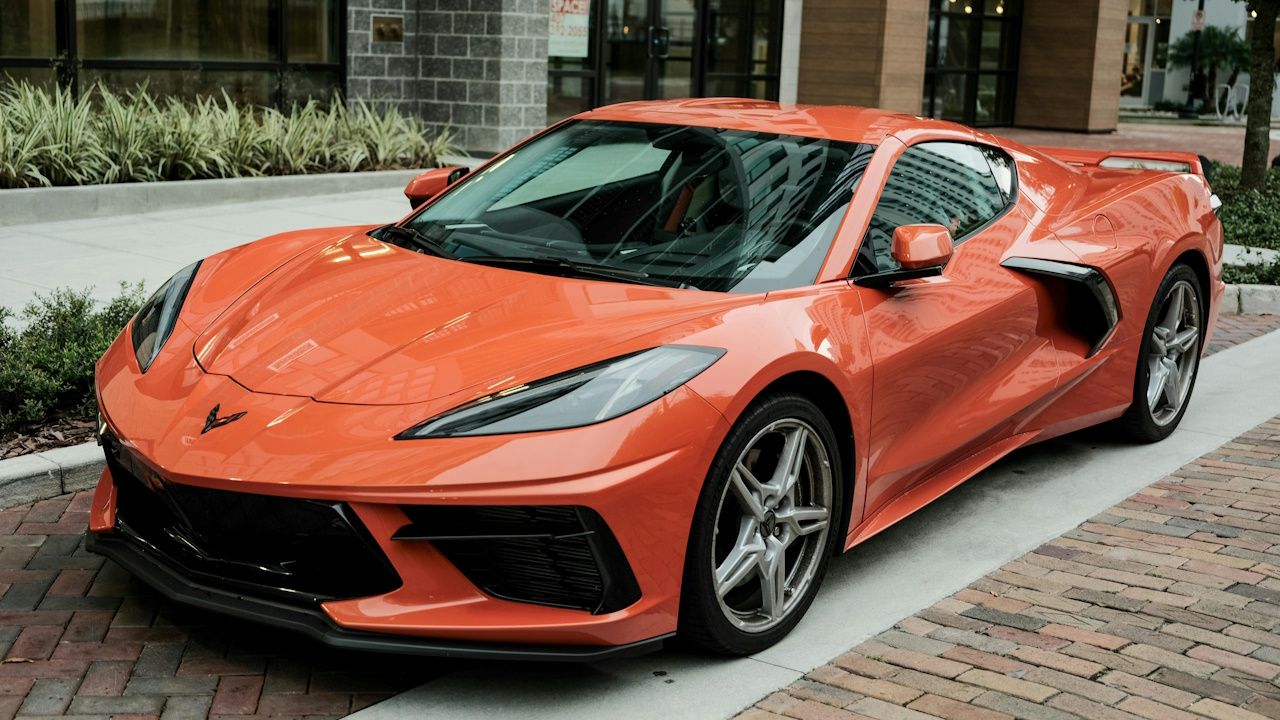
The 2020 Chevrolet Corvette marked one of the biggest turning points in the history of America’s iconic sports car. For the first time since the Corvette’s debut in 1953, its V8 engine moved from the front of the car to a position behind the driver. While this radical change transformed the Corvette’s engineering, Chevrolet worked carefully to preserve the qualities that had made the nameplate successful for nearly seven decades. The result was a sports car that embraced reinvention without abandoning its heritage.
The Mid-Engine Layout Changed the Formula
For generations, the Corvette had relied on a front-engine, rear-wheel-drive layout that delivered impressive performance and unmistakable character. By the late 2010s, however, Chevrolet engineers recognized that extracting significantly higher levels of performance from the traditional layout was becoming increasingly difficult.
Moving the naturally aspirated 6.2-liter LT2 V8 behind the passenger compartment improved weight distribution, traction, and handling. The new configuration allowed the Corvette to accelerate more effectively while offering greater stability during aggressive cornering.
Although the mechanical layout changed dramatically, Chevrolet retained the Corvette’s hallmark V8 power and rear-wheel-drive character.
The new architecture expanded the car’s performance potential without changing its identity.
Familiar Corvette Character Remained Intact
Despite the engineering revolution underneath the body, Chevrolet intentionally preserved many of the Corvette’s defining traits. The LT2 remained a naturally aspirated pushrod V8, delivering the distinctive sound and linear power delivery that enthusiasts had long associated with the nameplate.
The cockpit remained driver-focused, with controls angled toward the person behind the wheel, while removable roof panels continued to offer an open-air driving experience. Practical touches, including front and rear cargo compartments, ensured the mid-engine Corvette remained surprisingly usable for everyday driving.
Rather than copying European supercars outright, Chevrolet adapted the new layout to fit the Corvette’s long-standing philosophy of combining high performance with everyday practicality.
Its familiar personality eased the transition to an entirely new platform.
Modern Technology Supported the Transformation
The C8 Corvette introduced advanced technology that helped maximize the advantages of its new design. An eight-speed dual-clutch transmission replaced the traditional manual gearbox, providing lightning-fast gear changes while improving acceleration and efficiency.
Electronic performance systems, adaptive suspension, and available magnetic ride control allowed the Corvette to deliver both comfortable highway cruising and exceptional track capability. Engineers also paid close attention to cooling, aerodynamics, and chassis stiffness to ensure the new platform could support future high-performance variants.
These innovations demonstrated that modernization could enhance the Corvette experience without overshadowing its core mission.
Technology became a tool rather than the defining feature.
Reinvention Secured the Corvette’s Future
The success of the 2020 Corvette proved that even one of America’s most established sports cars could evolve without losing its identity. The C8 attracted longtime Corvette owners while introducing the model to buyers who had previously considered only exotic mid-engine sports cars.
Subsequent high-performance versions further demonstrated the flexibility of the new platform, confirming that the move to a mid-engine layout had created opportunities for continued development. At the same time, the Corvette remained comparatively attainable, preserving another tradition that had defined the model for decades.
Looking back, the 2020 Chevrolet Corvette balanced tradition and reinvention by changing its engineering while preserving its character. Chevrolet embraced a bold new layout, yet retained the V8 performance, everyday usability, and value that had made the Corvette an American icon, proving that evolution does not require abandoning a successful legacy.
More from Fast Lane Only
- Unboxing the WWII Jeep in a Crate
- 15 rare Chevys collectors are quietly buying
- 10 underrated V8s still worth hunting down
- Police notice this before you even roll window down
*Research for this article included AI assistance, with all final content reviewed by human editors