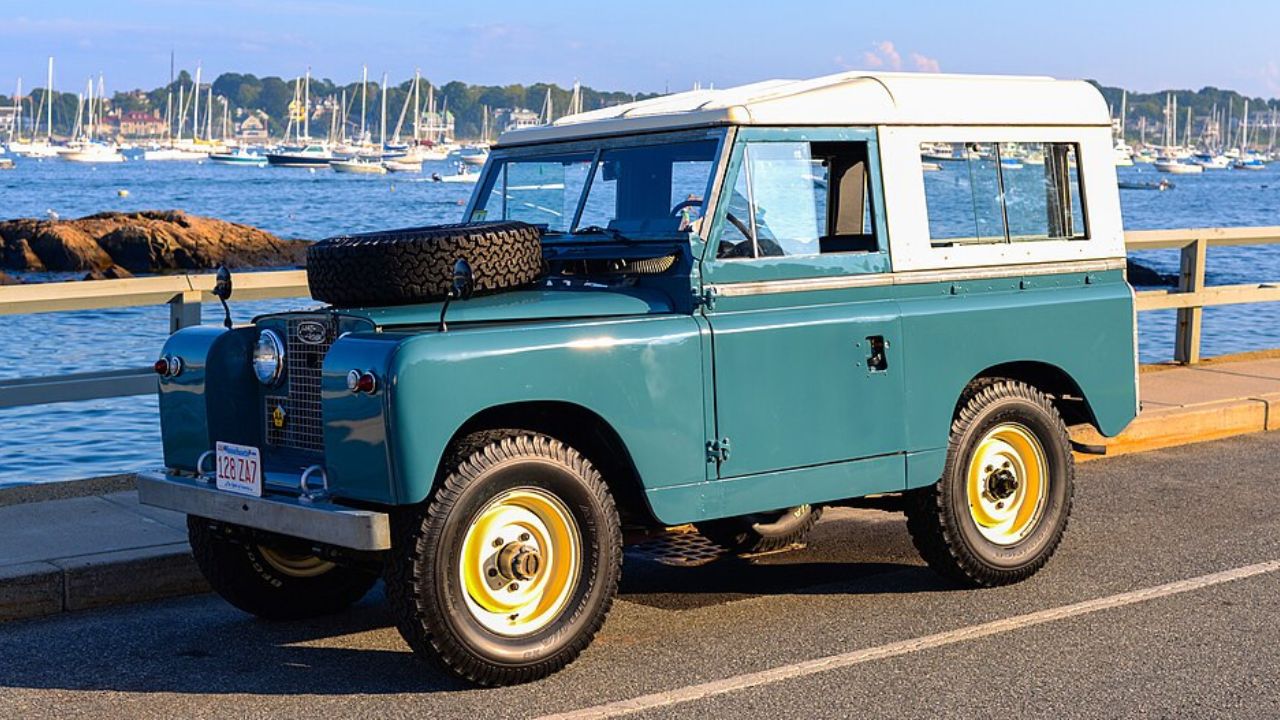
In remote mining camps, highland clinics and bush airstrips, the Land Rover Series II quietly became as fundamental as a generator or a water tank. Long before SUVs turned into lifestyle accessories, this boxy workhorse earned a reputation as the vehicle that arrived where maps ran out and the road was only a suggestion.
Its importance was not just mechanical. By combining simple engineering with surprising versatility, the Series II helped knit together regions that had been effectively cut off, turning distant valleys, farms and villages into places that could be reached, supplied and sometimes even saved.
How the Series II transformed the original Land Rover idea
The first postwar Land Rover was little more than a farm tool on wheels, built from surplus materials and aimed at replacing tractors. The Series II, introduced at the end of the 1950s, took that agricultural concept and refined it into a vehicle that governments, aid agencies and remote communities could rely on as a primary transport link rather than a field implement.
Central to that shift was the chassis and body layout. The Series II kept the ladder-frame construction, live axles and leaf springs that made the original tough, but it improved packaging and ergonomics so that crews could spend long days in the cab without feeling as if they were riding a piece of machinery. A slightly wider track and more sculpted body panels gave better stability on rutted tracks while preserving the short overhangs that let the truck climb out of riverbeds or over rock shelves.
Under the bonnet, the four-cylinder petrol and diesel engines were not powerful by modern standards, yet they were designed for field repair. In mining towns and bush workshops, mechanics could strip and rebuild a Series II engine with basic hand tools and a jack. That mattered more than outright speed. A vehicle that could be coaxed back to life beside a broken bridge was more valuable than one that needed a diagnostic laptop hundreds of kilometres away.
The cabin and body options also expanded the original concept. The Series II was available as a short-wheelbase runabout, a long-wheelbase station wagon and a bare chassis for custom bodies. The same basic platform could therefore become an ambulance, a mobile workshop, a forestry rig or a school bus. In many countries, fleets mixed body styles on a common mechanical base, simplifying parts inventories and training for drivers and mechanics.
Where the first Land Rovers had been tools for landowners, the Series II evolved into a platform for institutions. Government survey teams, rural police units and medical outreach programs adopted it because it could be ordered in bulk, configured for their needs and then kept running in harsh conditions with relatively modest budgets.
Why a mid-century 4×4 still shapes remote mobility
The Series II matters today because its design DNA still defines what people expect from a serious off-road vehicle. In parts of Africa, the lineage that began with the Series II evolved into the Defender, which remains embedded in stories of cross-border trade, conservation work and wartime logistics. One account of the Defender in Africa describes it as a fixture in national parks, rural taxi ranks and military convoys, a role that rests on habits formed when early Series trucks opened tracks that had never seen a motor vehicle.
In remote districts, the Series II and its descendants often became the first reliable bridge between subsistence communities and formal economies. Farmers could move perishable crops to market before they spoiled. Health workers could reach villages during the rainy season, when dirt roads turned to mud and lighter vehicles bogged down. Aid shipments that might have required expensive airlifts could instead travel overland, albeit slowly, in convoys of battered Land Rovers.
The design choices that enabled that impact were not glamorous. The boxy body maximized interior volume for cargo and passengers. Flat glass and simple panels were cheap to replace after rollovers or tree strikes. The mechanical four-wheel-drive system, with selectable low range, gave drivers direct control over traction without relying on electronics that would be difficult to service in the field.
Those priorities stand in stark contrast to modern luxury 4x4s. When the Range Rover arrived in the 1970s, it introduced a more comfortable, carlike experience to the same basic format. Over time, that model evolved into a high-end SUV with complex air suspension and extensive electronics. Enthusiasts who track the Range Rover story often highlight how far the breed has moved from its utilitarian roots. By comparison, the Series II feels almost agricultural, yet that simplicity is exactly what made it so effective in isolated regions.
Even as new vehicles arrive, the legacy of the Series II affects how remote operators think about risk and redundancy. Many organizations still keep an old Land Rover on the fleet because it can be cannibalized for parts to keep another running, or because it can tow, winch or haul in conditions that would overwhelm lighter pickups. In some areas, local workshops have developed informal supply chains for used components, turning scrapyards into lifelines for vehicles that might otherwise be retired.
The Series II also shaped driving culture. In countries where formal driver training was rare outside cities, people often learned on these trucks. Their slow steering, long-throw gearshifts and need for mechanical sympathy taught drivers to read terrain carefully, pick lines through obstacles and manage momentum rather than brute power. That skill set still informs how experienced off-road drivers approach difficult tracks, even in modern vehicles with far more capability on paper.
Where the Series II legacy goes from here
As emissions rules tighten and new vehicles become more complex, the original Series II faces an uncertain future on public roads, especially in richer countries. In many remote regions, however, the calculus is different. Replacing a fleet of aging Land Rovers with new 4x4s involves not only purchase price but also training, tooling and the risk that sophisticated systems will not tolerate dust, heat or poor fuel quality as well as older designs.
Some operators are experimenting with hybrid approaches. A modern pickup might handle routine runs on graded roads, while a refurbished Series II or Defender is reserved for the worst tracks and emergency missions. Specialist workshops now offer ground-up restorations that preserve the ladder frame and mechanical driveline while upgrading brakes, lighting and safety equipment. In a few cases, electrification projects have replaced combustion engines with electric motors and battery packs, turning classic Land Rovers into low-emission workhorses for short-range tasks.
Policy choices will shape how long the Series II remains a common sight in the field. Import restrictions on used vehicles, incentives for cleaner fleets and investment in rural infrastructure can all push operators toward newer models. At the same time, heritage and practical experience carry weight. In conservation areas and on large farms, decision makers who grew up watching Series trucks rescue bogged tractors or ferry injured workers are reluctant to abandon a formula that has proven itself over decades.
The cultural cachet of the old Land Rover also complicates the picture. As collectors in cities pay rising prices for restored Series IIs, there is a risk that surviving examples will be pulled out of working fleets and into private garages. That could leave remote communities dependent on less suitable vehicles. On the other hand, the attention helps keep parts in production and encourages aftermarket suppliers to support the platform, which indirectly benefits those who still use the trucks as intended.
Looking ahead, the most likely outcome is not a clean break but a gradual blending of eras. The qualities that made the Series II indispensable in places most drivers never see, mechanical honesty, adaptability and a focus on function over form, are being reinterpreted in modern designs. Some manufacturers are building simpler, more rugged variants of their 4x4s for fleet buyers. Others are studying how classic Land Rovers handled heat, dust and overloading to inform durability targets for new models aimed at emerging markets.
More from Fast Lane Only
- Unboxing the WWII Jeep in a Crate
- 15 rare Chevys collectors are quietly buying
- 10 underrated V8s still worth hunting down
- Police notice this before you even roll window down
*Research for this article included AI assistance, with all final content reviewed by human editors