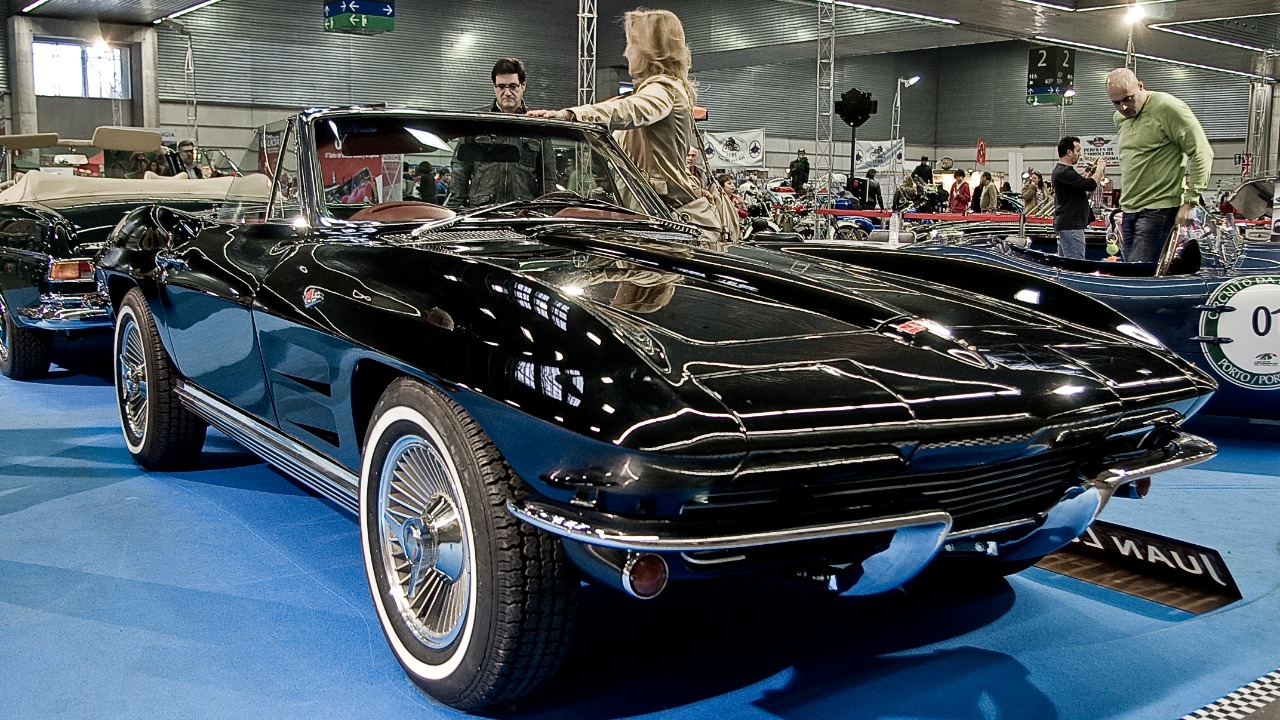
The Chevrolet Corvette began as an ambitious experiment to create an American sports car capable of competing with European icons. Over decades, it evolved from a stylish two-seater into a world-class performance machine. Through innovation, racing success, and continuous engineering improvements, the Corvette proved that America could build a sports car worthy of global respect.
An American Sports Car Was Born
In the early 1950s, European sports cars from manufacturers such as Jaguar, Porsche, and Ferrari were gaining popularity among enthusiasts. These vehicles offered exciting driving experiences, but American automakers had few direct competitors. General Motors recognized an opportunity to create a uniquely American sports car.
The Corvette debuted in 1953 as Chevrolet’s attempt to capture the imagination of performance-minded buyers. Its fiberglass body, compact design, and futuristic styling immediately made it different from traditional American automobiles.
However, the early Corvette was not an instant success. Its six-cylinder engine and automatic transmission lacked the performance expected from a true sports car. Chevrolet knew improvements were necessary if the Corvette was going to compete with European rivals.
The arrival of the small-block V8 in 1955 transformed the Corvette’s identity and gave the car the performance foundation it needed.
Engineering Improvements Created a True Competitor
As the Corvette developed through the years, Chevrolet focused on improving more than just horsepower. Engineers worked on suspension design, chassis strength, braking systems, and overall balance to create a better driving experience.
The introduction of the second-generation Corvette, known as the Sting Ray, brought major improvements. Its independent rear suspension, sharper styling, and improved handling capabilities helped establish the Corvette as a serious sports car.
Unlike earlier American performance vehicles that focused mainly on straight-line speed, the Corvette began emphasizing cornering ability and driver involvement. This shift allowed it to compete more effectively with European sports cars.
Chevrolet continued refining the Corvette by introducing advanced engines, improved aerodynamics, and new technologies that kept the model competitive for changing generations.
Racing Proved Its Performance Credentials
Motorsports played an important role in building the Corvette’s reputation. Racing allowed Chevrolet engineers to test the car under extreme conditions and demonstrate its capabilities against international competitors.
The Corvette achieved success in endurance racing, including major events such as the 24 Hours of Le Mans. These victories helped prove that an American sports car could compete against established European manufacturers.
Racing experience also influenced production models. Lessons learned from competition improved suspension tuning, engine development, braking performance, and overall reliability.
The Corvette became respected not only because of its specifications but because it had proven itself on some of the world’s toughest racetracks.
Modern Corvette Redefined Expectations
By the time later generations arrived, the Corvette had transformed into a sophisticated performance machine capable of challenging much more expensive sports cars. Models such as the ZR-1 and Z06 demonstrated that Chevrolet could deliver advanced engineering and exceptional speed.
The introduction of the mid-engine C8 Corvette represented another major milestone. By changing the traditional front-engine layout, Chevrolet moved the Corvette closer to the design philosophy used by many exotic European sports cars.
Despite its advancements, the Corvette maintained its original mission: delivering world-class performance at a more accessible price.
The Corvette became America’s answer to Europe’s best sports cars because it continuously evolved while staying true to its purpose. It proved that innovation, racing experience, and determination could create a machine capable of competing anywhere in the world.
More from Fast Lane Only
- Unboxing the WWII Jeep in a Crate
- 15 rare Chevys collectors are quietly buying
- 10 underrated V8s still worth hunting down
- Police notice this before you even roll window down
*Research for this article included AI assistance, with all final content reviewed by human editors