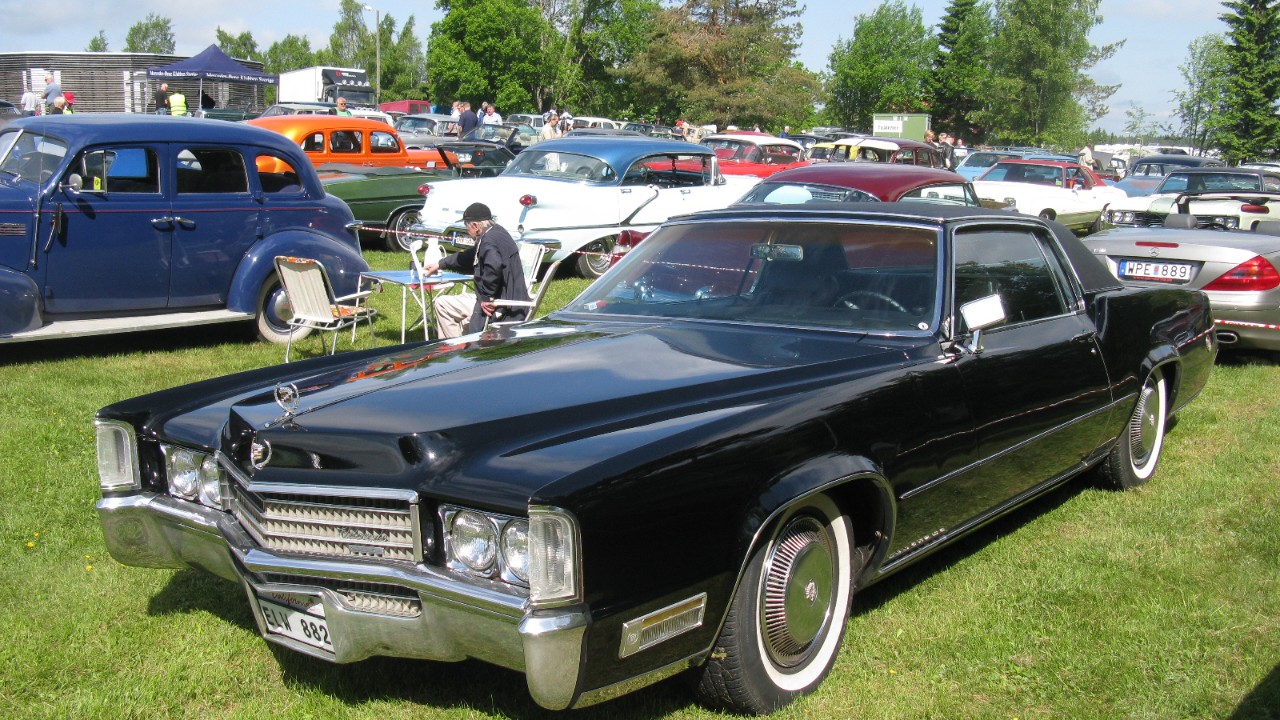
Cadillac sold 17,930 copies of the 1967 Cadillac Eldorado, nearly three times the nameplate’s previous best year. Buyers wanted a big, beautiful two-door with a long hood, a short deck and nothing practical about it. For about three decades, carmakers on both sides of the Atlantic gave them exactly that.
Then the market moved on. Then sedans, crossovers and SUVs took over the showroom, and the true luxury coupe slowly faded. Today, though, a pillarless hardtop with a V8 or V12 and a hand-finished cabin is almost unthinkable as a new car.
These are our picks, 12 luxury coupes that prove they don’t build them like this anymore. The verdict is our opinion, of course. The engines, production figures and prices come from the sources we checked. We start with the 1967 Cadillac Eldorado and finish with a V12 Mercedes that cost a small fortune when new.
1. 1967 Cadillac Eldorado
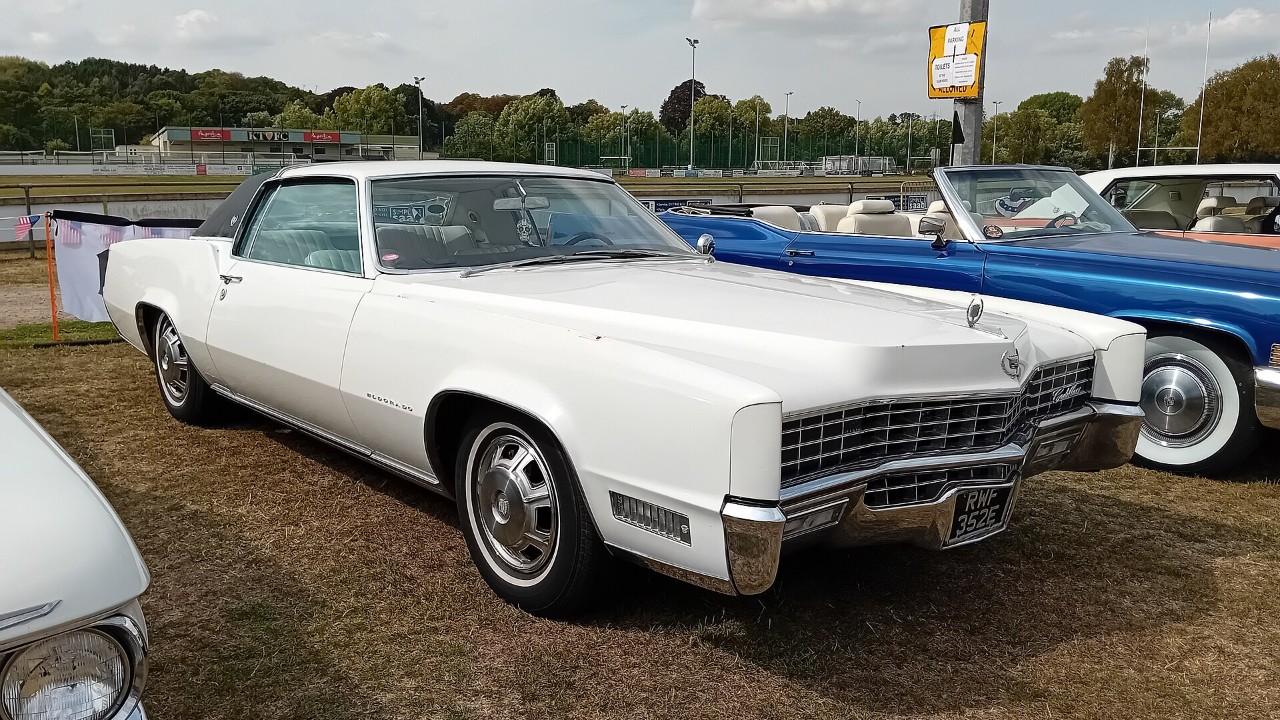
For 1967, Cadillac turned the Eldorado into a front-wheel-drive hardtop coupe. It borrowed the Oldsmobile Toronado’s unified powertrain package, pairing a 429 cubic-inch V8 with a Turbo-Hydramatic 425 automatic. At the time, putting that much engine over the front wheels was a bold move for a luxury brand.
The styling was just as daring. GM design chief Bill Mitchell chose the sharp, angular look. In addition, the 1967 Cadillac Eldorado hid its headlamps behind moveable covers. It was the first and only Cadillac to do that, and only for 1967 and 1968.
Buyers loved it, despite high list prices. As a result, sales reached 17,930, a huge jump for a nameplate that had always been a niche car. We’ve covered other generations in our list of Eldorados so loaded they outpriced their era.
Our take: no modern Cadillac has the nerve of this one, because nothing in the current lineup takes that kind of risk. Instead, it is long, sharp-edged and front-drive, with a 429 V8 under the hood and no rear doors. A 1967 Cadillac Eldorado with working headlamp covers is a rolling piece of GM design history.
2. 1969 Continental Mark III
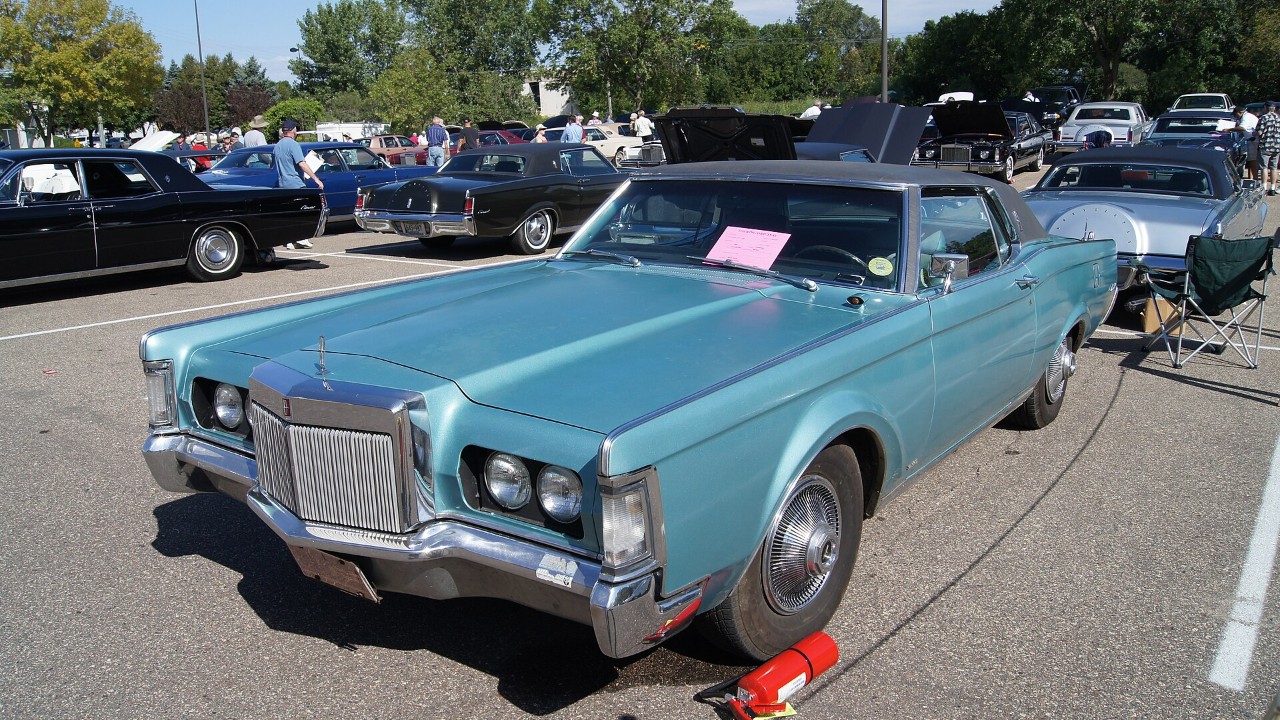
Lee Iacocca knew exactly what he wanted. As Ford’s head of cars and trucks, he told design vice president Gene Bordinat to “put a Rolls-Royce grille on a Thunderbird.” The result was the Continental Mark III, unveiled at the 12 Hours of Sebring on March 23, 1968, as an early 1969 model.
Underneath, though, it shared its chassis with the four-door Thunderbird. Power came from a 460 cubic-inch V8 rated at 365 gross horsepower, with a three-speed C6 automatic. The list price was $6,741.
Standard equipment read like a luxury menu. Power steering, power brakes, power windows and vacuum-operated hidden headlamps all came with the car. Later, a Cartier-branded clock joined them, a few months after launch. Oddly, Ford sold it only as a “Continental,” and the Lincoln name appeared nowhere on the car.
In our view, the Mark III is the car that made the personal-luxury coupe a Ford Motor Company specialty. The long hood and the upright, Rolls-style grille are pure late-1960s theater. Nobody would sign off on that much hood for a two-door today, which is exactly why it belongs here.
3. Mercedes-Benz 280 SE 3.5 Coupe

Mercedes-Benz launched the 280 SE 3.5 in August 1969. It was the company’s first postwar coupe with more than three liters. Under the hood sat the new 3.5-liter M116 V8, rated at 200 hp at 5,800 rpm and good for about 130 mph.
By then, the body was already a classic. Paul Bracq designed the coupe and cabriolet shapes, which wear the tall grille and clean, flat flanks of 1960s Stuttgart. Then the V8 gave that elegant body the pace it always deserved.
However, production stayed small. Mercedes built 3,270 coupes and 1,232 cabriolets, for 4,502 cars in total. Output ended in July 1971, so the run lasted barely two years.
Our take: the 280 SE 3.5 is what happens when a company builds a coupe for people who never look at the price. It is formal, quiet and fast in a way modern cars rarely try to be. Today, by contrast, Mercedes builds its two-doors as sporty cars first. This one is a grand hotel lobby on wheels, with a V8 to match. That combination simply doesn’t exist in a new car showroom anymore.
4. 1973 BMW 3.0 CSi
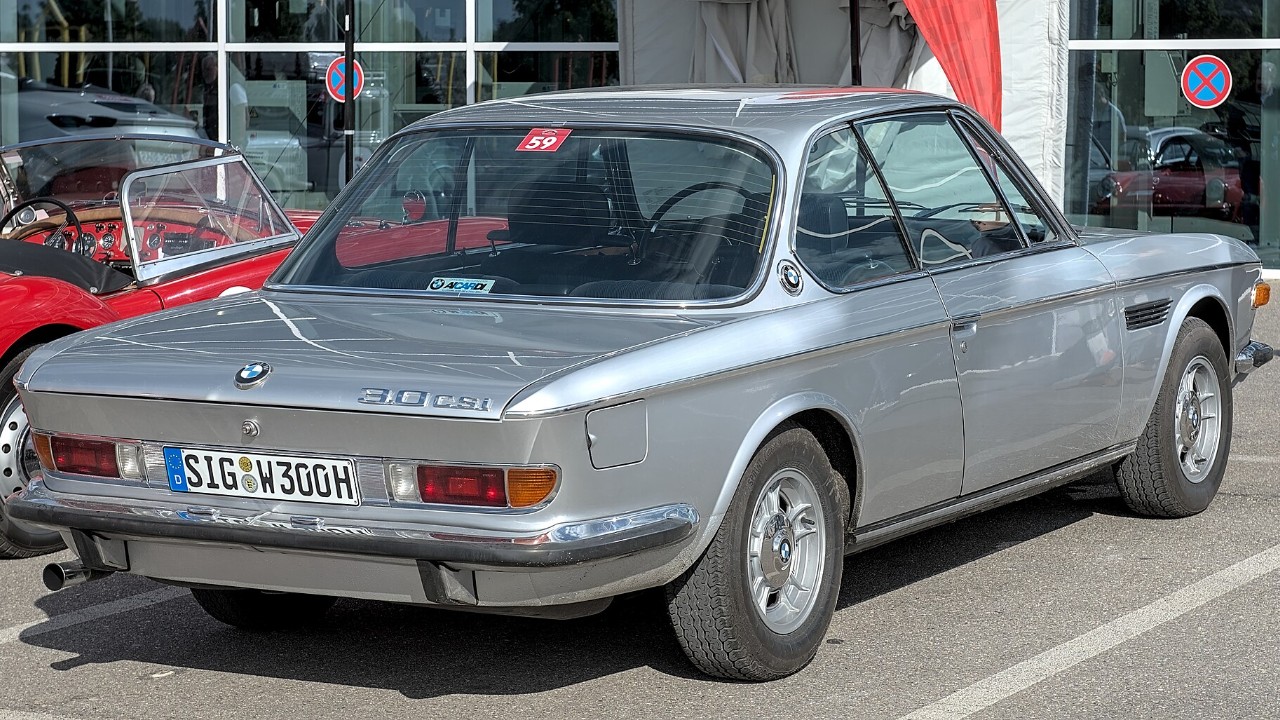
BMW’s 3.0 CS and 3.0 CSi replaced the 2800 CS in 1971. At the same time, their straight-six grew to 2,986 cc. The CSi added Bosch D-Jetronic electronic fuel injection and a 9.5:1 compression ratio, which lifted output to about 200 hp at 5,500 rpm.
Karmann built the bodywork and assembled the cars at its Rheine plant, with Wilhelm Hofmeister as lead designer. The slim pillars and huge glass area make the cabin feel airy, even by modern standards. Meanwhile, BMW built 7,935 3.0 CSi coupes between 1971 and 1975.
The CSi also had a famous sibling. BMW introduced the lightweight 3.0 CSL in May 1972 as a homologation special, building 1,265. Those cars carried BMW’s touring-car program, and CSL drivers won the European title in 1973 and every year from 1975 to 1979.
In our view, the CSi is the sweet spot of the family. That’s because it has the CSL’s shape without the racing car’s spartan edges. Few modern coupes offer that thin-pillared, glassy greenhouse, because crash rules and styling trends moved in the other direction. For us, the CSi is a reminder of how good a 1970s grand tourer could look.
5. 1987 Mercedes-Benz 560 SEC
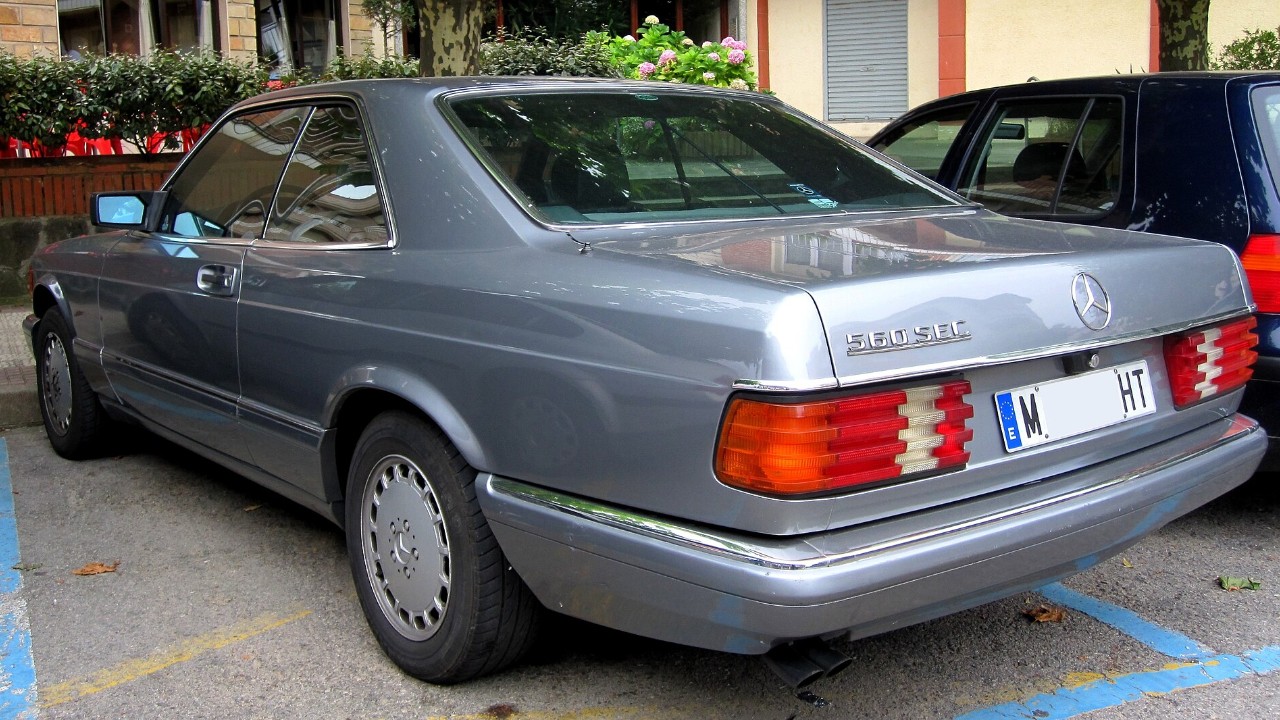
The C126 coupe debuted at the 1981 Frankfurt show. Bruno Sacco led the design team, and the coupe slipped through the air better than the sedan, with a drag coefficient of 0.34. It also had no B-pillar between the front and rear side windows.
That pillarless shape created a problem, because the seat belt anchors sat far behind the driver. So Mercedes developed belt presenters. When you close the doors and start the engine, the shoulder anchors move forward about 30 cm. It retracts once the belt is fastened or after 30 seconds.
Above the 380 and 500 sat the 560 SEC, the top model. Its 5,547 cc V8 made 299 PS in European form and 242 PS in catalyzed US trim. Mercedes built 28,929 of them, out of 74,060 SEC coupes overall.
Our take: the 560 SEC feels engineered rather than styled. Every detail, from the belt presenters to the pillarless glass, solves a problem most carmakers never bothered to address. A clean example with its records is one of the great 1980s luxury cars. In fact, we’d happily drive one across a continent tomorrow.
6. 1989 Jaguar XJ-S V12 coupe
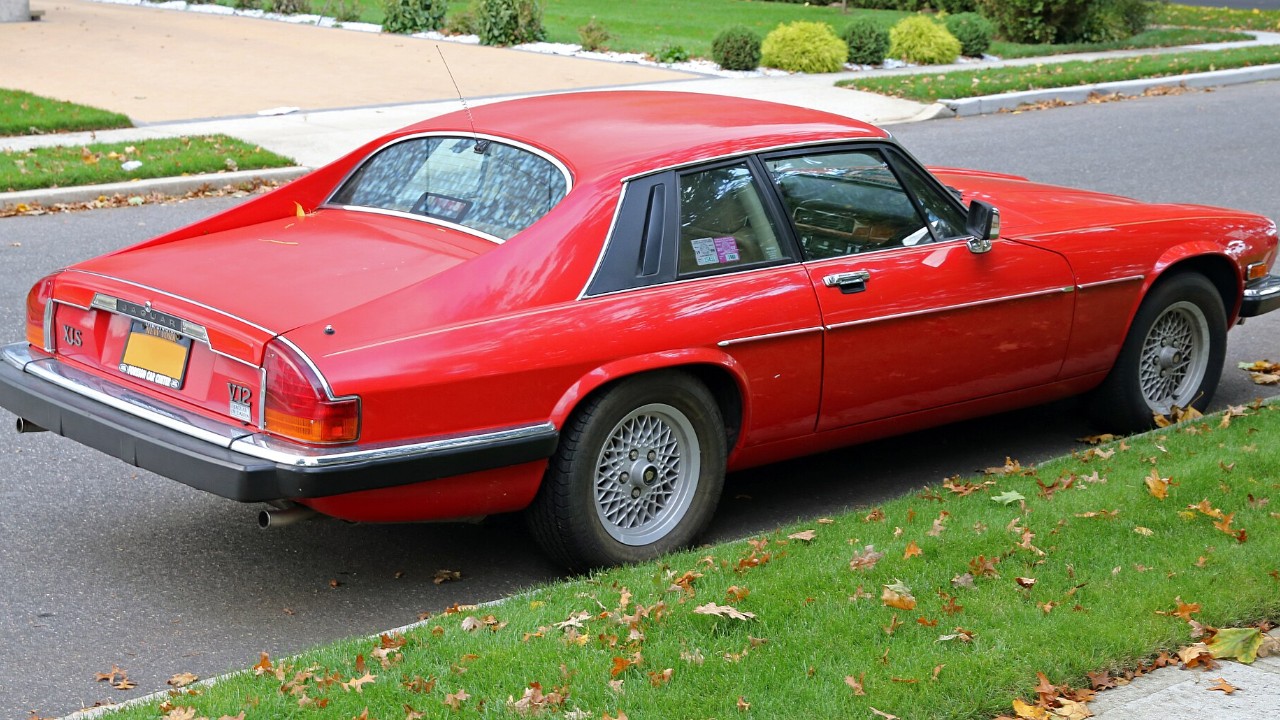
Jaguar introduced the XJ-S on September 10, 1975. It was a big, fast grand tourer built around the company’s 5.3-liter V12. From July 1981, Jaguar renamed it the XJ-S HE and fitted the High-Efficiency V12 for better fuel economy.
In HE form, the V12 made 295 hp, or 263 hp in North American trim. Meanwhile, those swept rear buttresses were a deliberate styling feature, meant to help the aerodynamics. Jaguar kept the car in production for so long that it built 115,413 of them. Under Ford ownership, it even dropped the hyphen in 1991 and became the XJS.
The XJ-S also had a racing career. Tom Walkinshaw’s TWR team won the 1984 European Touring Car Championship with it, along with that year’s Spa 24 Hours. You can read about a TWR Jaguar XJS on track in our earlier story.
Our take: a V12 in a two-door British coupe is the kind of indulgence that no longer fits any carmaker’s plan. A 1989 car gets the HE engine and the later updates while keeping the original shape. It is a velvet hammer, smooth until you ask for more.
7. 1972 Citroen SM
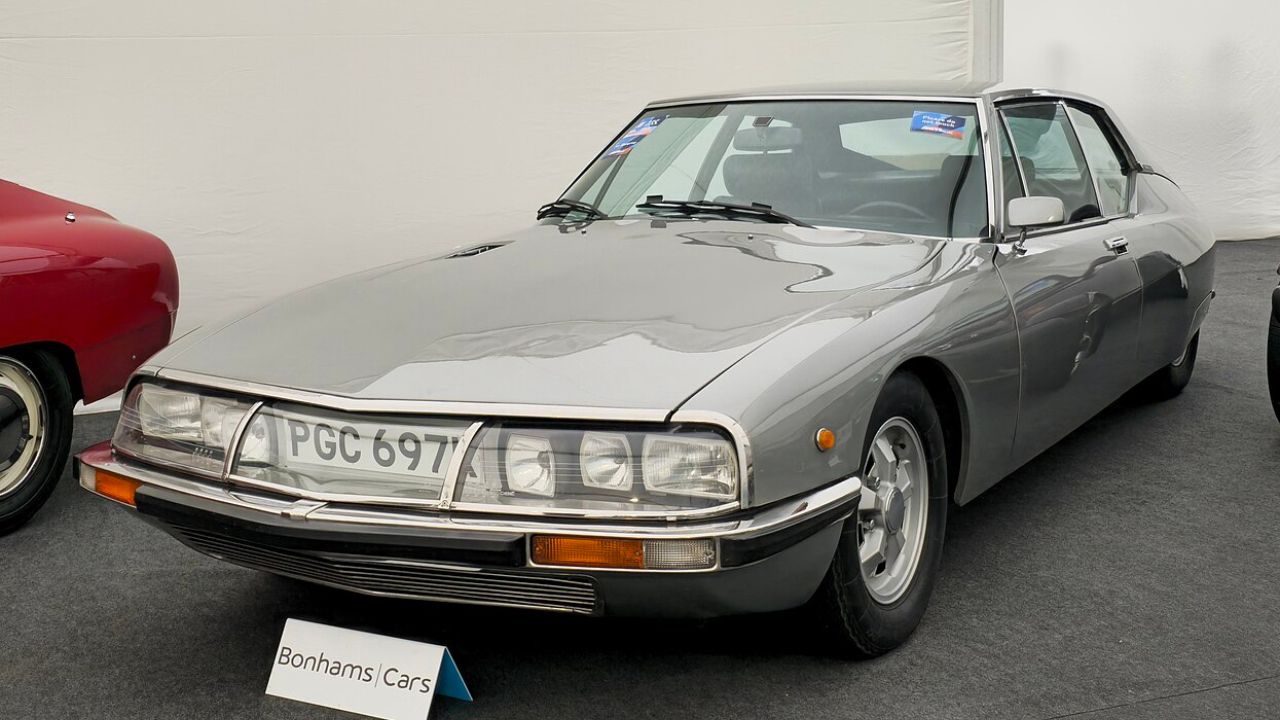
Citroën bought Maserati in 1968, and the SM was the reason. It combined Citroën’s hydropneumatic, self-leveling suspension with a 2.7-liter V6 designed by Maserati’s Giulio Alfieri. First, the car debuted at the Geneva Motor Show in March 1970. French sales began that September.
According to Hagerty’s price guide, the aluminum V6 made 170 hp and drew on a Maserati four-cam design. Hagerty also lists a later 3.0-liter version with 180 hp. The steering was just as unusual. Citroën’s DIRAVI system was fully powered and self-centering, with about two turns lock to lock.
European cars got six headlamps with swiveling high beams, which were illegal in the US. Even so, Motor Trend named the SM its 1972 Car of the Year. Hagerty notes the car left the American market in 1974 because Citroën could not modify it for crash standards.
Citroën built 12,920 SMs before production ended in 1975. In our view, nothing since has matched its mix of French engineering and Italian power. Hagerty’s guide lists a value of $34,200 for a 1973 car, which is a lot of strange for the money.
8. 1977 Lincoln Continental Mark V
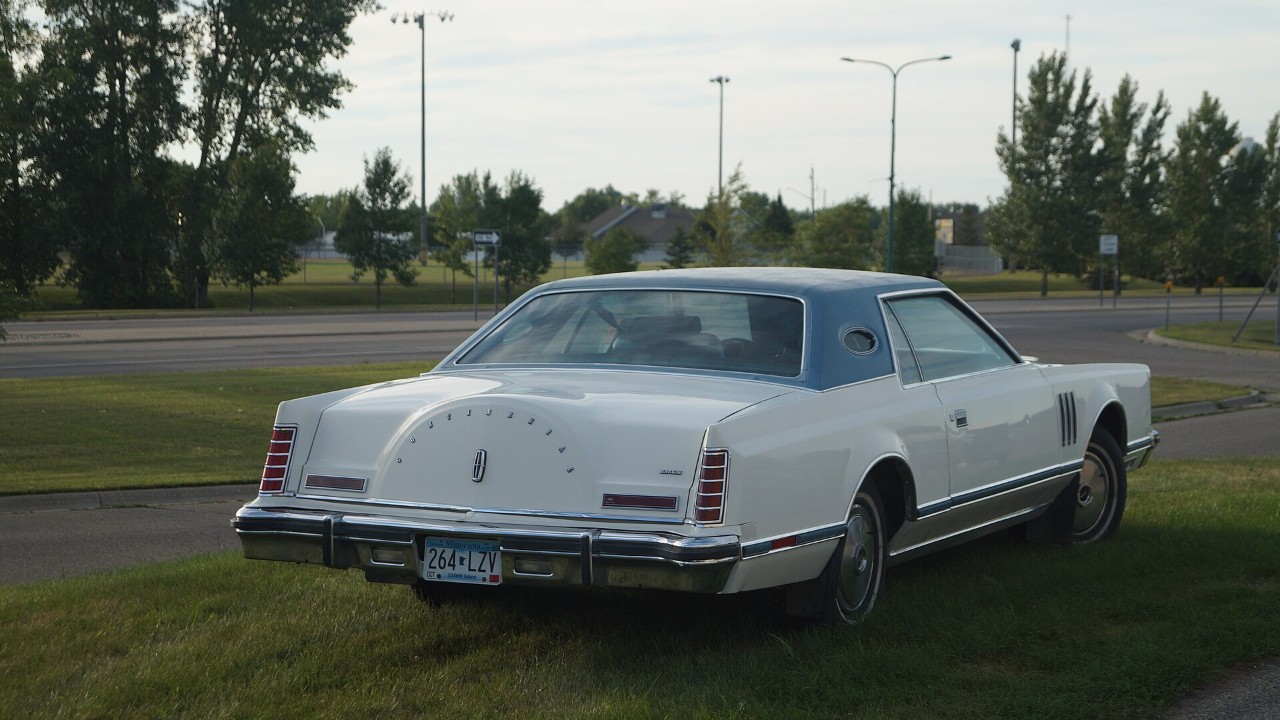
The Mark V stretched 230.3 inches from bumper to bumper. Because of that, it was the longest two-door coupe Ford ever sold. Yet it was also a diet. Lincoln cut curb weight from about 5,000 pounds for the Mark IV to roughly 4,600.
For 1977, a 400 cubic-inch V8 with 179 hp came standard. Outside California, buyers could choose a 460 V8 rated at 208 hp. Either way, a three-speed C6 automatic did the shifting.
Then there were the Designer Series cars. For example, Lincoln offered Bill Blass, Cartier, Givenchy and Emilio Pucci editions. Each had coordinated paint, interior, vinyl roof and trim, plus a designer decklid decal and a gold-plated dash nameplate. For 1978, the Diamond Jubilee Edition added $8,000 to the price, topping $21,000.
Our take: the Mark V is the last word in 1970s American excess. It has a hood that seems to go on forever and enough chrome to blind a parking lot. Still, the sales figures show buyers agreed. Lincoln sold roughly 228,262 Mark Vs across its three model years.
9. 1985 BMW 635 CSi
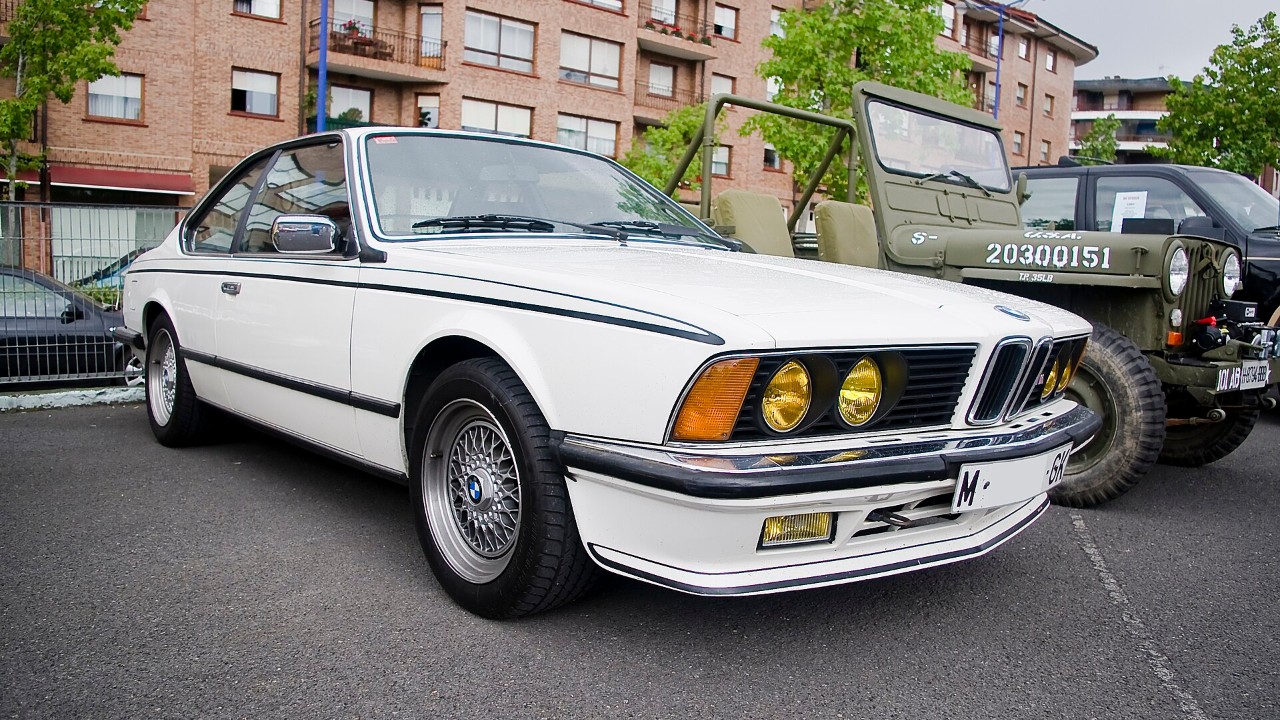
Paul Bracq, who shaped the Mercedes coupe earlier on this list, also designed BMW’s E24 6 Series. The range ran from January 1976 to April 1989, a run of more than 13 years. The 635 CSi joined it in July 1978 as the more powerful model.
Its M30 straight-six grew to 3,430 cc. In European form for 1982 to 1987, it produced 218 PS at 5,500 rpm. US cars from 1985 to 1987 used the same displacement with 182 hp. As a result, even the American car had a smooth, eager six with plenty of character.
Karmann built complete E24s until August 1977. After that, it supplied only the steel body shells, and BMW assembled the cars at Dingolfing. In the end, BMW built 86,216 E24s in all.
Our take: the 635 CSi has one of the best profiles of the 1980s. The low nose and thin pillars give it a look no modern BMW coupe can match. It is fast enough to enjoy and relaxed enough for a long trip. Today, a big, airy coupe with a straight-six up front is a near-extinct species.
10. Maserati Mexico

The Mexico got its name from a sale. A 2+2 prototype by Virginio Vairo appeared on the Vignale stand at the October 1965 Turin show. Afterward, Mexican president Adolfo López Mateos bought it, and the production car took the name.
Maserati based the Mexico on the first Quattroporte, shortening the wheelbase by 11 cm. At launch, it used a 4.7-liter V8 with Weber carburetors, rated at 290 hp. Later, a 4.2-liter V8 followed in 1969. Even so, Maserati quoted a top speed of 240 to 250 km/h.
Production ran from 1966 to 1972, and Maserati built only 485 of them. So you can go to a lot of car shows without ever seeing one in person.
Our take: the Mexico is a four-seat Italian V8 coupe that never shouts about its luxury. It has none of the wedge-shaped drama of later Maseratis. Instead, it offers a clean shape, room for friends and a V8 rumbling up front. That formula belongs to another era. In other words, it’s a gentleman’s express that makes most modern grand tourers feel overstyled.
11. 1965 Chrysler 300L
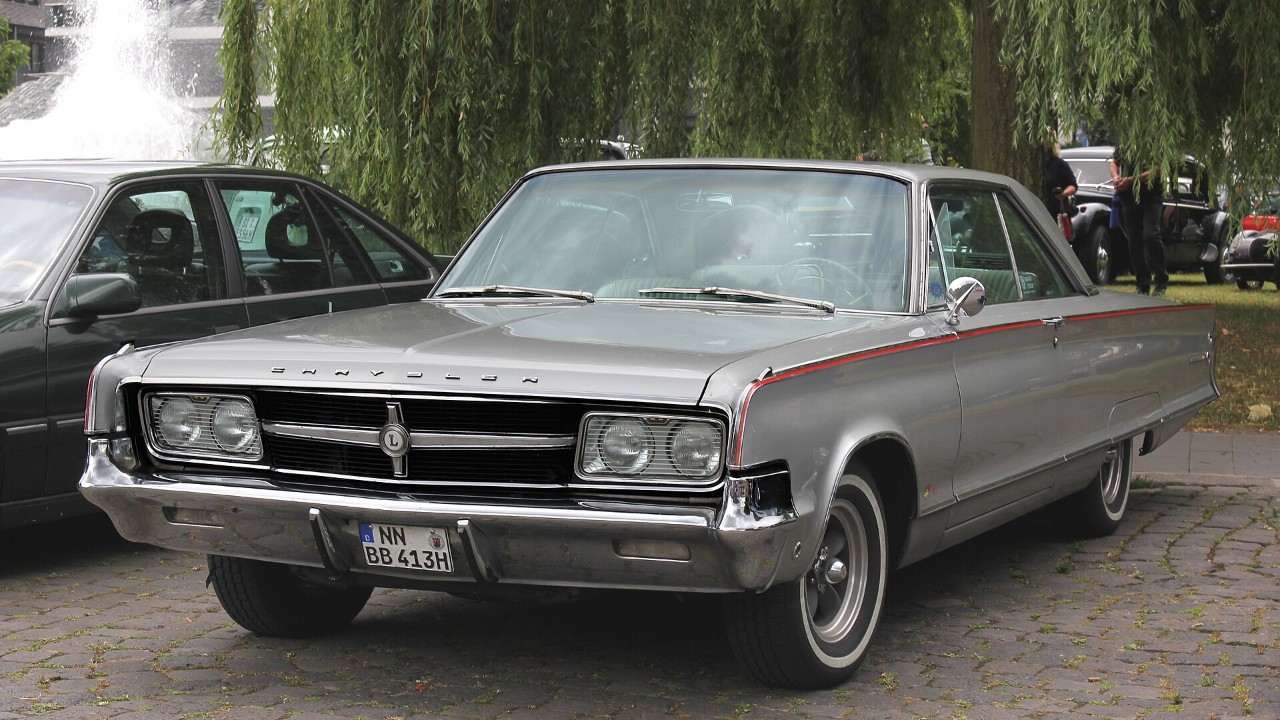
The 300L closed the book on Chrysler’s letter cars. It was the eleventh and final model in the traditional series. Elwood Engel, who had succeeded Virgil Exner as head of styling, gave it crisp lines, slab sides and a tall greenhouse.
Unlike earlier letter cars, the 300L offered only one engine. The 413 cubic-inch V8 made 360 hp, the same as the year before. A three-speed TorqueFlite automatic came standard. However, buyers could order a four-speed manual with Hurst shift linkage at no extra cost.
Chrysler built 2,845 of them, including 2,405 hardtops and 440 convertibles. Earlier letter cars made our list of Chrysler 300 letter cars that scared their own dealers.
Our take: a full-size luxury hardtop with a big V8 and an optional four-speed is a combination no automaker offers now. In short, the 300L was a banker’s car with a drag racer’s option list. Besides, it is the last of a famous line, which gives it a special place in Chrysler history. We’d take a four-speed hardtop if we could find one.
12. Mercedes-Benz CL600
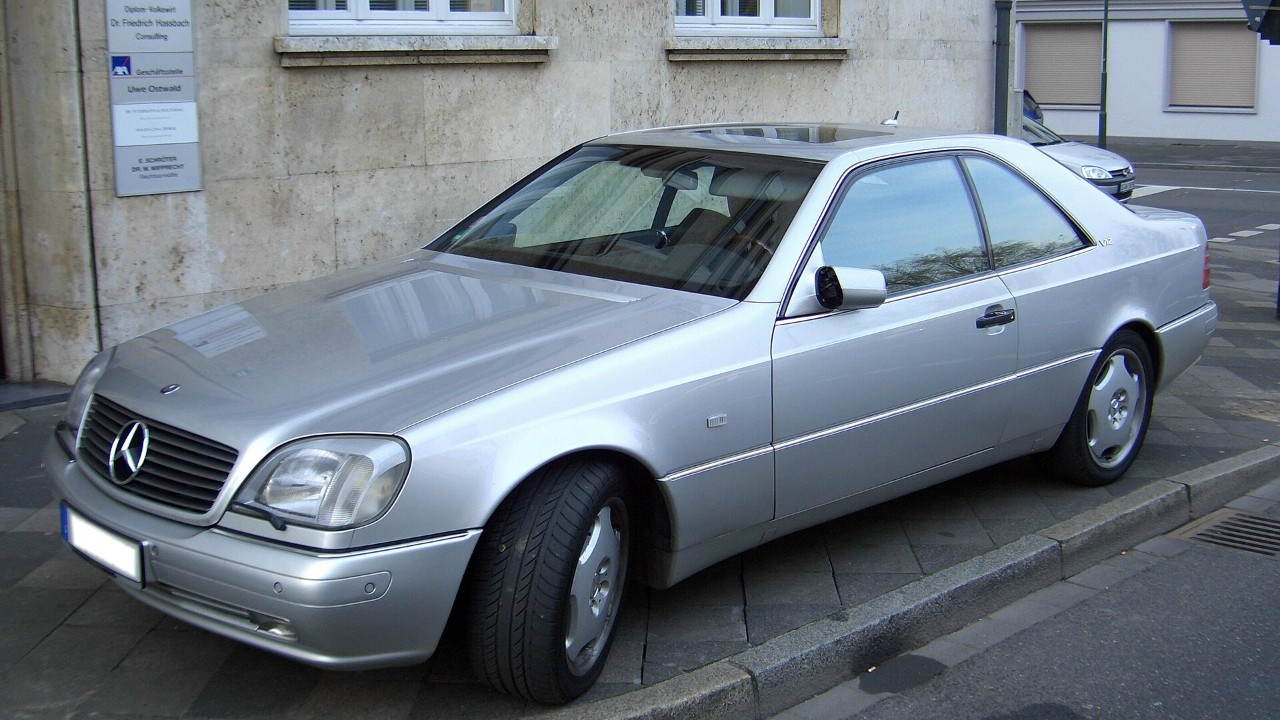
The C140 coupes debuted at the Detroit auto show in January 1992. According to Zwischengas’s history of the SEC coupes, the 600 SEC used a 5,987 cc V12 with 394 hp. In February 1992, it cost DM 220,020 with standard equipment. That made it the most expensive series-production car built in Germany that year.
The names changed along the way. First, the coupes became the S 600 Coupe for 1994. Then, from June 1996, Mercedes called them the CL-Class, and the V12 car became the CL600.
The equipment list explains the price. For instance, double-glazed windows kept the cabin hushed. The 600 also came with memory seats and dual-zone automatic climate control as standard. Mercedes and Bosch presented the ESP stability system in these coupes in 1994.
Mercedes built 26,022 of these coupes at Sindelfingen over six years, and 8,573 had the V12. Our take: the CL600 is the last of the old-school, money-no-object Mercedes coupes, and it shows in every switch and panel. In our view, it is the high-water mark of the big Mercedes two-door. In 2022, the SEC coupes became among the first contenders for Germany’s H historic license plate.
More from Fast Lane Only