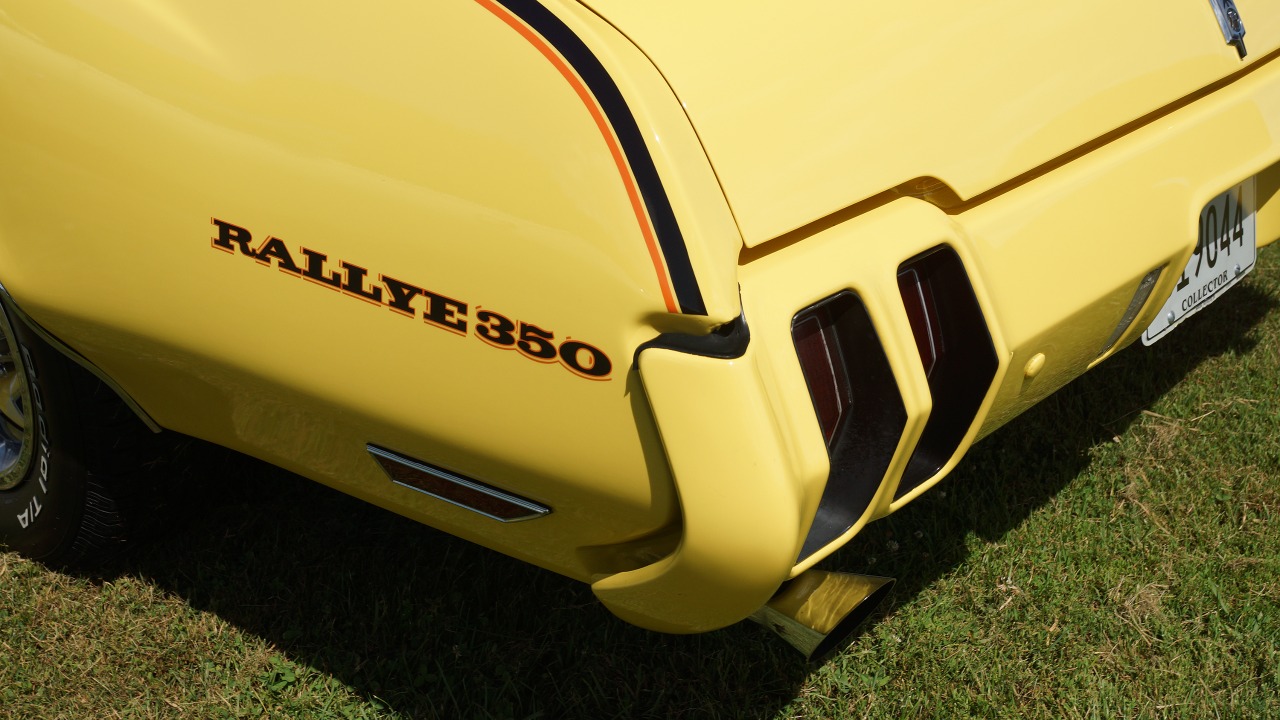
Oldsmobile’s decision to launch the Cutlass Rallye 350 at the height of the muscle car era was both a marketing gamble and a pragmatic response to rising insurance costs. The bright yellow “junior supercar” arrived as a budget-minded alternative to the brand’s big-block bruisers, and today its limited production and distinctive specification are finally being reflected in collector values.
More than five decades later, the Rallye 350’s story is written as much in auction data and price guides as it is in period brochures. I want to trace how and when Oldsmobile introduced this model, what made it different from the rest of the Cutlass line, and how current market numbers help explain why this once-overlooked package has become a serious player in the classic muscle market.
How Oldsmobile brought the Rallye 350 to market
The Cutlass-based Rallye 350 did not simply drift into showrooms as another option code, it arrived with a formal rollout that underscored Oldsmobile’s intent to carve out a niche below the 442. The Rallye 350 Was Introduced On February 18, 1970, By Oldsmobile General Manager John Beltz And Made Its Debut At The 1970 Chicag auto show, a timing that placed it squarely in front of enthusiasts looking for performance without the insurance penalties attached to larger engines. That debut framed the car as a distinct package within the Cutlass family rather than a minor trim tweak.
Contemporary descriptions emphasize that this was a 1970-only experiment, a point reinforced by references to the Oldsmobile Rallye as a “1970-only offering” built around the 350 engine. The positioning as a value-priced high-performance model using the 350 V-8 set expectations that it would deliver credible speed while staying under the radar of insurers who keyed on big cubic-inch figures. Later overviews of the Oldsmobile Rallye and its Key Points describe it as Produced for the 1970 model year only, which aligns with the one-season production run that now helps support its rarity premium.
Engineering, color, and the “junior supercar” brief
Under the skin, the Rallye 350 was carefully specified to hit a sweet spot between performance and cost. The only engine offered for the Rallye 350 package was the L74 350-cu.in. V-8, rated at 310 horsepower with a single four-barrel carburetor, a combination that gave the car genuine muscle without stepping into big-block territory. Reporting on the Rallye notes that this 350-cu powerplant, with its 310 rating, was capable of pushing the car to 60 mph in about seven seconds, which was competitive for an intermediate-sized performance car of the period and more than enough to justify its sporty branding.
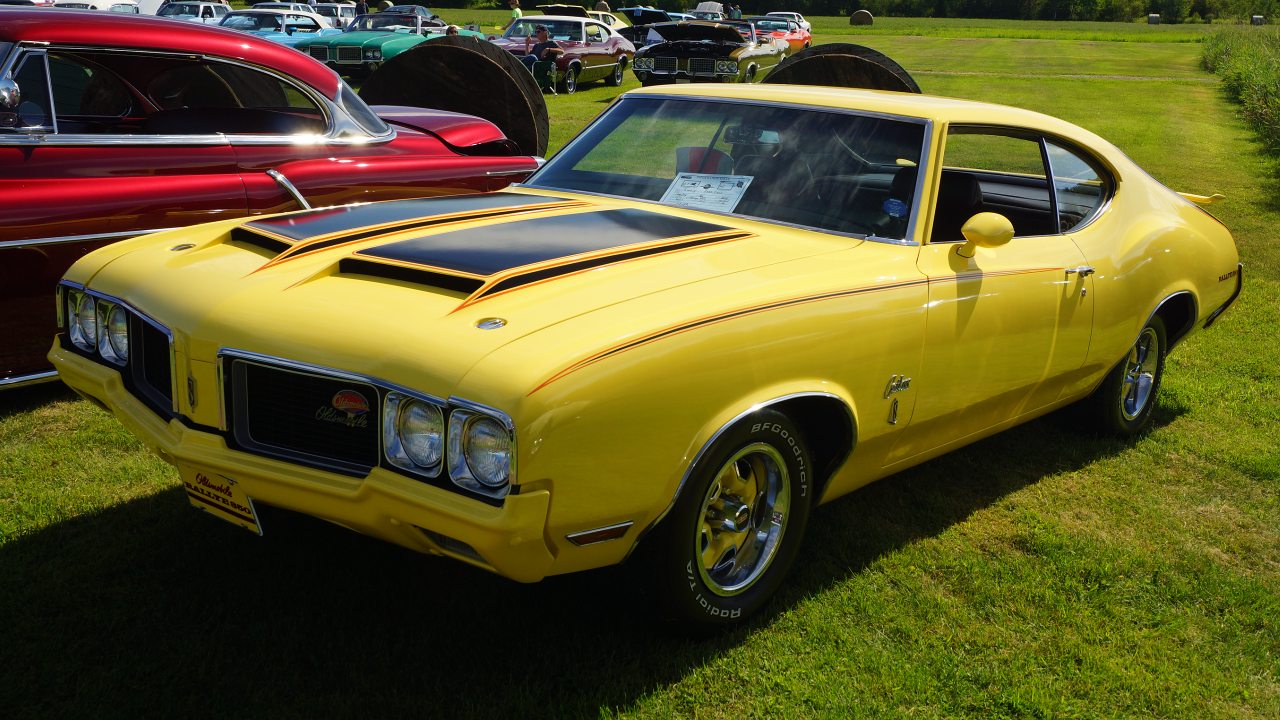
Oldsmobile also made a bold visual statement that set the Rallye apart from other Cutlass variants. Sebring Yellow Was The Only Color Offered On This Model, and that high-impact paint extended to the bumpers and wheels, creating a monochrome look that enthusiasts still recognize instantly. Period and retrospective accounts describe the car as an insurance special “junior supercar,” with About 3500 copies of the insurance special “junior supercar” 1970 Olds Rallye 350 were built, a figure echoed by another report that Oldsmobile only built 3,547 of them. Those production totals, combined with the single-color strategy and the focused 350 Olds Engine With 310HP formula, help explain why the Rallye 350 now stands out in a crowded field of late 1960s and early 1970s muscle machines.
Production numbers and how rare the Rallye 350 really is
Rarity is one of the key levers in any collector car’s value, and the Rallye 350’s production story is unusually tight and well defined. Enthusiast research and period-based summaries converge on the idea that Oldsmobile only built 3,547 of them, a number that appears in detailed discussions of the 1970 Oldsmobile Cutlass Rallye 350 and its 350 Olds Engine With 310HP specification. Another retrospective on the Olds Rallye notes that About 3500 copies of the insurance special “junior supercar” 1970 Olds Rallye 350 were built, reinforcing that the total run sat in the mid three-thousand range rather than stretching into five- or six-figure territory.
Context from owners’ groups and production breakdowns adds nuance to those totals. One enthusiast-focused analysis of Oldsmobile Rally 350 production and sales explains that Oldsmobile introduced the bright Sebring Yellow package to fight tightening regulations that were destroying the muscle car class, and it frames the Rallye as a targeted response rather than a mass-market volume play. That same discussion of the Oldsmobile Rally 350 underscores that the car lived in the shadow of the 442, which likely kept sales modest even as it offered a more affordable path into performance. When I weigh those figures against the broader Cutlass production of the era, the Rallye’s roughly 3,500-unit run looks genuinely scarce, especially once attrition from rust, accidents, and modifications is factored in, even though precise survival rates are Unverified based on available sources.
How the Rallye 350 was positioned in the muscle car market
Oldsmobile did not intend the Rallye 350 to dethrone the 442, it was designed to slot beneath it as a clever workaround to rising insurance premiums and regulatory pressure. A detailed overview of the Oldsmobile Rallye describes its Key Points and notes that it was Produced for the 1970 model year only, with the package aimed at buyers who wanted the look and feel of a supercar without the cost of insuring a big-block. Another analysis of the Oldsmobile Rally 350 explains that Oldsmobile introduced the bright Sebring Yellow car to fight the tightening regulations destroying the muscle car class, explicitly linking the model to the broader policy environment that was starting to squeeze high-horsepower offerings.
That positioning is echoed in the way enthusiasts and historians talk about the car today. The Oldsmobile Rallye is often described as a value-priced high-performance model using the 350 engine, a phrase that captures both its budget-conscious mission and its mechanical core. Later commentary on the Oldsmobile Rallye and its Key Points notes that Upon its release, the Olds package promised performance while helping owners save cash every year on insurance, a reminder that the 350-cubic-inch displacement was not just a technical choice but a financial strategy. In practice, the Rallye 350 gave buyers a factory-tuned, visually aggressive Cutlass that could be justified to insurers and regulators, a balance that now reads as a snapshot of the muscle car market on the brink of change.
What today’s price guides and sales say about value
Modern valuation tools and sales databases show that the market has finally caught up with the Rallye 350’s blend of rarity, performance, and period-correct flair. A dedicated valuation page for the 1970 Oldsmobile Cutlass Rallye 350 tracks condition-based pricing and confirms that the model now commands a clear premium over ordinary Cutlass coupes, reflecting its limited production and specific 350-cu, 310 horsepower configuration. Another detailed feature on the 1970 Oldsmobile Rallye 350 notes that, According to Hagerty, the value of a 1970 Oldsmobile Rallye 350 is between $22,100 to $68,200 depending on its condition, a range that captures everything from driver-quality examples to top-tier restorations.
Real-world transaction data backs up those guidebook figures. A dedicated Oldsmobile Rallye 350 Market page on a major sales aggregator, labeled Oldsmobile Rallye 350 Market, CLASSIC, COM, compiles auction and private-sale results under market_id: 6168 and shows how prices have trended as collectors recognize the car’s significance. That Market overview, which groups Oldsmobile and Rallye 350 entries under a single 350 M category, indicates that well-presented cars with correct Sebring Yellow finishes and original 350 engines tend to sell at the upper end of the guide ranges, while modified or rough examples lag behind. When I compare those numbers with the $22,100 to $68,200 spread cited on Nov 6, 2022, in a feature on the 1970 Oldsmobile Rallye 350, the pattern is clear: the car has moved firmly into serious-collector territory, but it still sits below the stratospheric prices of the most famous big-block muscle machines, which keeps it attractive to enthusiasts who want period performance without paying 442 or Hemi money.