The Hurst/Olds W-30 sits at the intersection of muscle car mythology and limited-production rarity, which is exactly why collectors still chase it hard today. Oldsmobile only paired the Hurst performance treatment with the W-30 package in select years, and those windows of production now define some of the most closely watched prices in the classic Oldsmobile world.
To understand what years Oldsmobile actually built the Hurst/Olds W-30, and what serious buyers are paying for them now, I need to trace the model’s evolution from late‑1960s experiment to early‑1980s swan song, then line that history up against current valuation data and recent sale trends.
How the Hurst/Olds collaboration set the stage
The Hurst/Olds story starts in the late 1960s, when Oldsmobile and Hurst Performance Engineering teamed up to create a halo version of the 4-4-2. The first result was the 1968 Hurst/Olds Sport Coupe, built at Demmer and sharing its basic body with the regular Olds 4-4-2, but upgraded with Hurst hardware and distinctive appearance cues. That initial collaboration established the template: Oldsmobile would supply a strong Cutlass or 4-4-2 platform, and Hurst would add shifters, graphics and performance tweaks to create a limited-production special.
Through the early 1970s, Oldsmobile continued to refine this formula, using the Cutlass and 4-4-2 as the base for successive Hurst/Olds editions. The partnership allowed Oldsmobile to keep a performance image alive even as regulations tightened, while Hurst gained a factory-backed showcase for its parts. By the time the W-30 designation appeared alongside the Hurst/Olds nameplate, both sides had a clear playbook for how to build a collectible muscle car in small numbers and keep it distinct from the standard showroom fare described for the broader Oldsmobile 4-4-2 W-30 line.
Which years carried the Hurst/Olds W-30 badge
Within that broader collaboration, the W-30 tag did not appear on every Hurst/Olds, and that is where the production years become crucial for collectors. The Hurst/Olds lineage runs from 1968 through 1984, but only certain model years combined the Hurst treatment with the W-30 performance package. Reporting on the model’s history notes that the Hurst/Olds program unfolded in distinct generations, with the early cars based on the 4-4-2, the Colonnade-era cars in the mid‑1970s, and a final Gen (1983–1984) built on the Oldsmobile Cutlass Calais platform.
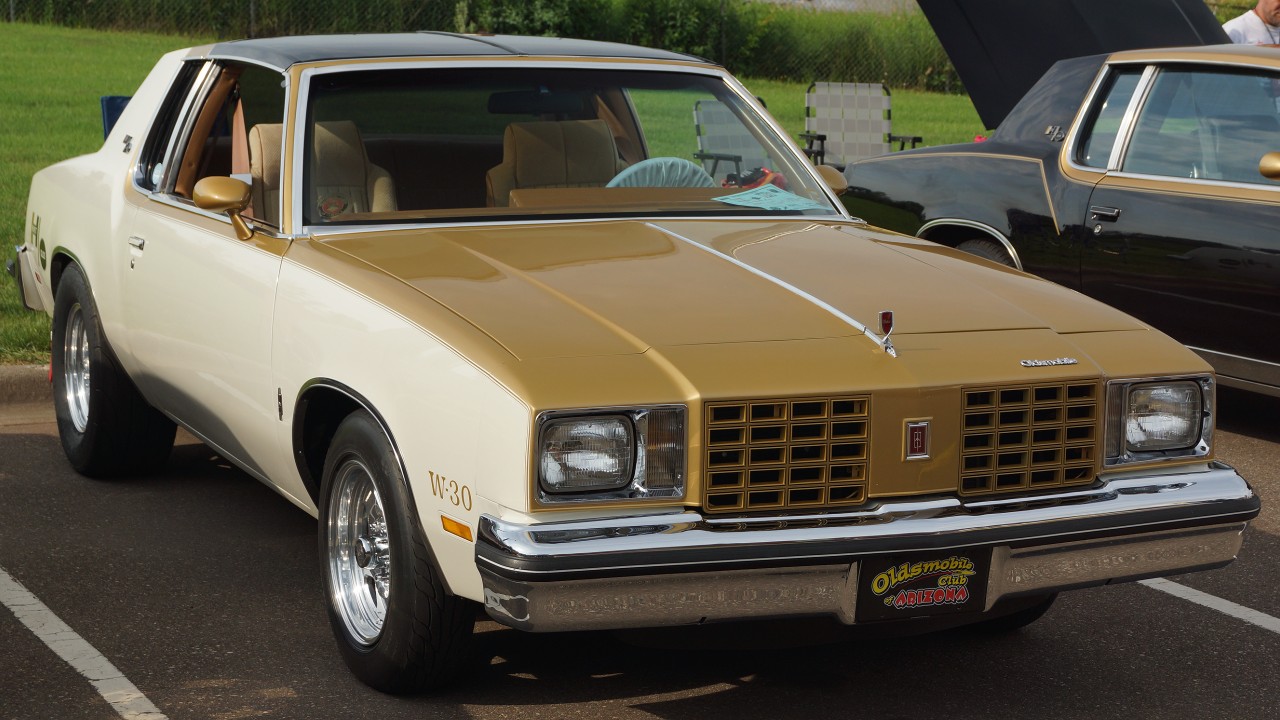
Within that span, the W-30 designation is most closely associated with the higher-performance variants that bridged the muscle car and personal luxury eras. The 1979 Hurst/Olds W-30, for example, is explicitly identified as a W-30 car and is now treated as a standalone collectible, while earlier 4-4-2 W-30 models from 1968 to 1972 show how Oldsmobile used the same performance code on non‑Hurst cars. The key takeaway for buyers is that the Hurst/Olds W-30 years sit inside a larger 1968–1984 Hurst/Olds production run, and that the W-30 badge itself signals a more focused performance intent than the appearance-only specials that followed.
How the Hurst/Olds W-30 compares to the 4-4-2 W-30
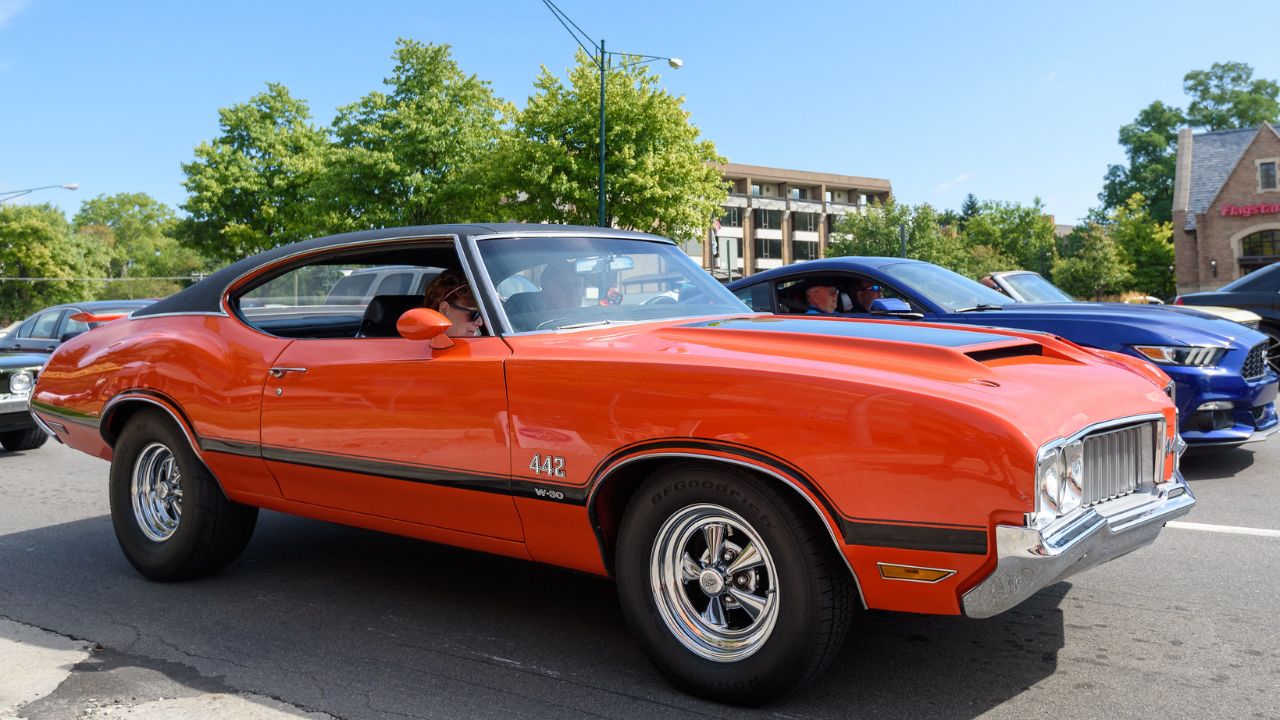
To understand why the Hurst/Olds W-30 commands attention, I find it useful to compare it with the standard Oldsmobile 4-4-2 W-30. The 4-4-2 W-30 package, built from 1968 to 1972, was a high-performance muscle car in its own right, and it has become one of the most desirable Oldsmobile models from that era. A valuation snapshot for a 1970 Oldsmobile 4-4-2 W-30 notes that, typically, you can expect to pay around Typically $84,800 for a car in good condition with average spec, a figure that underscores how serious collectors are about the pure 4-4-2 W-30 formula.
By contrast, the Hurst/Olds W-30 cars blend that performance heritage with the visual drama and limited-production cachet of the Hurst collaboration. The 1979 Oldsmobile Hurst W-30, for instance, is described as a highly desirable collector’s car, with prices for well-kept examples reflecting both its place in the muscle car tradition and its late‑1970s luxury flavor. While the 4-4-2 W-30 tends to attract buyers who want peak performance from the classic muscle era, the Hurst/Olds W-30 appeals to those who value rarity, special trim and the Hurst name alongside solid performance credentials.
Current market benchmarks for Hurst/Olds values
Looking at the broader Hurst/Olds market, the numbers show a car that has matured into a steady collectible rather than a speculative rocket. Aggregated sales data for Oldsmobile Hurst/Olds models built from 1968 to 1984 indicates that the highest recorded sale sits well above the typical transaction, while the average price across the market is reported at $43,933. That average captures everything from driver-quality Colonnade cars to well-preserved early examples, and it gives a useful baseline for how the nameplate is valued as a whole.
Within that overall picture, the Colonnade-era Hurst/Olds models from the mid‑1970s have emerged as what one recent analysis calls an acquired taste, but a valuable one. Reporting on those cars notes that if you can find one of these relatively scarce models today, you can expect to pay more than $20,000 for a car in good condition, with the highest observed figure in that sample reaching $40,000. Those numbers sit below the best 4-4-2 W-30 results but comfortably above many standard Cutlass coupes from the same period, which reflects the premium that the Hurst/Olds badge and limited production still command.
What collectors pay for specific Hurst/Olds W-30 era cars
When I drill down to individual model years that bracket the Hurst/Olds W-30 era, the price spread becomes clearer. For the mid‑1970s, a valuation snapshot for a 1975 Oldsmobile Cutlass Hurst/Olds shows that the value can vary widely depending on condition and specification, but the structured pricing bands confirm that even average examples sit above ordinary Cutlass coupes. The same pattern appears in the early‑1980s cars that closed out the Hurst/Olds run, particularly the Oldsmobile Cutlass Calais Hurst/Olds models that form the Gen (1983–1984) chapter of the story.
For a 1983 Oldsmobile Cutlass Calais Hurst/Olds, the guidance is that, typically, you can expect to pay around Typically $22,800 for a car in good condition with average spec. The 1984 Oldsmobile Cutlass Calais Hurst/Olds sits in a similar band, with guidance that, typically, you can expect to pay around Typically $22,600 for a similar example. Those figures place the final Hurst/Olds generation well below the peak 4-4-2 W-30 values, but they still represent a meaningful premium over standard G‑body Cutlass coupes from the same years.
How W-30 heritage shapes collector demand today
The W-30 label itself carries weight that extends beyond any single Hurst/Olds year, and that heritage helps explain why collectors are willing to pay up for the cars that combine both names. A discussion of the Oldsmobile 4-4-2 W-30 notes that the package was a high-performance muscle car produced by Oldsmobile from 1968 to 1972, and that it was one of the standout models of its era. That same conversation points out that well-preserved examples now fetch high prices at auction, which aligns with the separate valuation that pegs a 1970 Oldsmobile 4-4-2 W-30 at around $84,800 in good condition.
When the W-30 code appears on a Hurst/Olds, as it does on the 1979 Oldsmobile Hurst W-30, buyers are effectively getting a bridge between that earlier performance reputation and the later limited-edition Hurst styling. Recent commentary on the 1979 Oldsmobile Hurst W-30 describes it as a highly desirable collector’s car, with prices for well-kept examples reflecting both its muscle car tradition and its 1970s luxury character. In practice, that means a Hurst/Olds W-30 will not match the very top 4-4-2 W-30 numbers, but it will usually sit above a comparable non‑W-30 Hurst/Olds from the same period, and well above a standard Cutlass or 4-4-2 without the special equipment.
What all this means if you are shopping a Hurst/Olds W-30
For anyone trying to buy into this niche, the production years and current prices point to a few practical rules. First, the Hurst/Olds W-30 sits inside a broader 1968–1984 Hurst/Olds run, so verifying that a car actually carries the W-30 designation is essential before paying a premium. Second, the market clearly rewards originality and condition, with Colonnade-era cars in good shape already clearing $20,000 and late Hurst/Olds models like the 1983 and 1984 Oldsmobile Cutlass Calais Hurst/Olds clustering in the low‑$20,000 range for solid drivers.
Finally, the gap between the roughly $43,933 average across all Hurst/Olds sales and the $84,800 benchmark for a 1970 Oldsmobile 4-4-2 W-30 shows how much room there is for careful buying. A well-documented Hurst/Olds W-30 can deliver a significant slice of that W-30 mystique at a fraction of the cost of a top-tier 4-4-2, while still offering the rarity and visual drama that make these cars stand out at any show or auction. For collectors who value both story and specification, the specific years that Oldsmobile built the Hurst/Olds W-30 remain some of the most compelling places to park money in the Oldsmobile universe.