Oldsmobile gave America the Rocket V8 in 1949, and in 1968 it rolled out the first Hurst/Olds. In between, the division built some of the most stylish full-size cars Detroit ever sold. Its 88 line became the brand’s most popular from 1950 through 1974, and the Ninety-Eight sat at the top of the range as the flagship.
Oldsmobile is gone now, but the cars are not. Some of them won races, some paced the Indianapolis 500, and others simply wore more chrome than a jukebox. However, not every Olds earns a permanent spot in the garage.
These eight are our picks, and the verdict is our opinion: if one of these were ours, we would not let it go at any price. The years, engines and production numbers behind each choice come from Oldsmobile and Hurst histories, so the facts are on the record even if the stubbornness is all ours.
1. 1950 Oldsmobile Futuramic 88
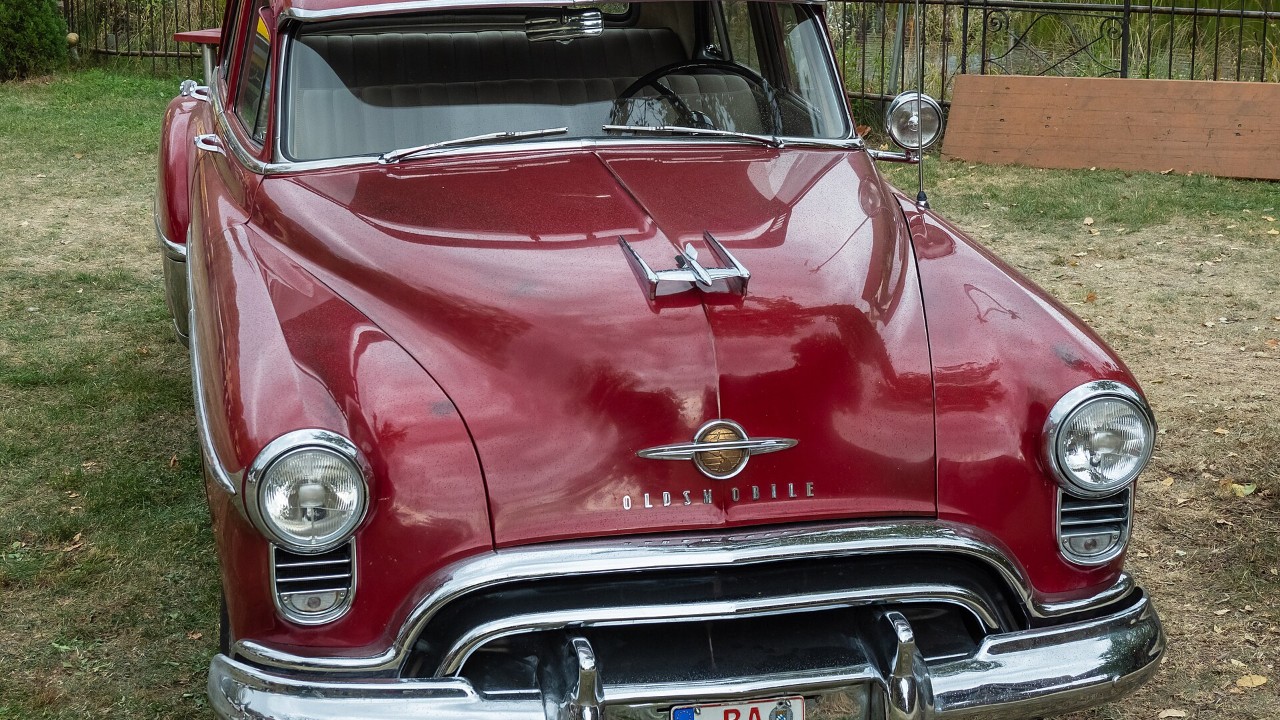
The Futuramic 88 is the car that turned a sensible brand into a performance brand. Oldsmobile took its new 303-cubic-inch Rocket V8, rated at 135 horsepower, and dropped it into the lighter body it shared with the six-cylinder 76. In other words, the company put its biggest engine in its smaller car, a recipe muscle-car builders would copy for decades.
The results showed up on the track right away. The 88 won six of the nine NASCAR late-model races it entered in 1949, then took 10 of 19 in 1950. Meanwhile, Hershel McGriff and Ray Elliot won the 1950 Carrera Panamericana in a 1950 model. For 1950, Oldsmobile also offered a modified Cadillac manual gearbox, because the 1949 V8 cars had been automatic only. Buyers noticed, too: that year the 88 outsold the six-cylinder 76.
An Olds first paced the Indianapolis 500 in 1949, in a convertible powered by the Rocket V8, according to GM Heritage Center records. Our take: a Futuramic 88 is a piece of American racing history that happens to have a back seat. We would drive it to every show we could find and never answer the “is it for sale?” question with anything but a smile.
2. 1955 Oldsmobile Ninety-Eight Holiday
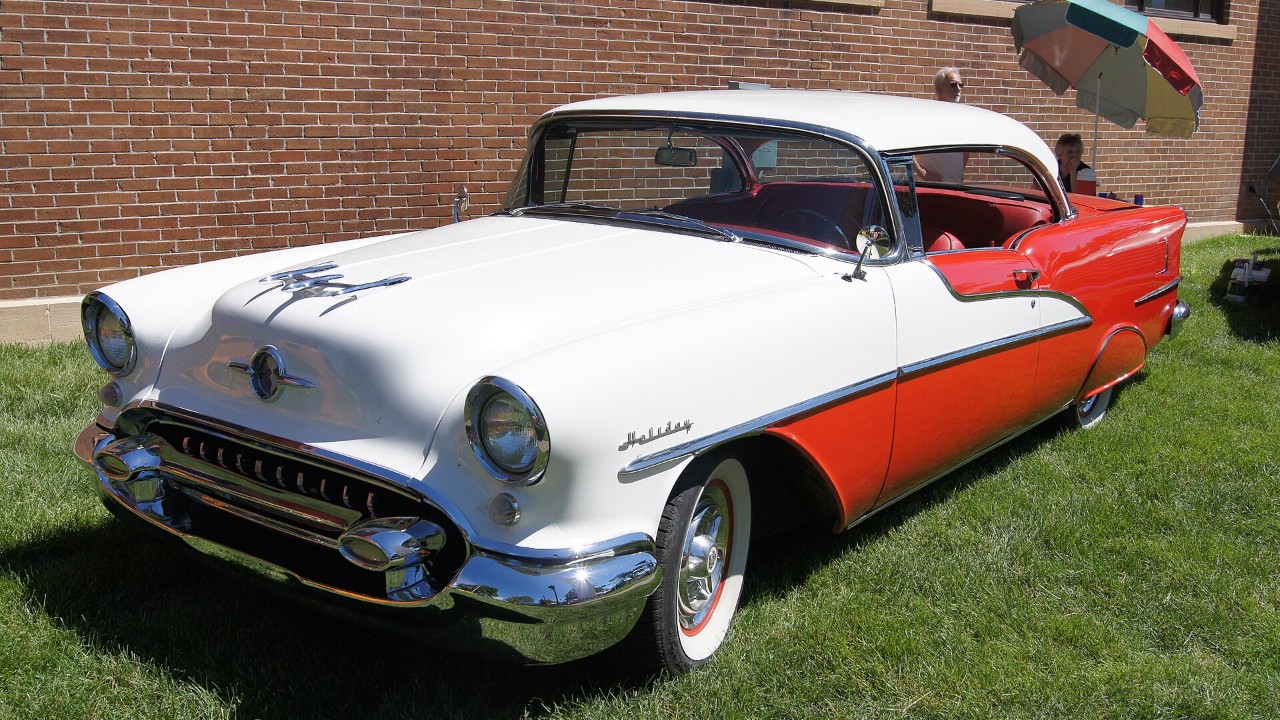
The 1955 Ninety-Eight is Oldsmobile at full confidence. It rode on a 126-inch wheelbase and stretched 212 inches long. Power steering came standard, and a 240-horsepower Rocket V8, shared with the Super 88, sat under the hood. Little chrome touches finished the job, from medallions on the front fenders to a “Ninety-Eight” script on the deck lid.
Oldsmobile used the Holiday name for its pillarless hardtops, and 1955 is the year that idea grew two more doors. At mid-year, the division added a four-door Holiday Sedan. Together with the 88 Holiday and two Buicks, it ranked among the first four-door hardtops ever built. As a result, the open, airy roofline that defined late-1950s Detroit started right here.
Buyers loved it. Ninety-Eight sales set a record of 118,626 for 1955. That number tells you these cars were everywhere once, but most went the way of daily drivers. In our view, a well-kept Ninety-Eight Holiday is the perfect antidote to anyone who thinks 1950s luxury meant a Cadillac or nothing. We would keep it for the long Sunday drives, with the windows down and no pillar in the way of the view.
3. 1957 Oldsmobile Starfire Ninety-Eight Holiday Coupe
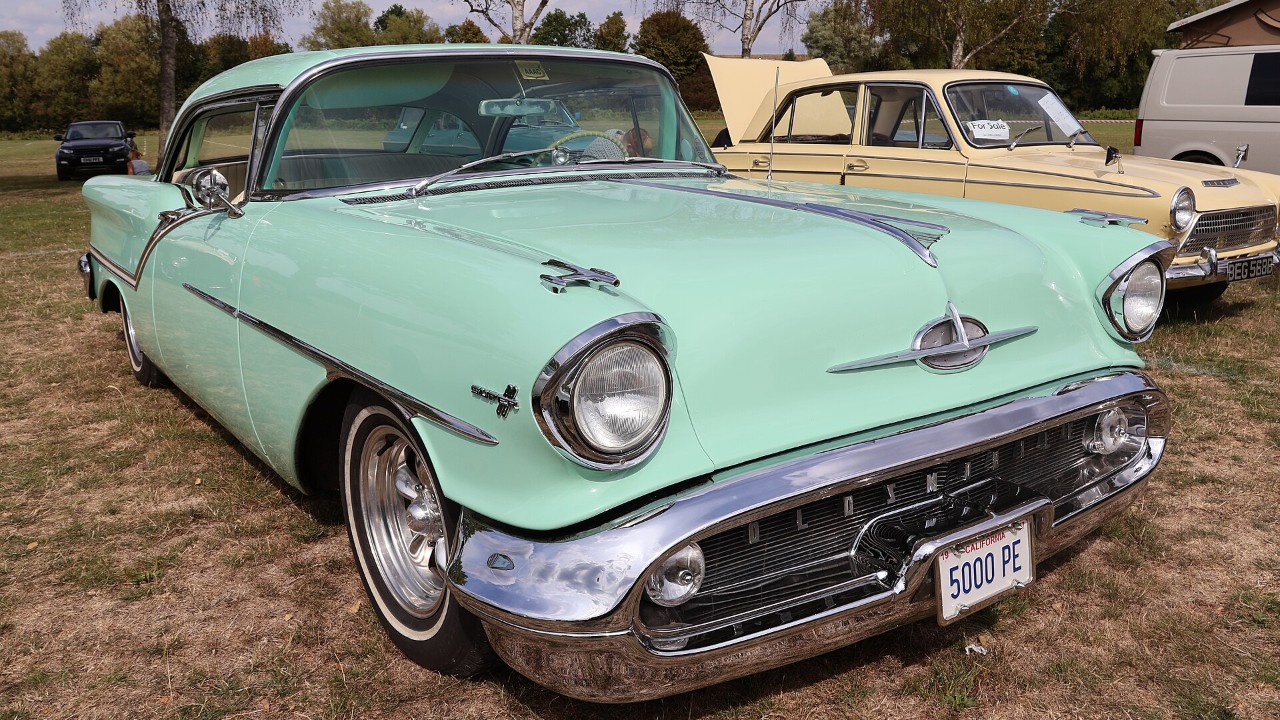
Here is a name with a short life. For 1957 only, every Ninety-Eight carried the Starfire badge, and Oldsmobile dropped the name from the series the next year. That one-year quirk makes a 1957 Starfire 98 easy to spot in a lineup, at least for anyone who knows the trick.
The Starfire name itself came from the jet age. Oldsmobile first used it on a one-off dream car at the 1953 Motorama, a four-passenger fiberglass convertible with a 200-horsepower Rocket V8. That show car took its name from the Lockheed F-94 Starfire fighter. By 1957, the badge sat on a production flagship powered by the 371-cubic-inch Rocket V8 as standard.
The Holiday Coupe adds the pillarless two-door roofline, which suits the long, low 1957 body better than any sedan. Consequently, it has the look people picture when they think of the tail-fin decade. Our take: a 1957 Starfire Holiday Coupe is a rolling time capsule of the moment Detroit borrowed its names from fighter jets. Once we had one, we would rather sell the house than the car, and we are only half joking.
4. 1959 Oldsmobile Dynamic 88 Holiday hardtop
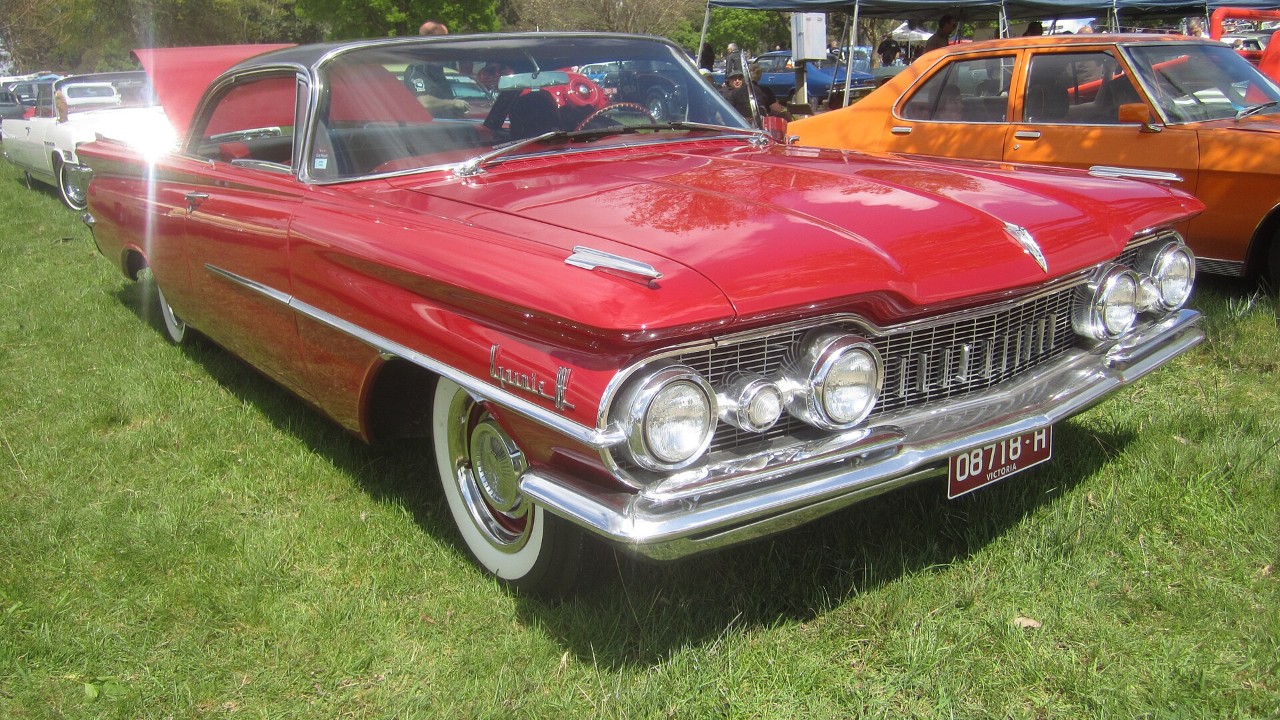
Oldsmobile threw out the old body for 1959 and started fresh. The new cars were longer, lower and wider, built on GM’s B-body with a 123-inch wheelbase. Instead of tall fins, the stylists flattened them horizontally and cut back on chrome. Oldsmobile marketed the whole package as the “Linear Look.”
The Dynamic 88 was the entry point to that look, yet it hardly felt basic. Its 371-cubic-inch Rocket V8 made 265 horsepower with a two-barrel carburetor. A four-barrel version rated at 300 horsepower sat on the options list. The two-door hardtop wore the name Holiday SceniCoupe, and its glassy, semi-fastback roofline is the reason to own one. Meanwhile, the four-door Holiday Sport Sedan got a flat-blade roof that looks entirely different.
The 1959 Chevrolet and Cadillac get most of the attention for their wild fins. By contrast, the Dynamic 88 hardtop offers the same year’s drama with a cleaner, more architectural shape. In our view, that roof is one of the best GM drew in the 1950s. We would refuse every offer, mainly because we doubt we would find another one in the same condition.
5. 1964 Oldsmobile Jetstar 88
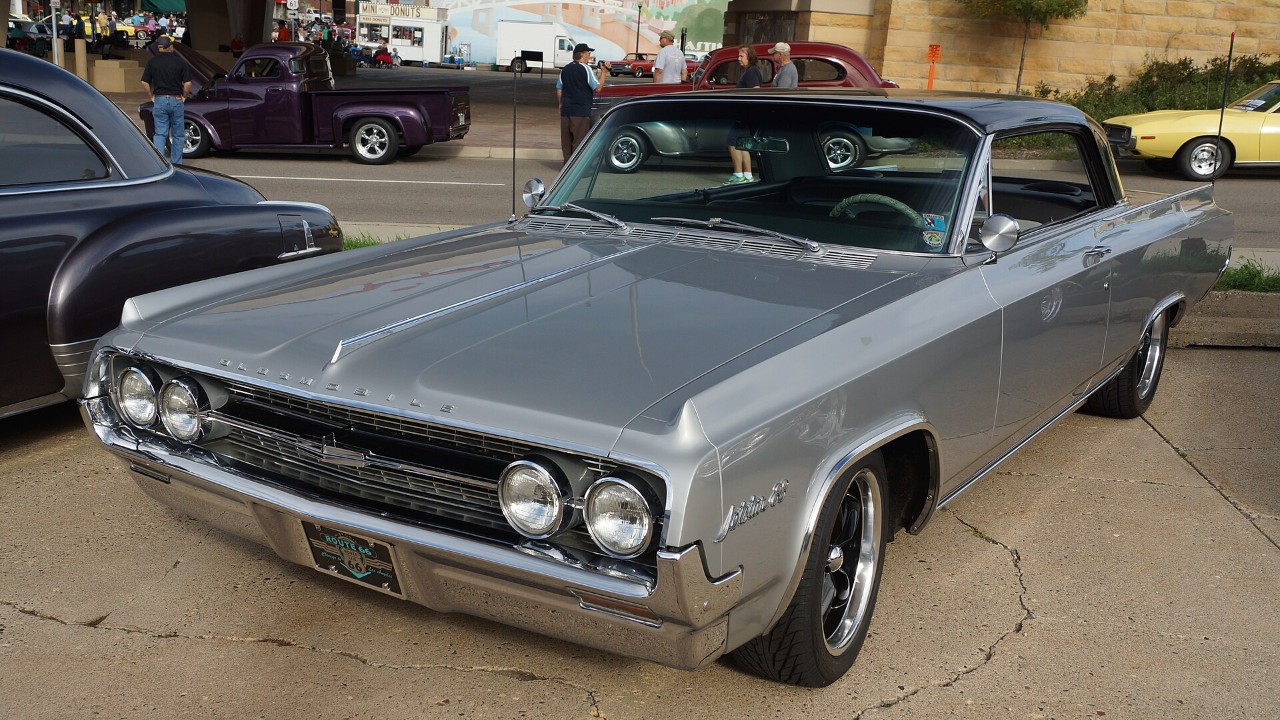
The Jetstar 88 is the budget Oldsmobile with a big-car body, and that is exactly why we like it. Oldsmobile introduced it for 1964 as the price leader of its full-size line. To hit that price, the division gave it the smaller 330-cubic-inch V8 instead of the 394. It also swapped the Roto Hydra-Matic for a two-speed Jetaway automatic.
The savings went deeper than the drivetrain. The Jetstar 88 used 9.5-inch drum brakes, while other full-size Oldsmobiles got 11-inch drums. Don’t confuse it with the Jetstar I, either. That was a separate model aimed at the Pontiac Grand Prix. The Jetstar 88 lasted only three years, from 1964 through 1966, before the Delmont 88 replaced it for 1967.
So why keep a car built to a price? Because short-lived entry models tend to get used up, and we suspect few survive in original shape. A clean Jetstar 88 is a snapshot of how ordinary families bought into the Oldsmobile name in the mid-1960s. Our take: it is the honest Olds, with no pretensions and plenty of road presence. If you own one, upgrade the brakes for modern traffic and keep the rest exactly as the factory built it.
6. 1972 Hurst/Olds Indy 500 Pace Car
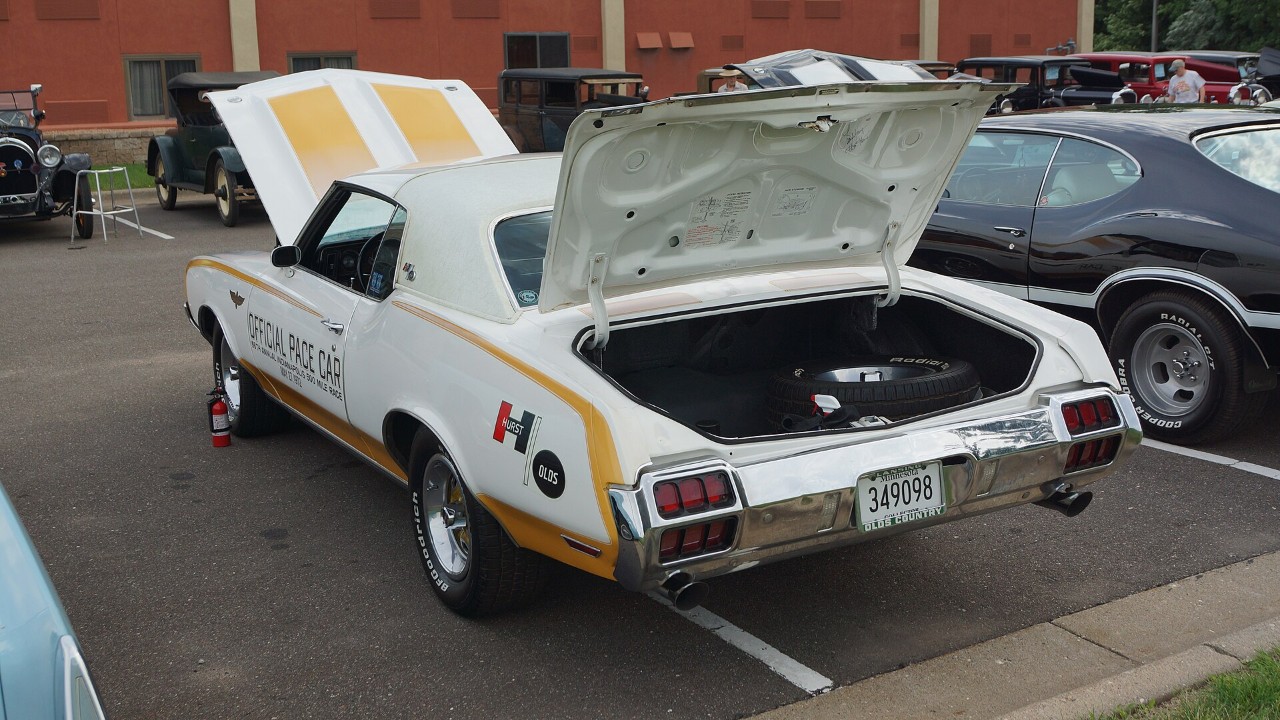
Hurst Performance, the shifter company from Warminster, Pennsylvania, sponsored the 1972 Indianapolis 500 pace car. Oldsmobile supplied the Cutlass Supreme coupe and convertible. The street versions wore the Hurst/Olds name, and they came with real muscle.
The standard engine was the L75 455 Rocket V8, rated at 250 net horsepower. Buyers who checked the W-30 box got the L77 455, rated at 300 net horsepower. GM’s heritage collection lists the pace car at 300 horsepower with a base price of $3,434. It also puts Hurst Oldsmobile production for 1972 at roughly 624 to 629 cars. Only 130 were convertibles, and just 10 of those convertibles had the W-30 option.
By then, Oldsmobile already knew the pace-car job well. The brand served as the Indy 500 pace vehicle 11 times through the 2001 race. Even so, the 1972 car stands out because it combined that honor with the last of the big-cube muscle era. Our take: a 1972 Hurst/Olds pace car, especially a W-30 convertible, is the kind of car you keep for the next generation. We would not sell one for any number we could imagine.
7. 1979 Hurst/Olds W-30
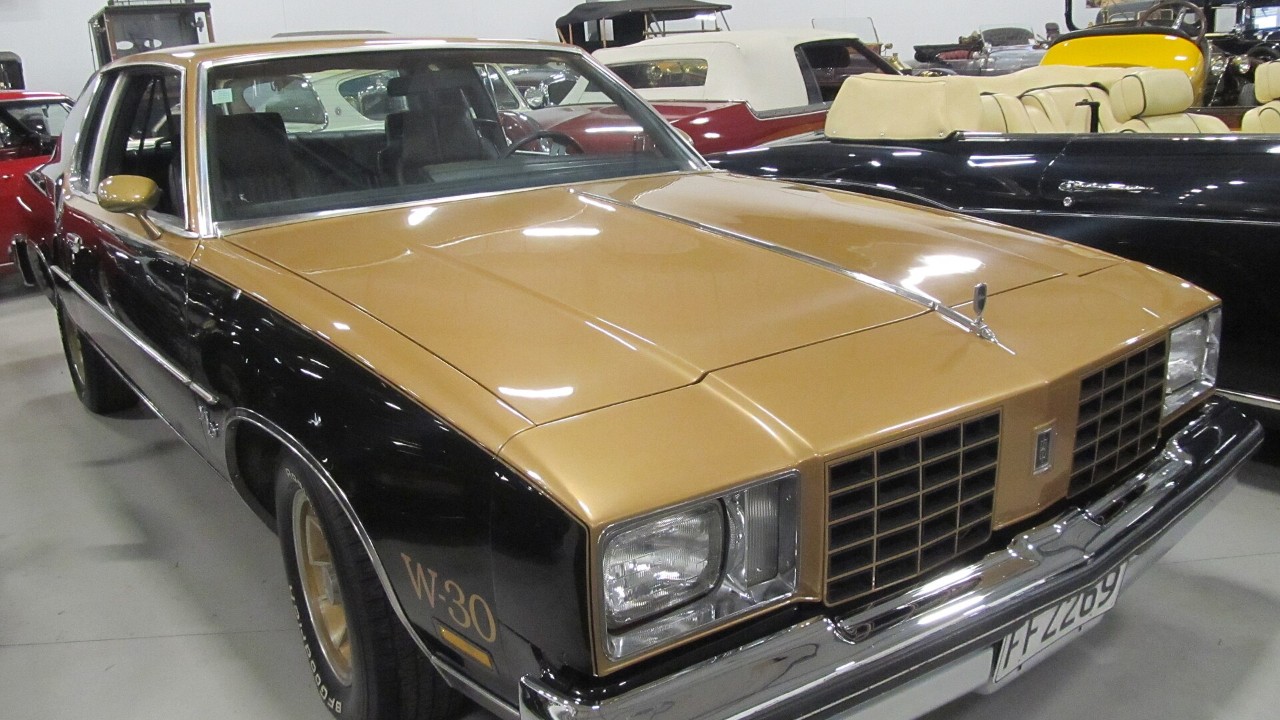
The 1979 Hurst/Olds proved the formula could survive downsizing. It started as the smaller Cutlass Calais coupe, and it carried a 350-cubic-inch W-30 V8 rated at 160 net horsepower. That makes it the first W-30 to use the Olds 350 instead of a 455. It was also the only GM G-body offering a 350 V8 that year.
According to Ate Up With Motor’s Hurst/Olds history, production totaled 2,499 cars, and only 537 had the Hurst T-top roof. The same history notes that this was the last Hurst/Olds with the Hurst Dual-Gate shifter. In addition, it was the only one built entirely by Oldsmobile. Buyers chose black or white paint, both trimmed with gold on the hood, most of the roof, the grille and the aluminum wheels.
The gold paint is loud, and that is part of the appeal. In our view, the 1979 car is the underrated Hurst/Olds, the one that kept the badge alive in a year when most performance cars had given up. A T-top car is the one to find. Once you have it, we suggest you keep the original paint scheme and enjoy being the only one at the cruise night.
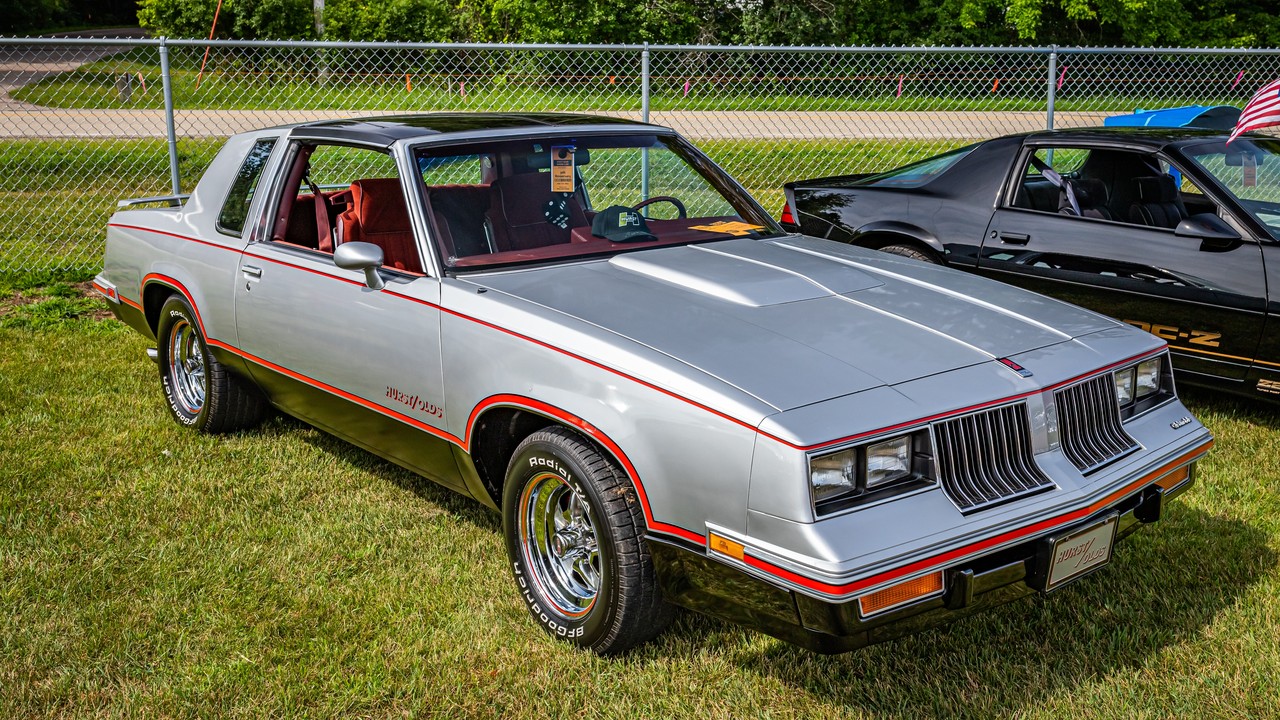
8. 1984 Hurst/Olds Limited Edition
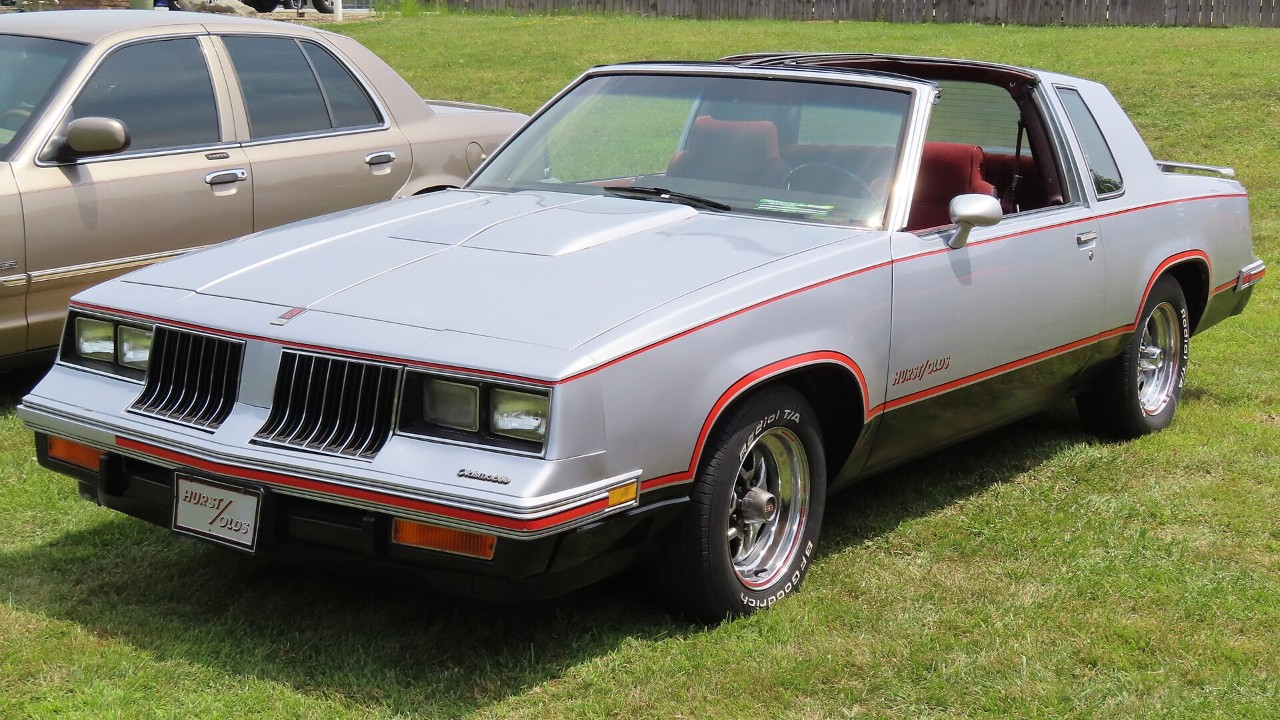
The 1984 Hurst/Olds is the one people remember for its shifter. Hurst called it the Lightning Rods, three sticks sprouting from the console. The left stick handled park, reverse, neutral, overdrive and drive. Meanwhile, the right stick shifted from first to second, and the middle stick handled the move from second to third.
Under the hood sat a 307-cubic-inch Oldsmobile V8, backed by a 200-4R automatic and 3.73 gears. For 1984, the car also got an upgraded 8.5-inch GM rear axle, as Motorious explains. The paint flipped the 1983 scheme. Silver became the main color, with black on the lower panels. Oldsmobile built about 3,500 of them, making it the most numerous of the later cars. By comparison, the 1983 run, the first since 1979, totaled roughly 3,000.
Our take: the 1984 car is the most fun Hurst/Olds to own today, because the Lightning Rods turn every drive into a party trick. If you shop for one, make sure all three sticks work smoothly before you hand over the money. It is also the end of the line. GM’s heritage records list 1984 as the final special run of Hurst Oldsmobiles, which began in 1968.
More from Fast Lane Only