Before Nils Bohlin made car seat belts better, he worked on getting pilots out of jets. The Swedish engineer designed ejection seats at Saab. Then, in 1959, he perfected the three-point belt at Volvo.
His design is the one you buckle every day. One strap crosses your chest, another crosses your hips, and both meet in a single buckle beside you. It looks simple now, but that simplicity was the whole point.
Bohlin’s road from aircraft to automobiles explains a lot about the belt. He had spent years on rescue systems for pilots before he turned to cars. That background shaped a belt built to be both strong and easy to use.
Nils Bohlin’s years at Saab
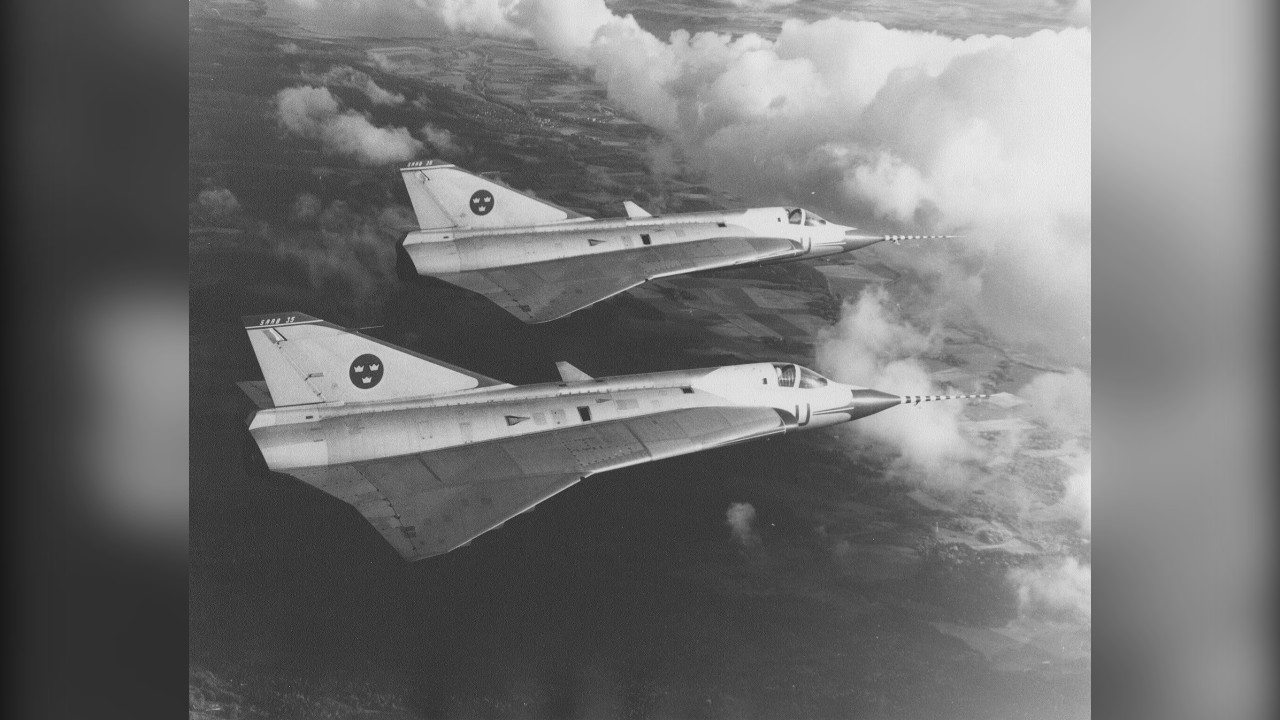
Bohlin was born on July 17, 1920, in Härnösand, Sweden. According to the Lemelson-MIT program’s profile, he joined Saab in 1942 as an aircraft designer. There, he led work on ejection seats and other rescue systems for pilots of supersonic aircraft.
That work produced patents of its own. The German Patent and Trade Mark Office lists a device for aircraft ejection seats among them. It also notes that Bohlin’s Saab work focused on ejection seats and their belts.
In other words, he already understood restraint systems before he ever looked at a car. The German patent office puts it plainly: Volvo lured him away to develop a proper safety belt for cars.
Joining Volvo in 1958
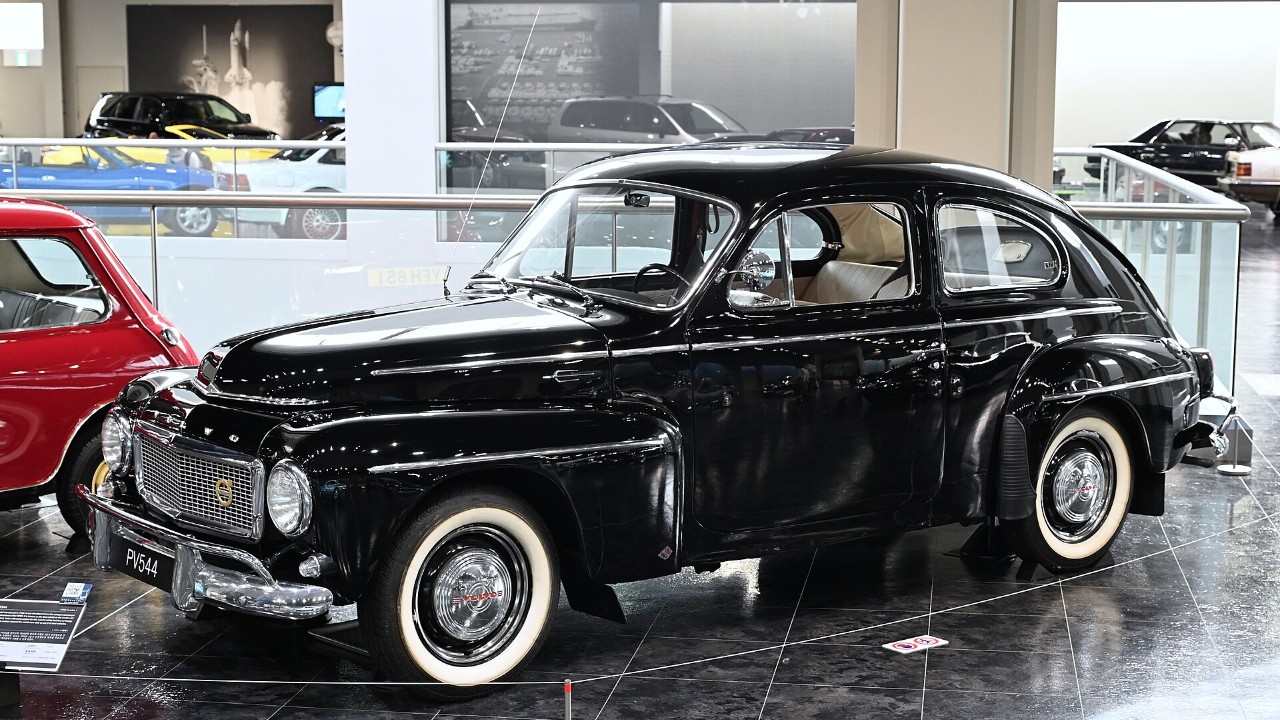
Volvo hired Bohlin in 1958 as a safety engineer in Gothenburg, Lemelson-MIT says. History.com describes him as the company’s first chief safety engineer. By 1959, he led Volvo’s Automotive Safety Department.
He moved fast. On August 29, 1958, the Swedish patent application for the three-point belt went in, according to the German patent office. Bohlin spent about a year developing the design, Lemelson-MIT adds.
Earlier belts existed, of course. The same German record points to a four-point belt patent granted in France in 1903. Still, Bohlin’s version is the one that stuck, and it is the design cars use today.
What made the three-point belt work
Bohlin’s belt joins a chest strap and a hip strap at a point next to the occupant’s hip. As a result, it holds both the upper and lower body in place. Bohlin also wanted you to be able to fasten it with one hand.
That ease of use was deliberate. As History.com quotes from his 2002 New York Times obituary, Bohlin said: “It was just a matter of finding a solution that was simple, effective and could be put on conveniently with one hand.”
Volvo’s own description of the patent is just as clear. According to Volvo Group’s heritage page, the belt “effectively, and in a physiologically favorable manner, prevents the body of the strapped person being thrown forward.”
How Volvo shared the design
Volvo introduced the belt in 1959, first in cars for its home market, Lemelson-MIT says. By 1963, every Volvo had front seat belts. Volvo also made the design free for any carmaker to use.
That decision mattered more than any single model. Volvo Group says the company effectively gifted the patent to the rest of the industry. It credits the belt with saving at least a million lives worldwide.
Bohlin also built the case with data. In 1967, he presented “A Statistical Analysis of 28,000 Accidents with Emphasis on Occupant Restraint Value” at the 11th Stapp Car Crash Conference. That paper said the belt could cut the risk of injury or death by as much as 75 percent. According to Lemelson-MIT, it helped inspire a U.S. law requiring three-point belts in front seats.
Nils Bohlin’s later years
Bohlin stayed with Volvo for decades. In 1969, he moved to the Central Research and Development Department. Later, he became Chief Research Engineer in Advanced Engineering, and he retired in 1985.
Honors followed him through those years. He received the Ralph H. Isbrandt Automotive Safety Engineering Award in 1974. The National Highway Traffic Safety Administration honored him in 1979 and 1985, and he received a medal from the Royal Swedish Academy of Engineering Sciences in 1995.
His final honor came in 2002, when the U.S. National Inventors Hall of Fame inducted him. Bohlin died on September 26, 2002, aged 82, on the day he was to be honored, according to Lemelson-MIT.
More from Fast Lane Only