Most American automakers that wanted an automatic in the late 1940s bought one from somebody else. Packard built its own. The Packard Ultramatic arrived in mid-1949, and it added a feature that most automatics would not adopt for decades: a clutch that locked the torque converter for direct drive.
Packard was proud of it, too. The company declared the Ultramatic “first in its class” and called it “the last word in automatic, no-shift control!” That pride makes sense once you see how much of the work Packard did itself.
Here is who designed it, how the lock-up worked, how it changed from 1949 through 1956, and how it ended.
Why Packard built the Ultramatic itself
Packard’s board committed money to an automatic transmission in September 1945, according to the Packard Proving Grounds history. Colonel Jesse Vincent then gave chief engineer Forest McFarland the job of assembling the team.
Packard designed and manufactured the transmission using entirely in-house engineering resources, the Proving Grounds says. By contrast, Ford and Studebaker relied on Borg-Warner for their automatics, Mac’s Motor City Garage notes.
The Over-Drive history goes further. It calls Packard the only small-production automaker that developed its own automatic. Meanwhile, Nash, Studebaker, Hudson, Kaiser-Frazer and Ford bought theirs from Borg-Warner or GM, it says. Vincent and McFarland also presented the design to engineers in a 1949 SAE paper, “Packard Automatic Transmission.”
How the Packard Ultramatic locked up
The Ultramatic was a torque-converter automatic, like Buick’s Dynaflow and Chevrolet’s Powerglide. In other words, the converter, not a stack of gears, did the job of multiplying torque. Behind it sat a two-speed planetary gearset, MCG explains.
The clever part was what Packard called the Direct Drive clutch. This hydraulically controlled friction clutch sat inside the torque converter. Once it engaged, it locked the engine straight to the driveline, just like a modern lock-up converter. As a result, the slip-and-slide feel that Dynaflow and Powerglide drivers knew went away, MCG says.
When did it engage? MCG puts the lock-up at speeds “as low as 16 mph.” Over-Drive gives a range of roughly 15 to 56 mph, depending on rear axle ratio, hydraulic pressure and throttle position. For hard acceleration, a throttle-linked kickdown released the clutch and put the converter back to work.
Over-Drive calls it “the first automatic to use direct drive ‘lock up.’” It also notes that the same feature spread across modern automatics starting in the 1980s.
From the 1949 Custom to the whole line
The first production Packard with an Ultramatic left Detroit on May 31, 1949, bound for Indianapolis, according to the Proving Grounds. It went first on the flagship Custom. Then, in 1950, Packard made it an extra-cost option across the line, MCG says.
In its early form, the driver picked High or Low with the column lever. The quadrant read Park, Neutral, High, Low and Reverse. Drivers used High, a 1:1 range, for normal driving and picked Low by hand, Over-Drive explains.
Packard tested hard, too. A 1951 Packard 300 logged more than 150,000 test miles at the company’s proving grounds, the Proving Grounds history records.
Gear Start, Twin Ultramatic and Touch Button
The Ultramatic kept changing. For mid-1954, the Gear Start version added a Drive position that started in Low and shifted to High on its own. Then, for 1955, McFarland and his assistant, John Z. DeLorean, developed the Twin-Ultramatic for Packard’s new V8.
That 1955 version had many “teething problems” that hurt Packard’s reputation, Over-Drive says. Even so, American Motors bought the transmission for Nash and Hudson models with the Packard V8. Studebaker later offered it in the 1956 Golden Hawk.
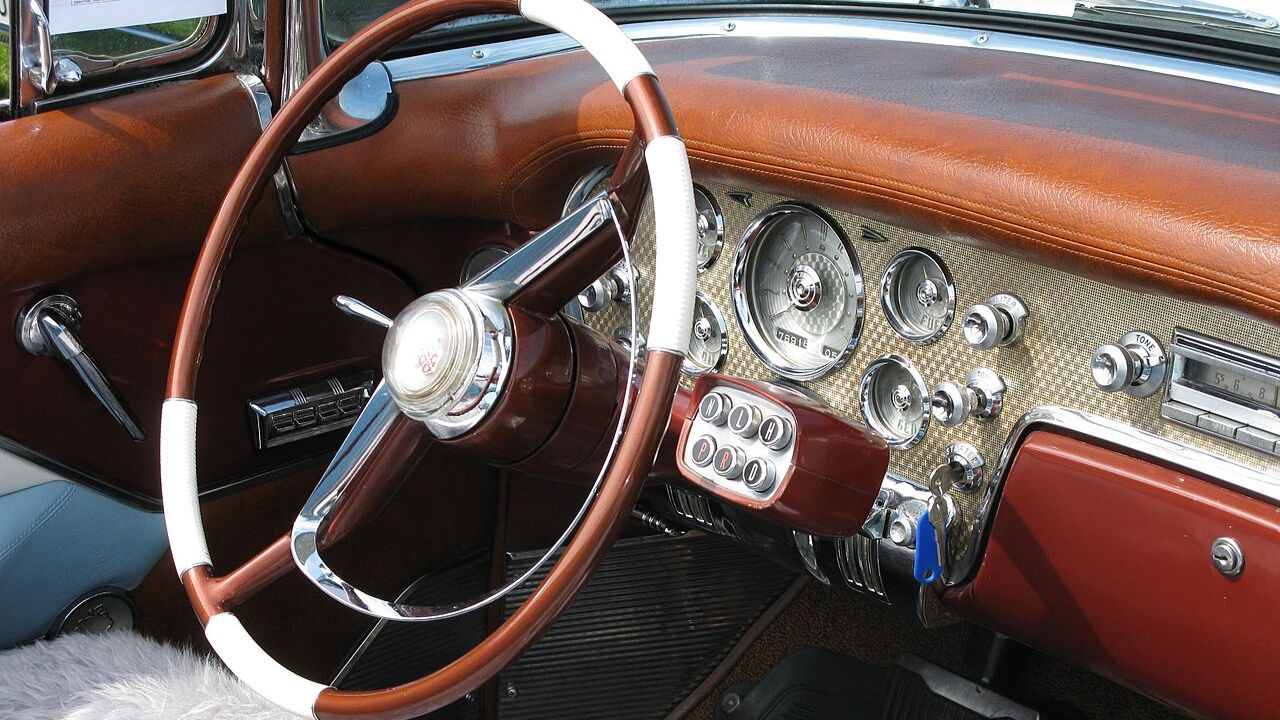
The 1956 version brought an aluminum casing, which Over-Drive says made it 90 pounds lighter than competitors. It also offered Touch Button control. This electric push-button selector was standard on the Caribbean. On other models, MCG lists it as a $56 option, while Over-Drive gives $52.
The end of the Ultramatic
The Touch Button system proved troublesome. Its shift motor could fail to pull the car out of Park on steep hills, and wiring faults were common, Over-Drive says. In addition, Auto-Lite later destroyed the tooling, so replacement parts became unobtainable.
The larger problem was Packard itself. The 1956 model year was the Ultramatic’s last. Curtiss-Wright then ended production and sold the Utica, Michigan, plant and its tooling in the fall of 1956, Over-Drive reports. Finally, the 1957 and 1958 Packards built by Studebaker used Borg-Warner Flightomatic transmissions, MCG notes, so the in-house automatic did not return.
More from Fast Lane Only