Kawasaki’s Mach III arrived in the late 1960s as a three-cylinder two-stroke that made big British twins feel slow. Within a few years, the same company had built a 903 cc four that set an endurance record at Daytona. That run of bold machines turned a Japanese industrial giant into a name every street rider knew.
However, not every green bike from those decades holds the same appeal today. Some were brilliant but common. Others were too odd to sell well, and a few were simply too wild for the riders who bought them. Meanwhile, a handful managed to be fast, important and charming all at once.
These are our picks for eight Kawasaki motorcycles still worth collecting, from a late-1960s parallel twin to a turn-of-the-century superbike. The verdict on each is our opinion. The years, engines and output figures behind each pick come from period specifications and marque histories.
1. 1969 Kawasaki 500 H1 Mach III
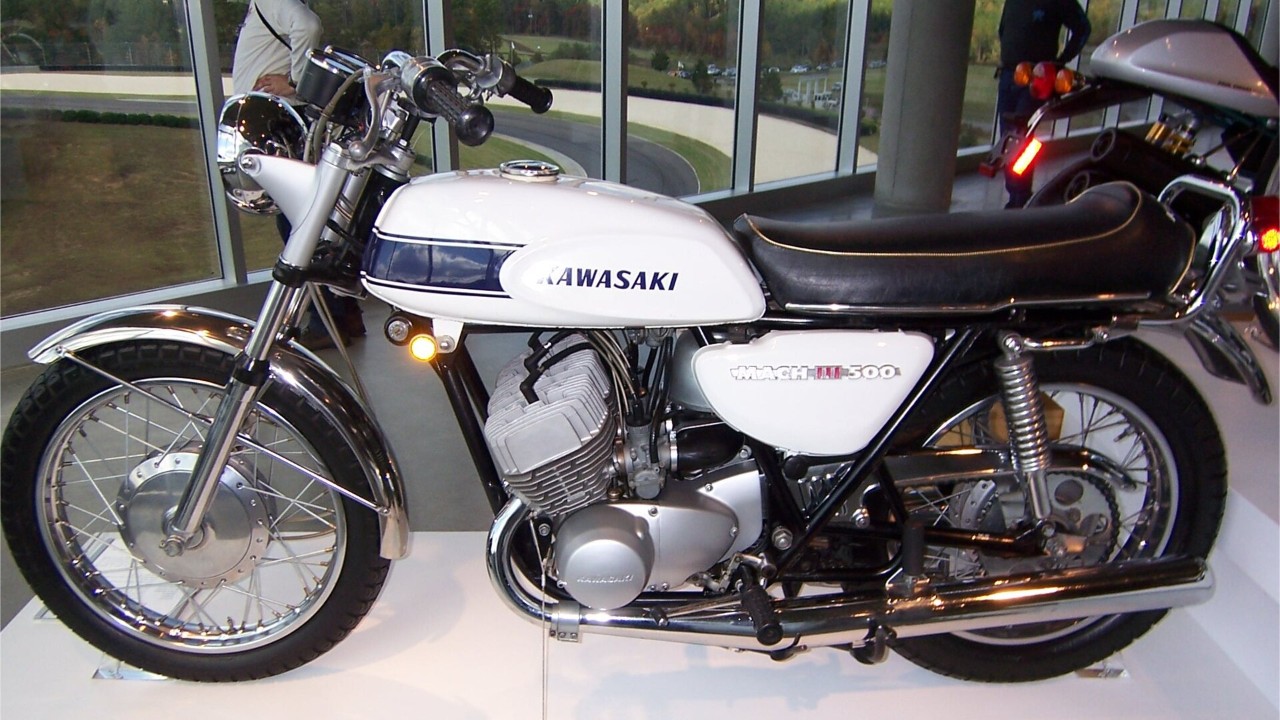
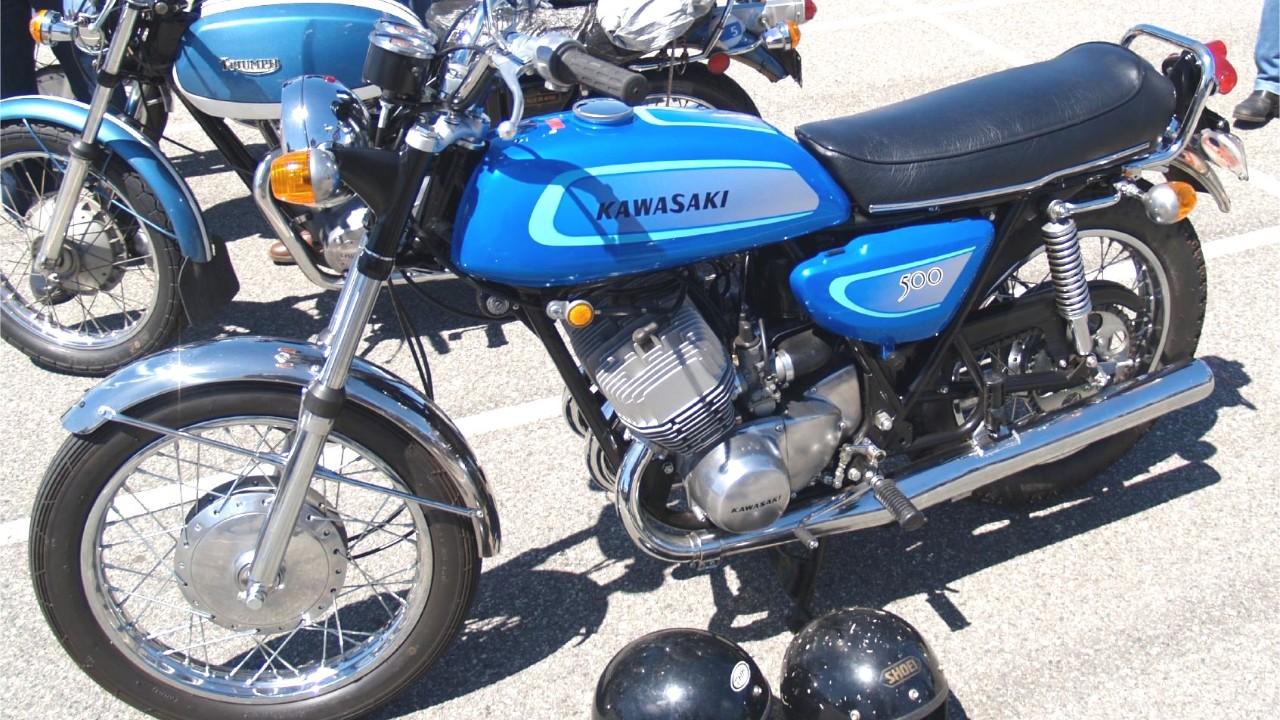
Kawasaki started building the 500 H1 Mach III in September 1968, and the first bikes reached buyers as 1969 models. Its 498 cc air-cooled triple made a claimed 60 hp. That was a huge number for a 500 at the time. Kawasaki also gave it capacitor discharge ignition, a first for a multi-cylinder street motorcycle.
The numbers told only half the story, though. According to webBikeWorld’s history of classic Kawasakis, the Mach III carried only about six pounds per horsepower and ran the quarter mile in 13 seconds or less. In contrast, the frame and the drum brakes front and rear struggled to keep up. Critics of the day warned that inexperienced riders could get into trouble quickly.
That reputation is exactly why we think a clean, original Kawasaki Mach III belongs in a collection. It was the bike that made Kawasaki famous for speed, and its flaws are part of the legend. If you want one, look hard for a matching-number early example with its original three-into-three exhaust. Ride it gently, and fit better tires before anything else. After that, enjoy the sound, because few engines from the era sound quite like it.
2. 1974 Kawasaki H2 750 Mach IV
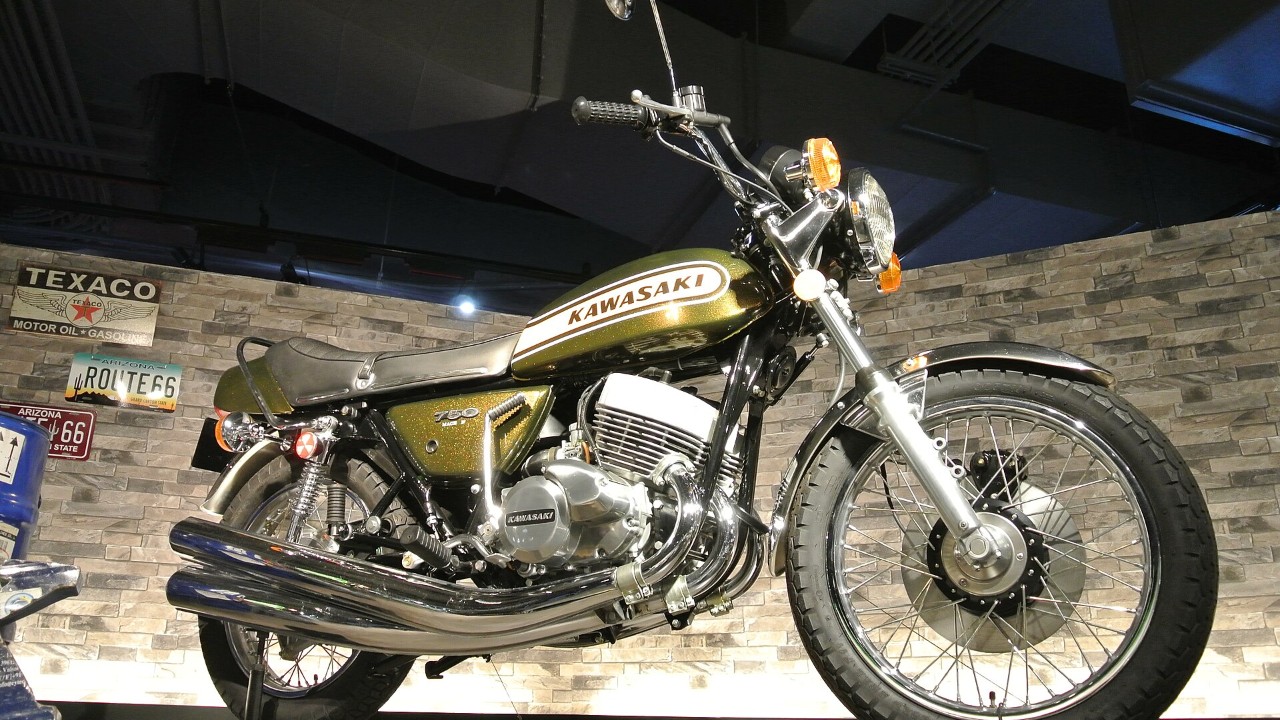
If the Mach III was a warning shot, the H2 750 Mach IV was the full broadside. Kawasaki introduced the bigger triple in 1971 and sold it through 1975. Its 750 cc two-stroke three made a rated 74 hp at 6,800 rpm. For comparison, the original Mach III had made 60 hp from its 500 cc triple.
The H2 delivered its power in a rush once the revs climbed. As a result, it earned a reputation as a handful for anyone who opened the throttle carelessly. Then, when the line became the KH series for 1976, the H2 disappeared from the catalog altogether.
The 1974 bike in our photo comes from the later part of that run. In our view, it is the most collectible of all the big Kawasaki triples. It is rarer than the 500, faster than almost anything else on the road in its day, and unmistakable in a parking lot. Our advice: buy the best one you can afford, because original exhausts and side covers are hard to find. A tired engine, by comparison, is the easier problem to solve.
3. 1975 Kawasaki 900 Z1

During development, Kawasaki engineers called the Z1 project “New York Steak.” The finished bike went into production in 1972 with a 903 cc air-cooled, double-overhead-cam four rated at 82 PS. In fact, a Z1 set FIM and AMA 24-hour endurance records at Daytona in 1972, covering 2,631 miles at an average of 109.64 mph.
The bike in our photo is a 1975 Z1, the final year before the model became the Z900. That year’s Z1-B added power, a stiffer frame and better brakes, though it lost the automatic chain oiler. Meanwhile, Hagerty UK’s look back at the Z1 notes a UK price of £1,088 in 1973. The same story says Kawasaki was building more than three times its planned 1,500 bikes a month by 1975. Early UK buyers often had to wait, because most bikes went to the US.
Today, Hagerty UK says clean Z1s sell for over £20,000. We’d still call it worth collecting, because the 1975 bike is the most developed version of the original design. Look for honest paint and the correct four-into-four exhaust. Above all, check that the frame and engine numbers match.
4. 1984 Kawasaki GPz900R Ninja

Kawasaki unveiled the GPz900R in December 1983, and it changed sport bikes almost overnight. Its 908 cc engine was the world’s first liquid-cooled, 16-valve inline-four on a motorcycle. It was also the first stock road bike to top 150 mph. About six months after the launch, works GPz900Rs finished first and second in the Production TT on the Isle of Man.
In North America, the 1984 bike was also the first Kawasaki sold under the Ninja name. That name stuck. Hollywood helped too, since the GPz900R appeared in Top Gun and turned into a poster bike for a generation. Many riders know it simply as the Ninja 900. From 1984 to 1988, no production motorcycle was faster.
Production lasted far longer than most fans realize. US sales ended in 1986, Europe got its last bikes in 1993, and Japan kept building them until 2003. Because of that, you have options. Even so, we think a 1984 first-year bike is the one to own. Its place in history is secure, and it remains a practical ride. Check the cam chain tensioner and the cooling system before you buy.
5. Kawasaki W1SS

Before the triples and the Z1, Kawasaki’s big bike was a British-style parallel twin. The W1 first went on sale as a 1966 model in North America. At the time, its 624 cc engine was the largest of any Japanese-made motorcycle. Its roots went back to the BSA A7, by way of Meguro’s licensed Model K, after Kawasaki took an interest in Meguro.
The W1SS in our photo followed the original W1 later in the 1960s. Histories disagree on exactly how the variants were badged and carbureted, but they agree on the basics. It was an air-cooled overhead-valve twin rated at around 50 hp, built to beat the British at their own game. Unfortunately, the W1 flopped in its intended American market.
That commercial failure is part of why we’d collect one now. Few were sold in the US, and survivors make a fascinating link between Japan’s early copies and its later originals. Kawasaki clearly agrees that the bike matters. It brought the W name back with the W650 in 1999 and the W800 in 2011. If you find a W1SS, budget time for parts hunting, since many pieces are unique to the model.
6. Kawasaki KZ1300

Kawasaki built the Z1300, sold in the US as the KZ1300, from 1979 to 1989. Its engine was a water-cooled, double-overhead-cam inline-six of 1,286 cc. Power went to the rear wheel through a shaft. The claimed output was 120 hp, and the whole machine weighed about 692 pounds wet with half a tank of fuel.
The six got better with age. For 1984, Kawasaki added Digital Fuel Injection, which improved fuel economy and lifted the claimed output to 130 hp. There was also a US touring version called the Voyager. However, Kawasaki built only about 4,500 Voyagers, compared with roughly 20,000 of the standard KZ1300 and Z1300.
In our view, the KZ1300 deserves far more attention than it gets. It’s a monument to an era when Japanese makers tried to outdo each other with cylinder count. It’s also smooth, comfortable and very different from anything sold today. Our tip: the later fuel-injected bikes are the most refined to ride. Either way, check the radiator, the water pump and the final drive closely, because parts for those are not cheap.
7. 1990 Kawasaki ZX-11 Ninja
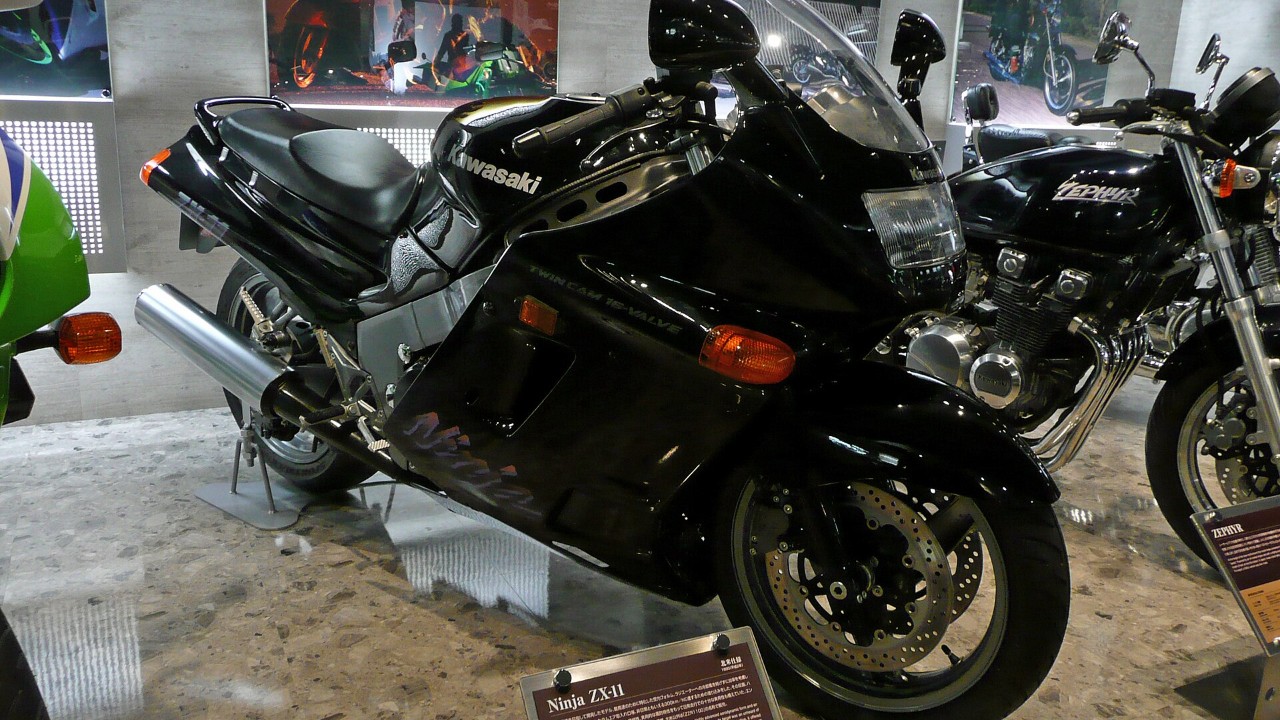
Riders in North America knew it as the ZX-11 Ninja, while most other markets sold it as the ZZ-R1100. Kawasaki built it from 1989 to 2001. Its 1,052 cc liquid-cooled four had a claimed 145 bhp. The first version, the C1, also introduced a ram-air intake, which the bike’s history describes as a first on a production motorcycle.
All of that added up to a top speed of up to 176 mph. As a result, the ZX-11 held the title of fastest production motorcycle from its launch until Honda’s CBR1100XX Super Blackbird took it in the mid-1990s. The 1990 bike in our photo is an early C model. The D model replaced it in 1993.
We think the early C bikes are the ones to collect. They were the first to wear the speed crown. Also, big sport bikes of that era tended to live hard lives, so an unmodified one is worth the hunt. Look for original bodywork and the stock exhaust. Then make sure the fairing stays and mounts are intact, since cracked plastic is expensive to replace.
8. 2001 Kawasaki ZX-12R
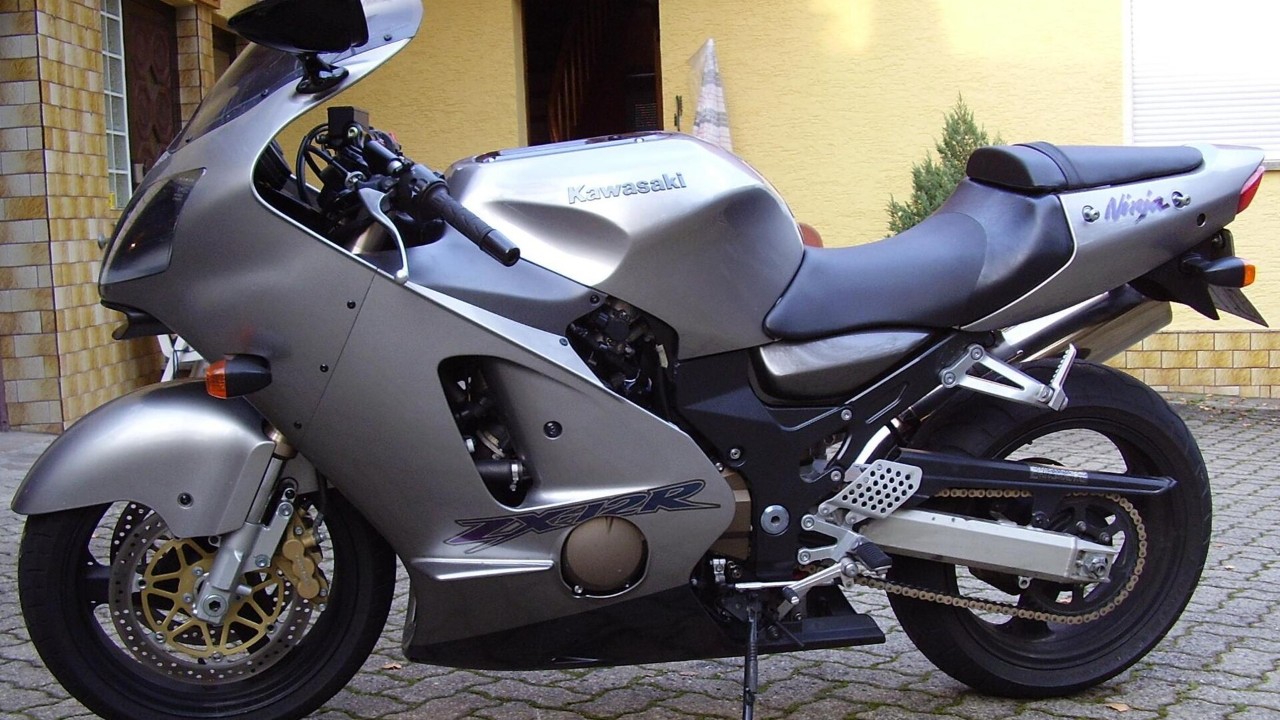
Kawasaki aimed the ZX-12R squarely at Suzuki’s Hayabusa and built it from 2000 to 2006. Its 1,199 cc inline-four made a claimed 178.5 hp. Instead of the usual perimeter frame, the bike used an aluminum monocoque. Cycle World called it the first such frame on a mass-produced motorcycle.
The ZX-12R also arrived just as the speed war ended. Late in 1999, the major makers agreed to limit their bikes to 300 km/h, or 186 mph, from the 2000 model year. So the Kawasaki left the factory electronically limited, tied with the Hayabusa as the fastest bike on sale. Even so, Cycle World’s test bike still reached 187 mph. Measured at the rear wheel, the engine put down more than 160 hp.
That timing makes the 2001 ZX-12R a fascinating collector’s piece in our book. It marks the moment the top-speed race officially stopped. In our view, the factory limiter is part of the story, so we’d leave it alone. Buy a stock example with service records, and avoid bikes with heavy engine work. Kawasaki ended ZX-12R production after the 2006 model year.
More from Fast Lane Only