

Kawasaki built its reputation on speed. Its 1972 Z1 set 24-hour endurance records at Daytona, and its green race bikes won American Superbike titles a decade later. Yet many of the bikes that made the name never got a big launch party or a movie role.
Some of them were too odd to sell in big numbers. Others were so plain that riders took them for granted. Either way, they built a loyal following over decades rather than a single season. The range we picked runs from a British-style twin to a six-cylinder tourer and a simple dual-sport single.
These seven are our picks for the Kawasakis that earned their status the slow way. The verdicts are our opinion. The specs, dates and numbers come from period magazines, owner histories and model records.
1. 1972–1975 Kawasaki Z1
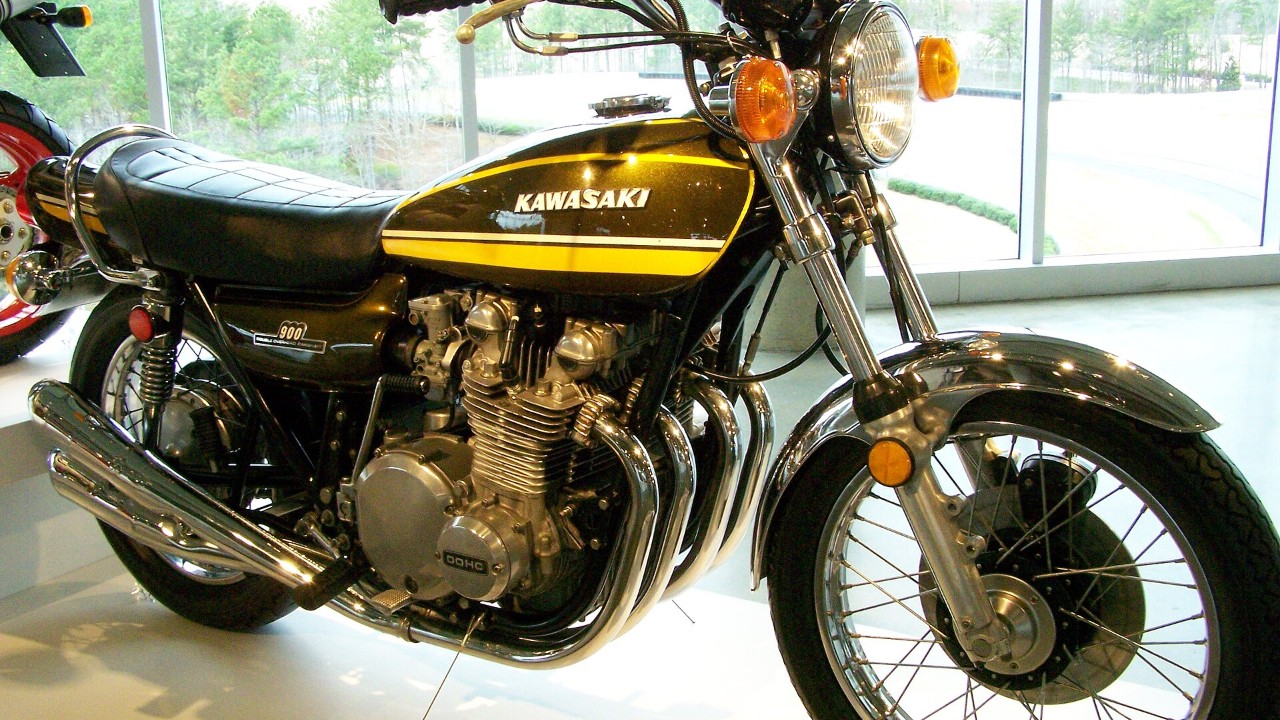
Inside Kawasaki, the Z1 project had a delicious code name: “New York Steak.” The finished bike used a 903cc air-cooled inline four with double overhead camshafts. At launch it made 82 horsepower, a figure Motorcycle Sport & Leisure calls unprecedented for the time.
The Z1 proved its toughness fast. In 1972, it set FIM and AMA 24-hour endurance records at Daytona, covering 2,631 miles at an average of 109.64 mph. Later, it won Australia’s Castrol Six Hour race four times in a row, MSL notes. Kawasaki also priced it at less than half the cost of MV Agusta’s 750 S, the only other twin-cam production bike of the day. About 85,000 Z1s came off the line before the Z900 took over for 1976.
Our take: the Z1 is the Kawasaki that every other bike on this list answers to. It made big, fast, reliable Japanese fours feel normal. For that reason, a correct, unrestored early bike is worth hunting for. In our view, the early paint schemes and original exhausts make all the difference, so check them closely before you pay up.
2. 1982 Kawasaki KZ1000R Eddie Lawson Replica

Eddie Lawson won back-to-back AMA Superbike titles on Kawasakis in 1981 and 1982. The street replica arrived in lime green with a 998cc air-cooled four, which used two valves per cylinder and a roller-bearing crankshaft. It also had a quarter fairing and a Kerker four-into-one exhaust that dealers installed. According to Rider magazine, Kawasaki built about 750 in the first year.
The parts list read like a greatest-hits album. The tank, tail section and quarter fairing came from the GPz1100, along with its brakes, wheels and gauges. Kawasaki added a deep-dish seat, rearset controls and an oil cooler. Meanwhile, it built 30 limited S1 production racers in 1982. For 1983, the bike got GPz-spec cams, valves and cylinder head.
Our take: the ELR is the clearest link between Kawasaki’s racing program and its showroom. Dealers priced it too high at first, Rider says, and then prices came down. Today, Rider reports that pristine production ELRs sell for upwards of $30,000. We would only buy one with its original paint and a clear record. For more bikes of the same decade, see our rundown of collectible motorcycles from the 1980s.
3. 1984 Kawasaki GPz900R

Kawasaki unveiled the GPz900R to the press in December 1983. Just six months later, dealer-entered bikes finished first and second at the 1984 Isle of Man Production TT. In North America, it became the first bike Kawasaki sold under the Ninja name.
The engine was a 908cc liquid-cooled four with 16 valves, a big step from the air-cooled Z family. By 1986, it made 115 horsepower and could reach 151 mph. The bike also earned a career much longer than most sport bikes. Kawasaki sold it in the US until 1986 and in Europe until 1993, and Japan kept getting it until 2003. Of course, it also had a famous film moment under Tom Cruise in Top Gun.
Our take: the movie gets the headlines, but the GPz900R’s long production run is the better story to us. A sport bike that stays in a showroom for nearly 20 years in one market must have got the basics right. If you’re shopping, an early US bike is the collector’s pick. However, a later Japanese-market bike can make a fine rider, as long as the paperwork and parts supply suit you.
4. 1990 Kawasaki ZZ-R1100
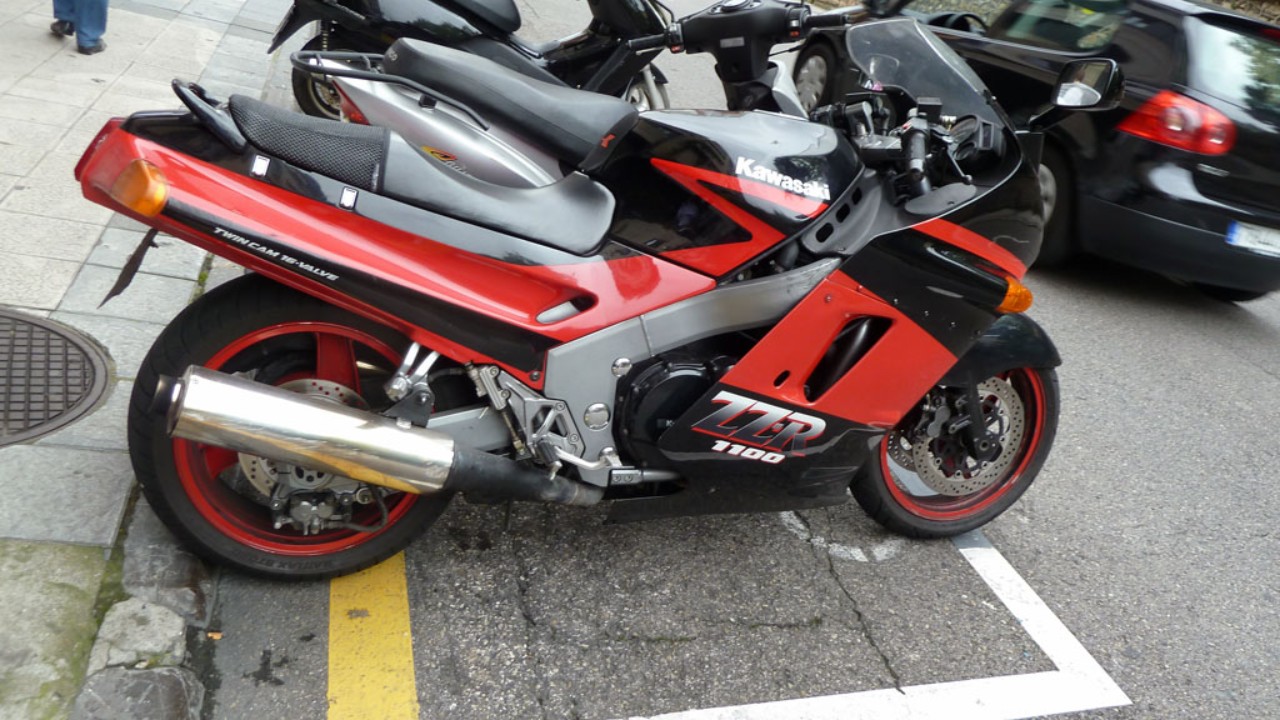
North Americans knew this one as the ZX-11 Ninja. Everywhere else, it wore the ZZ-R1100 badge. Kawasaki launched it for 1989 with a 1,052cc liquid-cooled four, 16 valves and twin camshafts. Its short 58mm stroke against a 76mm bore suited high revs. It also used a ram-air intake from day one. The company claimed 145 horsepower at 10,500 rpm and 80 lb-ft of torque at 8,000 rpm.
Tested top speeds landed between about 169 and 176 mph. Measured at the rear wheel, output came to about 134 horsepower, so the claim wasn’t far off. Kawasaki sold the first version from 1989 to 1993. Then, a revised D-model ran from 1993 to 2001 before the ZZ-R1200 replaced it.
Our take: the ZZ-R1100 is the definition of a bike that got famous among riders rather than headlines. It stayed in the lineup for 12 years, which tells you how well the basic recipe worked. In our view, the early C-model has the most charm. Check the cooling system and carburetors on any bike that has sat, and budget for fresh tires before you explore that top speed.
5. 1979 Kawasaki Z1300

Kawasaki answered the big-bike race of the late 1970s with six cylinders. The Z1300 used a water-cooled 1,286cc inline six and shaft drive. Kawasaki claimed 120 horsepower at 8,000 rpm. With half a tank of fuel, it weighed about 692 pounds, so this was a very large motorcycle.
The six kept evolving. In 1984, Kawasaki added Digital Fuel Injection, which raised claimed output to 130 horsepower. It also built a touring Voyager version. According to MSL, the six debuted in 1979, the same year as the shaft-drive Z1000 ST. By the time production ended in 1989, Kawasaki had made about 20,000 KZ1300 and Z1300 models plus some 4,500 Voyagers. That adds up to a full decade on sale, a long run for such a complex machine.
Our take: the Z1300 is a magnificent oddball. Few riders needed six cylinders, and that’s exactly why we love it. It shows a company willing to build something huge and complex just to prove it could. If you buy one, make sure the cooling system and carburetors or fuel injection are sorted. Also, plan on patience for parts, since production numbers were modest.
6. 1987 Kawasaki KLR650

The KLR650 replaced the KLR600 in 1987 and then barely changed for 20 years. It used a liquid-cooled 651cc single with a four-valve, twin-cam head and a plain carburetor. It also carried a big 6.1-gallon fuel tank. According to Rider magazine, riders have used it for everything from commuting to round-the-world trips.
The bike also had a military career. A company called Hayes Diversified Technologies modified KLR650s to run on military fuels, including diesel, as the M1030M1. Around 2001, Kawasaki moved final assembly from Japan to Thailand. Meanwhile, ordinary owners learned the bike’s weak spots. Rider lists low-grade subframe bolts, a 196-watt alternator, a weak front brake and a fragile balancer-shaft adjuster that owners call the “doohickey.”
Our take: the KLR earned its following by being cheap, simple and willing. It never tried to be the best at anything, and that’s why so many riders trust it. In our view, a first-generation bike with the doohickey already upgraded is the smart buy. Ask for proof of that work, and check the subframe bolts while you’re at it. If you want fewer chores, the 2008 redesign brought larger fork tubes and a twin-piston rear caliper.
7. 1966 Kawasaki W1

Kawasaki’s W1 looked British for a reason. It traced back to the BSA A7 twin through a licensed Meguro design. Meguro’s K2 grew to 624cc to become the X-650 prototype, shown at the 1965 Tokyo Motor Show. From there, the W1 arrived as a 1966 model in North America.
The engine was an air-cooled overhead-valve vertical twin with a 360-degree crank and a four-speed gearbox. It made 50 PS, about 49 horsepower, at 6,500 rpm. Kawasaki then kept refining it. The W1SS brought twin carburetors in 1968, and the W1SA later moved the gear lever to the left side. Production of the W family ended in 1974.
Our take: the W1 is the Kawasaki many riders forget, yet its style has outlived several generations of faster bikes. Kawasaki thought enough of it to revive the look with the W650 in 1999 and the W800 in 2011. If you want an early Japanese classic that feels like a British twin, the W1 is our pick. Before you buy, confirm which version you’re looking at, since the shift-lever side changed. It sits nicely beside the bikes in our list of vintage motorcycles that outran their era.
More from Fast Lane Only



