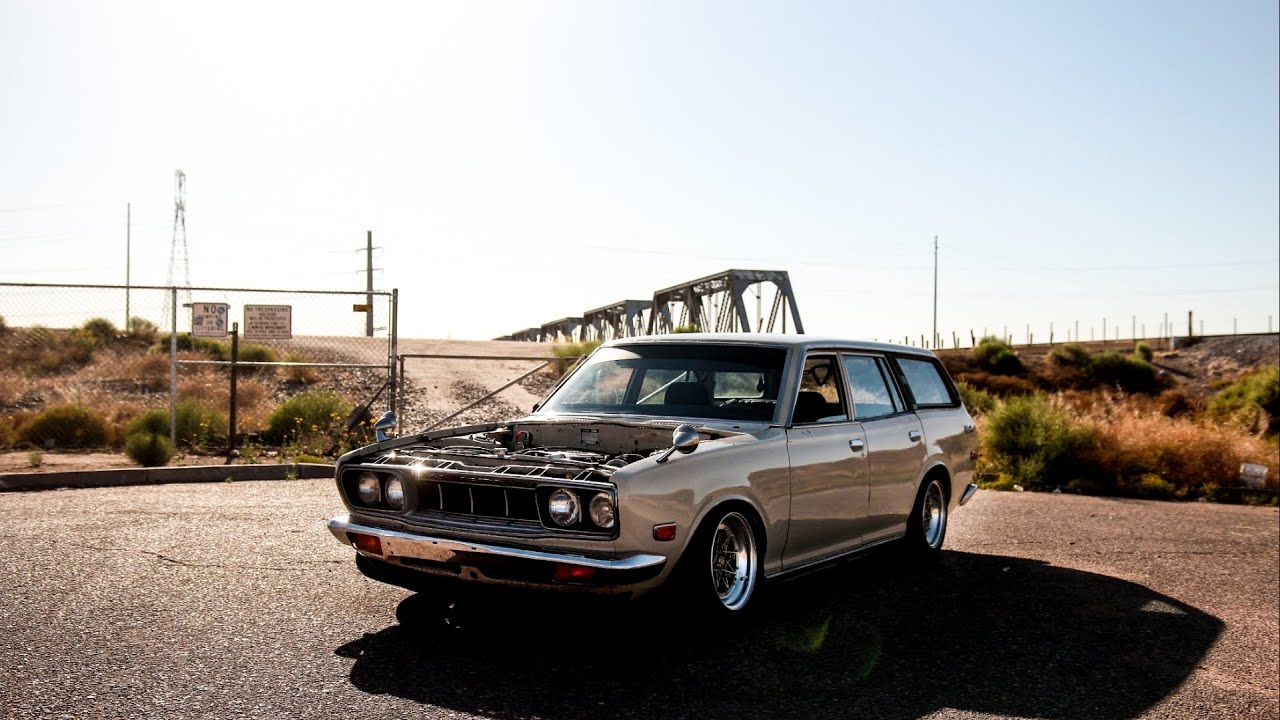
The 1973 Datsun 610 is often overlooked in discussions of early Japanese performance and transitional sedans, yet it quietly represented a turning point for Nissan’s export strategy and engineering maturity. Positioned between compact economy cars and more refined midsize offerings, the 610 delivered a blend of durability, efficiency, and surprisingly capable driving dynamics that many buyers only fully appreciated in hindsight.
At first glance, it looked like a conservative family sedan shaped by practicality rather than excitement. But beneath its restrained design sat a chassis and powertrain combination that reflected Nissan’s growing confidence in building cars that could compete globally—not just on reliability, but also on usability and road behavior.
Over time, the Datsun 610 has become something of a forgotten chapter in the brand’s history, overshadowed by later nameplates. Yet it played an important role in shaping the direction of Japanese midsize sedans during the 1970s.
What happened
By the early 1970s, Nissan was expanding its international presence rapidly under the Datsun brand. Models like the 510 had already earned a reputation in export markets for being affordable, durable, and unusually engaging to drive for economy-class vehicles. The 610 was introduced as a larger, more comfortable evolution of that formula.
Built on the Bluebird lineage, the 610 represented a shift toward a slightly more upscale and spacious driving experience. It was intended to appeal to families and commuters who needed more interior room without sacrificing the low running costs and reliability that defined early Datsun vehicles.
The styling of the 610 reflected this transitional identity. It featured a longer body, cleaner proportions, and a more formal sedan profile compared to the boxier compact models that preceded it. While not aggressive or sporty in appearance, it carried a sense of understated modernity that helped it stand out in growing export markets.
Under the hood, the 1973 Datsun 610 was typically equipped with a range of inline-four engines depending on region and specification. These engines were not designed for high-performance output but instead focused on efficiency, longevity, and smooth operation. In higher-spec versions, the power delivery was sufficient to move the relatively lightweight chassis with confidence in everyday conditions.
One of the key strengths of the 610 was how its engine characteristics were integrated with the rest of the vehicle. Rather than chasing peak horsepower figures, Nissan emphasized drivability and responsiveness at normal speeds. This made the car feel more capable than its modest specifications might suggest.
Transmission options included manual gearboxes that allowed drivers to extract more engagement from the engine, as well as automatic options aimed at comfort-oriented buyers. The manual configurations, in particular, highlighted the car’s more engaging side, especially when paired with its balanced chassis.
The rear-wheel-drive layout was another important factor in its character. Unlike many economy-focused vehicles that would later transition to front-wheel drive, the 610 retained a traditional drivetrain configuration. This contributed to more predictable handling and helped distribute weight more evenly across the chassis.
Suspension tuning focused on versatility. The setup was designed to handle a range of conditions—from city commuting to highway travel—without feeling overly soft or unstable. Independent front suspension and a rear setup tuned for durability allowed the car to maintain composure over uneven roads while still offering reasonable comfort.
Inside, the cabin was functional but improved compared to earlier Datsun models. The 610 offered more space, better seating comfort, and a more refined dashboard layout. Materials remained practical rather than luxurious, but the overall environment reflected Nissan’s intent to move upmarket gradually.
Despite its modest positioning, the 610 demonstrated engineering consistency that set it apart from many competitors in its segment. It was not a performance car in the traditional sense, but it delivered a level of balance and predictability that made it enjoyable to drive in a wide range of situations.
Why it matters
The 1973 Datsun 610 matters because it represents a critical step in the evolution of Japanese midsize sedans during a period of rapid global expansion. It helped bridge the gap between early compact export successes and the more refined vehicles that would later define Nissan’s international reputation.
Its importance lies in how it combined practicality with early signs of driving refinement. While many economy cars of the era focused solely on affordability, the 610 introduced a more balanced approach that considered comfort, stability, and road behavior as equally important.
This shift reflected broader changes within Nissan’s engineering philosophy. As export demand grew, so did expectations for ride quality and durability under varied driving conditions. The 610 was part of the response to those expectations, offering a more mature and versatile driving platform.
The retention of rear-wheel drive was particularly significant. At a time when many manufacturers were still experimenting with different layouts, the 610’s configuration provided natural handling characteristics that helped it stand out in terms of stability and driver confidence.
Its engines, while modest in output, were also important in shaping Nissan’s reputation. They demonstrated that reliability and smooth operation could be achieved without sacrificing usability. This balance became a defining feature of later Datsun and Nissan models throughout the decade.
From a historical perspective, the 610 also highlights how Japanese automakers gradually shifted from being seen as producers of basic transportation to manufacturers capable of producing well-engineered, globally competitive vehicles. It played a supporting but important role in that transformation.
Even though it did not achieve the fame of later performance-oriented or design-forward models, the 610 helped establish the foundation for Nissan’s reputation in midsize sedans. Its engineering approach influenced how the company would develop future generations of Bluebird and related platforms.
What to watch next
Interest in early Japanese sedans like the 1973 Datsun 610 has been slowly increasing as collectors and enthusiasts revisit overlooked models from the era. Vehicles that once served as everyday transportation are now being reassessed for their historical and engineering significance.
Future appreciation is likely to focus on originality and preservation. Well-maintained examples with factory specifications intact are becoming more desirable as surviving vehicles grow rarer over time. Cars that retain their original drivetrains, interior components, and trim details are especially valued among collectors interested in authentic representations of early Nissan engineering.
Light modifications remain common within enthusiast communities, particularly upgrades that improve drivability without altering the character of the vehicle. Suspension improvements, brake enhancements, and mild engine tuning are typical approaches used to keep the platform usable in modern traffic conditions.
Parts availability is generally supported by Nissan’s long history and shared components across related models, but specific trim pieces and early-production details may become increasingly difficult to source. This adds additional importance to well-preserved original examples.
As automotive history continues to re-evaluate the foundations of Japanese export success, the Datsun 610 is likely to gain greater recognition as a transitional model that helped define the direction of midsize sedans in the 1970s.
More From Fast Lane Only: