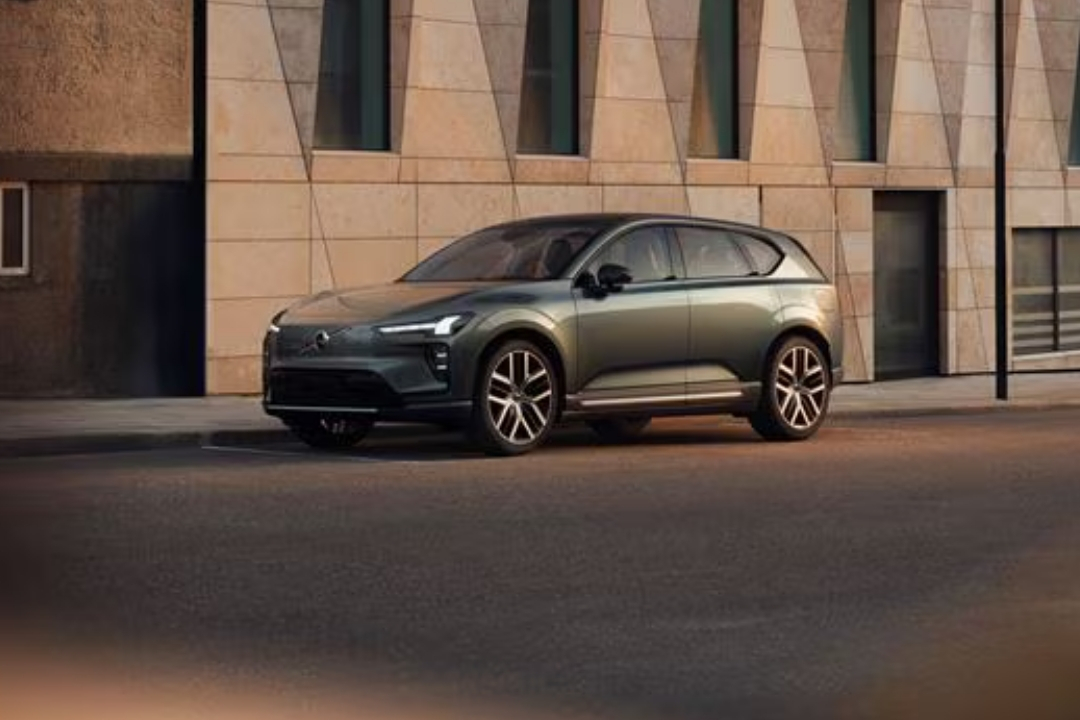
Carwow’s Mat Watson does not hand out “best in class” lightly. Across years of reviews, he has been the reviewer willing to point out a car’s flaws even while praising it, and he did exactly that with the new Volvo EX60. Strong acceleration, a quiet cabin, nine suitcases in the boot, and a verdict that landed about as decisively as a car review can land: buy it, it’s the best in its class.
The trouble is that “best in class” is a claim built on trade-offs, and the EX60 has plenty of them. A dashboard almost entirely controlled through a touchscreen. A glovebox that looks real and isn’t. A digital key with a battery that can die and lock you out. Steering wheel adjustment buried in menus. None of these are secrets. Mat pointed out most of them himself, on camera, before still landing on a full-throated recommendation.
That gap between the list of annoyances and the size of the endorsement is exactly where things get interesting, because the audience watching noticed the same gap Mat did, and a lot of them did not land in the same place he did.
A car built around one screen
The EX60 is a genuinely well-equipped SUV. It comes with a panoramic roof, a 28-speaker Bowers & Wilkins sound system on the Ultra trim, adaptive suspension, and an interior Mat called glorious more than once. What it does not come with is much in the way of physical controls. Wipers and drive mode selection still get a stalk and a switch, but climate settings, steering wheel position, and a long list of other functions live inside the central touchscreen.
Viewers pushed back on this specifically and often. Comments raised concerns that operating menus while driving pulls attention away from the road, arguing that a car built around a single screen works against the safety reputation Volvo has spent decades building. Others were more resigned than outraged, noting that most drivers set their seat and mirrors once and never touch them again, so burying that adjustment in a menu barely matters day to day. Both reactions were common enough that neither one dominates the comment section outright.
The glovebox that isn’t
Few details drew as much attention as the fake glovebox. What looks like a traditional storage compartment on the passenger side of the dash is, in Mat’s own words, just a piece of trim. It doesn’t open. The actual storage lives in a smaller tray lower down, alongside the wireless phone charger and USB-C ports.
For some commenters, this fed into a broader complaint about features quietly disappearing across new EVs in the name of design, while the touchscreen grows to absorb whatever used to have a physical home. It’s a small thing on its own, but it kept coming up, alongside gripes about the sunroof adding unwanted heat and the digital key’s battery life being one more thing to babysit.
Where the praise actually lines up
None of this means the pushback was one-sided. Plenty of commenters sided with Mat almost point for point. On the steering wheel adjustment specifically, several pointed out that it is a set-once, forget-forever task, no different in practice from adjusting mirrors, and that a physical button for something used twice ever is not worth the added complexity. Others defended the screen-first approach as simply where the market is heading, whether people like it or not.
The performance numbers back up Mat’s claims too. A 4.27-second run to 60 mph and a 34-meter stop from 60 are both strong results for a car this size, and neither figure drew any real pushback in the comments. The efficiency claim was a different story. Mat’s real-world test worked out to 3.8 miles per kWh across more than 300 miles, translating to roughly 350 miles of range, and he framed that as beating the bigger-battery BMW iX3 he’d tested previously. At least one commenter challenged that comparison directly, arguing the range advantage shows up in Mat’s own testing but not in wider reporting on the two cars. It’s a reminder that even the most concrete-looking numbers in a review can still draw disagreement once real-world variables enter the picture.
A car that splits its own audience
What makes this particular review interesting isn’t that people disagreed with Mat. Reviewers get disagreed with constantly. It’s that the disagreement split largely along philosophical lines rather than factual ones. Most people weren’t arguing about whether the glovebox opens or whether the rear windows only go down halfway. They agreed on what the car does and doesn’t do. The argument was mostly about whether those choices matter.
That’s a different kind of review controversy than usual. Most car debates are about numbers, whether a claimed range holds up, whether a 0-60 time is accurate. This one was mostly about philosophy: whether physical buttons are a safety necessity or a relic, whether a screen-first cabin is minimalist elegance or an accessibility problem waiting to happen. Mat clearly landed on one side of that argument. A meaningful slice of his audience landed on the other, sometimes forcefully.
So, who is “everyone”?
Mat’s closing verdict was not hedged. Go buy it, best in class, no real qualifications attached. And for buyers who prioritize range, quietness, boot space, and don’t mind living inside a touchscreen, that verdict probably holds up fine. The performance numbers alone make a strong case.
But “everyone” was never going to include the segment of the audience that has spent the last few years watching physical buttons disappear from car after car and getting more frustrated each time it happens. For them, the EX60 isn’t the exception to a bad trend. It’s another data point in it. Mat built a genuinely strong case for this car. He just didn’t build one that closes the argument, and the comments underneath his own review are proof of that.
More from Fast Lane Only
- Unboxing the WWII Jeep in a Crate
- 15 rare Chevys collectors are quietly buying
- 10 underrated V8s still worth hunting down
- Police notice this before you even roll window down
*Research for this article included AI assistance, with all final content reviewed by human editors.