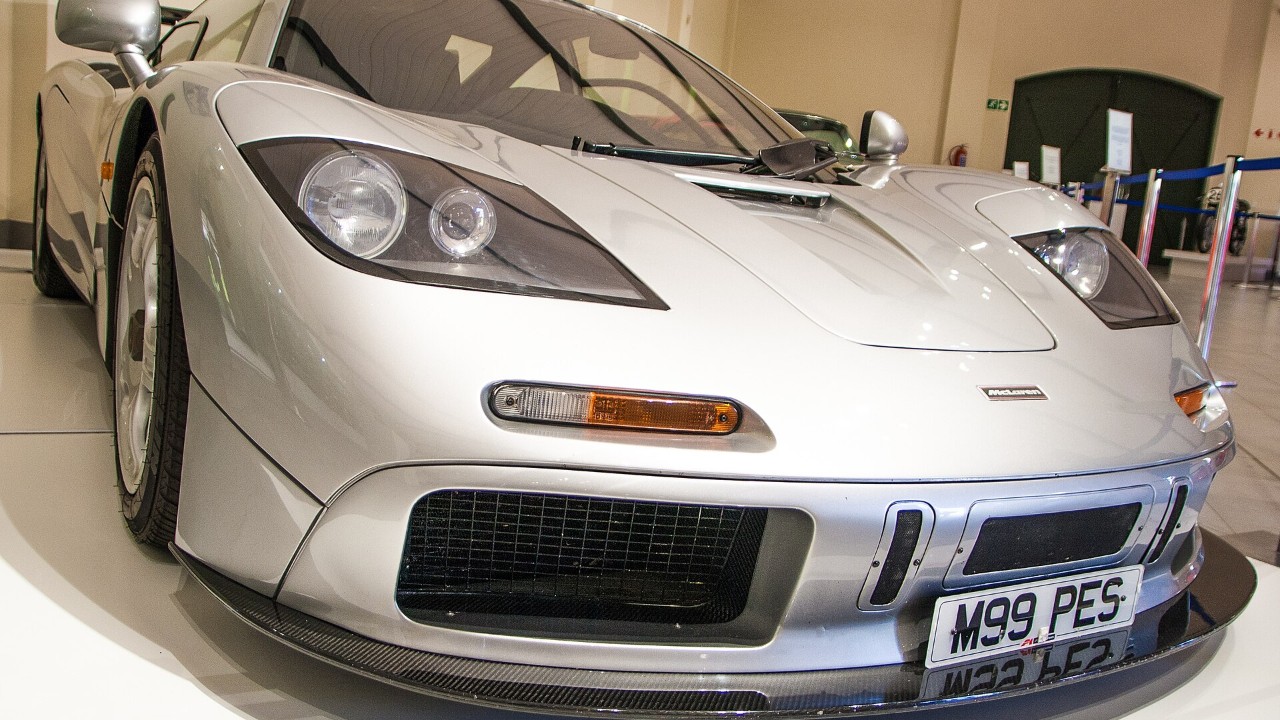
On March 31, 1998, a McLaren F1 averaged 240.1 mph on a German test track, and it did so only after engineers raised its rev limiter. That detail sums up a strange British habit. Small makers in the UK often built cars that were quicker than their brochures, their prices or their reputations let on.
Fragile gearboxes held some of these cars back. Others came from tiny firms that nobody took seriously, or from race programs that ended before the cars could prove themselves. A few simply arrived with numbers so modest that buyers never guessed what was underneath. In every case, though, the real pace outran the official story.
These are our picks, twelve British sports cars we think were faster than anyone admitted at the time. That verdict is our opinion. The figures behind each choice come from period specifications, factory records and road tests, and we have left out any number we could not confirm.
1. 1994 McLaren F1
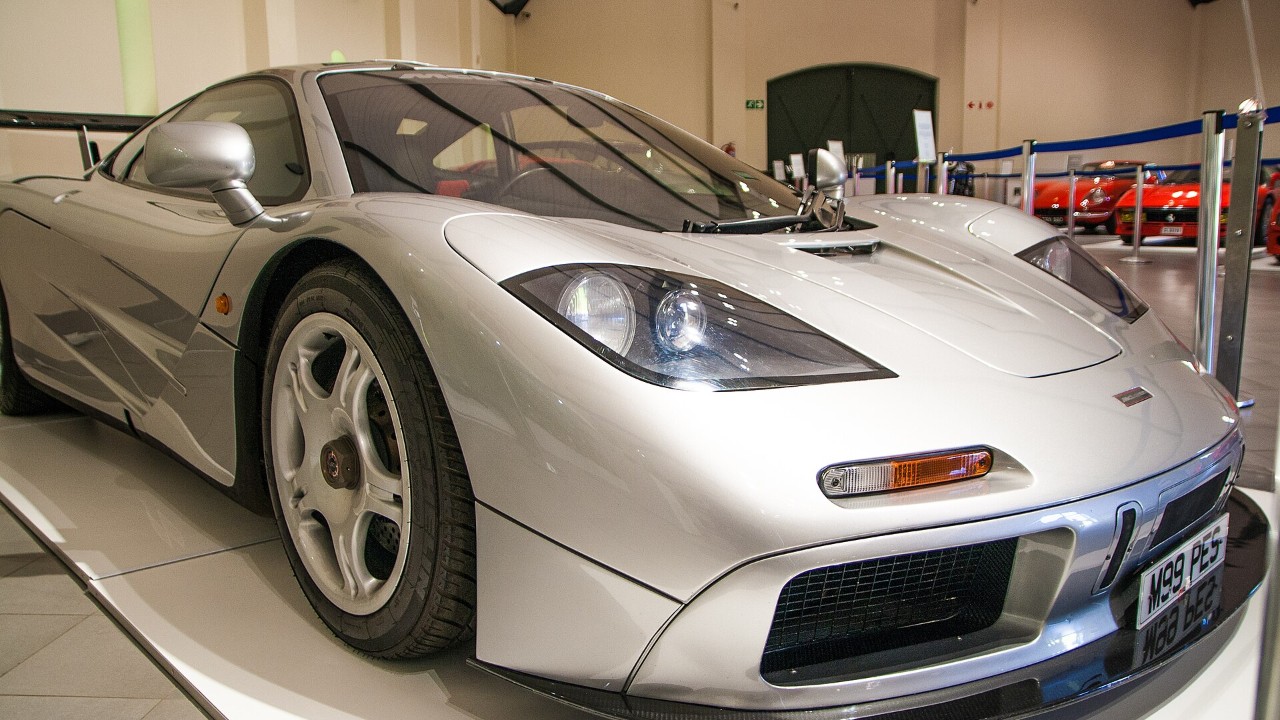
Gordon Murray’s McLaren F1 entered production in 1992 with a 6.1-liter BMW V12 rated at 618 horsepower. McLaren built 106 F1s in all, but only 64 were standard road cars. In other words, almost nobody ever got to see what one could really do.
That changed in 1998. As Hagerty UK recounts, Andy Wallace took an F1 to Volkswagen’s Ehra-Lessien track and hit the limiter in sixth gear. So the engineers raised it to 8,300 rpm. On the next runs, the car averaged 240.1 mph both ways, with a one-way best of 243 mph. Hagerty notes that the figure is still the record for a naturally aspirated production car.
Our take: for six years, the F1 had more speed in it than its rev limiter allowed. Meanwhile, its racing sister, the F1 GTR, won Le Mans outright in 1995. For a car designed first for the road, that is an extraordinary double. For that reason, the McLaren F1 tops our list. Engineers knew what it could do, but for most of its life the public only saw a car with an electronic leash.
2. 2001 Lotus Esprit V8
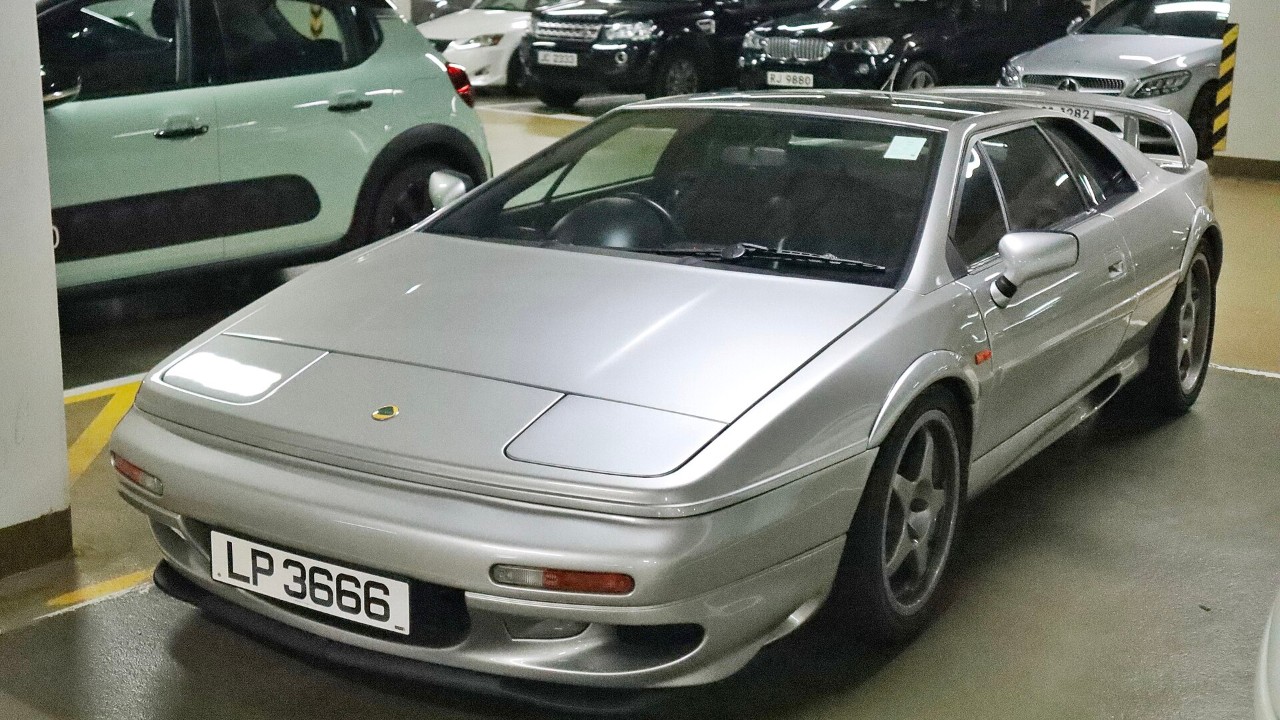
When Lotus gave the Esprit a V8 of its own design, the engine was far stronger than the car let on. The Type 918 was a 3.5-liter twin-turbo V8 with a flat-plane crank and four valves per cylinder. However, Lotus detuned it to 350 horsepower. The reason was simple: the Renault-sourced transaxle could not take any more.
Even in that restrained state, a V8 Esprit could reach roughly 174 mph. By 2001, the wedge shape dated back a quarter century, so many people saw the car as a relic. In fact, it was a genuine 170 mph-plus supercar built in Norfolk. If you want the full story of where the shape began, our look at the original 1976 Lotus Esprit covers it.
Our take: this is the clearest case on the list. The engine had more to give, and Lotus said so through the detuning itself. The figure on the spec sheet was a limit set by a part, not by the engine. Lotus sent the final Esprit off the line on February 20, 2004, bound for Chicago. If you shop for one, budget for gearbox care, since that part set the car’s limits from the start.
3. 2002 Noble M12 GTO
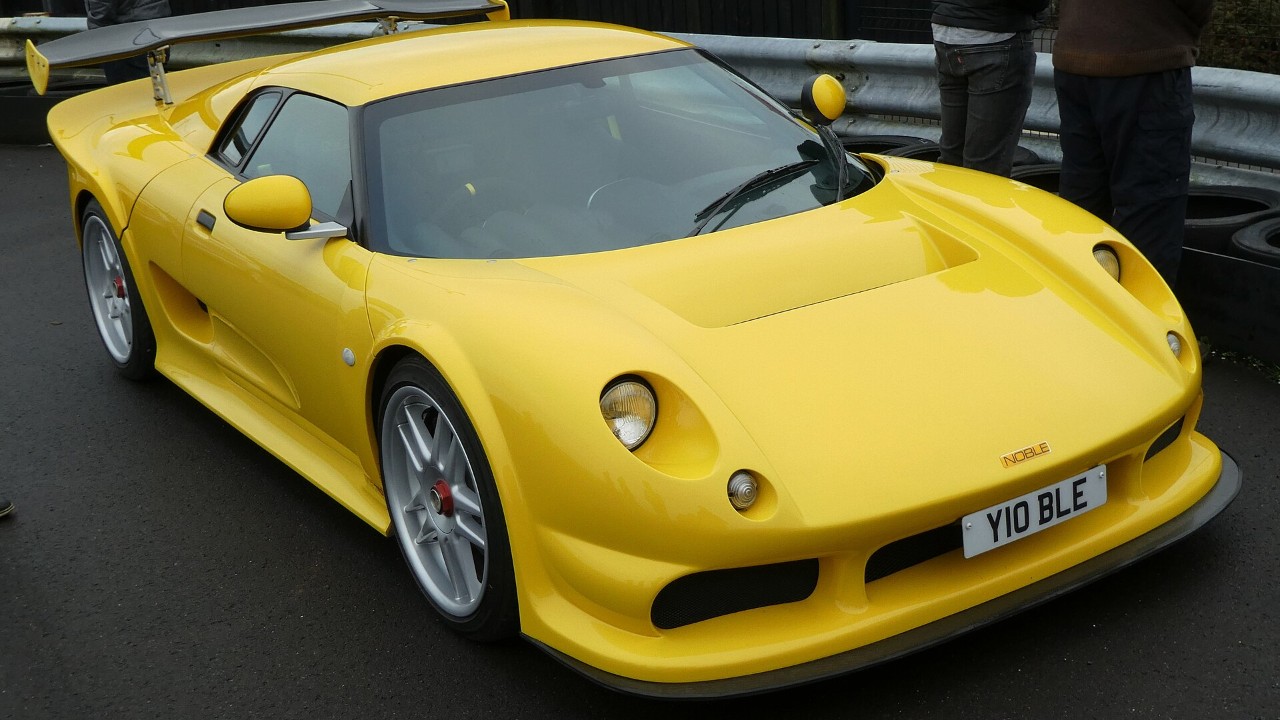
Lee Noble designed the M12, and its engine sounded ordinary on paper. The GTO used a 2.5-liter Ford Duratec V6. Noble, though, added two turbochargers and pushed it to 310 horsepower.
That number does not sound wild today. For a car built by a tiny firm, though, it was serious. Later versions went further, however. The GTO-3R used a 3.0-liter version with 352 horsepower, weighed 1,080 kg and topped out at 185 mph. Production ran from 2000 to 2008. Later, Hi-Tech Automotive built cars under license in Port Elizabeth, South Africa.
Our take: the M12’s spec sheet gave little warning of how quick it was. In our view, it was the British giant-killer of its decade. If you shop for one today, the small V6 badge on the paperwork is part of the fun. Meanwhile, its successor, the M400, raised output to 425 horsepower with larger Garrett turbos and cut weight to 1,060 kg. That tells you how much headroom the original design had.
4. Ariel Atom 300 Supercharged
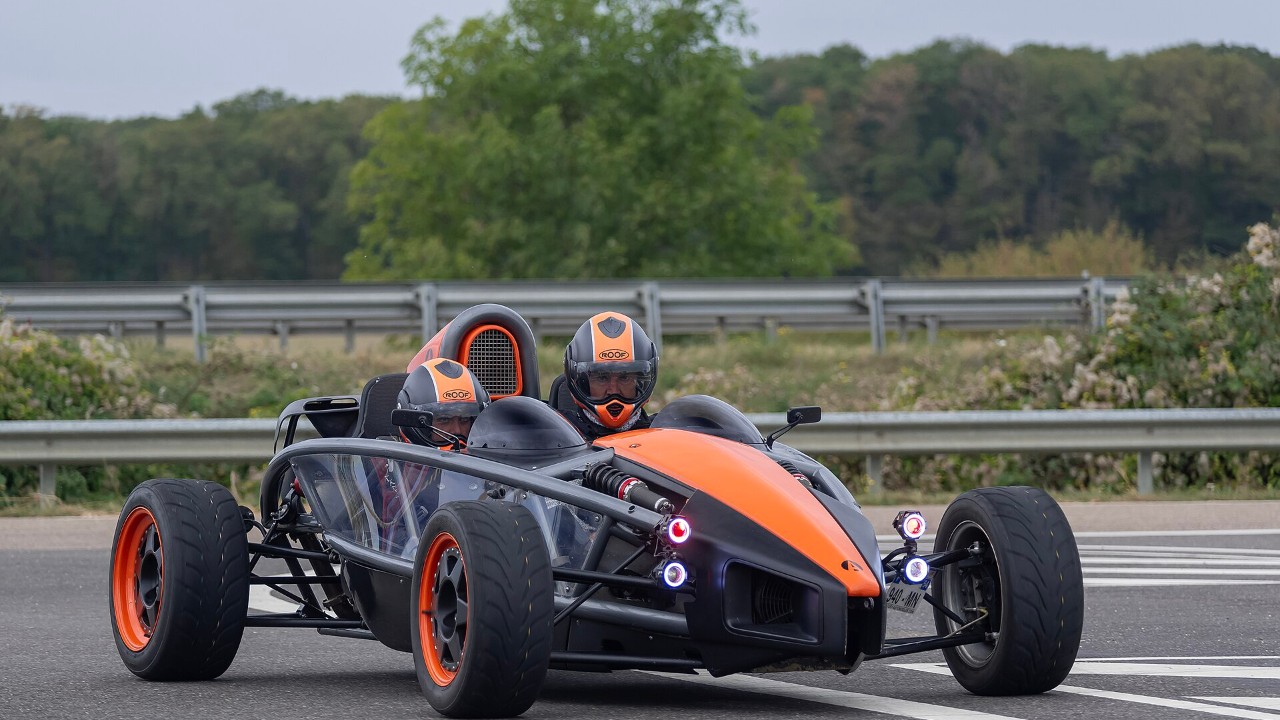
The Atom started as a student project. Niki Smart developed it at Coventry University with lecturer Simon Saunders, and the pair first showed it at the 1996 British International Motor Show. Later, the Ariel Motor Company put it into production in Crewkerne, Somerset.
From the outside, an Atom is mostly tubes and a seat. Because of that, people assumed it was a toy. Then came the 300 supercharged edition, with a 2.0-liter Honda engine and a blower that pushed it to 300 bhp. In 2005, a Sunday Times test recorded 0 to 60 mph in 2.89 seconds. For a car built around a tube frame and a small four-cylinder, that was astonishing.
Our take: no car on this list looks less serious, and that is exactly why it belongs here. The Atom hides nothing, yet people still underestimate it. Later, in 2011, the V8 Atom 500 set the fastest lap by a road-legal car on the Top Gear test track. The supercharged 300 had already shown the way. If you want one, remember that the Atom has no real bodywork, so dress for the weather.
5. 1987 Aston Martin V8 Zagato
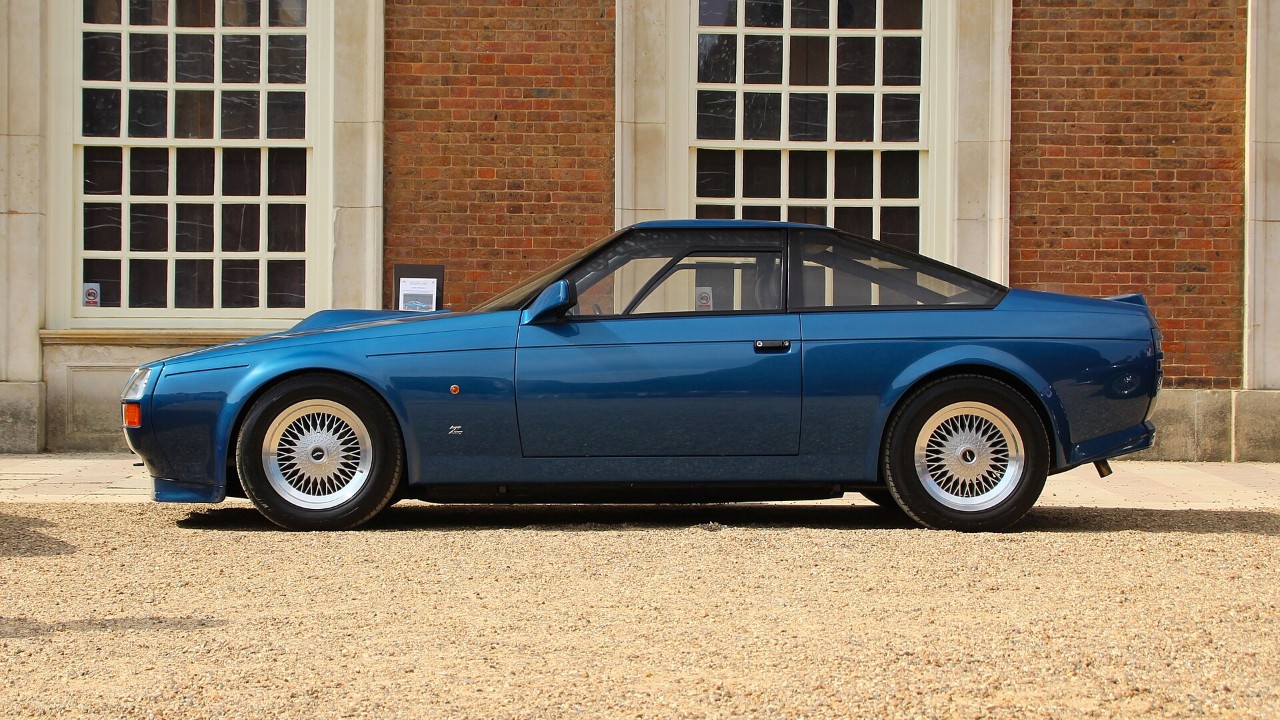
Aston Martin and Zagato built the V8 Zagato from 1986 to 1990. Aston built only 89, 52 coupes and 37 convertibles. Its 5.3-liter V8 breathed through twin-choke Weber carburetors and made 430 bhp.
The styling was blunt and divisive. As a result, the car drew more debate about its looks than its pace. Yet the coupe could reach about 186 mph, a big number for a heavy, carbureted grand tourer in the late 1980s. That put it in the same conversation as Italian exotics. By comparison, it matched the top speed of the twin-supercharged Virage Vantage that came years later.
Our take: the V8 Zagato rarely gets credit as a fast car, mostly because people judge it by its square nose. We think that is unfair. Its top speed belongs in any conversation about the fastest front-engined cars of the late 1980s, and it got there on carburetors. If you find one, the coupe is the purer driver’s choice. With so few made, each one also carries real rarity on top of its speed.
6. 2000 TVR Tuscan Speed Six
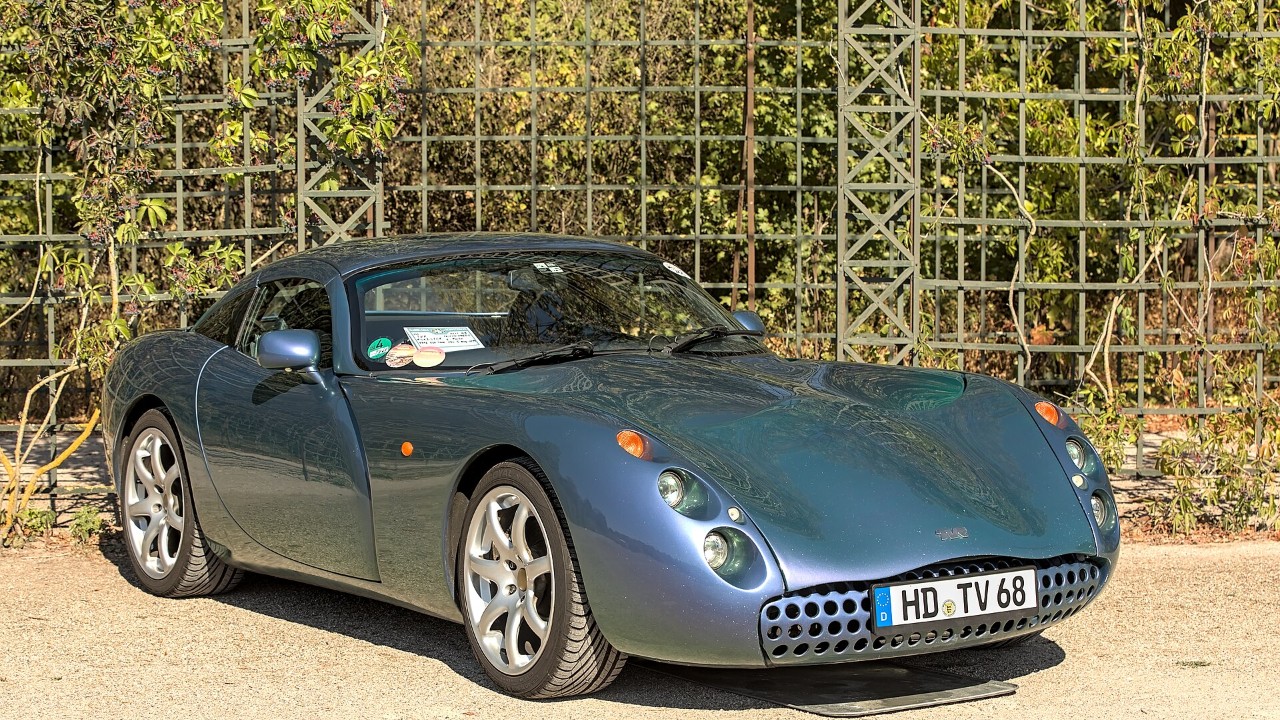
TVR launched the Tuscan in 1999, but the motoring press did not drive it until 2000. Under the long hood sat a 4.0-liter straight six of TVR’s own design. According to evo’s buying guide, it made 360 bhp and pushed a car of about 1,100 kg to 60 mph in 4.4 seconds.
Evo lists the top speed at 180 mph-plus. Even so, many buyers focused on what the car lacked. It had no ABS and no traction control, so the throttle pedal did the job of the electronics. The Blackpool firm was small, and its reputation centered on noise and drama rather than numbers. Later versions pushed harder, though. The Red Rose upgrade brought 380 bhp, and the Tuscan S reached 60 mph in 4.0 seconds.
Our take: the Tuscan was a genuine 180 mph car from a small firm known more for noise than numbers. In our view, the lack of driver aids made it feel even faster than it was. TVR pushed the same idea further with the 2003 TVR Sagaris. Evo valued an excellent Tuscan at £40,000 in March 2024.
7. Caparo T1
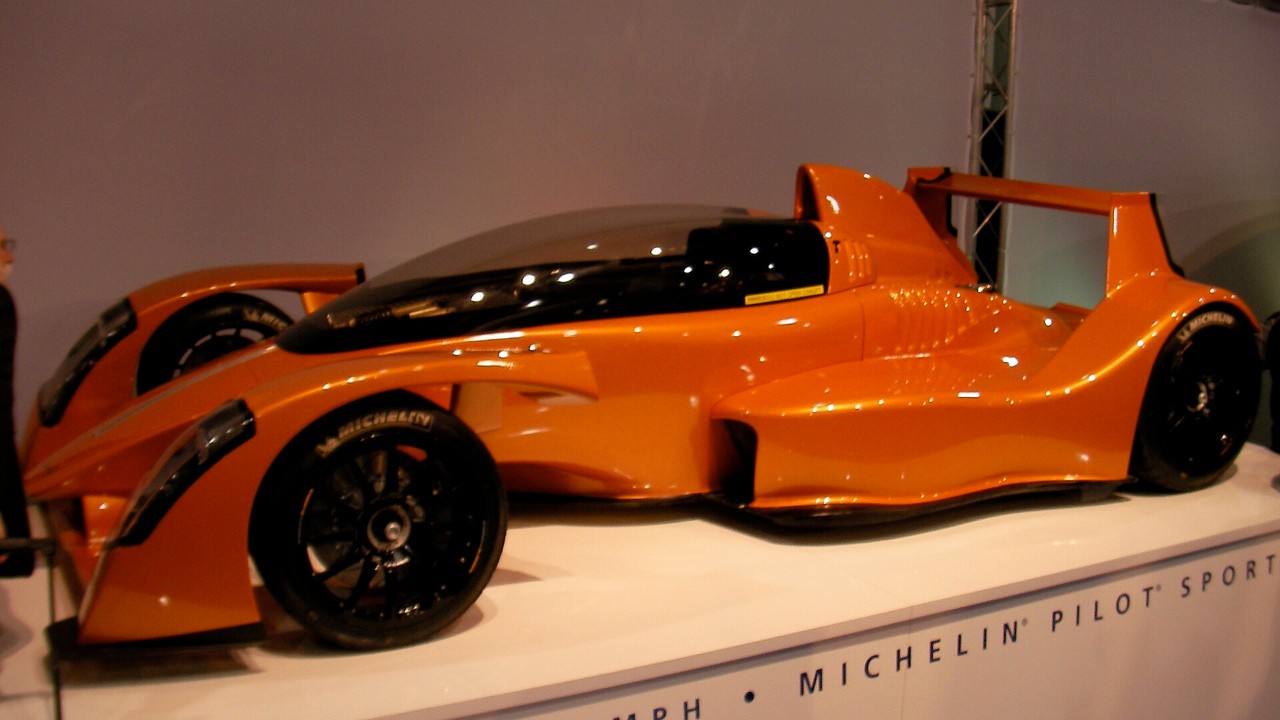
Engineers who had worked on the McLaren F1 founded Caparo, including Ben Scott-Geddes and Graham Halstead. The company unveiled its T1 in Monaco in April 2006. It weighed about 470 kg and used a 3.5-liter V8 that made 575 horsepower at 10,500 rpm.
That works out to about 1,223 horsepower per tonne. In low-downforce trim, Caparo estimated its top speed at 205 mph. Then came the moment that defined it. On November 11, 2007, the T1 lapped the Top Gear test track in 1:10.6, well ahead of the Koenigsegg CCX’s 1:17.6. However, the show struck the time from its board because the car could not clear a speed bump.
Our take: few cars have been officially faster and officially ignored at the same time. Caparo argued that production cars had adjustable ride height, which the test car lacked. Either way, the T1 never got the recognition its pace deserved. In the end, the company went into administration in 2015 after selling just 15 cars.
8. 1994 Lister Storm
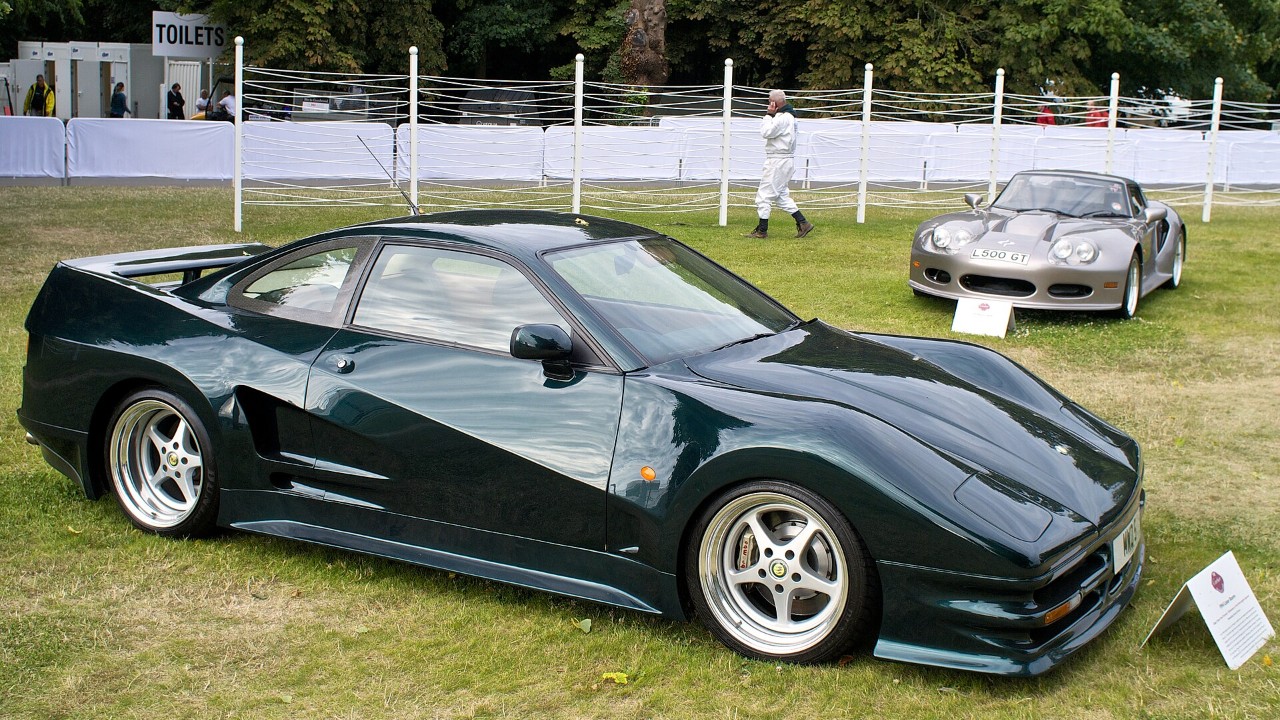
Lister Cars of Cambridge built the Storm road car in 1993 and 1994, and it made only four. It carried a 7.0-liter Jaguar V12 rated at 546 horsepower. Lister claimed a top speed of 208 mph. In other words, it was a 200 mph car in the early 1990s.
At £220,000, the Storm was too expensive for most buyers, and the road car faded from view. Its racing career, though, told the real story. At first, the results looked mixed, and the 1995 Le Mans car retired after 40 laps with gearbox failure. In 2000, the Storm won the season opener at Valencia and four more races to take both the team and driver titles in the FIA GT Championship.
Our take: almost nobody bought the road car, so almost nobody knew how fast it was. In our view, that makes the Storm one of the great overlooked British supercars of the 1990s. The racing titles are the proof the showroom never got. With only four road cars built, seeing one in person is a rare event.
9. 2016 Lotus Evora 400
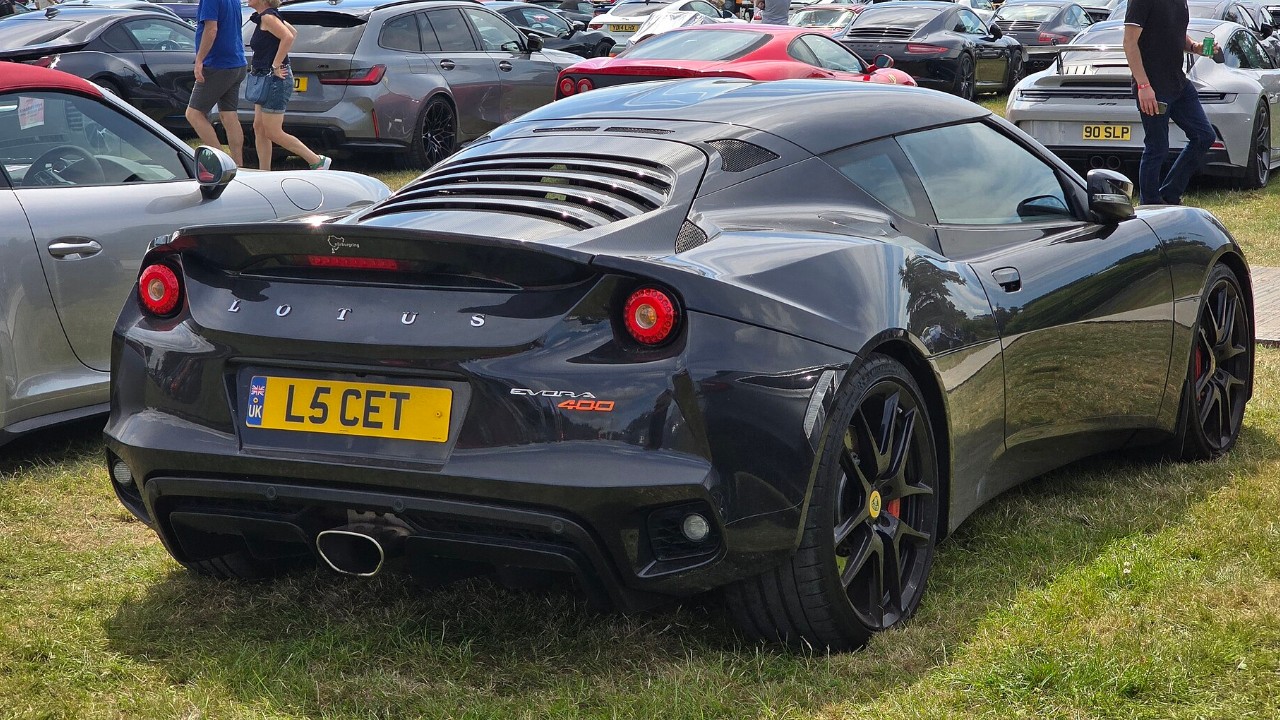
The Evora 400 arrived for 2016 as a major rework of Lotus’s four-seat coupe. A supercharged and intercooled 3.5-liter V6, derived from a Toyota design, made 400 horsepower at 7,000 rpm. It also produced 302 lb-ft of torque.
The Evora 400 reached 60 mph in 4.1 seconds, about half a second quicker than the Evora S. With the manual gearbox, the top speed was 186 mph. The automatic version topped out at 174 mph. The car weighed 1,395 kg, which is heavy by Lotus standards but light for a 2+2 with that much power.
Our take: because the engine came from Toyota roots, some buyers treated the Evora as a softer Lotus. We think that missed the point. A 186 mph four-seater that steers like a Lotus is a rare thing. In addition, the 400 name told buyers exactly what they were getting, which counts as rare honesty on this list. If you want one, look for the manual, which brings both the higher top speed and the better feel.
10. 1986 Ford RS200 Evolution
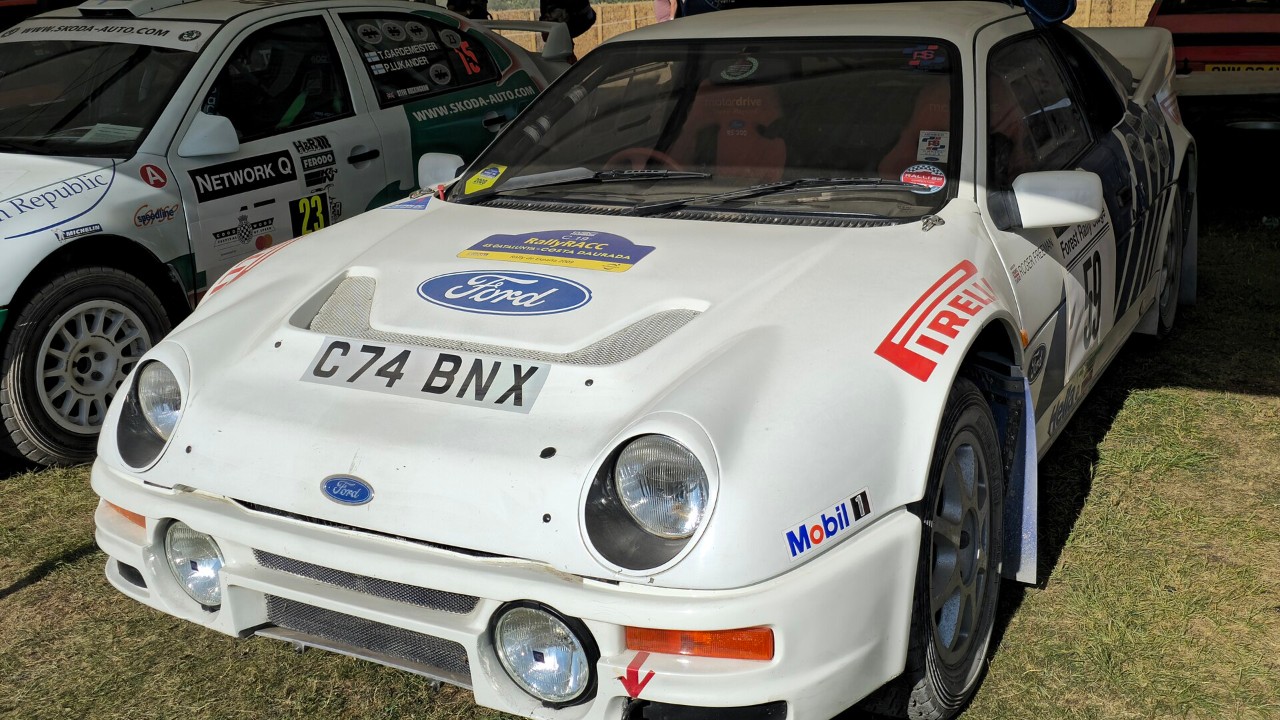
Ford built the RS200 for Group B rallying, and the rules demanded at least 200 road cars. Reliant assembled them at Shenstone, England, from 1984 to 1986. The standard car used a 1.8-liter turbocharged Cosworth BDT engine, with road output usually listed at 250 horsepower.
The Evolution version went much further. Its BDT-E engine grew to 2,137 cc, and a typical output was around 580 horsepower. Then, at the end of 1986, the FIA abolished Group B. As a result, the RS200 lost the stage Ford designed it for almost as soon as it arrived. So the 200 road cars Reliant assembled became the main legacy of the program.
Our take: the RS200 never got to show what it could do in a full rally career. That is why we think it was faster than history admits. The road cars were tame on paper, and the Evolution cars had nowhere official to race. If you see one at an event, the Evolution’s engine is the one to ask about. In our view, every surviving RS200 is a reminder of a contest that ended early.
11. Aston Martin Virage
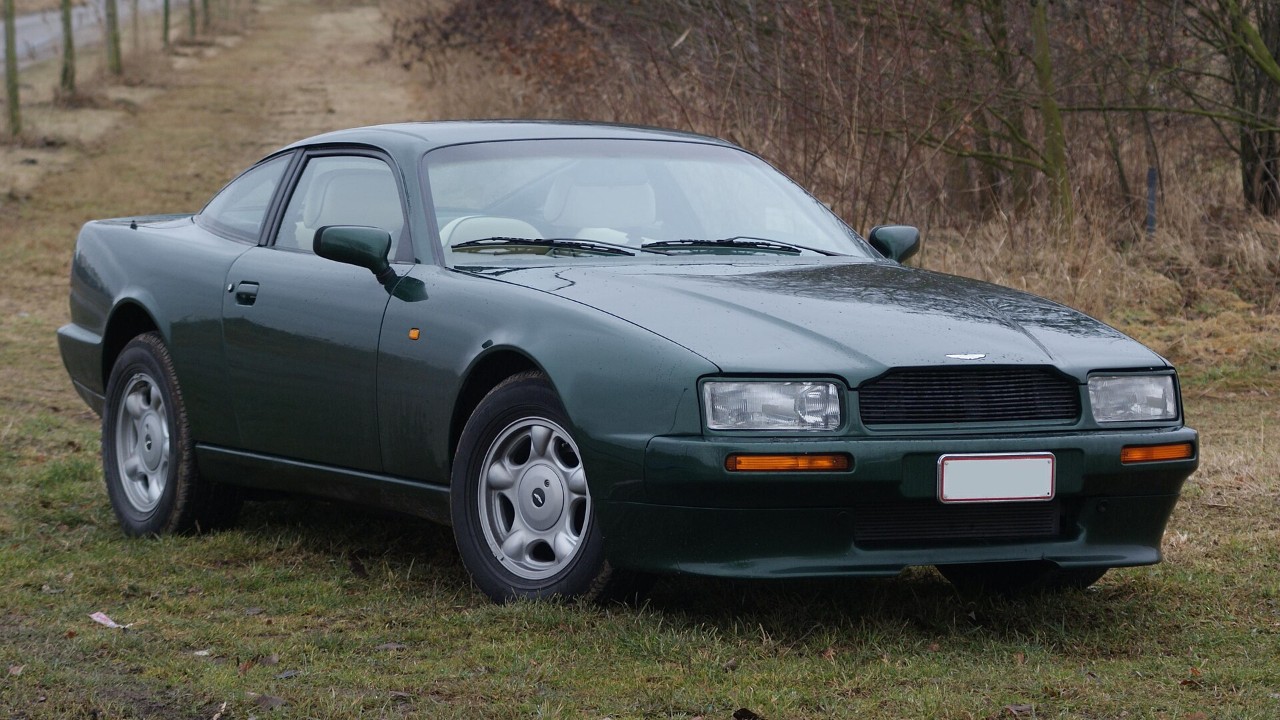
The Aston Martin Virage coupe arrived in 1989. Its 5.3-liter, 32-valve V8 wore cylinder heads designed by Callaway. Aston claimed 330 horsepower, a modest figure for a big, expensive grand tourer. Then the Volante convertible followed in 1992.
The real speed came later. For example, in January 1992 Aston’s Works Service began offering a 6.3-liter conversion, using a bored and stroked engine derived from the AMR1 racing car. That brought between 456 and 500 horsepower and a top speed of 175 mph. Later, the twin-supercharged Vantage pushed output to 550 horsepower and 186 mph. In other words, the same basic car spanned from 330 to 550 horsepower, depending on how far an owner wanted to go.
Our take: the base Virage looked like a gentle cruiser on paper. In reality, the factory knew how much more the design could take, and it sold that speed to owners who asked. We think the standard car’s figures undersold the whole family. If you shop for one, check whether a car has had the 6.3 conversion. Also, Aston built only about 280 twin-supercharged Vantages, compared with 411 Virage coupes.
12. Ginetta G33
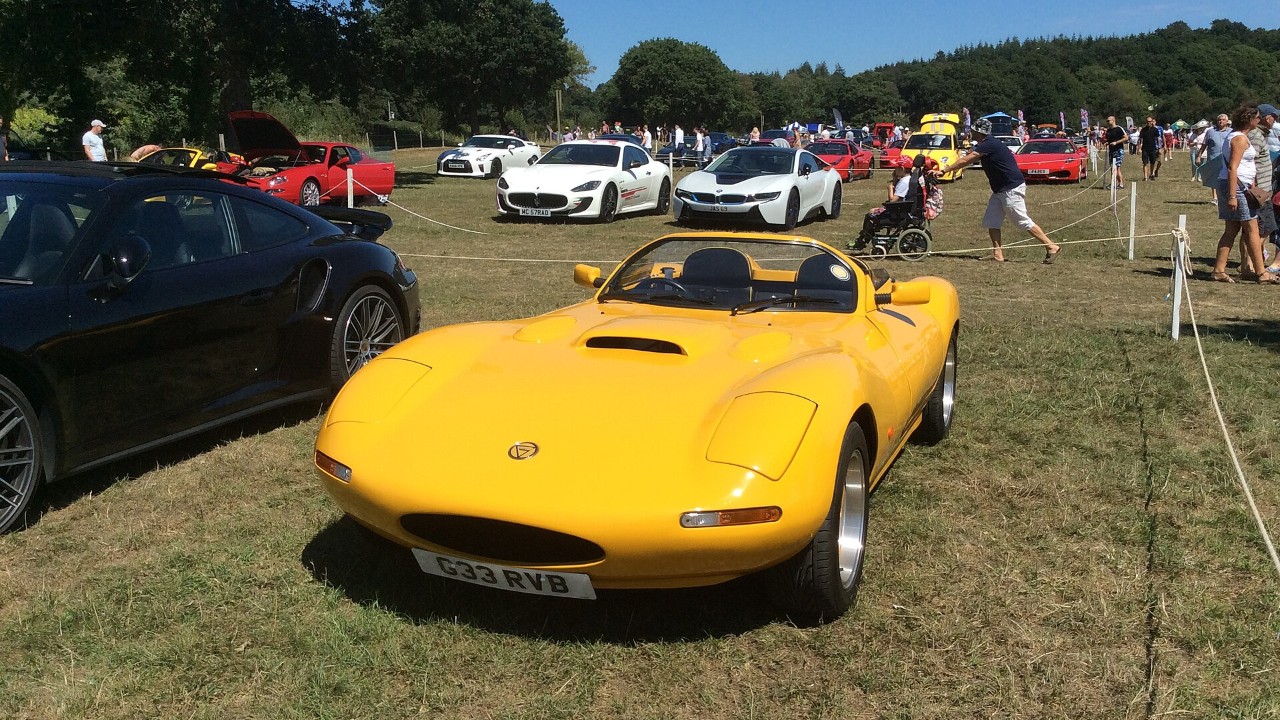
Ginetta’s G33 was a small two-seat roadster with a 3.9-liter Rover V8 up front. A Ginetta owners’ site lists it at 200 bhp, with 0 to 60 mph in 5.3 seconds. It cost £18,186, and Ginetta built about 100.
Those were serious numbers for the price. Still, the G33 arrived as Ginetta struggled. In 1995, when a magazine road test priced the V8 at just under £20,000, the firm was failing, and receivers soon stepped in. According to Drives Today’s history of one surviving car, a G33 weighed less than a ton.
Our take: the G33 offered near-supercar acceleration for sports car money, but the company’s troubles buried it. In our view, it deserved a much bigger audience. In the car Drives Today profiled, the V8 started life in an automatic Range Rover and drives through an LT77 gearbox. For a small British roadster, that mix of V8 torque and low weight is hard to beat. The owners’ site puts total production at just 100 cars.
More from Fast Lane Only