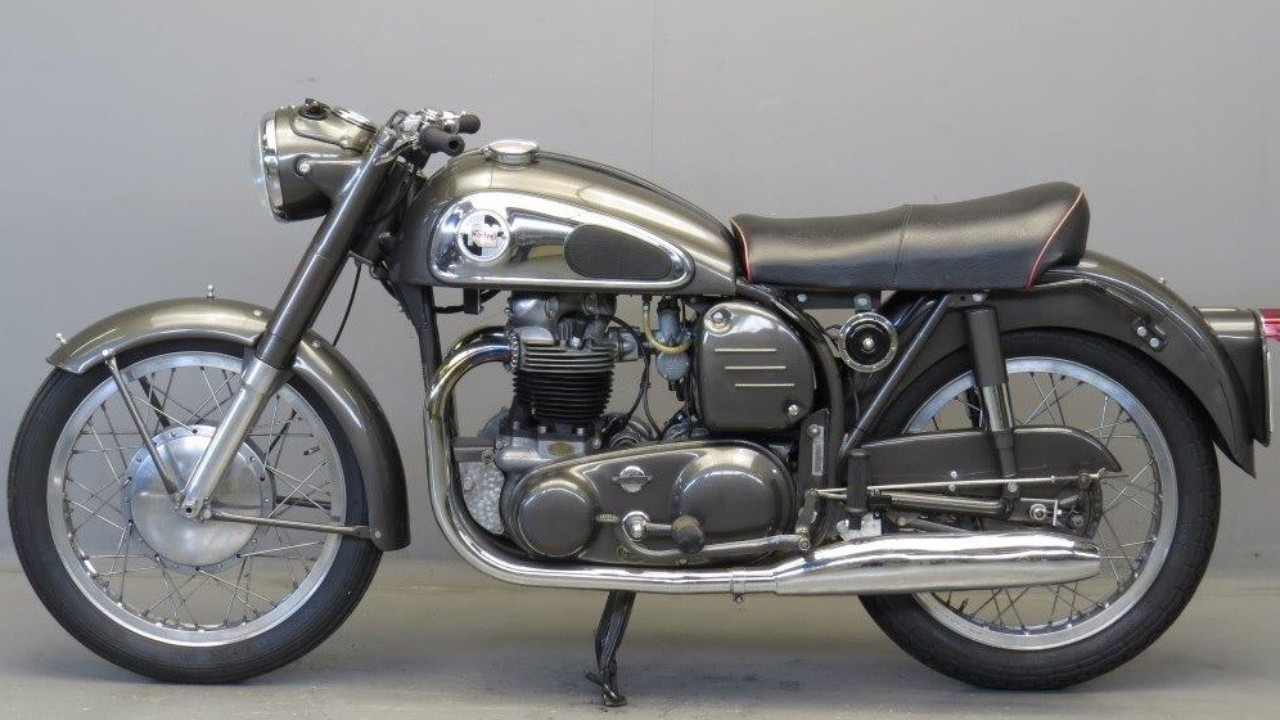
Norton raced at every Isle of Man TT from 1907 into the 1970s, and the Norton Model 99 Dominator grew straight out of that habit. In fact, its frame came from the Manx racers. Its engine came from a twin that Bert Hopwood drew just after the war.
Most riders know the Commando, and plenty know the Manx. However, Norton’s real story runs through less famous bikes too: a side-valve army workhorse, a long-lived pushrod single and a modern V4 superbike. None of them shouted for attention when new. Over time, each one earned a lasting place in British motorcycling.
These are our picks, eight Nortons that we think became icons without much fanfare. The “icon” label is our opinion. The dates, engine sizes, race results and production figures behind it come from Norton club records, period reports and the maker’s own announcements.
1. 1956 Norton Model 99 Dominator Deluxe
Bert Hopwood designed the original Dominator twin in 1947 and 1948, and the 497 cc Model 7 went on sale in mid-1949. Norton then put that engine into the featherbed frame. The McCandless brothers of Belfast had developed that frame for Norton in January 1950, and it first proved itself under the Manx racers.
The Norton Model 99 arrived in September 1955 with a 596 cc version of the twin. It also made 31 bhp, helped by a higher compression ratio from an alloy head introduced a year earlier. As a result, a 1956 bike combines the bigger engine with the race-bred featherbed frame.
Our take: the Model 99 is where the featherbed Dominator grew up. It has more pull than the 500 cc Model 88, yet it keeps the light, precise steering that made the frame famous. Later, from the 1960 model year, Norton offered optional enclosed bodywork on Deluxe versions of the 88 and 99, but we prefer the bare engine on show. For more bikes that were ahead of the curve, see our list of British motorcycles that were years ahead of their time.
2. 1937 Norton Model 18
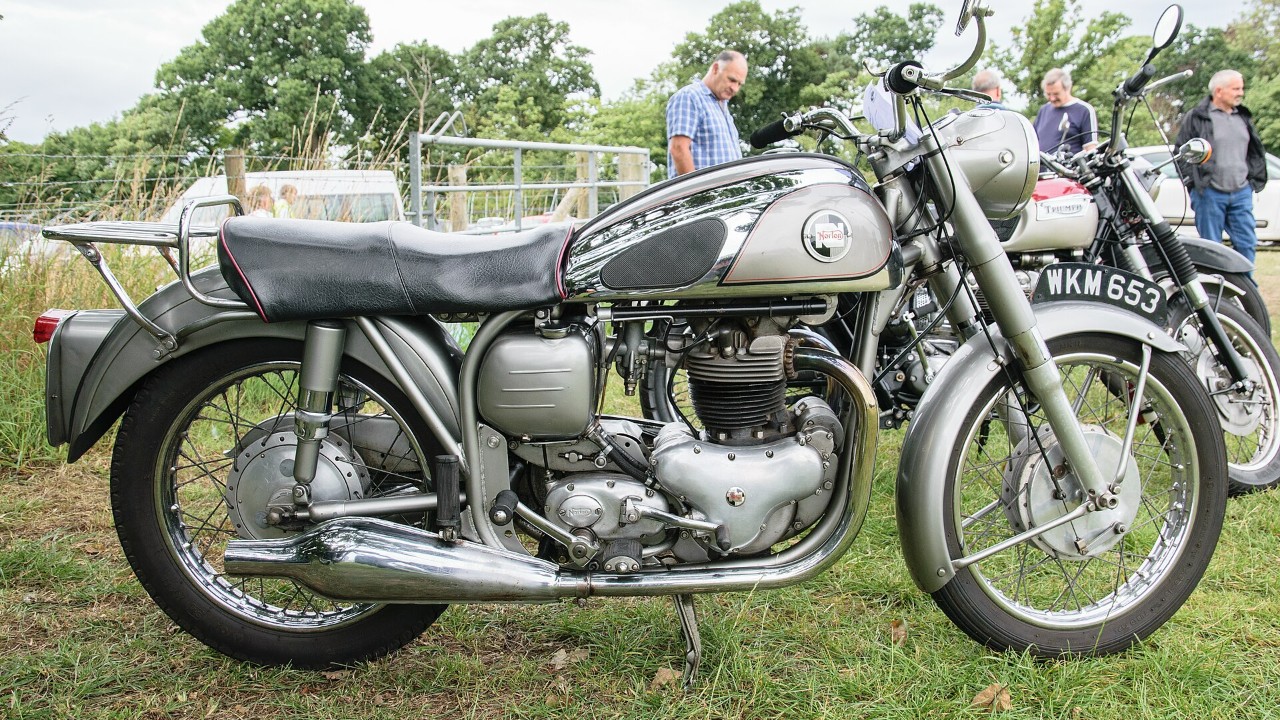
The Model 18 was Norton’s first overhead-valve single, and it made its name in a single season. In 1924, it helped Norton win both the Senior and sidecar TTs. Alec Bennett’s Senior TT win that year was also the first at a race average speed over 60 mph.
That racing win turned into a long road career. The same 490 cc OHV engine also went into the ES2, according to the Norton Owners Club. By 1937, in our view, the Model 18 had become a mature road bike rather than a race-bred novelty.
In our view, the Model 18 is the bike that turned Norton from a racing name into a road brand. It rewards a calm, steady rider more than a fast one. We think that makes it one of the most honest Nortons ever built. It does exactly what a 500 cc single should, without fuss, and it shows where the later pushrod Nortons came from.
3. 1955 Norton Manx 30M
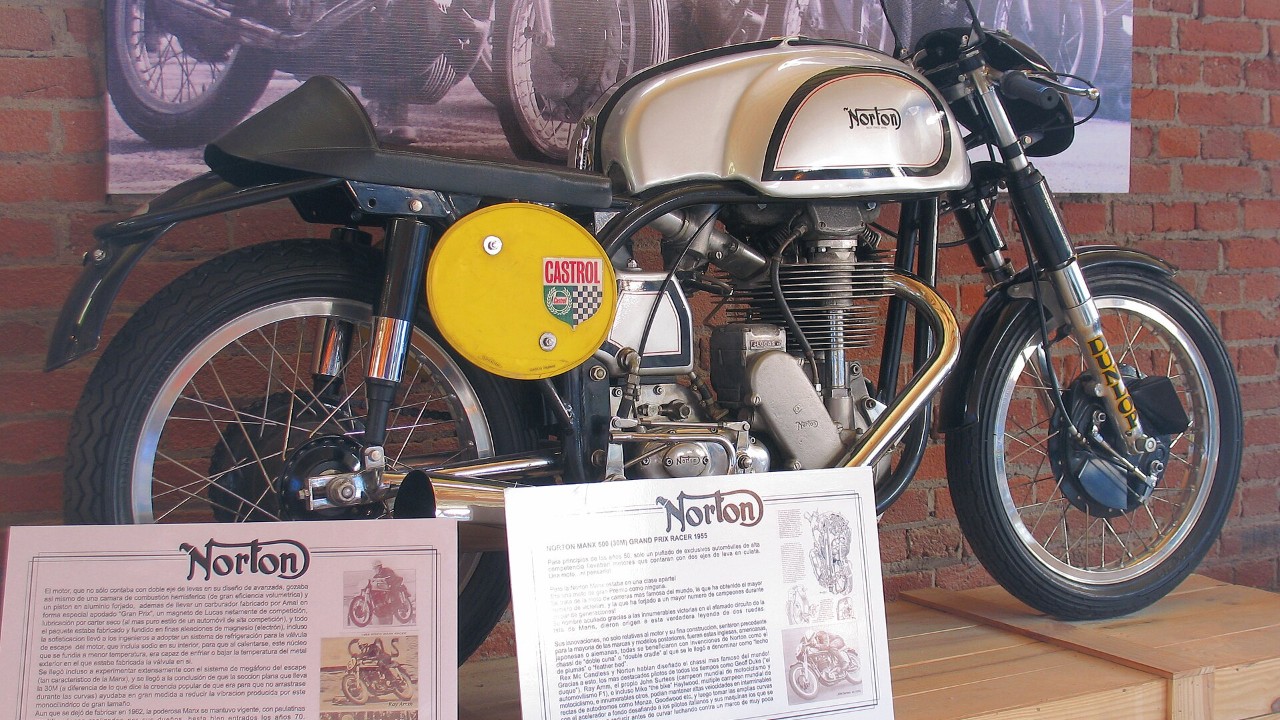
The Manx was Norton’s production racing single, built from 1947 to 1962. Its 499 cc engine used double overhead cams, a design Norton developed in 1937 and refined a year later. Depending on the version, the 500 made between 47 and 54 bhp.
The featherbed frame transformed it in 1950. That year, featherbed Manx bikes recorded a double hat-trick of podium places at the TT. Riders such as Geoff Duke, John Surtees and Derek Minter all raced featherbed Nortons. Meanwhile, the Manx won the Bol d’Or several times between 1958 and 1971.
Its most remarkable result came long after the factory stopped. Godfrey Nash won the 1969 Yugoslavian Grand Prix on a Manx. That was the last time a single-cylinder bike won a 500 cc Grand Prix race.
Our take: the 30M is the purest racing Norton ever offered to privateers. Norton built just 42 more between November 1962 and January 1963, after the last full production year. Any 1955 survivor is a piece of that era.
4. Norton V4SV
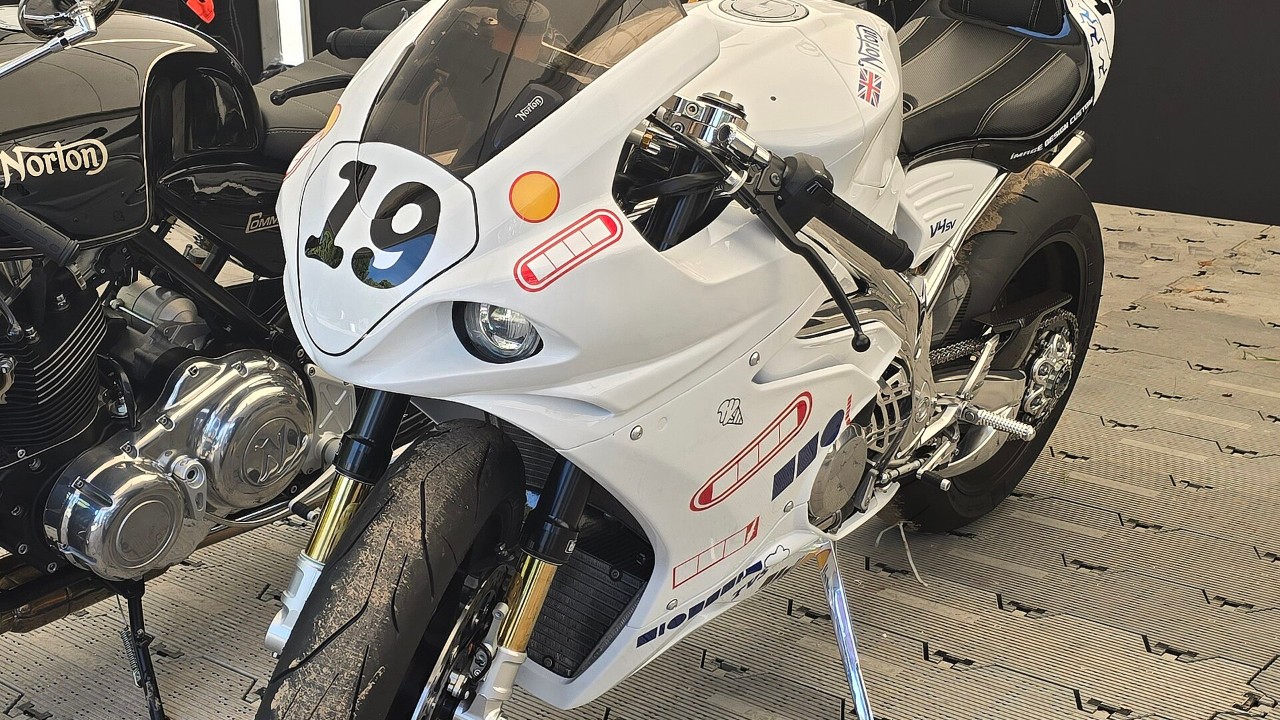
The V4SV is the newest bike here, and it shows that Norton continues to build machines with a clear identity. It uses a 1,200 cc, 72-degree V4. According to Motorcycle News, it makes 185 bhp at 12,500 rpm, down from about 200 bhp on the V4SS it replaced. Peak torque of 92.5 lb-ft arrives 1,000 rpm sooner, though.
In our reading, Norton traded a little peak power for a stronger midrange. It also gave the V4SV a polished aluminium frame and carbon bodywork. MCN describes it as “all-new and re-engineered.”
The V4SV also marks a turning point for the company. India’s TVS bought Norton in April 2020, in an all-cash deal reported at about £16 million. Then, in late 2021, it opened a new factory at Monkspath, in Solihull.
In our view, the V4SV is the bike that proved the new Norton could build a convincing modern superbike. It may never match the Commando’s fame, but it gave the brand a credible flagship again.
5. Norton Commando 961 SE
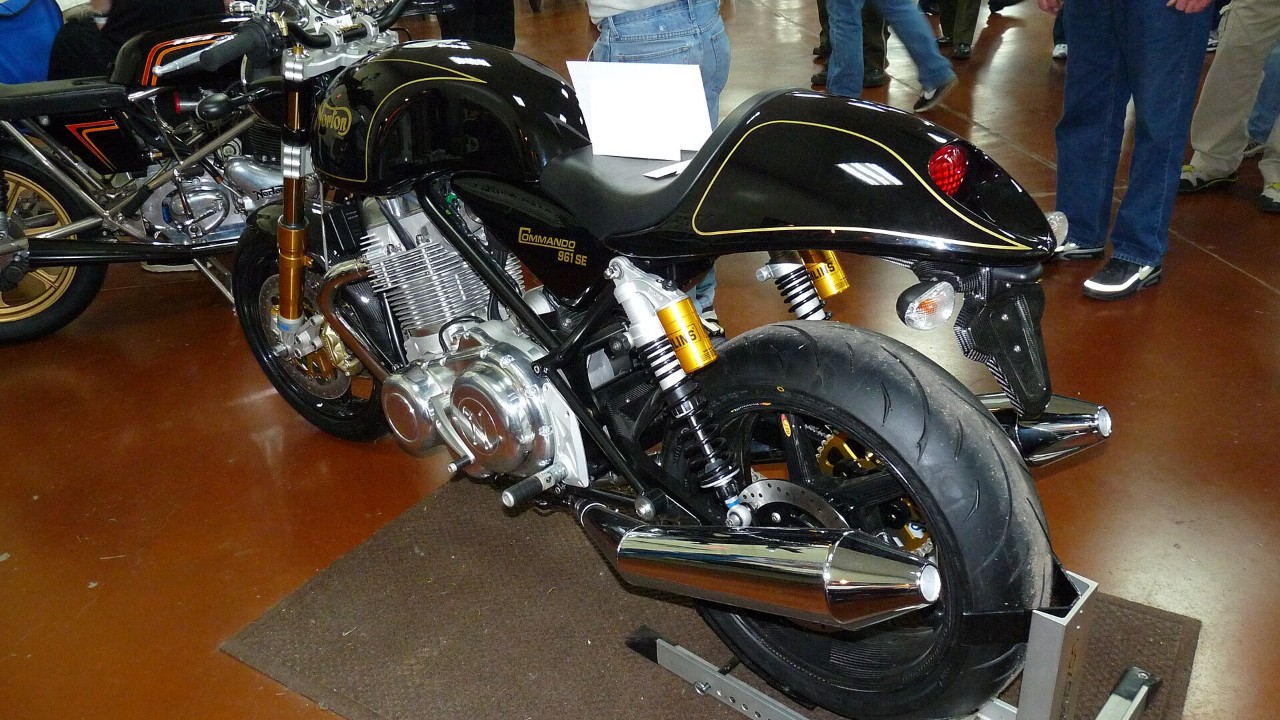
Stuart Garner secured the Norton name in late 2008. He then relaunched the company at Donington Park, where it developed a new 961 cc Commando. At its heart was an air- and oil-cooled pushrod parallel twin with a 270-degree crank.
The first model to reach the public was the 961 SE. Norton revealed it at the Goodwood Festival of Speed on July 7, 2010, according to a 2010 launch preview. Production was limited to 200 bikes. Each one also had BST carbon-fibre wheels and full Öhlins suspension. In addition, the spec sheet listed 80 PS at 6,500 rpm.
Norton built the SE at a new facility at Donington Park in the British Midlands. Garner’s team set up a 15,000 sq ft factory there.
We think the SE matters more than its numbers suggest. It showed that a classic British parallel twin could return with modern parts and a premium finish. Only 200 exist, so it is the 961 we would want in a collection.
6. 1949 Norton ES2
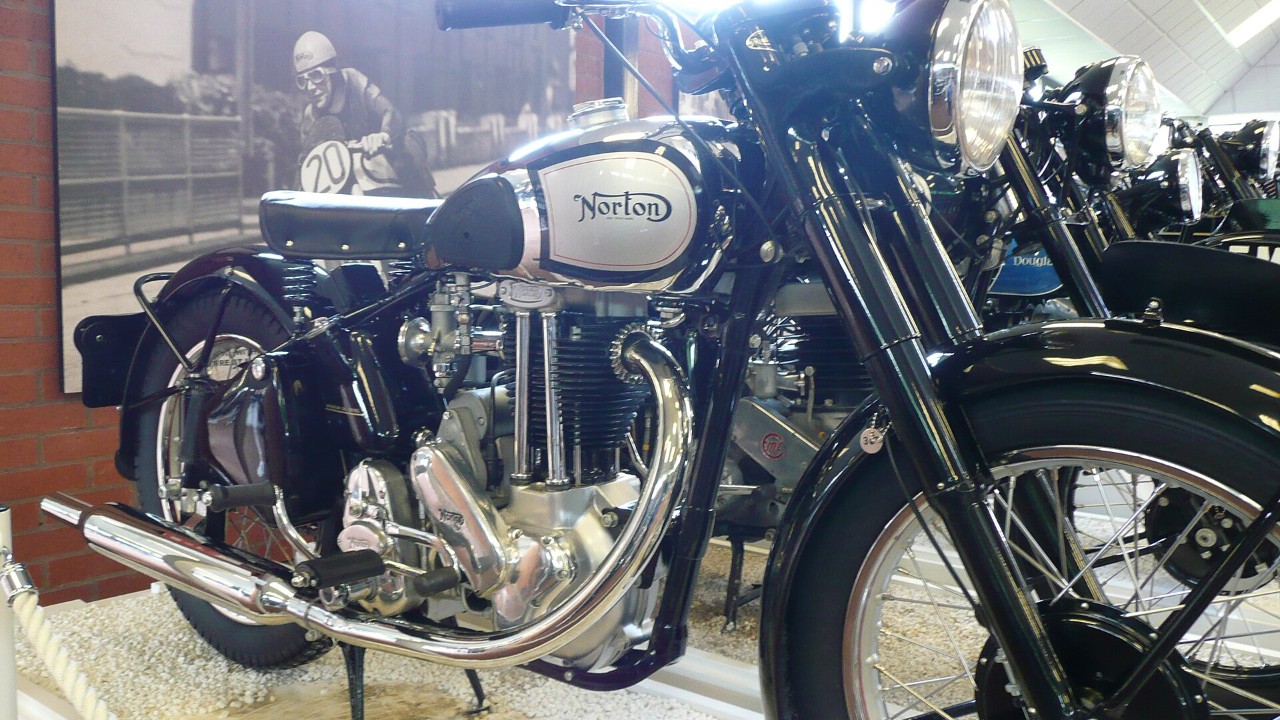
The ES2 made its debut at the 1927 Olympia Show and stayed in Norton’s range for most of the next four decades. In other words, it shared the 490 cc OHV engine of the Model 18. Production ran from 1928 to 1939, stopped for the war and then resumed until 1963.
A 1949 bike captures the postwar version in its first form. When production restarted, the plunger frame and telescopic forks became standard, the Norton Owners Club notes. Then, in 1952, the ES2 moved to a swinging-arm frame with Girling rear dampers. Our list of British motorcycles owners refuse to part with shows how many riders feel this way about old British singles.
In our opinion, the ES2 is the Norton that ordinary riders actually owned and used. It never had the glamour of the Manx or the speed of the twins. Instead, it offered decades of steady service from one basic design. A plunger-frame 1949 ES2 is also the more characterful version today, in our view. It wears its age proudly.
7. 1942 Norton 16H
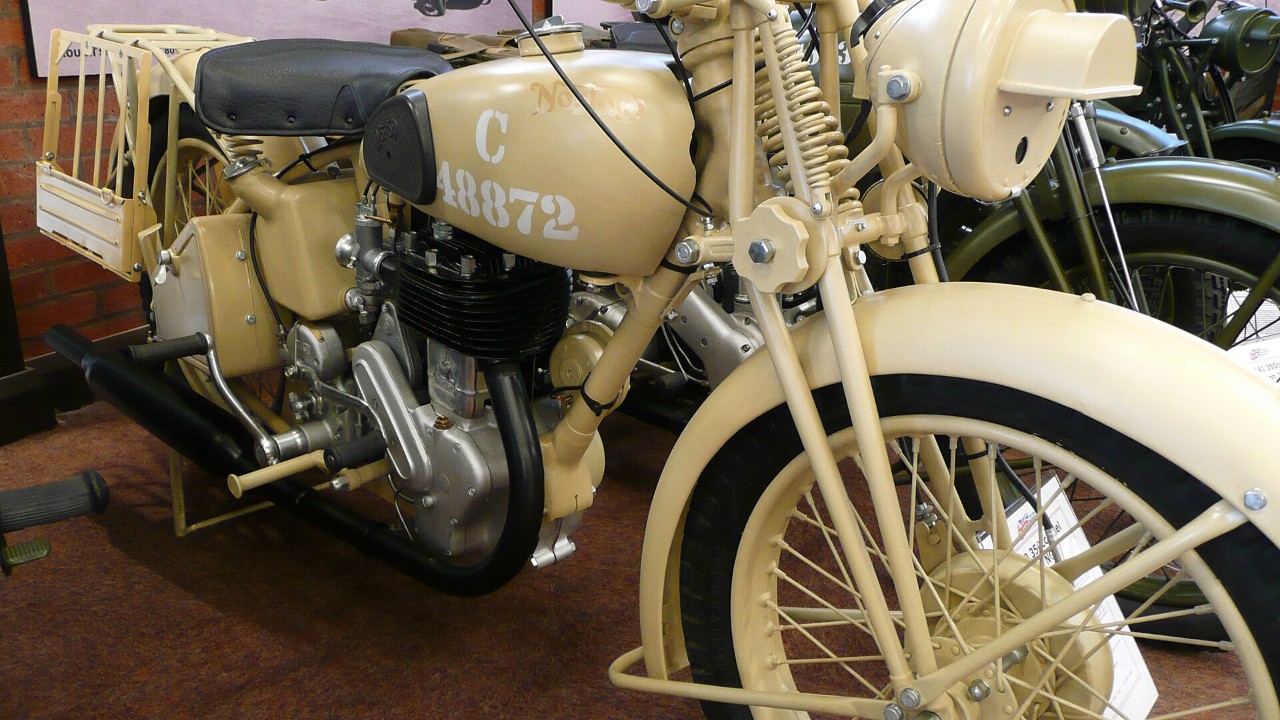
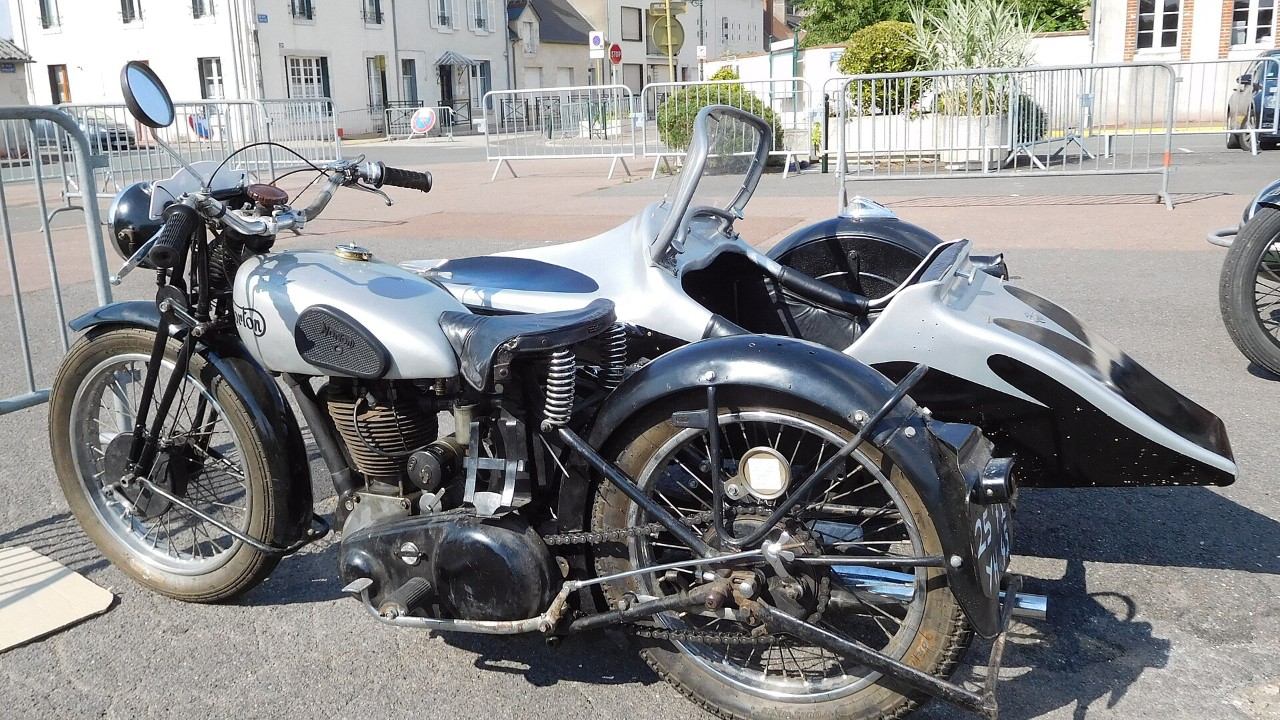
The 16H started as a civilian bike, but war made it famous. A modified 16H won a 1935 military tender. Norton then built 900 in 1936 and 2,000 in 1937. During World War II, Norton supplied nearly 100,000 machines to the British Army.
Still, the 490 cc side-valve single was slow but tough. It had a top speed of 68 mph and weighed 388 pounds dry, with a four-speed gearbox and chain drive. Soldiers used it for despatch riding, training, reconnaissance, convoy control and escort duties.
After the war, dealers converted surplus army bikes for civilian use. Those bikes got a short centre stand and chrome fork springs, rims and headlamp. Records for many wartime machines are uncertain, because the assembly books for bikes built after early 1940 are missing.
Our take: the 16H is the Norton that did the most work. A 1942 bike in military trim is a rolling piece of history. In our view, it earned icon status the hard way, one despatch run at a time.
8. 1965 Norton 650SS
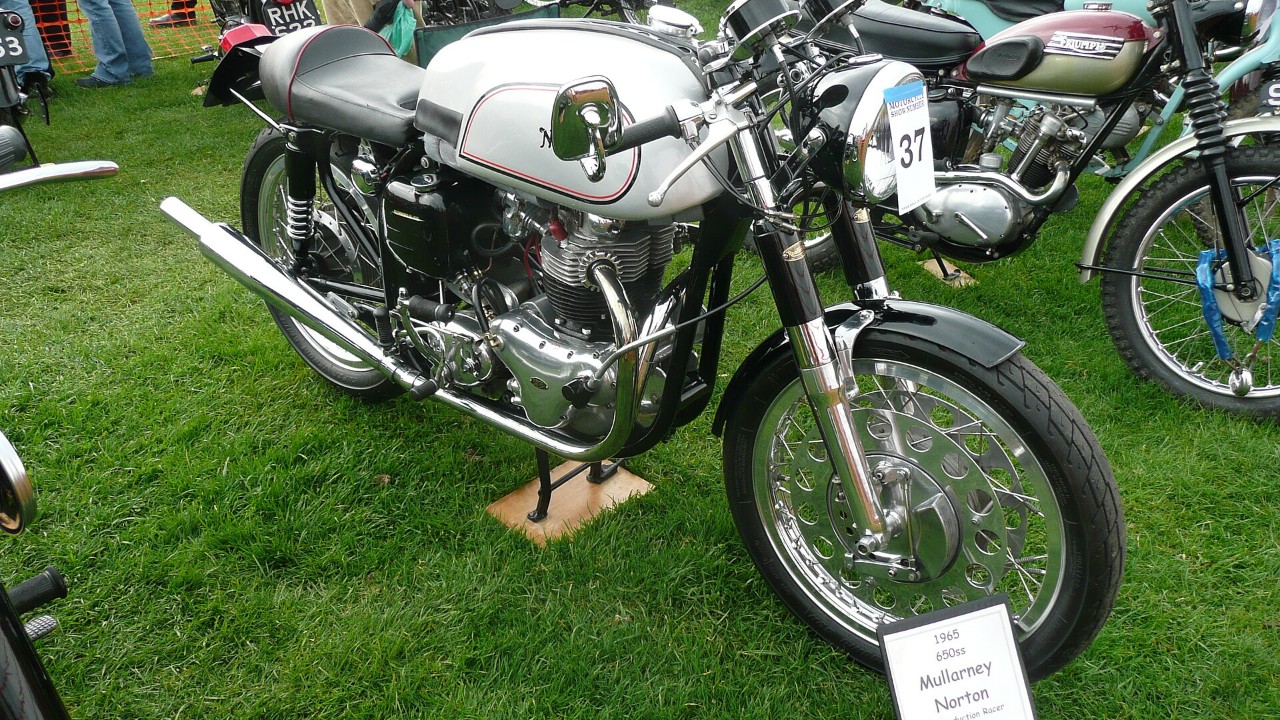
Norton first built a 650 twin for America. The 650 Manxman launched on November 7, 1960, for the US market only. Then, in September 1961, the 650SS appeared for British riders with twin carburettors and café-style bars.
The “SS” stood for Sport Special, and the bike lived up to it. It quickly earned a reputation as the “best of the Dommies,” the nickname riders gave Dominator twins.
By 1965, the 650SS was a mature, well-sorted bike. It sat alongside the larger 750 Atlas, which Norton had launched for the US in 1962. In our view, the 650SS is the more rewarding road bike of the two.
We think that makes it the Norton twin to own if you want the featherbed experience in its best form. In our view, it remains the high point of the Dominator line, which began with the 497 cc Model 7 in 1949.
More from Fast Lane Only