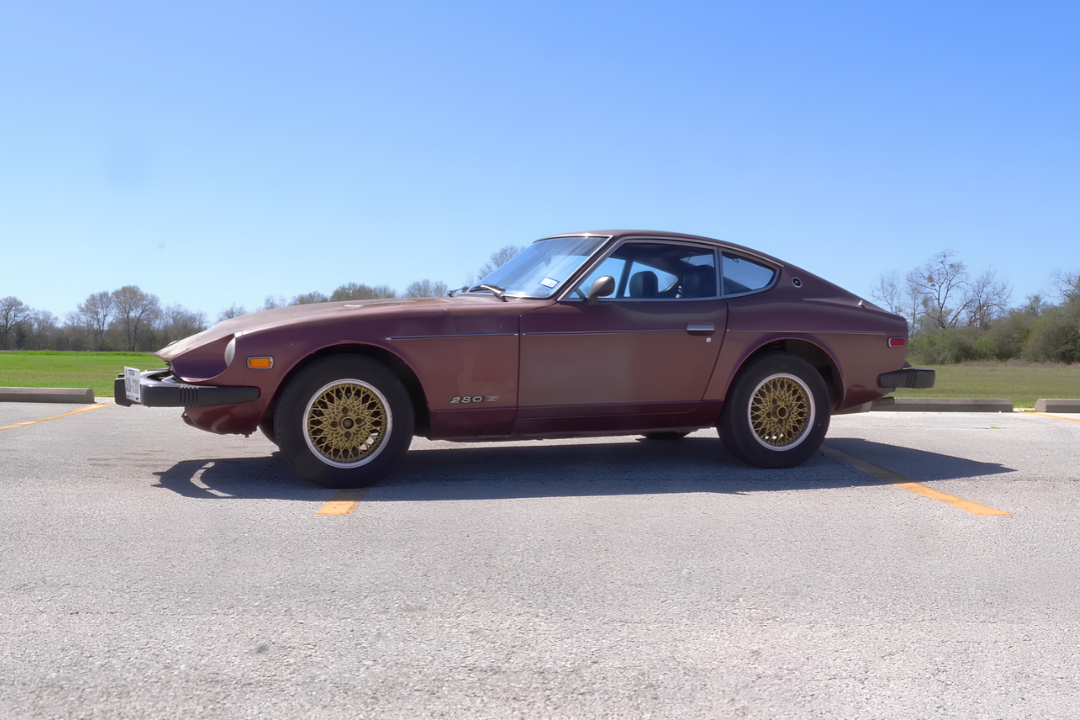
Eight months. A custom ignition system. A completely new wiring harness. Modern fuel injection. An electronic throttle. And after all that, the 1978 Datsun 280Z still refused to start.
Ronald Finger had not even touched the engine’s internals. The pistons, valves and camshaft were staying exactly as Nissan made them. His plan was to take everything around the old L28 engine and replace it with modern hardware, then see whether a 1970s engine could actually become more efficient and powerful without losing its identity.
The old Datsun had plenty of room for improvement
The 280Z was already ahead of many cars from its era because it used Bosch L-Jetronic electronic fuel injection instead of a carburetor. But by modern standards, the system was crude. The original owner’s logbook showed around 15 to 17 mpg, while the car managed only 125 horsepower at the wheels on the dyno.
Finger decided the answer was not another engine. He wanted to keep the L28 completely stock internally and improve the parts responsible for delivering air, fuel and spark. The first major change was an electronic throttle body controlled by a modern ECU and digital accelerator pedal. That allowed the computer to control airflow instead of relying on the collection of valves, vacuum lines and mechanical hardware used by the original system.
Getting the new throttle onto the old engine was not exactly plug-and-play. Finger had to design custom adapters, deal with the larger throttle opening and create an O-ring seal. A 3D-printed prototype helped prove the design before the final aluminum part was made.
Then he basically rebuilt the ignition system
The original engine used one ignition coil and a distributor. Finger wanted individual coils that the new ECU could control, so he used six used Nissan coils and built a completely new way for the computer to know where the engine was in its rotation.
That meant designing a small trigger wheel and Hall-effect sensor assembly to fit where the distributor had been. The first prototype failed because the trigger wheel moved around as it spun, causing the ECU to lose synchronization. Finger eventually redesigned the shaft and bearing arrangement so everything stayed locked in place.
The final shaft also had to be made from case-hardened steel because the original distributor drive gear could damage softer material. A machinist friend in Switzerland made the custom shaft, while CNC-machined and 3D-printed parts completed the assembly. With that problem solved, the same system could also tell the ECU where the camshaft was. That gave the computer enough information to fire the new injectors sequentially rather than firing all of them together like the original system.
Eight months of work still ended with a no-start
Finger then replaced the old injectors with modern EV14-style units, added pressure and temperature sensors, installed a wideband oxygen sensor and built an entirely new engine wiring harness. Even the ECU was mounted in the original computer’s location.
When he finally turned the key, almost everything appeared to work. The throttle responded. The fuel pump ran. The sensors reported correctly. The ignition timing could be calibrated. But the engine would not start. Finger went through several possibilities before finding the real problem. The ECU knew the engine’s size, cylinder count and firing order, but it did not know how efficiently the engine could pull in air at different RPMs. Without a volumetric efficiency table, the ECU was badly estimating the amount of fuel required.
There was no suitable L28 table available, so Finger loaded one from a completely different engine just to see what would happen. The engine started.
The old L28 comes back with more power
After finishing the cooling system and exhaust, Finger drove the car on the road before taking it back to Stupid Fast for another dyno session. The first dyno test had produced 125 wheel horsepower. After eight months of work, the modified car made 142 whp.
That was a 17 whp increase, or roughly 13%, without changing the engine’s internal components. The car also improved its fuel economy. After driving it on highways, running errands and taking road trips, Finger recorded an average of 19.9 mpg compared with the previous 17 mpg figure. Of course, there was one last joke. Finger calculated that the fuel savings would take about 63 years to pay for the entire project.
So no, the 1978 Datsun did not suddenly become a modern car. But after eight months of replacing almost everything around its original engine, Finger managed to make the old L28 produce more power and use less fuel while leaving the heart of the engine completely untouched.
More from Fast Lane Only
- Unboxing the WWII Jeep in a Crate
- 15 rare Chevys collectors are quietly buying
- 10 underrated V8s still worth hunting down
- Police notice this before you even roll window down
*Research for this article included AI assistance, with all final content reviewed by human editors.