Edsel Ford picked the name Mercury in 1938, and the first Mercury Eight sold for $916 with a 95-horsepower V8. According to Ford’s own history, more than 65,000 were built in the first year. The brand then lasted until January 4, 2011, when the final Grand Marquis left the line.
In between, Mercury built a little of everything. It sold wagons, lead-sled favorites, big convertibles, smart compacts and even a roadster from Australia. Many of them shared a body with a Ford, yet each one carried its own trim, engines and attitude.
These are our picks for the Mercury models that show a kind of car nobody makes today. That verdict is our opinion. Still, the years, engines and production figures come from Ford’s records, period specs and collector sources, so the case for each car rests on facts.
1. 1939 Mercury Eight 99A station wagon
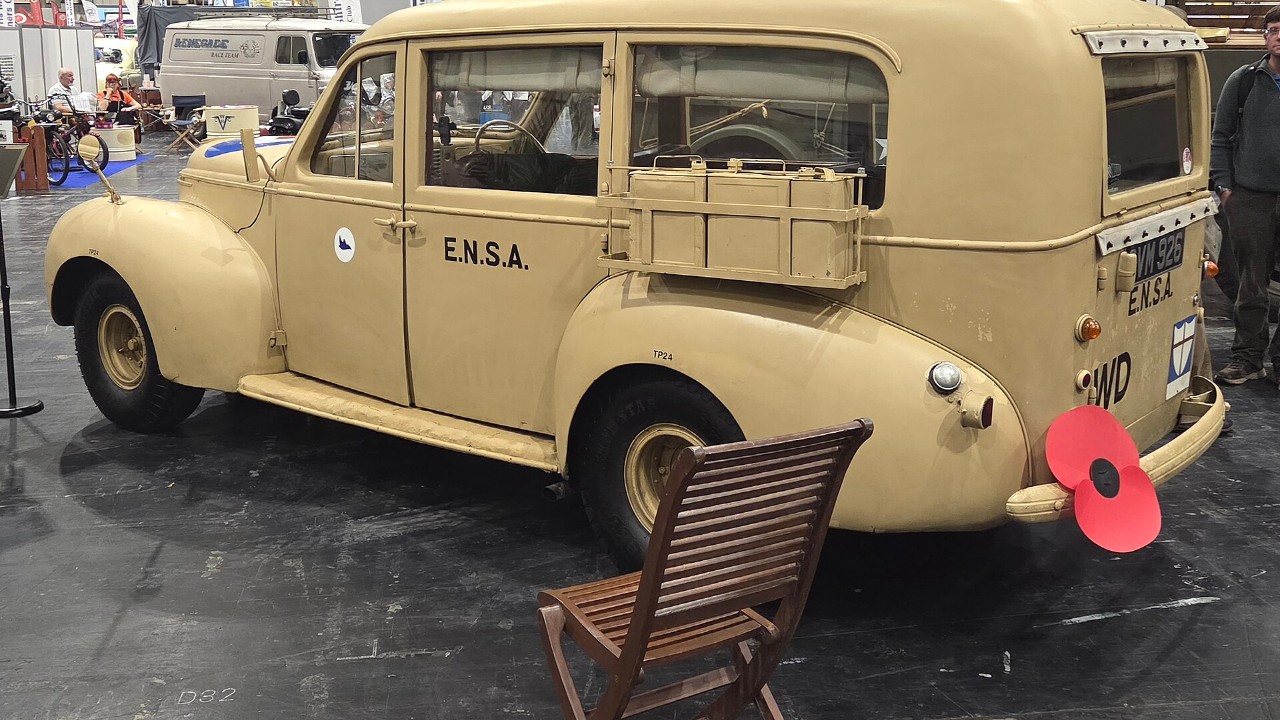
The first Mercury Eight carried the series code 99A. Mercury offered it in several body styles, including coupes, sedans, convertibles and station wagons. Under the hood sat a 95-horsepower version of Ford’s flathead V8, as Ford’s history of the Mercury brand confirms.
At first, the idea was simple. Edsel Ford and sales manager Jack Davis wanted a premium car between Ford and Lincoln. So the Mercury Eight sat one step above a Ford, with more style and a little more comfort.
Our take: this is exactly the kind of car nobody builds anymore. It is a premium-brand family hauler with a V8 and a wagon body, launched in the brand’s very first season. In our view, it also shows how Mercury saw itself from day one: a step up for families, not a toy for the few. We’d love to see more of them restored and driven to shows. After all, the formula worked: Mercury sold 90,556 Eights for 1941. Then the war cut 1942 production to just 1,902 cars.
2. 1950 Mercury Eight Sport Sedan
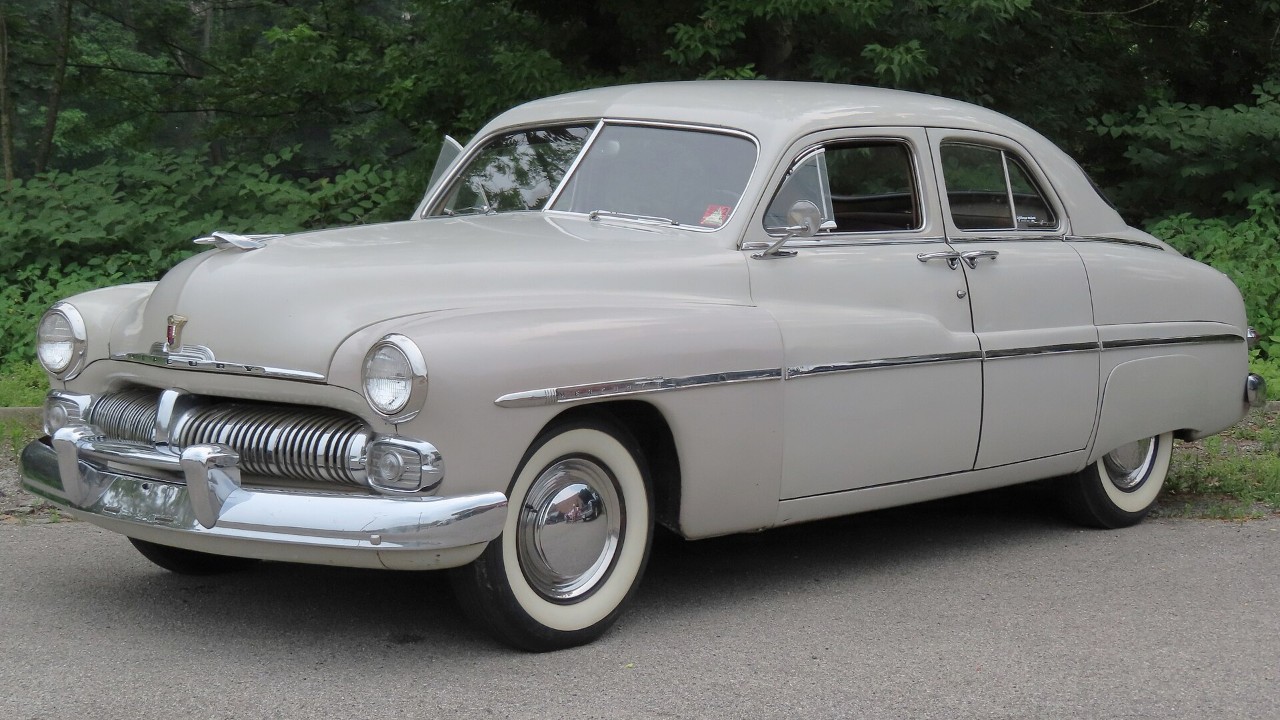
Mercury’s 1949 redesign was its first true postwar car. It rode a 118-inch wheelbase and used a smooth “pontoon” body with integrated fenders. The flathead V8 grew to 255 cubic inches and made 110 horsepower. Then, for 1950, the Monterey name made its debut as the flagship version of the Mercury Eight.
Those smooth bodies caught the eye of customizers almost right away. Ford’s history notes that the 1949 cars became popular with hot-rodders. In fact, Sam Barris built the first lead sled from a 1949 Mercury Eight. In our view, that chopped, lowered look still defines the custom-car world.
Our take: a stock 1950 Sport Sedan shows what the customizers started with. It has the same round shape and the same flathead V8, with nothing chopped. For a look at the Mercurys we’d steer clear of, see 8 Mercurys to avoid at all costs. We think an original Mercury Eight like this is worth more to car culture than its price suggests.
3. 1952 Mercury Monterey convertible
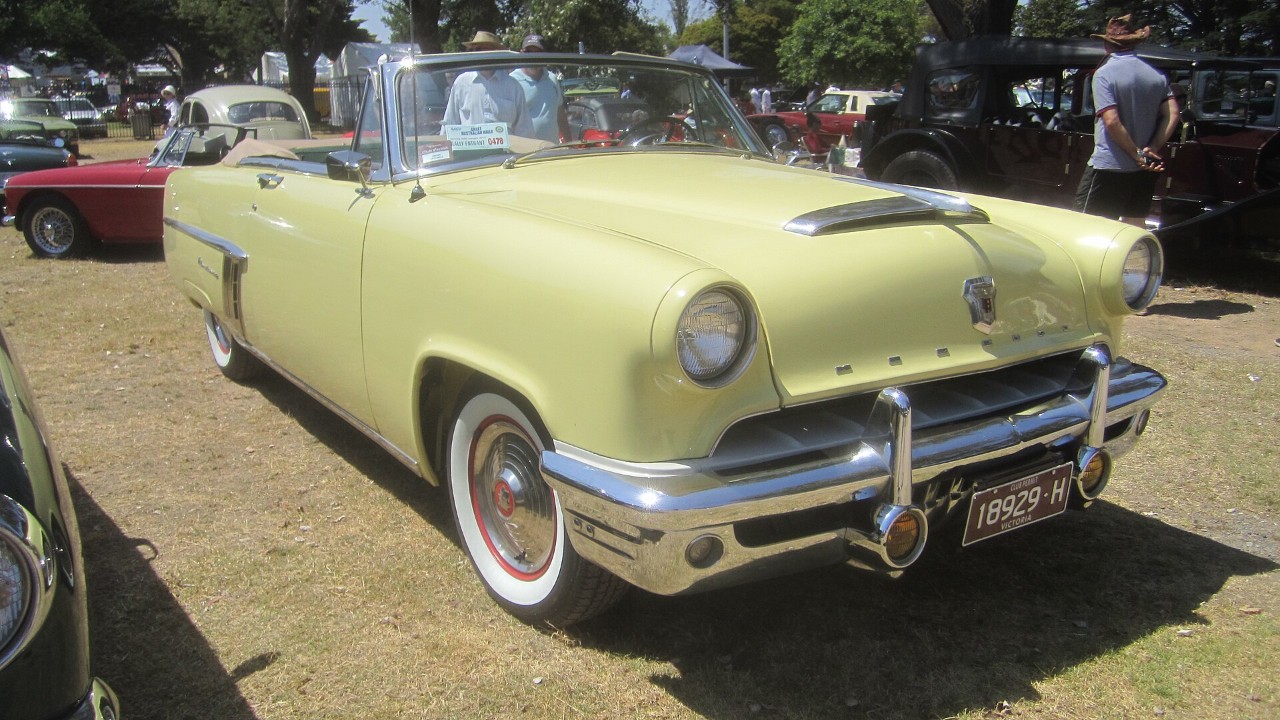
For 1952, the Monterey became its own series and Mercury’s top model line. It replaced the Mercury Eight, which ended after 1951. The new range included a convertible and a four-door sedan. Mercury also introduced a hardtop that year.
Initially, the convertible listed at $2,370. It still used a 255-cubic-inch flathead V8. In fact, the Monterey name had appeared only two years earlier as the flagship version of the Mercury Eight. As a result, the 1952 Monterey marks the end of an era as well as a start. It brought a new top-line name, yet the engine was an old design.
Our take: a 1952 Monterey convertible is the kind of car that’s gone for good. It is a full-size, flathead-powered soft top from a mid-priced brand. Today, almost nothing fits that description. We’d keep one top-down all summer, and we’d never swap its flathead for anything newer. For a buyer today, that old V8 is part of the appeal, because it is simple to understand and easy to love.
4. 1956 Mercury Montclair hardtop
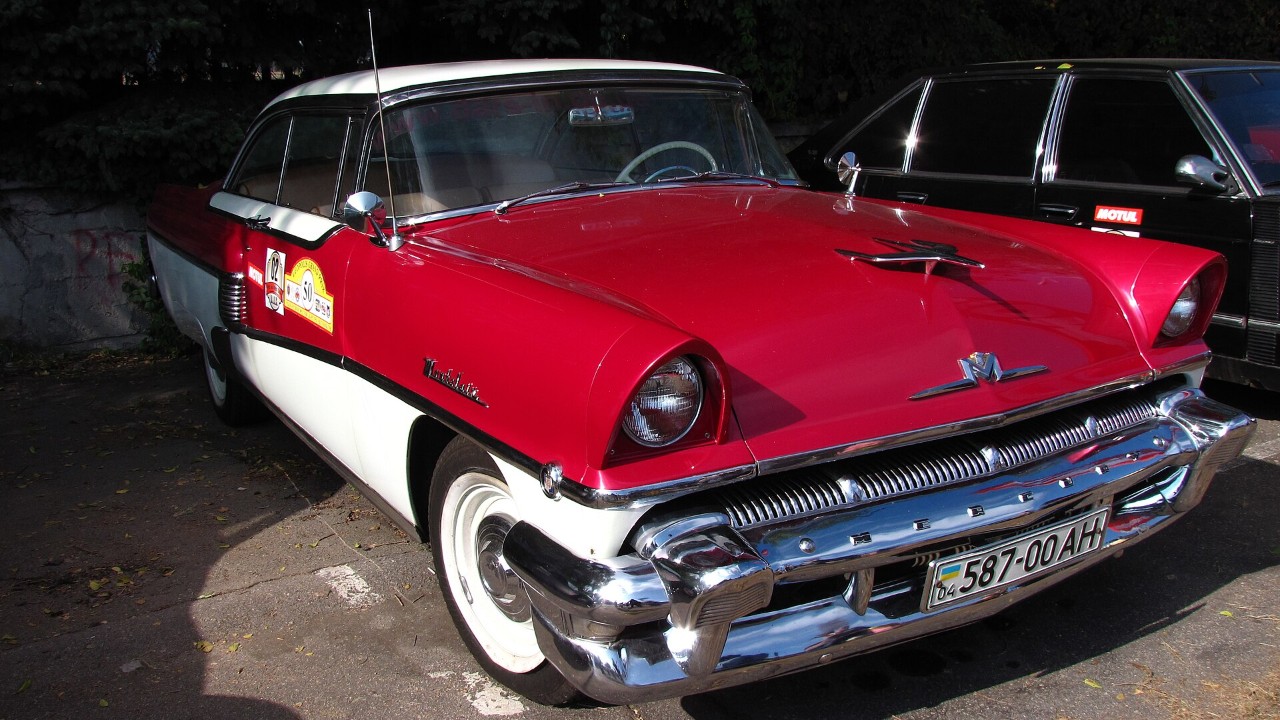
The Montclair arrived in 1955, ranked one rung higher than the Monterey. In its first year, the two-door hardtop listed at $2,631, and buyers took 71,588 of them. For 1956, the V8 was bored out from 292 cubes to 312, good for 225 horsepower.
Still, there was more for those who wanted it. From 1956, a dual-quad setup was on the order form, and it lifted output to 260 horsepower. That gave a Montclair hardtop real pace to match its looks. In addition, the 1955 Montclair range offered the Sun Valley, a hardtop with a tinted Plexiglas panel over the front half of the roof. Only 1,787 were built.
We’d call the 1956 Montclair hardtop peak 1950s Mercury. It had no center pillar, lots of chrome and a big V8. For more of our favorite Mercurys, see 8 Mercury models we’d quietly rank among the best. Our take: that pillarless shape, with its windows rolled down, is one of the great American profiles.
5. 1962 Mercury Meteor
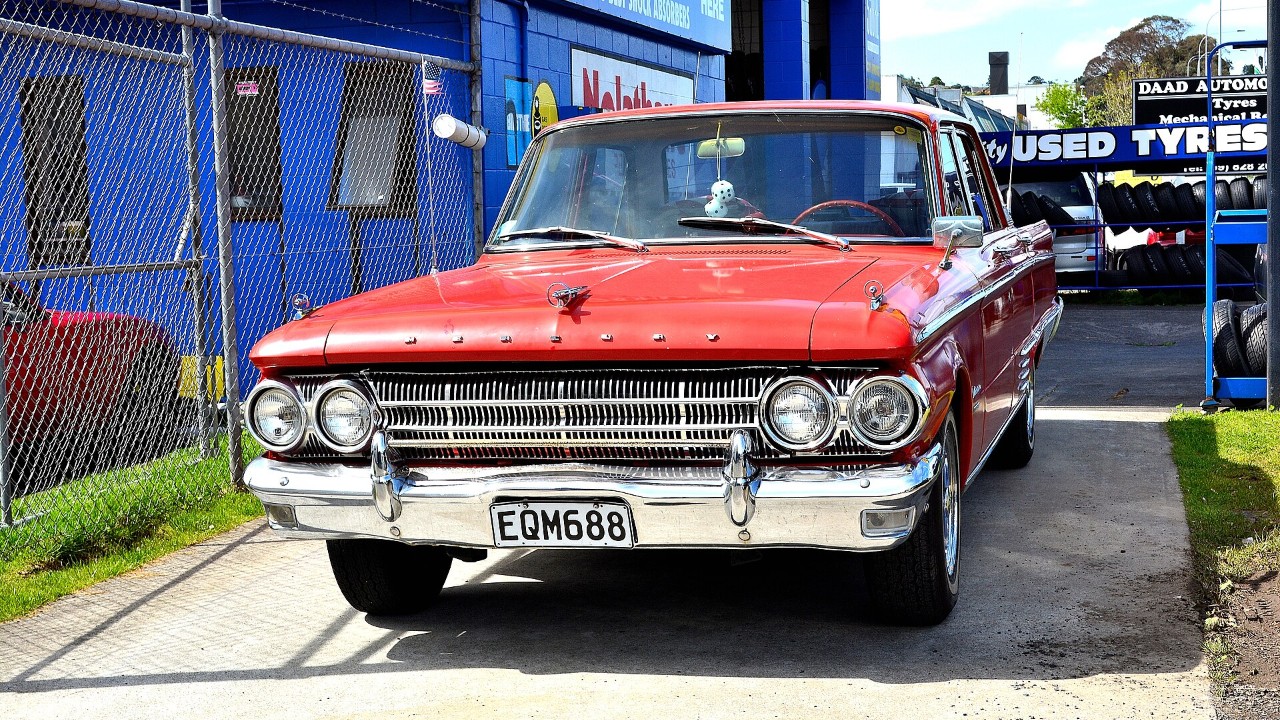
For 1962, the Meteor became an intermediate Mercury on a 115.5-inch wheelbase. It was the division’s counterpart to the Ford Fairlane. The standard engine was a 170-cubic-inch six making 101 horsepower. Buyers could also choose a 221 V8 rated at 145 horsepower or a 260 V8 at 164.
Mercury also offered the Meteor S-33, a sporty trim package. It brought bucket seats, a center console and premium trim. By comparison, the 1961 Meteor had been a full-size car on a 120-inch wheelbase, first developed as the 1961 Edsel Ranger. However, sales of the mid-size version were lower than Mercury hoped, and the brand dropped the Meteor after the 1963 model year.
Our take: the Meteor is a short-lived oddity of the sort carmakers no longer try. It was a mid-size Mercury built for just two years in this form, and then it was gone. That makes it a great conversation piece today. We’d buy one simply because so few people know it existed.
6. 1963 Mercury Comet Custom convertible
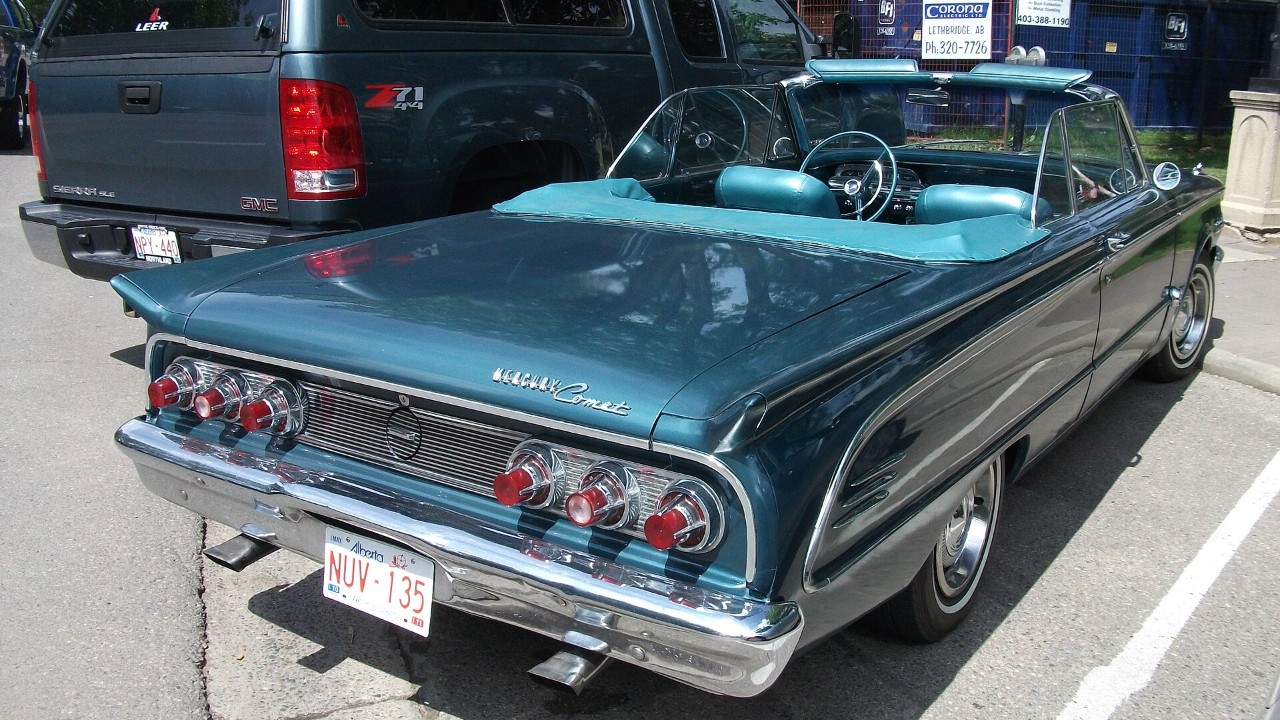
The Comet was first planned as the 1960 Edsel Comet. When Ford shut down Edsel in November 1959, the car went on sale under Lincoln-Mercury on March 17, 1960. By 1963, it was a Mercury Comet, and that year brought two new body styles, a convertible and a pillarless hardtop.
The 1963 Comet also got stronger. Mercury redesigned the chassis and suspension so it could carry an optional V8. That engine was the 260 from the Fairlane, rated at 164 horsepower with a two-barrel carburetor. The Custom trim added extra chrome, badges and an all-vinyl interior. Meanwhile, an optional S-22 package brought bucket seats and a center console to the two-door sedan.
We think the 1963 Comet Custom convertible shows a compact car done with care. It is small and light, with a V8 option and a real folding top. Few compact cars of any brand offer that mix today. Our take: a well-kept example is one of the friendliest Mercury convertibles to own.
7. 1966 Mercury S-55 convertible
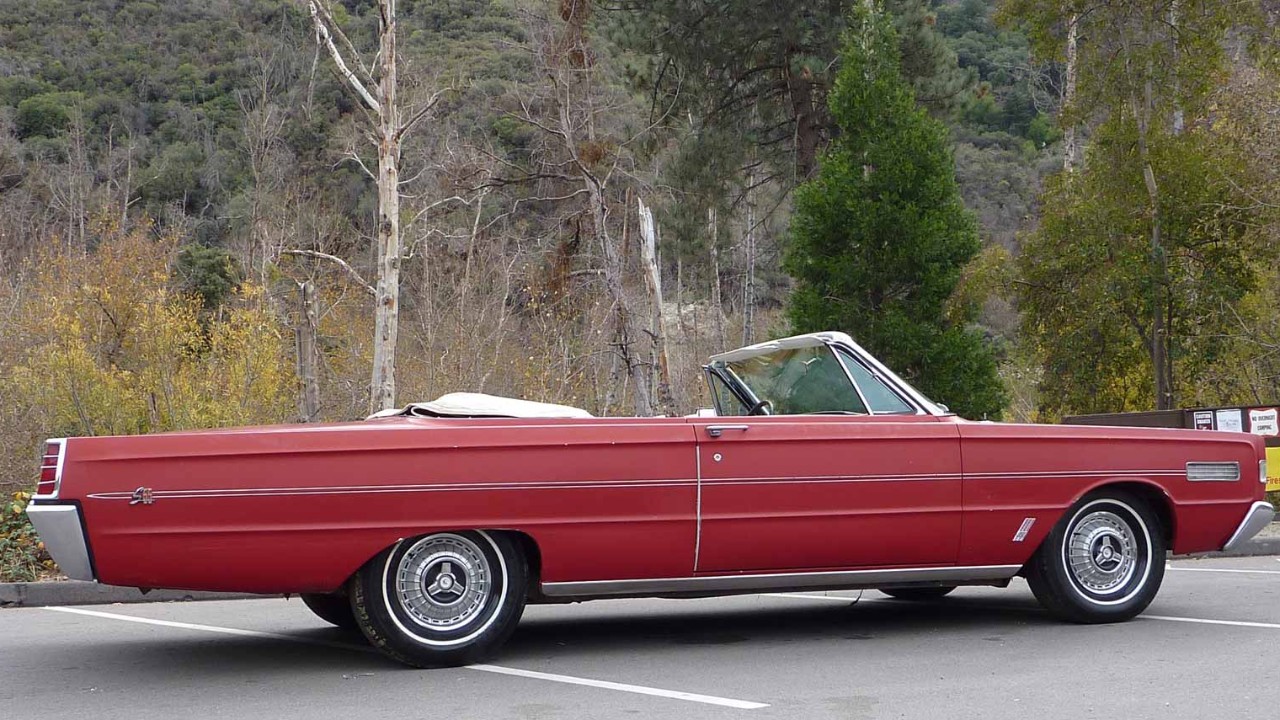
For 1966, the S-55 returned as its own model, and it came with one engine. That was the 428-cubic-inch “Super Marauder” V8, rated at 345 horsepower with a single four-barrel carburetor. Buyers could pair it with a four-speed manual or an automatic.
According to Curbside Classic, the 1966 run totaled 3,585 cars, of which 669 had a soft top. Each started at $3,614. Drum brakes were standard, while front discs cost extra. In addition, the heavily optioned convertible in that story would have stickered near $5,500. Every S-55 got buckets, a center console, a floor-mounted shifter and dual exhausts as standard. On the outside, 428 emblems sat on the front fenders, with S-55 badges on the rear quarters.
Our take: a full-size convertible with a big V8, buckets and a four-speed simply isn’t made anymore. The S-55 mixed luxury-car size with muscle-car hardware. In our view, that recipe vanished with the 1960s. If you find one, check that the 428 is still there, because the 1966 car came with no other engine. We’d hold on to one for good.
8. 1968 Mercury Montego MX convertible
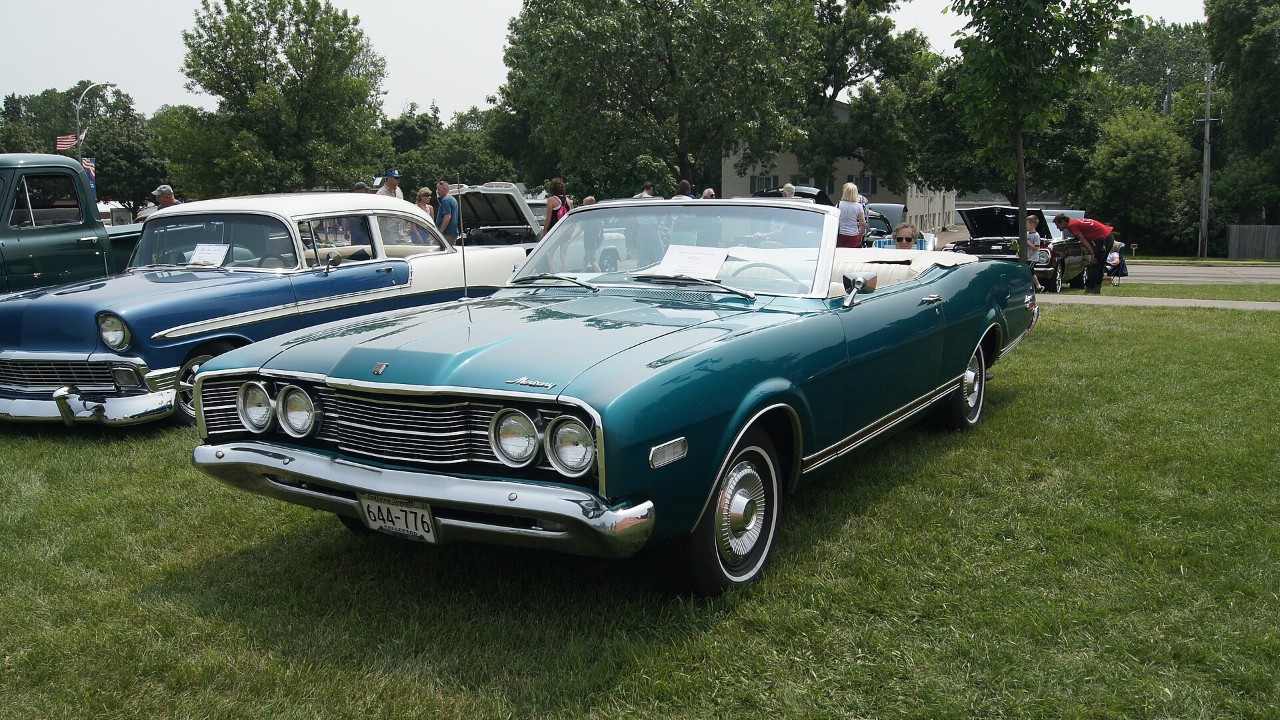
Mercury introduced the Montego for 1968 as part of its intermediate Comet line. It was the counterpart of the Ford Torino. The new name replaced the Comet Capri and Caliente, and the Montego MX took the Caliente’s spot near the top of the range.
The first Montego could be ordered as a two-door convertible, and the engine list ran up to a 390 V8. At the same time, the high-performance Comet Cyclone became its own model line for 1968. However, the convertible didn’t last. Mercury dropped it for 1970, and the 390 went away that year as well.
Our take: the 1968 Montego MX convertible is a mid-size, open-top Mercury that lived for just a short time. That brief run makes it special. We’d pick one over its Ford twin for exactly that reason. It shows how much variety Mercury squeezed out of a shared Ford body. For buyers today, an MX convertible offers a mid-size Mercury soft top from a very short window, and that is reason enough for us.
9. 1976 Mercury Monarch
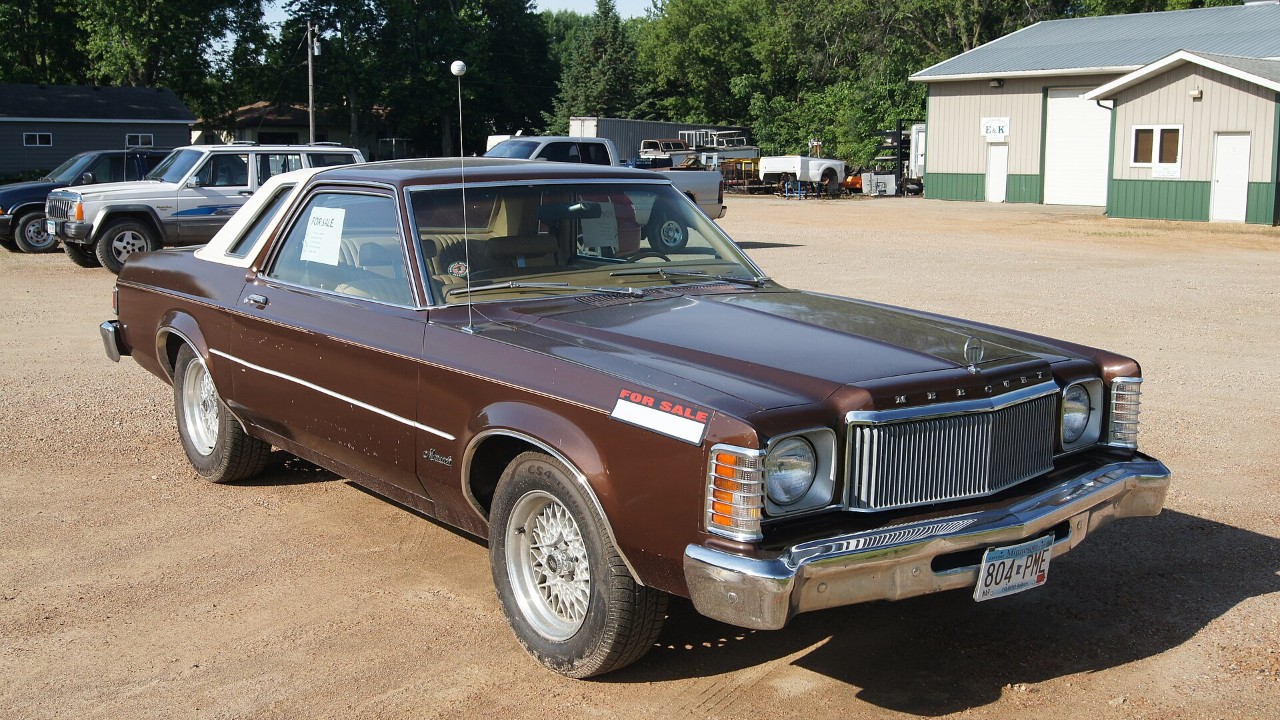
The Monarch ran from the 1975 through 1980 model years as the twin of the Ford Granada. Ford used the Mercedes-Benz 280 as its benchmark for the car’s styling and interior packaging. As a result, the Monarch looked crisp, formal and upright.
Furthermore, its engine range was wide. The base unit was a 200-cubic-inch six, and buyers could step up to a 250 six, a 302 V8 or a 351 V8. Meanwhile, the top Grand Monarch Ghia of 1975 and 1976 offered four-wheel disc brakes. Ford built 575,567 Monarchs in all. Later, for 1977, the Grand Monarch Ghia’s role passed to the Lincoln Versailles.
Our take: the Monarch is a small luxury sedan with a choice of six- or eight-cylinder power. In our view, nobody builds a compact American sedan with that kind of formal style anymore. This 1976 car still wears the round headlamps that gave way to rectangular units for 1978. We’d keep it just as it left the showroom.
10. 1978 Mercury Zephyr Villager
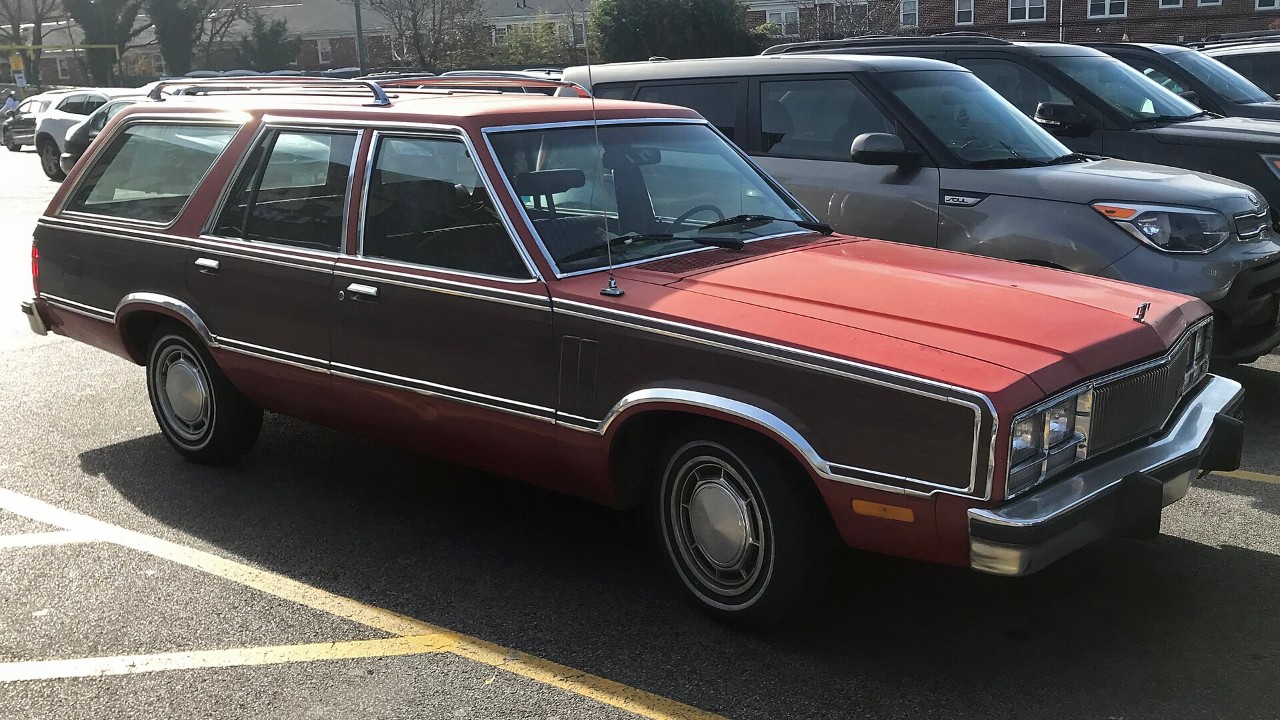
The Zephyr arrived for 1978 as Mercury’s twin of the Ford Fairmont. Together, they were the first cars on Ford’s new rear-drive Fox platform. That platform later carried a dozen other model lines. At launch, the Zephyr stood out with four headlights.
Also, the wagon could be ordered with the Villager package. It added simulated woodgrain trim on the sides, in line with other Mercury wagons. Mercury also sold a Zephyr Z-7 coupe. The Zephyr ran through 1983, and then the front-drive Topaz replaced it. Its Ford twin alone reached 1,598,631 units over those same years, so the platform clearly found buyers.
Our take: a compact rear-drive wagon with woodgrain sides is a thing of the past. The Zephyr Villager also marks the start of the Fox era, so it matters more than its plain looks suggest. We’d use one as a daily classic and enjoy every odd look it got. In fact, we’d bet most people at a cruise night would need a minute to place it.
11. 1979 Mercury Capri RS
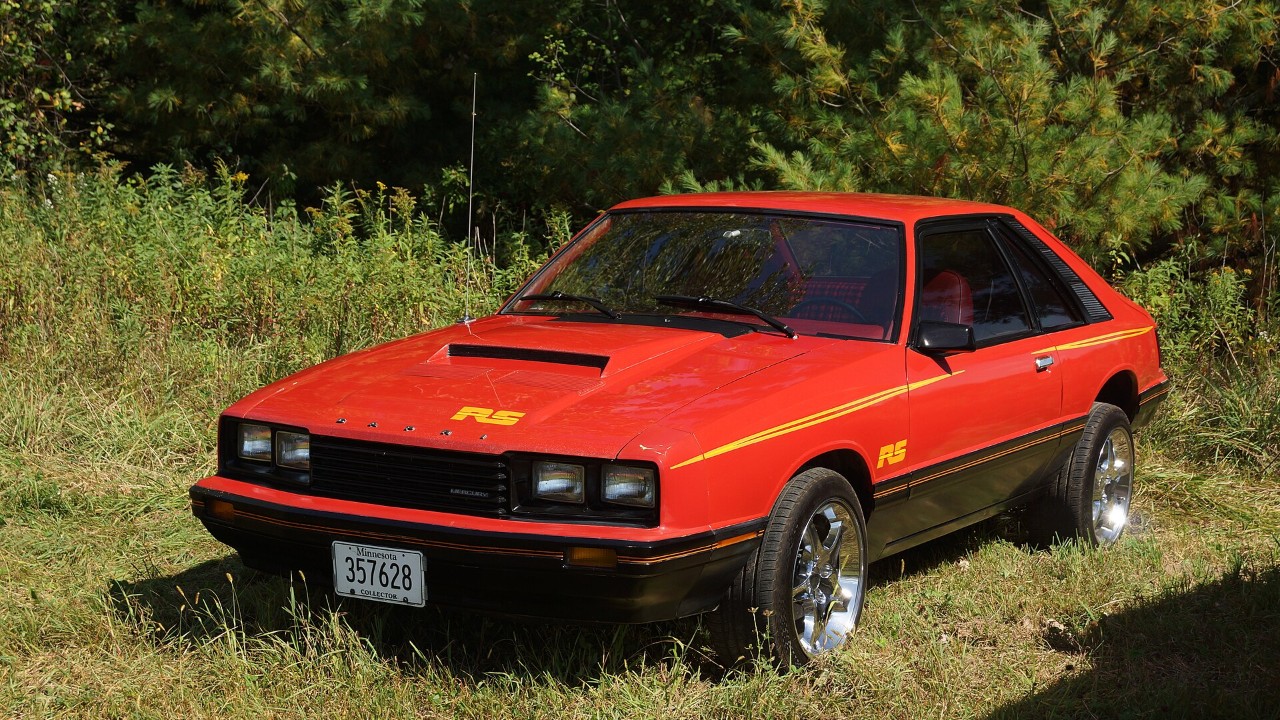
For 1979, Mercury’s Capri moved to the Fox platform and shared its bones with the Mustang. It came only as a three-door hatchback. The RS was the sporty trim, and a turbocharged Turbo RS joined it. Before this, Mercury had sold 513,500 Capri and Capri II cars from 1970 to 1978.
Early RS cars could be ordered with a four- or six-cylinder engine. In other words, the RS name was about attitude as much as speed in that first year. Even so, the hatchback body gave it a look of its own next to the Mustang.
Our take: a Mercury-badged pony car is gone for good, and the Capri RS is the clearest proof. It gave Mercury buyers their own take on the Fox Mustang. We’d keep one in stock form, with its RS trim intact, as a reminder that two brands once shared a pony car. If you are shopping, an original RS with its trim and badges intact is the version we’d chase.
12. 1991 Mercury Capri XR2 convertible
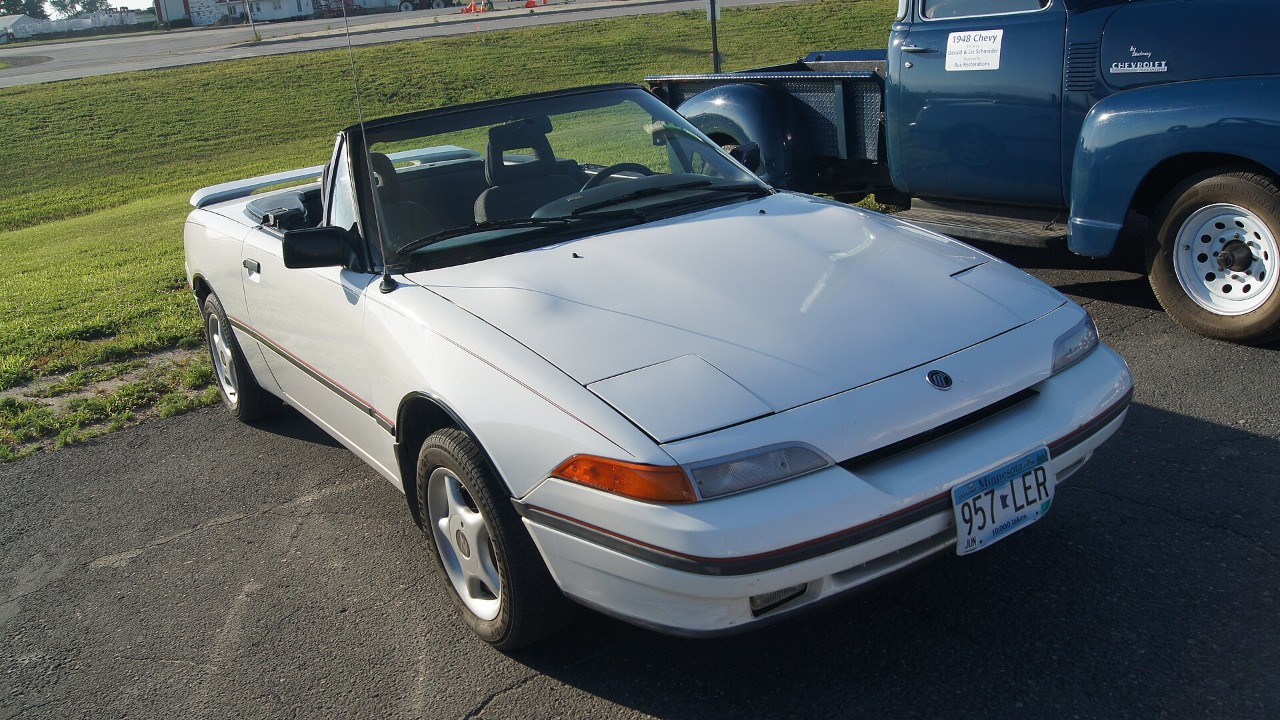
The last Capri came from the other side of the world. Ford of Australia built it, and it launched in the summer of 1990. Many of its parts came from the previous-generation Mazda 323. According to Consumer Guide, the base engine was a 1.6-liter twin-cam four with 100 horsepower.
Then the XR2 turned that engine up with a turbocharger, for 132 horsepower. It drove the front wheels through a five-speed manual. Standard features included a driver’s airbag, four-wheel disc brakes and independent suspension. An optional lift-off steel hardtop also made it a year-round car. However, Consumer Guide noted high noise levels and a plastic rear window that scratched easily. A passenger airbag arrived for 1994.
Our take: an Australian-built, turbocharged convertible sold by Mercury is the strangest car on this list. We love it for that. It was a four-seat soft top with a turbo, and nothing like it is sold today. Production ended after the 1994 model year.
More from Fast Lane Only