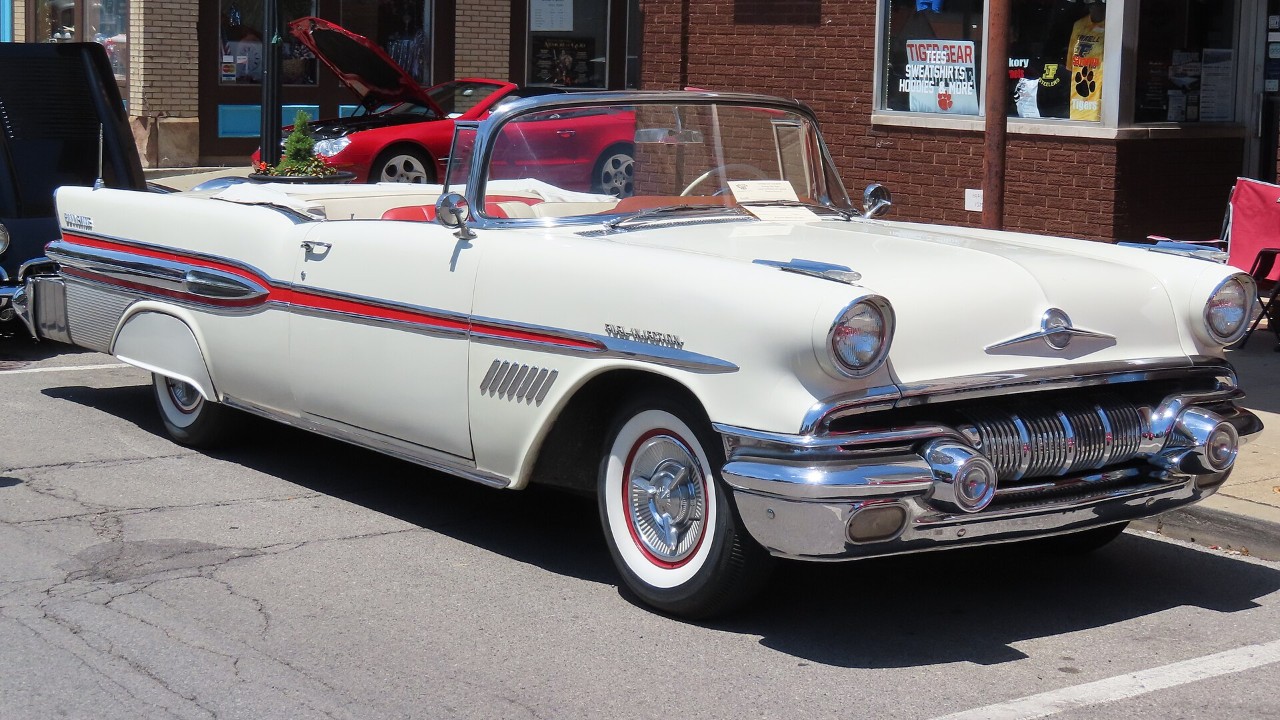
In 1957, Pontiac built just 630 Bonneville convertibles, and every one had fuel injection. In our view, that 1957 Bonneville convertible set a pattern the brand repeated for 50 years. Again and again, Pontiac built a car with more performance than its sensible siblings, sold it briefly, and then moved on.
Some of those cars ended because of rules, insurance costs or emissions limits. Others ended because a part broke, a body style went away or the whole division closed. Either way, many of them now feel like cars the factory could hardly believe it was selling.
So these are our picks: 12 forgotten Pontiacs that, in our view, felt too powerful for their own factory to keep building. The engines, ratings and production counts come from period sources, auction and club records and model histories. However, the verdict in the headline is our opinion, and we explain it for each car.
1. 1957 Pontiac Bonneville convertible
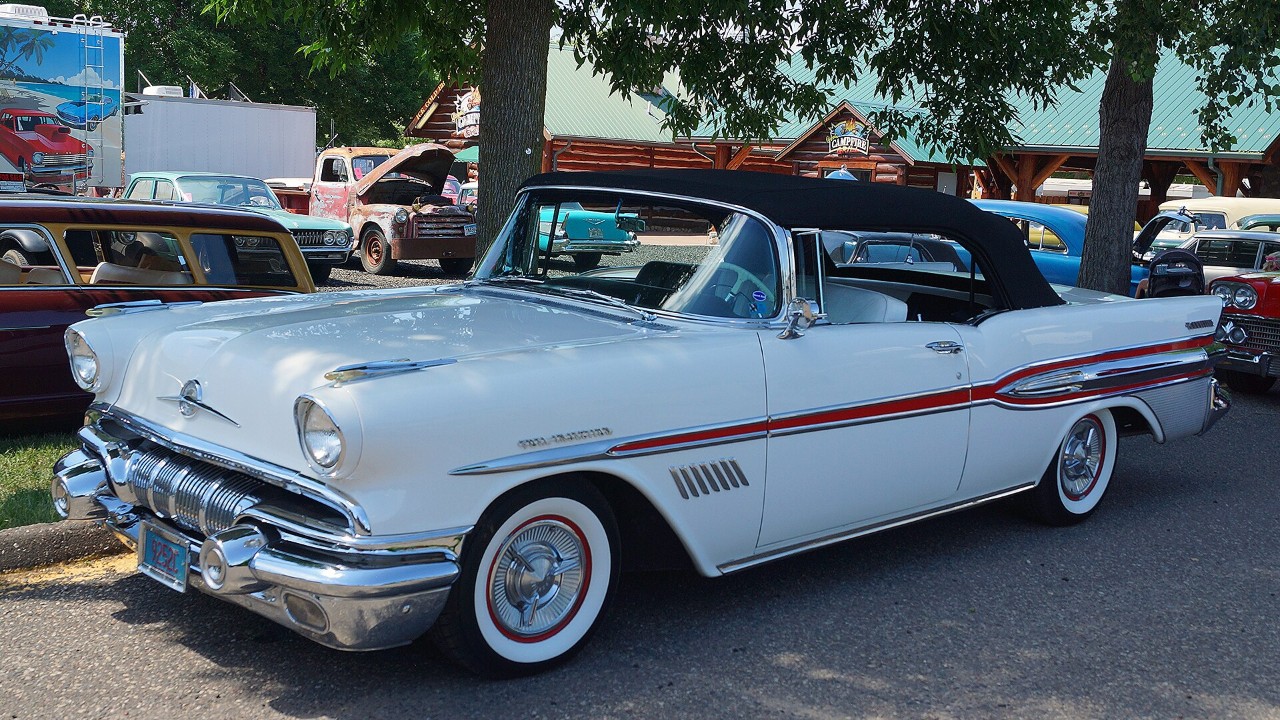
The first Bonneville convertible was a limited-production car, and fuel injection came standard. It used Rochester mechanical injection on a 347-cubic-inch V8 with 10.25:1 compression. “Fuel Injected” badges sat on the front fenders and the deck lid. Pontiac never released an official rating, and instead said only that the engine made more than 300 hp.
According to Old Cars Weekly, Pontiac built only 630 Bonneville convertibles for 1957, and the list price was $5,782. That was a Cadillac-like figure for a Pontiac. Chevrolet’s fuel-injected engine had arrived only about a month earlier, in February 1957.
Old Cars Weekly also notes that Pontiac sold these first cars as “dealer use only” models, which shows how special the factory considered them. Our take: a 630-car Bonneville convertible run with mechanical injection and a Cadillac price is exactly the kind of car a factory builds once to make a point. In our view, it felt too ambitious to keep in production, and that is why it stands at the top of this list. If you ever see one, check for the fender and deck badges and the injection hardware, since they define the car.
2. 1961 Pontiac Ventura hardtop
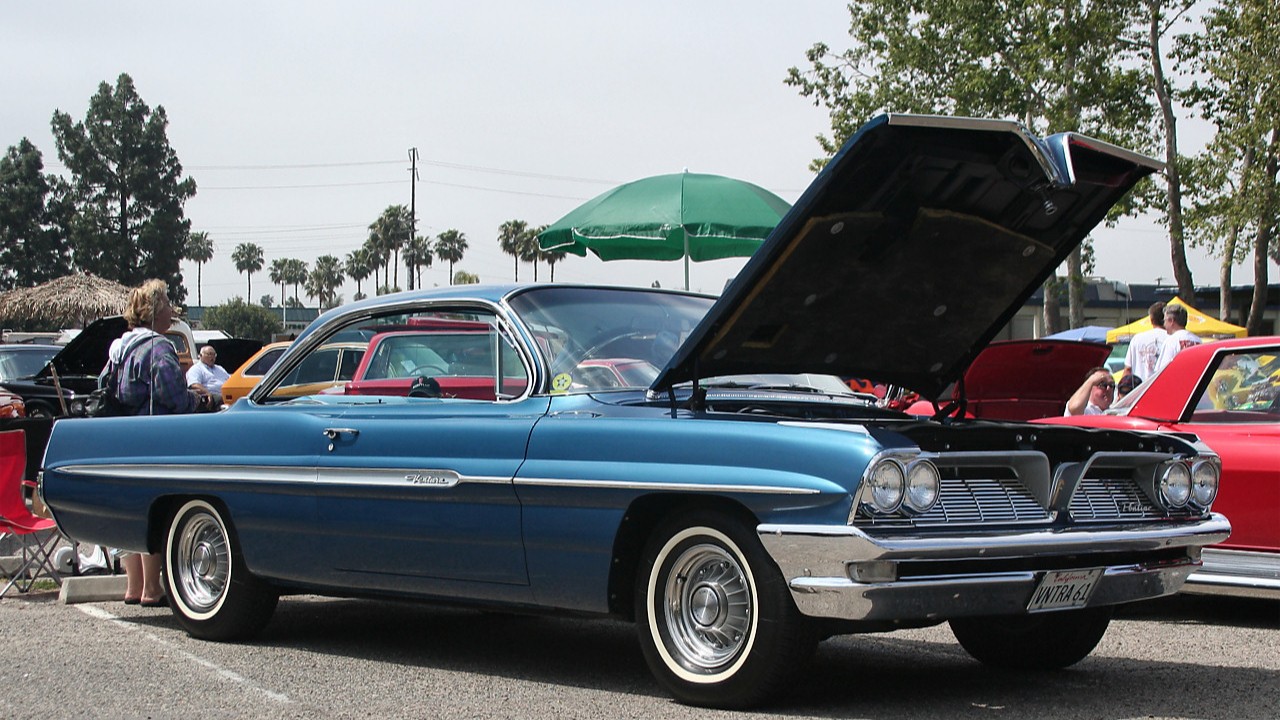
For 1961, Pontiac’s full-size cars shrank. According to Autotrader Classics, they weighed about 200 pounds less than the 1960 models and rode on a wheelbase three inches shorter. The Ventura two-door hardtop wore the airy roofline fans call a bubble top, or bubble window. As a result, the cabin felt bright and open, almost like a convertible with the roof up.
Under the hood, the hottest setups used a 389 V8 with 10.75:1 compression. With a single four-barrel, it made 333 hp and 425 lb-ft. Meanwhile, the Tri-Power version, with three two-barrel carburetors, made 348 hp and 430 lb-ft. That is a lot of engine for a car that Autotrader called one of the lightest full-size models.
Why does it belong here? Because a lighter big car with a Tri-Power 389 is, in effect, an early muscle car in a formal suit. The airy roof also makes the car look lighter than it is, which suits the engine. Our take: a Tri-Power Ventura hardtop feels like a car that got away from the product planners. If you find one, documented Tri-Power cars are the ones to chase.
3. 1965 Pontiac Grand Prix hardtop
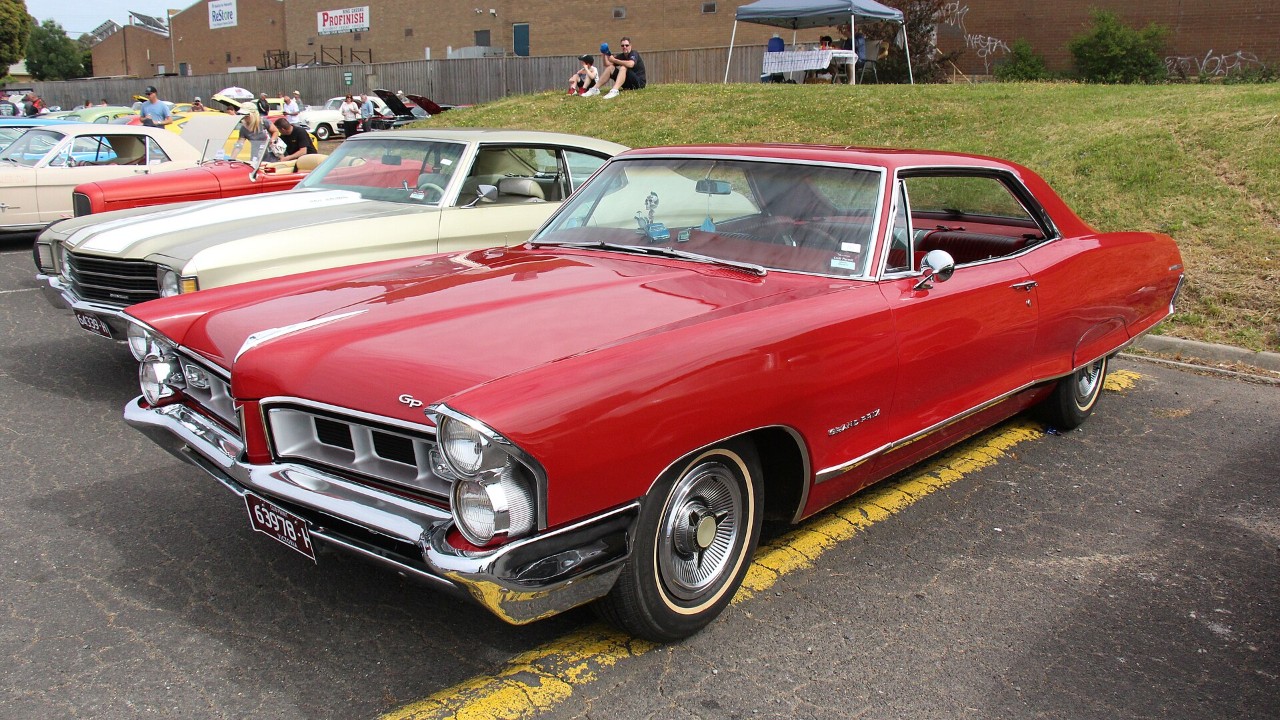
The 1965 Grand Prix was Pontiac’s big personal-luxury coupe. Even so, its engine list read like a drag-strip menu. The standard 389 V8 made 333 hp with a manual or 325 hp with an automatic. Options included a 389 Tri-Power and a four-barrel 421, both at 338 hp, and a 421 Tri-Power at 350 hp.
At the top sat the 421 HO Tri-Power, rated at 376 hp. That is serious power for a car aimed at comfort rather than the drag strip. Pontiac built 57,881 Grand Prix models for 1965, so the car was no rarity. However, the 421 HO cars are the ones we have in mind, because they turned a cruiser into something much wilder.
Our take: a 421 HO Grand Prix is a luxury coupe with a racing engine hiding under a long hood. In our view, it felt almost too strong for the role Pontiac designed it to play. For an earlier chapter of the Grand Prix story, read why the 1963 Pontiac Grand Prix got pulled from the lineup overnight. If you want one today, check the engine code before you trust the badges.
4. 1967 Pontiac Firebird 400 convertible
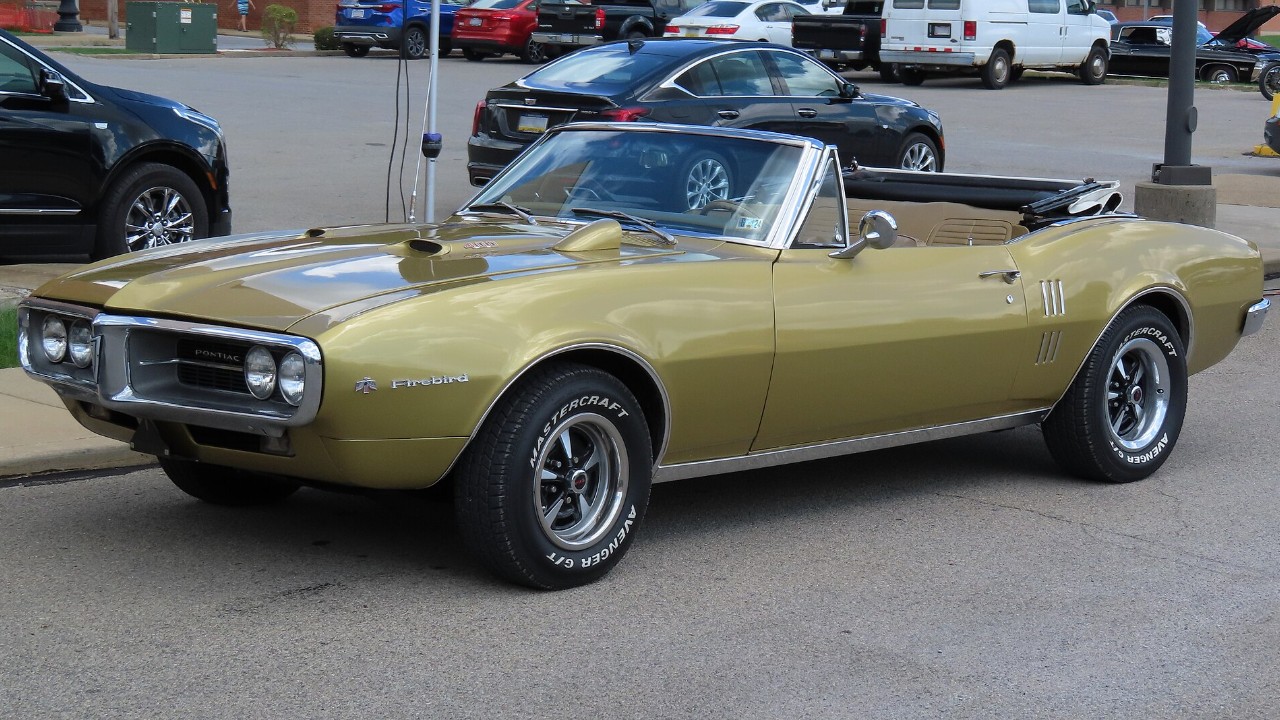
The Firebird arrived for 1967 as Pontiac’s version of GM’s new pony car. At the top of its range sat the Firebird 400. Its 400-cubic-inch V8 came from the GTO and carried a 325-hp rating. Buyers could also add the Ram Air option, which brought functional hood scoops. So the hottest Firebird of 1967 looked the part as well.
Here is the detail that fits our headline. All 1967 and 1968 Firebird 400 engines had throttle restrictors. Those parts stopped the carburetor’s secondaries from opening fully. In other words, GM fitted a big engine and then partly choked it, at least on paper.
In our view, that restriction tells you how nervous the corporation felt about a small car with a big V8. The Firebird 400 convertible sits right at that edge. Our take: an open 400 with the top down is one of the purest 1960s Pontiac experiences. In our view, it felt too powerful for the factory’s comfort, and the restrictors prove it. If you shop for one, look for a documented 400 car with the original scoops, because the badge alone proves nothing.
5. 1969 Pontiac Firebird Trans Am
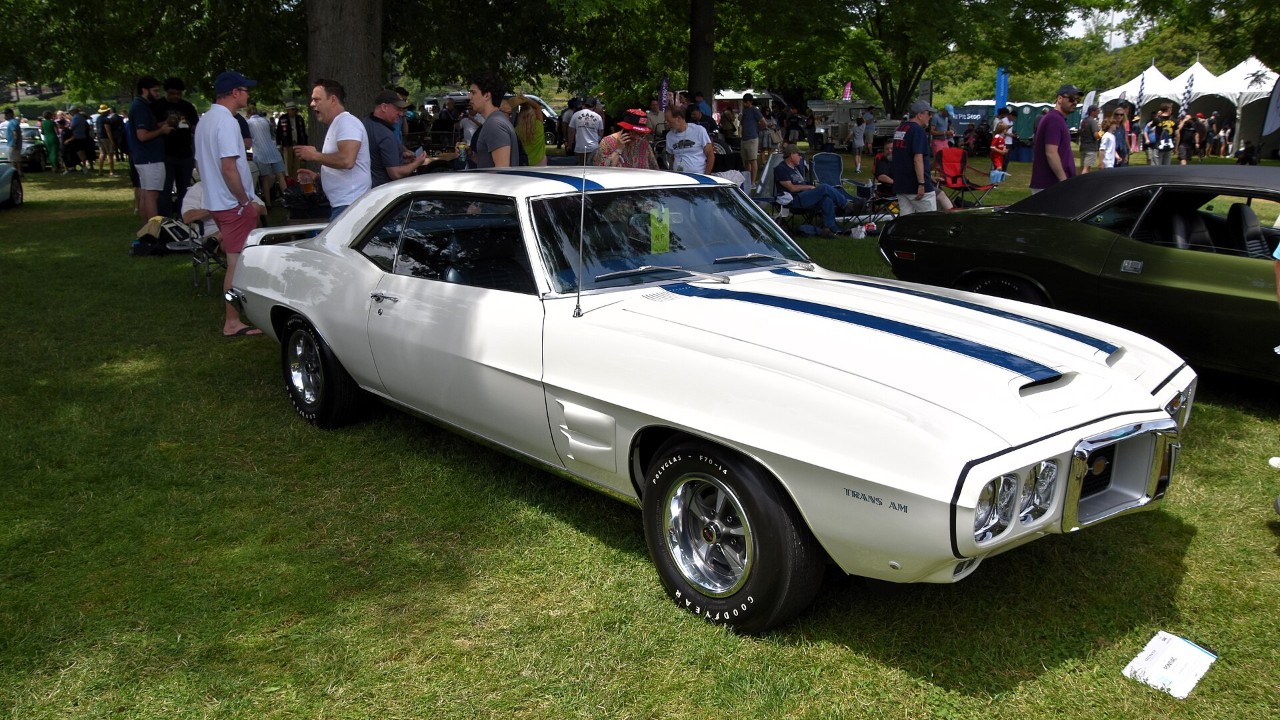
The first Trans Am appeared in 1969 as a performance and appearance package. It cost $1,083 extra. Pontiac named it after the SCCA’s Trans-Am racing series, but it never asked permission first. To settle the dispute, GM paid $5 for every car sold.
Production was tiny. Pontiac built 689 Trans Am hardtops and only eight convertibles in 1969. The strongest engine choice was the Ram Air IV 400, rated at 345 hp at 5,000 rpm. Fans often call the other Ram Air engine the Ram Air III, although Pontiac never used that name.
Our take: the 1969 Trans Am started as an expensive add-on few buyers ordered. Then it grew into the most famous Pontiac name of all. That tension is why it fits here. In 1969, the package was almost too much car for Pontiac to market, and the low numbers show it. For more Pontiacs that pushed the limits, see our list of 20 Pontiacs that seemed almost too wild for the drag strip. If you ever see one of the eight convertibles, consider yourself lucky, since that is one of the smallest totals on this list.
6. 1973 Pontiac GTO 455
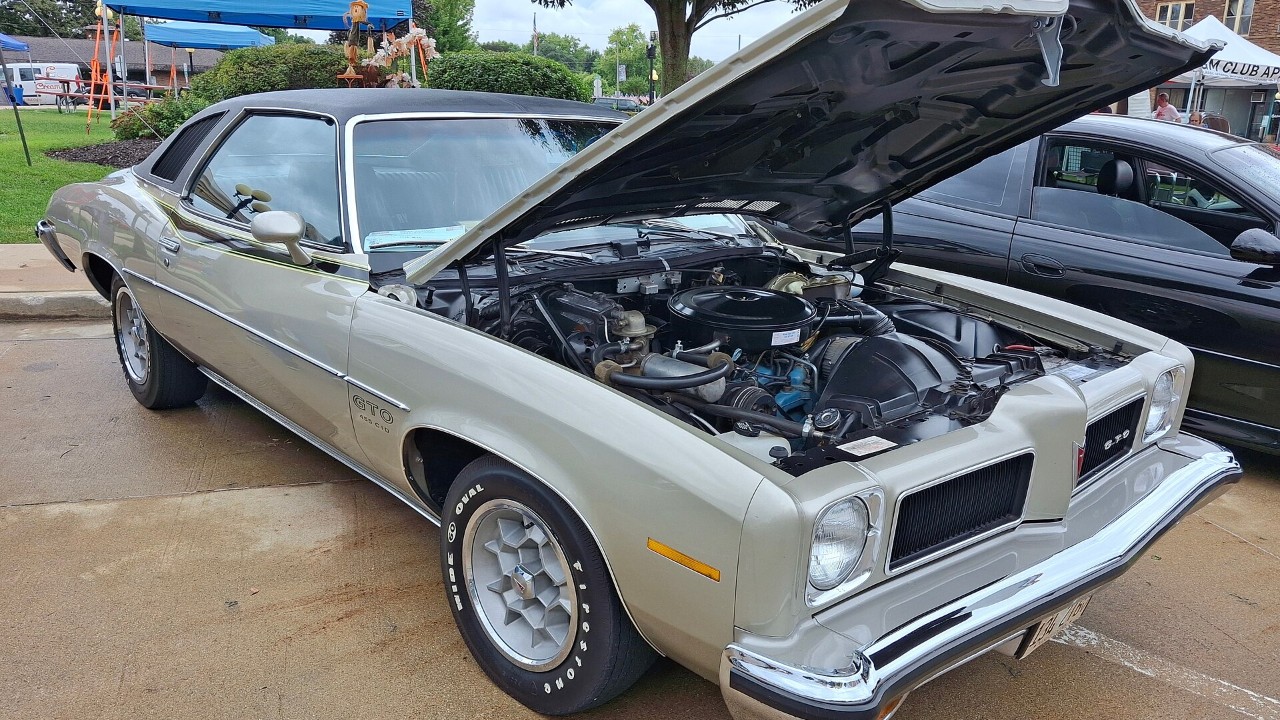
By 1973, the GTO had become an option package on the LeMans. That year’s car wore GM’s new Colonnade hardtop styling. The 455 V8 stayed on the option list, yet its rating fell to 250 hp, and buyers could pair it only with the Turbo Hydra-Matic automatic.
Meanwhile, Pontiac dropped the 455 HO for the GTO. Sales fell to 4,806 cars, a long way from the GTO’s peak years. In our view, that drop made the remaining 455 cars even more interesting. As a result, the 1973 car has become one of the most overlooked GTOs. It looks different from the earlier cars, and the numbers look modest on paper.
So why does it fit our headline? Because the 455 survived on the option list even as Pontiac backed away from big power elsewhere in the GTO. In our view, the car feels like a compromise between what Pontiac could build and what the times allowed. Our take: a 455 GTO from 1973 is a fascinating survivor of the muscle car’s last days. If you find one, confirm the 455 and the GTO package with paperwork before you pay a GTO price.
7. 1977 Pontiac Can Am
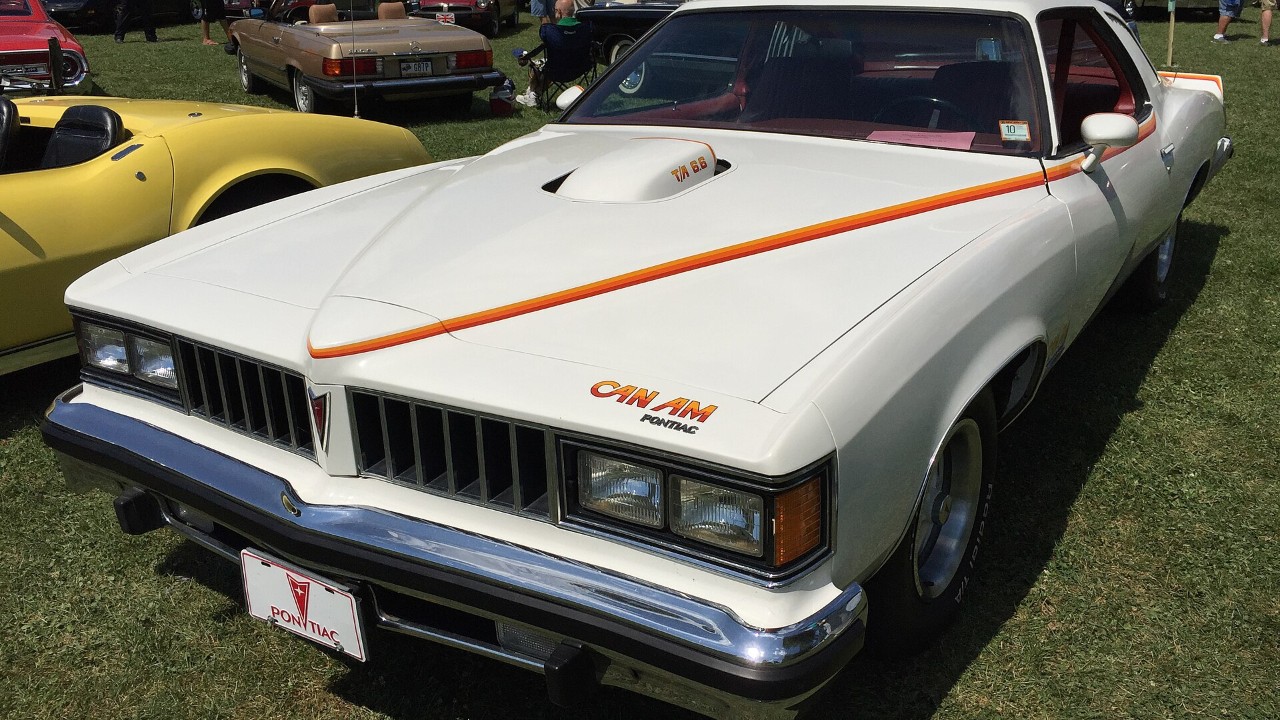
The Can Am was a special-edition option on the LeMans Sport Coupe. Pontiac showed it at the Detroit auto show in January 1977. Every one wore Cameo White paint with orange, red and yellow graphics. It also carried a Trans Am-style shaker hood scoop and a ducktail rear spoiler.
According to Hagerty, the standard engine was the 200-hp T/A 6.6, a 400 V8 coded W72, with a Turbo-Hydramatic 400. California and high-altitude cars used a 185-hp Oldsmobile 403 instead. Pontiac and Motortown planned 2,500 cars, and dealer orders may have doubled that. In other words, demand was there. Jim Wangers and Motortown had proposed the car, and Pontiac marketed it with the line “Remember the Goat!”
Then the tool Motortown used to make the rear spoiler broke. Rather than ship cars without spoilers, Pontiac canceled the car. According to Hagerty, some Pontiac managers also disliked the Can Am because it used the Grand Prix dashboard. A Pontiac Oakland Club director puts final production at 1,377. Our take: this is the most literal entry on our list, a hot car the factory chose to stop building. One sold for $26,400 at Barrett-Jackson in Scottsdale.
8. 1974 Pontiac Trans Am SD-455
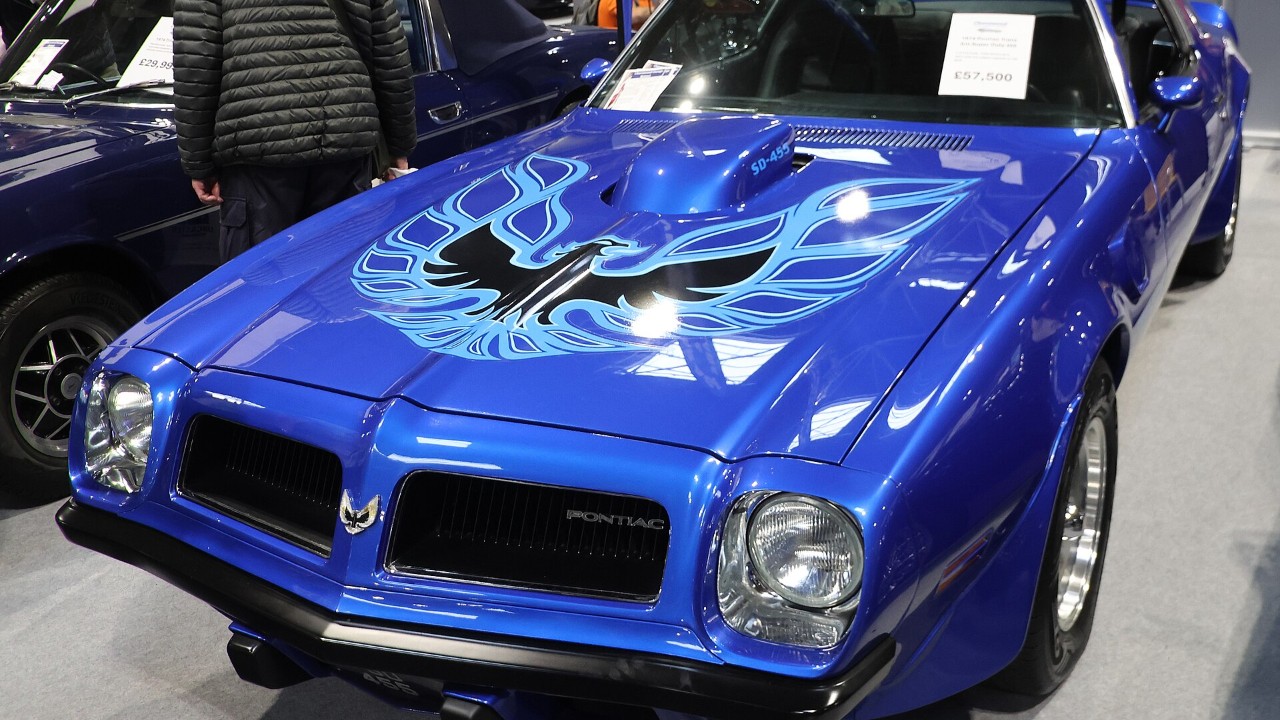
The Super Duty 455 arrived at the very end of the classic muscle era. In the Trans Am, it carried a rating of 290 hp at 4,400 rpm. That figure matched the factory’s SAE net rating. In our view, that number stood out at a time when big engines were losing power fast.
Production stayed small. Pontiac built 252 SD-455 cars during the 1973 production run, with 180 automatics and 72 manuals. Some of those cars carry 1974 model listings even though production took place in 1973. As a result, collectors pay close attention to dates and paperwork on any SD-455.
Our take: the SD-455 felt like a car that should not have existed in 1974. By then, the big-block muscle car seemed to be on its way out, yet Pontiac offered a 455 with real performance anyway. In our view, that is the textbook case of a car too strong for its era to keep in production. If you shop for one, insist on documentation, since the Super Duty package is the whole value of the car. Without it, you just have a regular Trans Am.
9. 2002 Pontiac Firebird Trans Am WS6 convertible
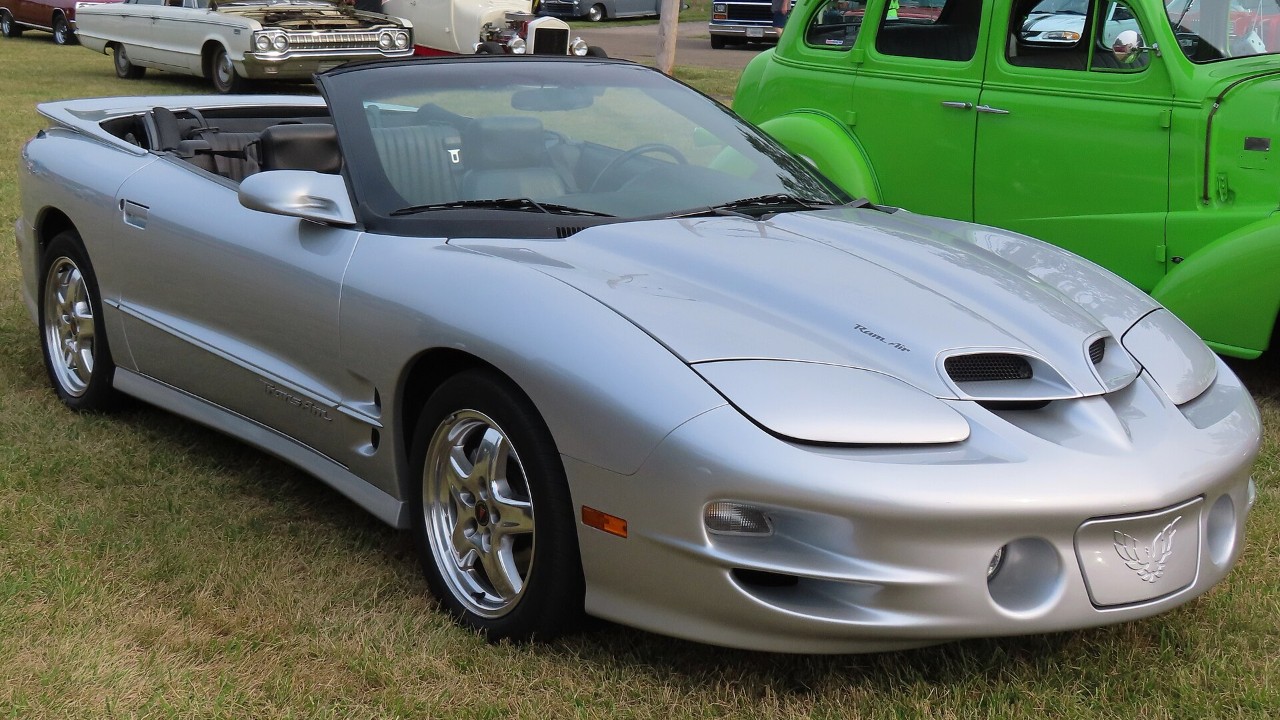
The final Firebird model year was 2002. Pontiac ended production on August 30, 2002, closing a run that started in 1967. At the top of that last lineup sat the Trans Am with the WS6 Ram Air package, powered by the 5.7-liter LS1 V8.
The WS6 cars made more than 300 hp from the LS1. Pontiac also offered the Trans Am as a convertible, so buyers could pair that V8 with an open roof. Even so, the car did not survive past 2002. Production of the whole Firebird line ended that August, after 36 model years.
Our take: the last WS6 convertible is the definition of a car that felt too good for its own factory to keep. The engine was strong and the image was intact, yet the line simply stopped. In our view, a 2002 WS6 convertible with low miles is one of the best ways to own the final chapter of the Firebird story. Before you buy, look for original Ram Air hood parts and documentation of the WS6 package. After all, the package is what separates this car from an ordinary late Firebird.
10. 2006 Pontiac GTO 6.0
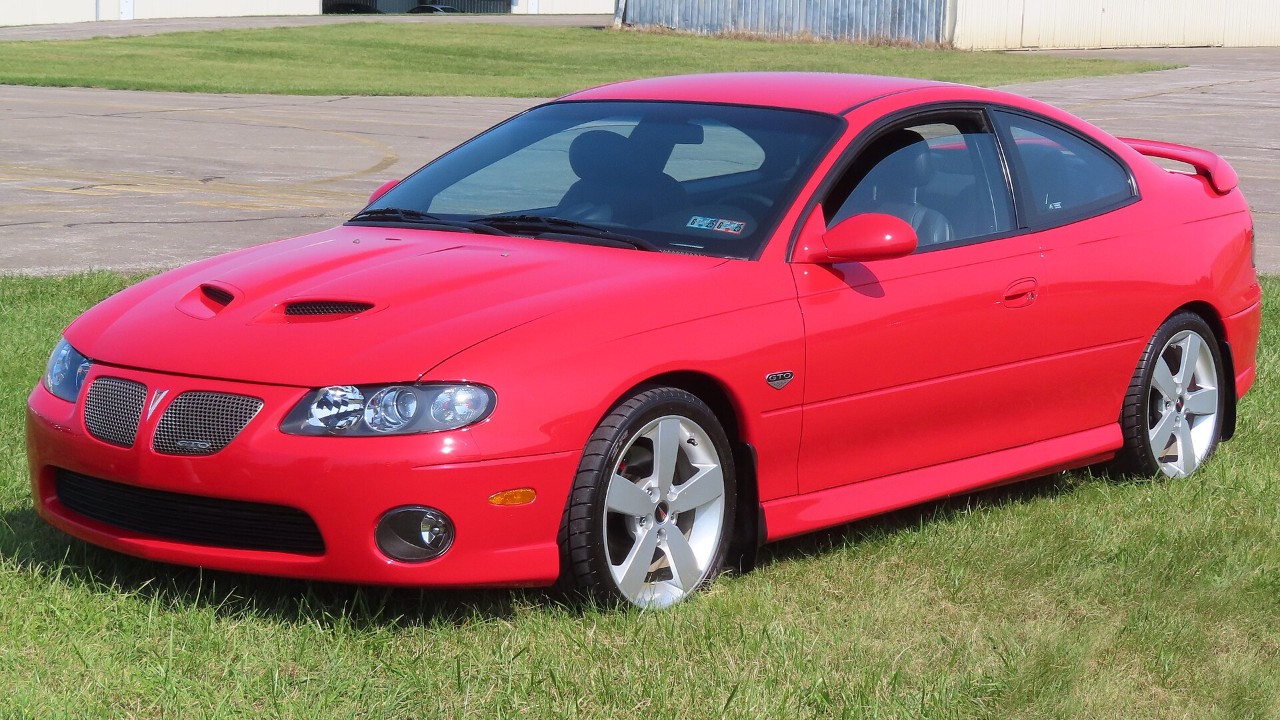
Pontiac revived the GTO name for 2004 on a rebadged Holden Monaro from Australia. The first year used the 5.7-liter LS1. For 2005, Pontiac switched to the 6.0-liter LS2, which raised output to 400 hp. The 2005 cars also kept the hood scoops that had first appeared as a dealer accessory package for 2004.
Pontiac built 13,948 GTOs for 2006, after 11,069 for 2005. In 2004, it sold 13,569 of the 15,728 cars it imported. Over all three years, total production came to 40,808 cars. In our view, that is a small number for a car with 400 hp and a back seat. Meanwhile, every one of them came from Holden in Australia, with a Monaro body under the Pontiac badges.
Our take: the 2006 GTO is a sleeper with a big V8, and it deserved more time. In our view, it felt too powerful for a market that wanted the GTO to look like 1969 instead. The 2006 car was the last of those three model years. Today, a clean six-speed car is one of the best modern Pontiacs to own, and an unmodified example is the one to find.
11. 2008 Pontiac Grand Prix GXP
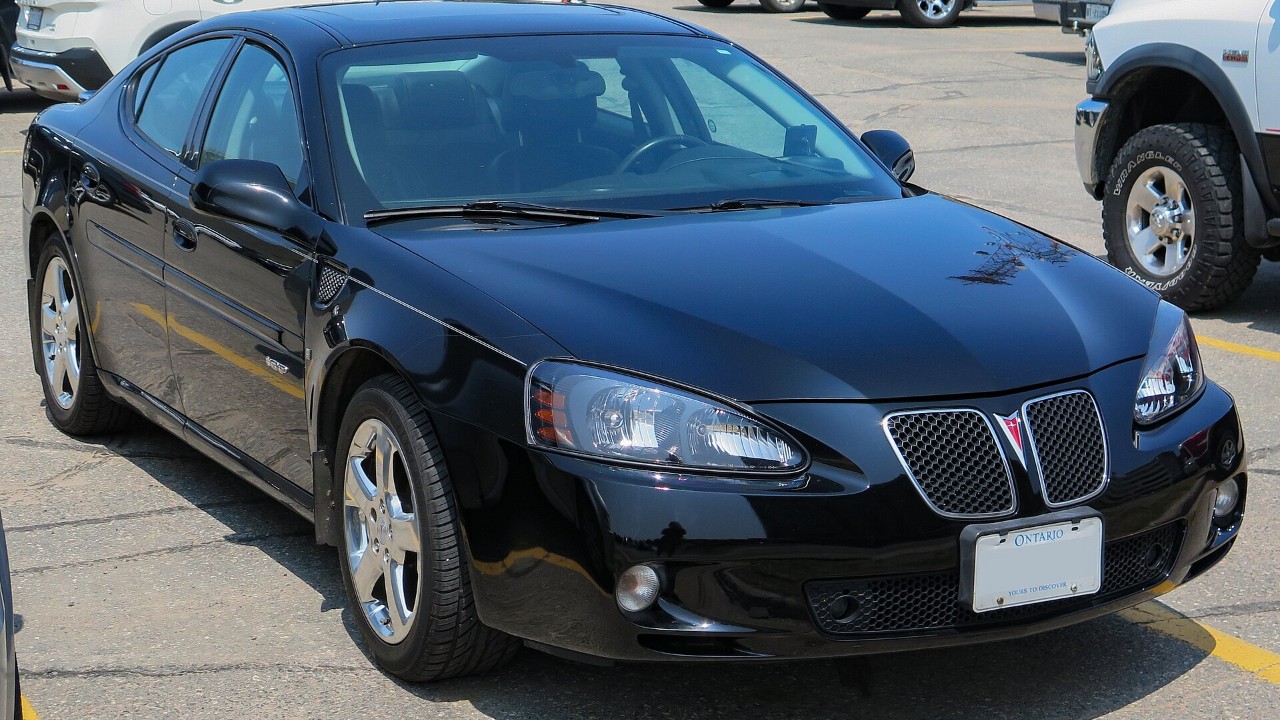
The Grand Prix GXP gave Pontiac’s front-wheel-drive sedan a V8. It used the 5.3-liter LS4, based on the LS1 block. That engine made 303 hp. It also used Displacement on Demand, GM’s active fuel management system, which was an unusual feature on a performance sedan.
The year 2008 was the last for the Grand Prix name. So the GXP closed a run that went back to the big personal-luxury coupes, like the 1965 car earlier on this list. In fact, the GXP was the Grand Prix’s final performance flagship.
Our take: a front-drive sedan with a 303-hp V8 is the kind of car product planners rarely approve. Once GM moved on, the idea vanished with the badge. In our view, it was an odd and wonderful mix. In our view, the GXP felt like too much engine for the platform, and that is part of its charm. If you shop for one, a well-kept 2008 with service records makes the most sense. Because it was the last year, a 2008 also closes the Grand Prix story, which in our view adds to the appeal.
12. 2009 Pontiac G8 GXP
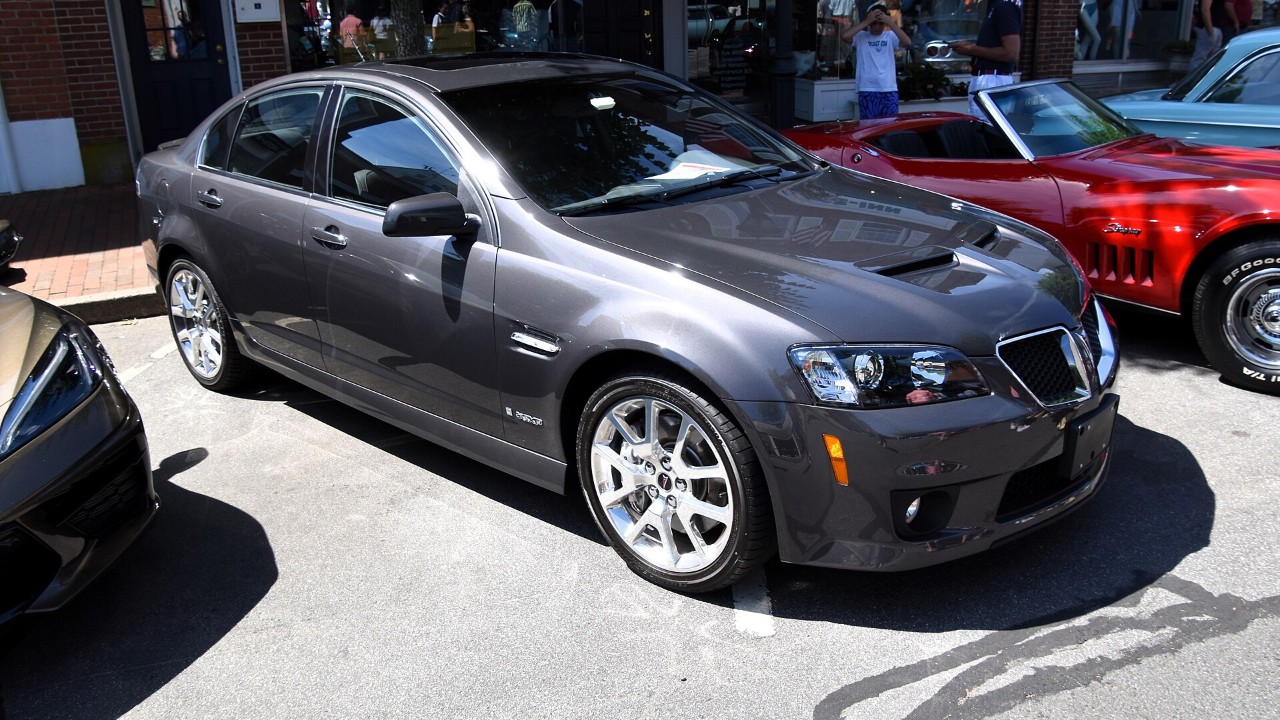
The G8 was a rebadged Holden Commodore built at Holden’s Elizabeth plant in Adelaide, Australia. The GXP was the top model, and it used the 6.2-liter LS3 V8, rated at 415 hp. A six-speed automatic came standard, and buyers could order a Tremec TR-6060 six-speed manual.
Unfortunately, the GXP arrived just as Pontiac was ending. The 2009 model year marked the end of all Pontiacs, and G8 production stopped in mid-2009. In total, Pontiac sold just 1,829 G8 GXPs before the division closed. In our view, the GXP had only a brief window on dealer lots, and it deserved far longer.
Our take: the G8 GXP is the most fitting way to close this list. It was a rear-drive sedan with a 415-hp V8 and an optional manual. In other words, it was everything Pontiac fans had asked for, and it arrived at the worst possible time. In our view, that makes it the clearest example of a car too powerful for its own factory to keep building. If you shop for one, the manual cars are the ones to hunt, in our opinion. The final tally stands at 1,829 G8 GXPs sold.
More from Fast Lane Only