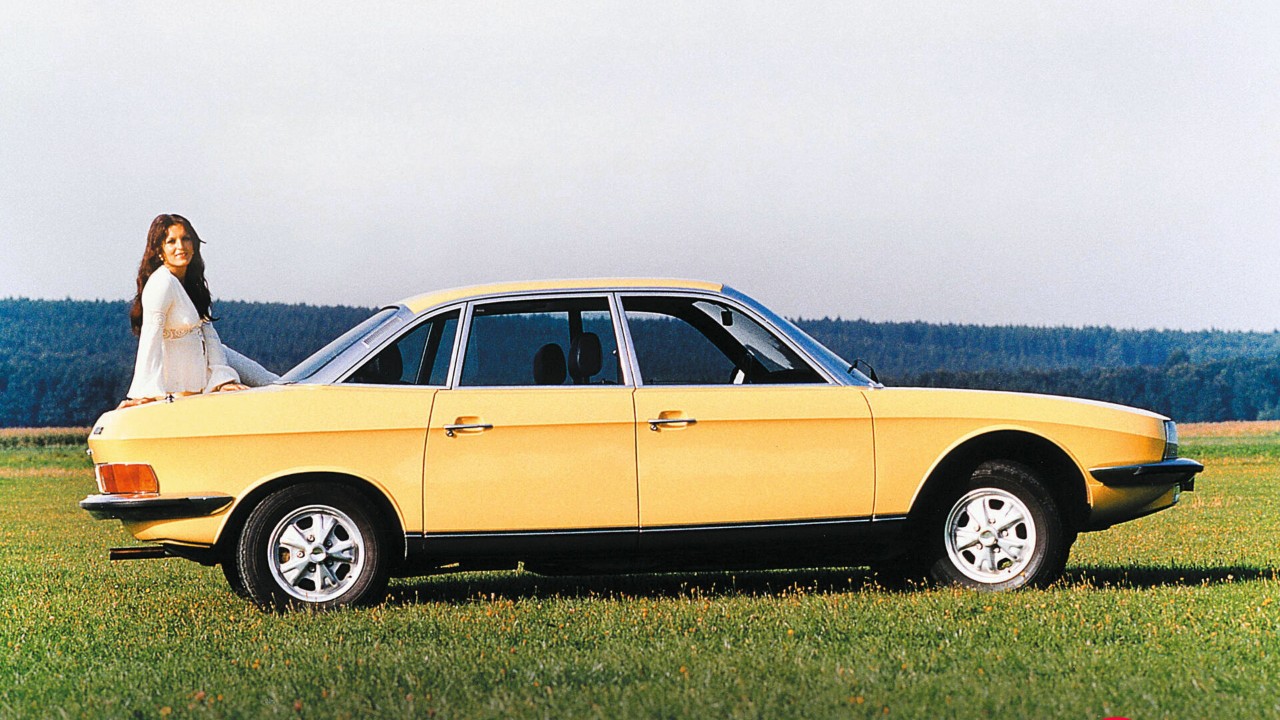
The NSU Ro 80 clutch had no pedal. Instead, the German sedan let its gear lever do that job, and a pair of rotors spun where pistons would normally sit. NSU paired a 995 cc twin-rotor Wankel with a three-speed gearbox, so a driver simply grabbed the lever and moved it.
That arrangement sounds odd today. However, it solved a real problem for a rotary engine with little pulling power at low revs. It also left a trap for drivers who rested a hand on the knob.
This is how the system worked, why NSU chose it and what the car’s makers say about how many they built. The short version: the lever told the clutch when to let go, and a torque converter covered the rest.
Why the NSU Ro 80 clutch sat in the gear lever
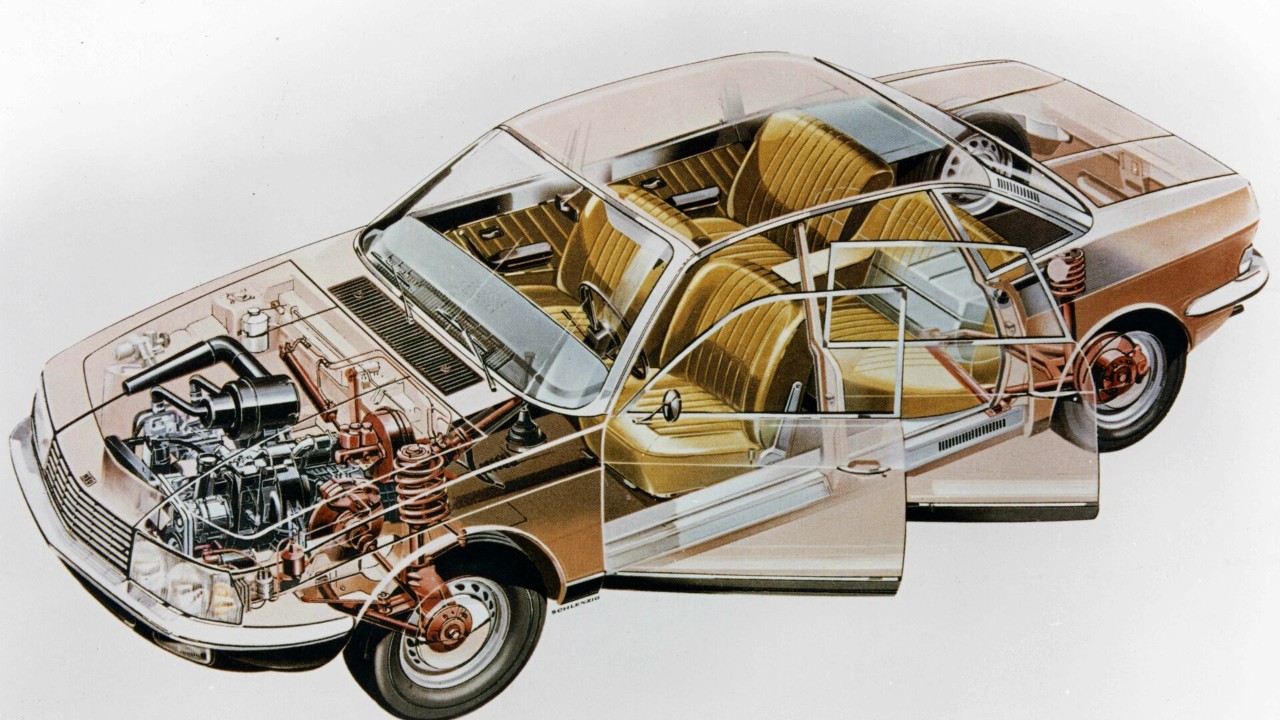
NSU did not fit a conventional automatic. Rather, it turned to a Saxomat semi-automatic built by Fichtel and Sachs, according to Curbside Classic. That writer says it combined an automatic clutch, worked by the shift lever, with a torque converter. In other words, there was no clutch pedal, yet the driver shifted the three gears by hand.
Sources describe the trigger in slightly different terms. Octane says a microswitch in the gear lever activated a vacuum-operated clutch to enable manual shifts. Similarly, a road test by Driven to Write calls it a three-speed manual with both a vacuum servo-operated clutch and a torque converter. Either way, touching the lever was the signal.
Octane also compares the setup to Porsche’s Sportomatic. That comparison helps, because Porsche used the same idea of a lever-triggered clutch with a converter behind it.
What the torque converter added
The converter mattered most at low engine speeds. Octane says it was there to smooth things out and assist low-rev running. Driven to Write goes further. In its view, the converter masked the rotary’s poor low-end torque and a driveline snatch on the overrun.
The gearing reflects that thinking. According to Driven to Write, first gear was good for at least 30 mph at 4,000 rpm, and third was essentially an overdrive. The selector used an H-pattern, with reverse where most drivers expected to find first.
The engine behind all this was compact. Curbside Classic rates the 995 cc twin-rotor unit at 113 hp (115 PS), while Octane quotes 117 bhp. Both agree on the displacement. Octane adds that the small engine allowed a compact front-wheel-drive layout.
Living with a lever that worked the clutch
The system had one firm rule. “A microswitch within the gearlever activates the clutch, so grasping the lever while the car is in motion is verboten,” Driven to Write warns. Its tester learned this the hard way. After forgetting to release the lever, he got “an unpleasant shudder from the drivetrain.”
Drivers also had to learn when to change down. Octane reports that owners unused to the transmission often labored the Wankel in top gear. As a result, they fouled the spark plugs. Still, one Driven to Write reader who knew the cars called them rugged and easy to use once you know the drill.
The rest of the car was just as ambitious. Curbside Classic notes inboard front disc brakes, and Octane mentions powerful ATE discs all round. Meanwhile, Driven to Write praises the ZF power steering as “lovely.”
Engines that wore out early
The gearbox was not the Ro 80’s weak point. Instead, the engine was. Curbside Classic says some engines showed apex-seal wear after as little as 15,000 miles and were worn out by 30,000. In its words, the car “became a nightmare of warranty costs.”
Octane tells the same story from the factory side. Worn rotor tips caused low compression and poor running, it says, so NSU had to pay for thousands of replacement engines. An update in 1969 brought strengthened rotor tip seals. That cured the problem, Octane says, but by then costs had spiraled.
Some owners gave up on the rotary altogether. Many refitted their cars with the little Ford V4, according to Curbside Classic, because it was the only engine that fit.
Car of the Year and a long production run
The Ro 80 made its first public appearance at the IAA motor show in September 1967, according to an Audi heritage release. Audi calls it the world’s first production car with a twin-disc Wankel engine. It also says the Ro 80 was the first German vehicle to be named Car of the Year, an award it won in 1968.
Curbside Classic adds that the Ro 80 beat the Fiat 125 and the Jensen FF for that title. Claus Luthe executed the body design in-house, and the car’s drag coefficient of 0.355 was excellent for the time, according to the same article. By comparison, Audi and Octane both give the figure as 0.35.
Production ran at Neckarsulm from 1967 to 1977, and the last car left the line in April 1977, Audi says. The two counts differ slightly. Audi puts the total at 37,374, while Curbside Classic gives 37,398. NSU Motorenwerke and Auto Union had merged in 1969, Audi notes. Then, in 1971, the company stretched an old Ro 80 advertising claim into the slogan “Vorsprung durch Technik.”
What an NSU Ro 80 costs now
The car’s early troubles once made it hard to sell. During the late 1970s, Curbside Classic says, one could hardly give away a Ro 80. Today the picture is different.
Octane’s buying guide says plenty of good, honest cars start from around £6,000, with projects from about £2,500. For a well-maintained car in great condition, it suggests budgeting about £10,000. Finally, Octane says perfect, low-mileage cars are rare but can be north of £15,000.
Mileage on a sorted car can be high. The owner in Driven to Write’s road test had covered over 150,000 km on a single engine, and his previous example managed 650,000 km.
More from Fast Lane Only