Pato O’Ward has become the kind of driver who changes the temperature of a race weekend the moment he rolls out of pit lane, and Arrow McLaren is quietly rebuilding its future around that reality. His raw speed, sharpened racecraft, and growing influence inside the organization are turning a once-frustrated project into a team that expects to fight for championships instead of hoping for them.
From the way he attacks qualifying laps to the way he talks about bad weekends, O’Ward is redefining what success looks like for Arrow McLaren in the NTT INDYCAR SERIES, and his parallel role in McLaren’s Formula One orbit only amplifies his leverage. The result is a driver who is not just fast in the car, but central to how the entire operation thinks about its next era.
Speed as a habit, not a highlight
When I look at Pato O’Ward’s trajectory, the first thing that jumps out is how his speed has stopped being a surprise and started feeling like a baseline expectation. In final practices and race trim, he has built one of the strongest finishing averages in the NTT INDYCAR SERIES, which is exactly why Arrow McLaren treats him as the reference point for what its cars should be capable of. That consistency showed up vividly when Curt Cavin detailed how Arrow McLaren’s Pato Ward again showed off his pace in a crowded field, reinforcing that his outright speed is not a one-off spike but a recurring pattern.
That kind of repeatable performance is exactly what teams crave when they are trying to close the gap to powerhouses like Ganassi and Andretti. If McLaren wants to be a factor against Ganassi and Andretti, which have stacked wins through drivers such as Palou and Kyle Kirkwood, it needs a driver who can live at the front even when the car is not perfect. O’Ward’s ability to wring lap time out of imperfect setups gives Arrow McLaren a fighting chance against those established benchmarks and provides engineers with a clear target for what “fast enough” actually looks like.
Turning bad weekends into building blocks
Speed alone does not reshape a team, though, and what impresses me most is how O’Ward has reframed the way Arrow McLaren handles adversity. He has talked about how the group set a “pretty big objective” to make its bad weekends better, a mindset shift that goes beyond setup sheets and into culture. When he says There was a clear push to raise the floor of their performance, it signals that he is not satisfied with simply shining on the days when everything clicks.
That attitude shows up in how he describes the team “accepting whenever we do not have it, and executing when we do have it,” a line that captures the balance between realism and ambition that top outfits need. When he explains that But it is showing how Arrow McLaren has learned to bank points on off days while still attacking on strong ones, you can hear the voice of someone who understands the grind of a full season. That is the kind of perspective that turns a fast driver into a de facto team leader, especially when the group is still chasing the week-in, week-out polish of the series’ dominant programs.
The contract that made him the cornerstone
O’Ward’s influence inside Arrow McLaren is not just informal, it is baked into the team’s long-term planning. When INDIANAPOLIS hosted the announcement that Pato Ward had signed an extension through 2025, the timing, just before the Indianapolis 50, underlined how central he had become to the project. The deal locked in a driver whose blend of speed and marketability gave Arrow McLaren a clear identity at a moment when it was still defining itself against the series’ traditional giants.
That commitment has only grown more significant as the technical landscape has stabilized. Now that the team knows it will be racing the same car for at least another two years, there is no excuse to treat O’Ward’s feedback as anything but the blueprint for development. His comments about how Arrow McLaren must use that stability to refine its package, rather than chase wholesale reinvention, show why the extension was more than a retention move. It effectively made him the lens through which the team views its future, from engineering priorities to how it evaluates new teammates.
Mr. Fast Hands and the McLaren ecosystem
What makes O’Ward’s story unique is that his value to Arrow McLaren is amplified by his role in the wider McLaren universe. He is not just an Arrow McLaren IndyCar driver, he is also a McLaren F1 Reserve and Development Driver, which means his feedback flows across two of the most demanding categories in motorsport. That dual role, described in detail when Arrow McLaren highlighted how he juggles INDYCAR and F1 machinery, gives the IndyCar team access to a driver who is constantly cross-pollinating ideas from different engineering cultures.
Inside the paddock, he carries the nickname Nicknamed Mr Fast Hands, a nod to the way Pato Ward manipulates the car on the limit in INDYCAR, and that reputation has followed him into his Formula One work. The fact that the nickname references the Mexican driver’s “ninja hands” is more than a fun label, it is shorthand for the car control and adaptability that make him such a valuable test and reserve presence for McLaren’s grand prix program.
From Monterrey to global prospect
To understand why O’Ward resonates so strongly with fans and teams alike, it helps to trace his path from karting prodigy to global prospect. Patricio “Pato” Ward, Born in Monterrey, built his reputation on a fearless driving style that caught the eye of major programs early, including a stint in the Red Bull system. That background hardened him in the pressure cooker of European junior formulas and North American open-wheel racing, and it explains why he looks so comfortable carrying the expectations of a manufacturer-backed IndyCar team.
His crossover appeal only grew when McLaren’s Formula One team signed the Mexican as a reserve driver, a move that formally linked his IndyCar success to F1 ambitions. That step, rooted in his performances and his ability to adapt quickly to grand prix machinery, positioned him as a legitimate Formula One prospect without diminishing his status as Arrow McLaren’s spearhead in the United States. For the team, that dual identity is a marketing and competitive asset, tying its IndyCar program to the global reach of F1 through a single, charismatic driver.
Big weeks, big stages, and the Arrow McLaren brand
O’Ward’s ability to thrive on big stages has become a central part of Arrow McLaren’s identity. In 2025 he delivered a career-best second in the NTT INDYCAR SERIES standings behind Palou, then capped that momentum with laps in both IndyCar and F1 machinery during a whirlwind stretch that showcased his versatility. Those “big weeks” do more than pad a résumé, they reinforce the idea that Arrow McLaren is a team whose lead driver can headline multiple series without losing focus on the championship fight at home.
That same star power is on display every May at Indianapolis, where Pato Ward of the Arrow McLaren team goes out of his way to connect with Indianapolis 500 fans, a detail that underscores how his popularity feeds directly into the team’s brand. That connection, highlighted by The Hill, turns Arrow McLaren’s presence at the Speedway into more than a sporting campaign. It becomes a relationship between a driver, a team, and a fan base that sees itself reflected in his energy and openness.
Car launches, continuity, and the next step
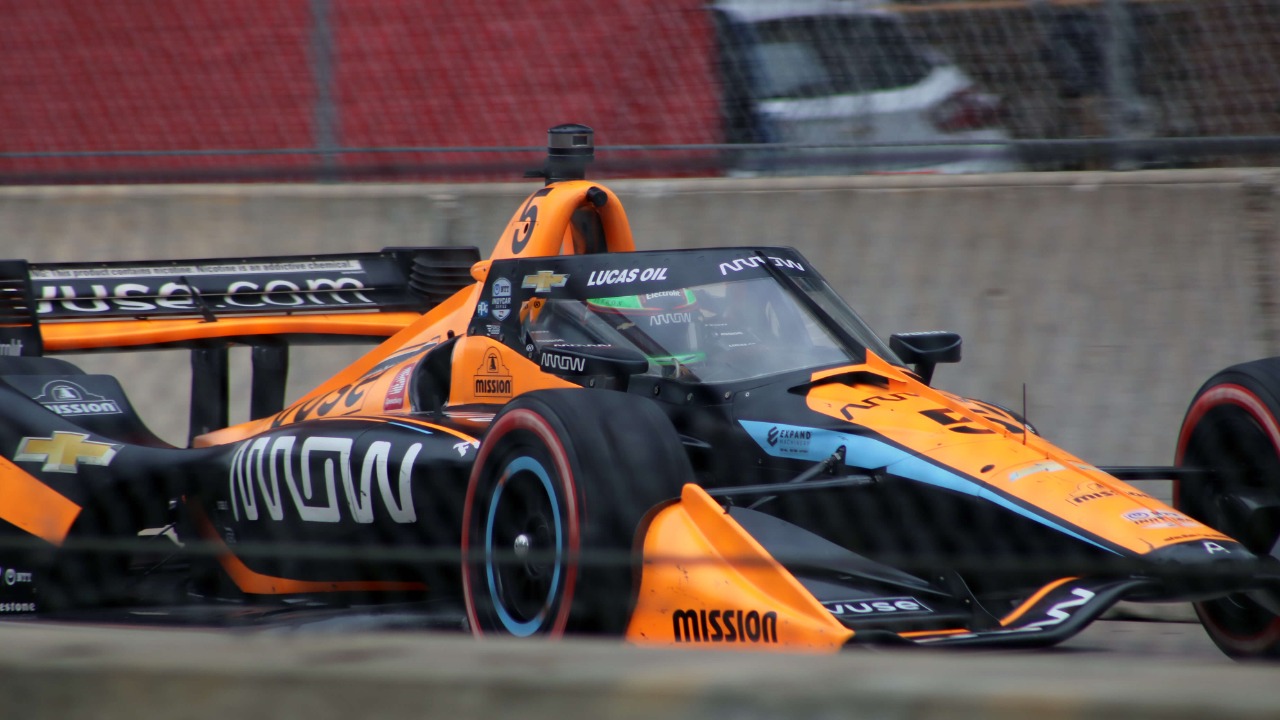
Arrow McLaren’s decision to build around O’Ward is visible even in the way it presents its machinery. When the team completed the launch of its three NTT INDYCAR SERIES cars in Feb by unveiling the No. 5 Chevrolet, the spotlight naturally gravitated toward the car O’Ward would drive. That launch, framed as a key moment for Share and Arrow McLaren ahead of St. Petersburg, signaled that the team’s visual identity and competitive hopes are tightly bound to the driver who has become its most recognizable asset.
From my vantage point, the next step is straightforward but demanding: convert that speed, stability, and star power into a championship. The ingredients are there, from the continuity of the current car regulations that Jun reporting highlighted, to the cultural shift O’Ward has driven by insisting that bad weekends still yield solid results. If Arrow McLaren can keep building around the habits and expectations he has set, the team will not just be reacting to the series’ powerhouses. It will be forcing Ganassi, Andretti, and everyone else to measure themselves against the standard that Pato O’Ward has created.