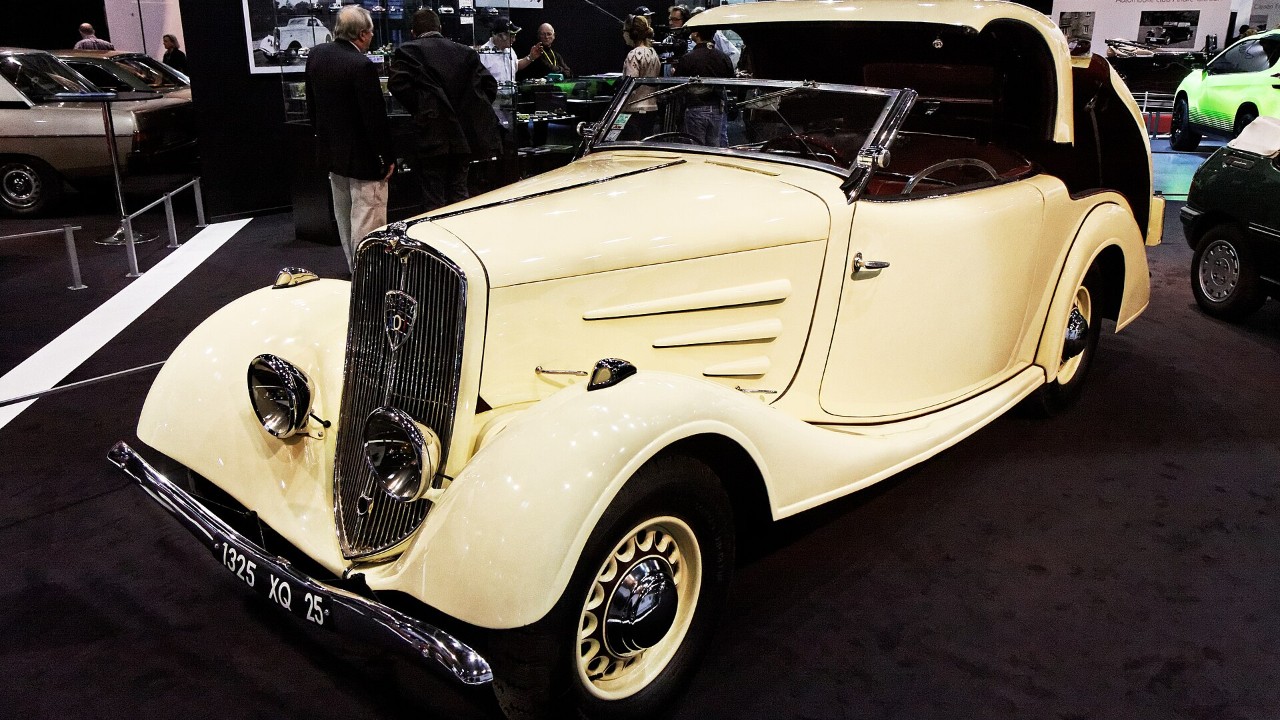
Peugeot showed the 401 Eclipse at the 1934 Paris Auto Show, and its steel roof folded away under the rear deck. Six decades later, folding hardtops became a selling point for Mercedes-Benz and Mitsubishi. The Peugeot 401 Eclipse got there decades earlier, and most people have forgotten it.
After all, convertibles have always invited bold ideas. Makers tried electric roofs, flying bodies across the ocean, curved driveshafts and turbochargers in family cars. Some of those ideas caught on years later, while others vanished with the cars that carried them.
These are our picks for nine forgotten convertibles that were years ahead of the competition. That verdict, in other words, is our opinion. However, the dates, engines and production figures come from maker archives, period histories and model records.
1. 1935 Peugeot 401 Eclipse
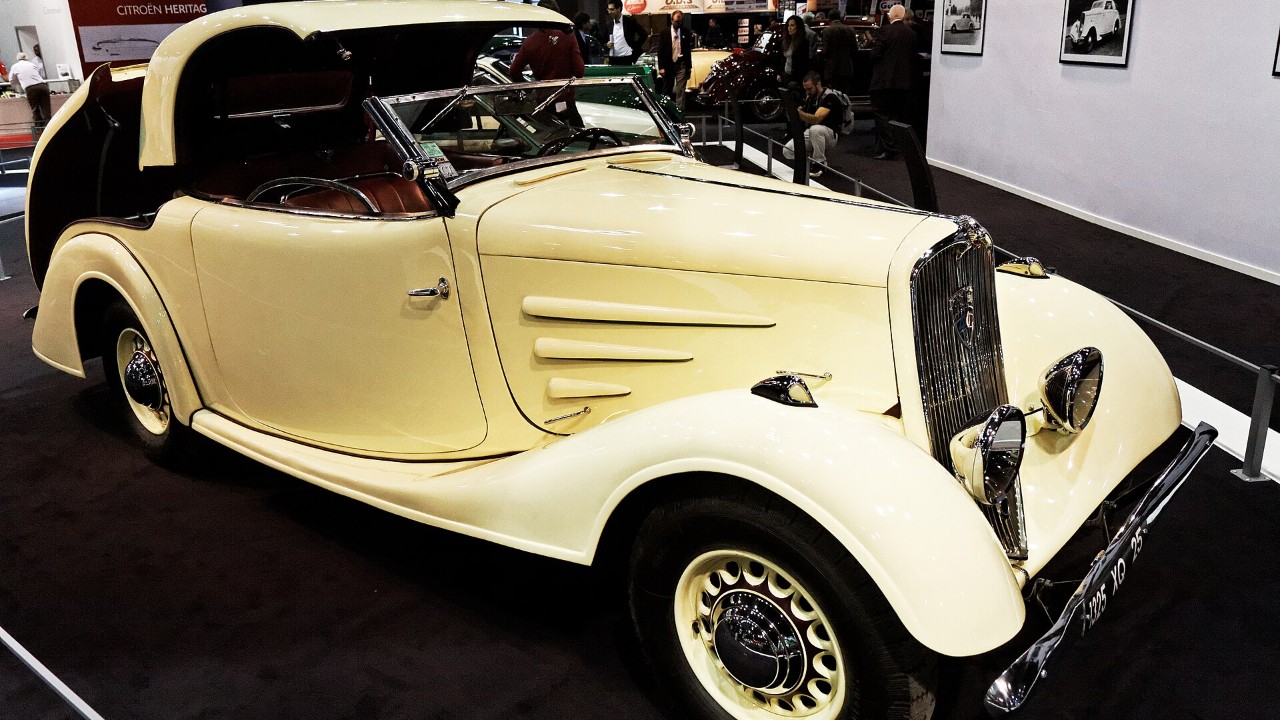
The Eclipse came from a partnership between the designer Georges Paulin, the Peugeot dealer Darl’Mat and the coachbuilder Pourtout. Its hardtop also moved and stowed under a reverse-hinged rear lid. New Atlas calls the 401 Eclipse “the first production car with an electric folding roof.”
Underneath, the 401 used a 1,720 cc four-cylinder engine. Even so, that was enough for about 100 km/h, or 62 mph. Peugeot built the 401 only in 1934 and 1935, and production ended in August 1935. In the end, records put the number of 401 Eclipses at 79.
Our take: few cars have aged into a better trivia answer. A 1935 Peugeot 401 Eclipse shows that the retractable hardtop is far older than most drivers think.
2. Peugeot 402 Eclipse
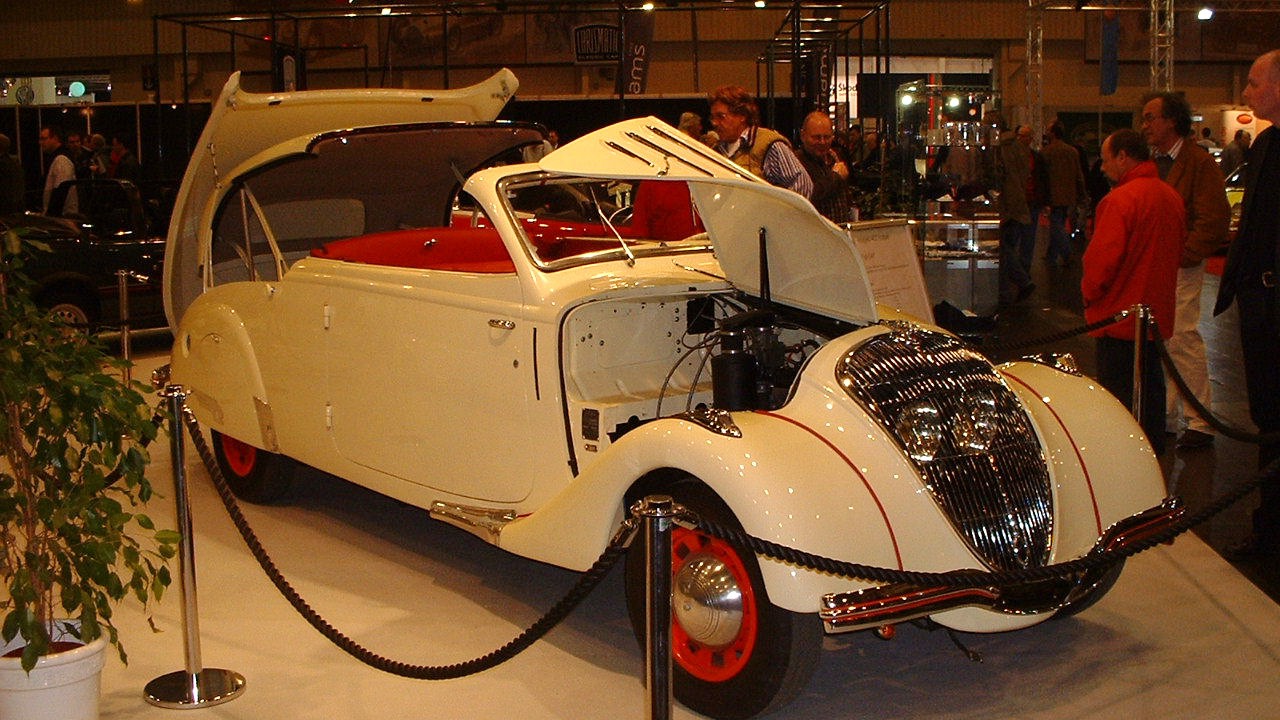
Peugeot carried the idea over to the 402, which replaced the 401. It showed a “coupé transformable Éclipse” at the 1936 Paris Motor Show, priced at 34,900 francs. Paulin had patented the retracting mechanism in 1931, and Pourtout again worked on the car.
The 402 itself was a streamlined Art Deco car, built at Sochaux from 1935 to 1942. At first, it used a 1,991 cc engine with 55 hp. Peugeot also moved the headlights to the center of the car, behind the grille.
By early 1937, Peugeot had replaced that first version with a longer one that seated four or five. In our view, any 402 Eclipse is a prize, because it kept the folding steel roof alive at Peugeot.
3. Peugeot 403 Cabriolet
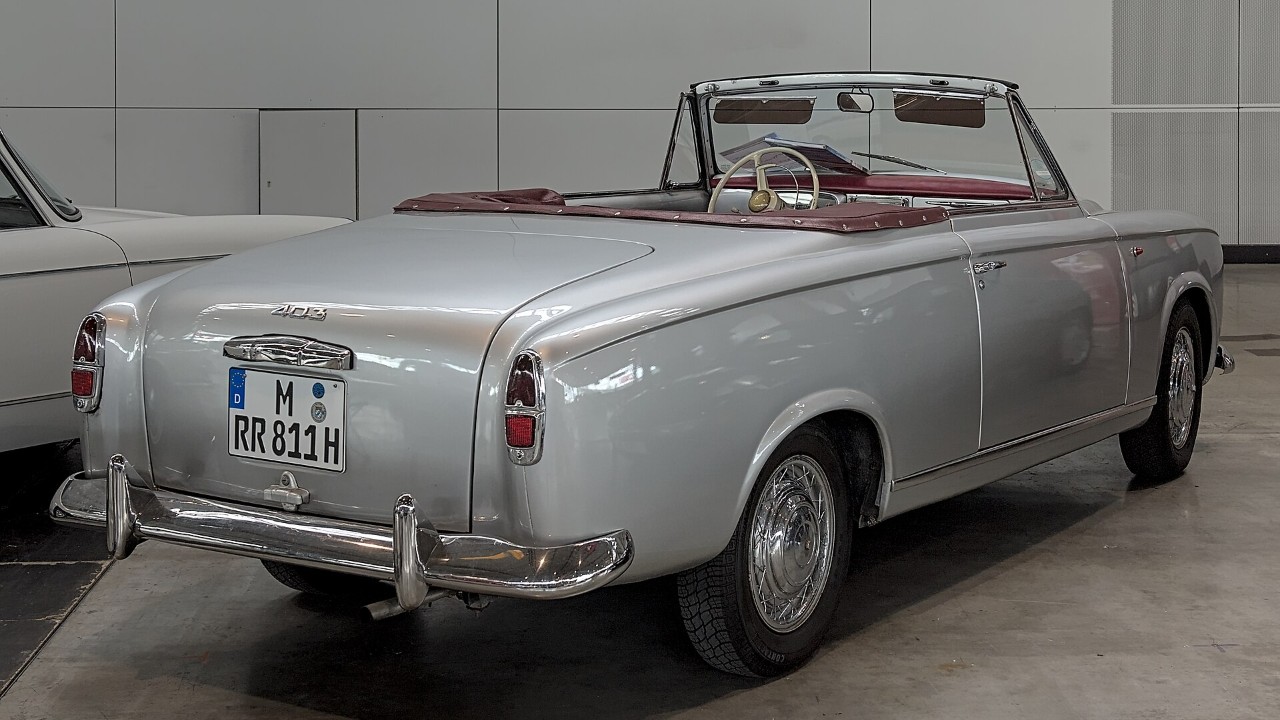
The 403 was Peugeot’s mainstream car of the 1950s, with styling by Pinin Farina. The Cabriolet joined it as a two-door convertible from 1956 to 1961. Peugeot built it in very modest numbers, and production ended in spring 1961, ahead of the 404 Cabriolet.
The 403 used a 1,468 cc four-cylinder with 58 hp, rising to 65 hp in 1958. Overall, Peugeot built 1,214,121 cars of the 403 type, including commercial models. Yet the Cabriolet won its biggest fame on television. A gray, worn 403 convertible was Columbo’s car in the 1970s series, and that car survives.
We have covered how Americans bought the sedan in our list of Peugeot cars Americans could buy new. Our take: a clean Italian-styled convertible from a mass-market maker felt fresh in its day.
4. 1959 Ford Galaxie Skyliner
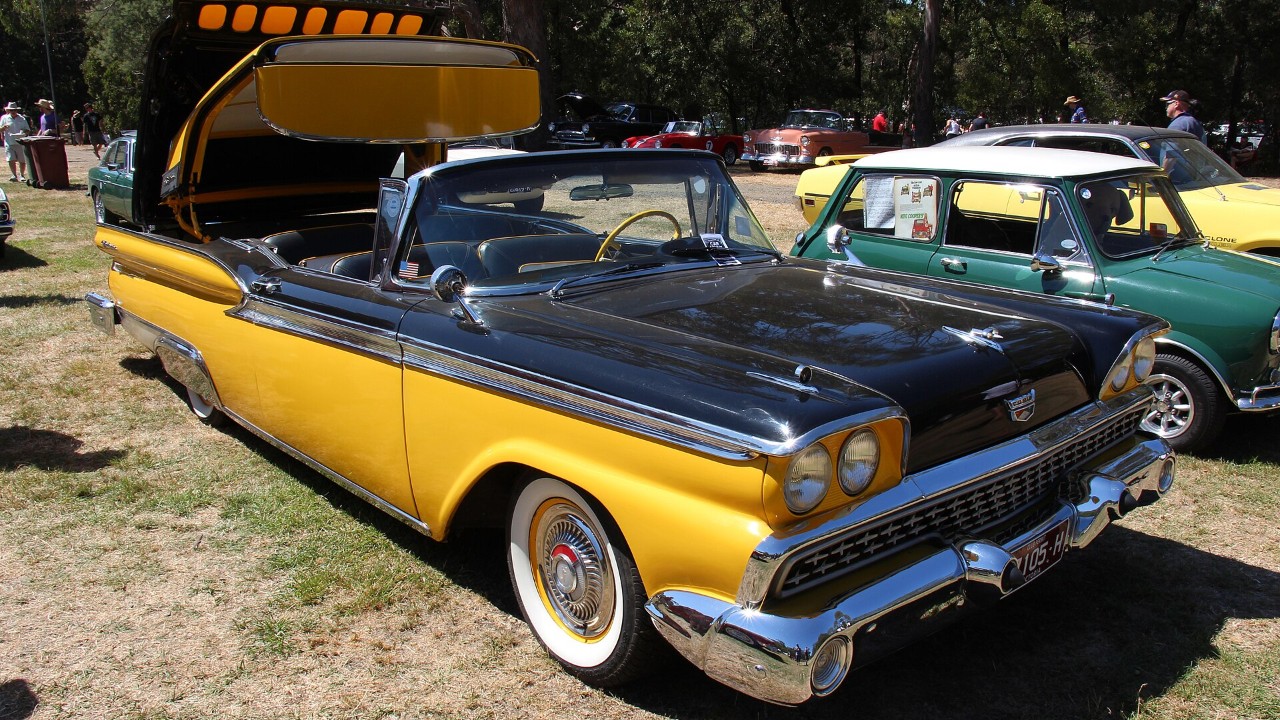
Ford sold its retractable-hardtop Skyliner from 1957 to 1959. For 1959, Ford added the Galaxie series, and the car became the Fairlane 500 Galaxie Skyliner. Those cars also wore Fairlane 500 badges on the rear and Galaxie badges on the sides.
The 1959 roof used six reversible electric motors, one fewer than the earlier cars. Even so, production kept falling. Ford built 20,766 Skyliners in 1957, then 14,713 in 1958, and only 12,915 in 1959. The listed retail price was $2,942.
We explained how the system worked in our story on how Ford’s 1957 Skyliner folded its steel roof into the trunk. Our take: the 1959 car is the last and least common of the three, and the Galaxie trim makes it the most dressed-up.
5. 1962 Pontiac Tempest Le Mans convertible
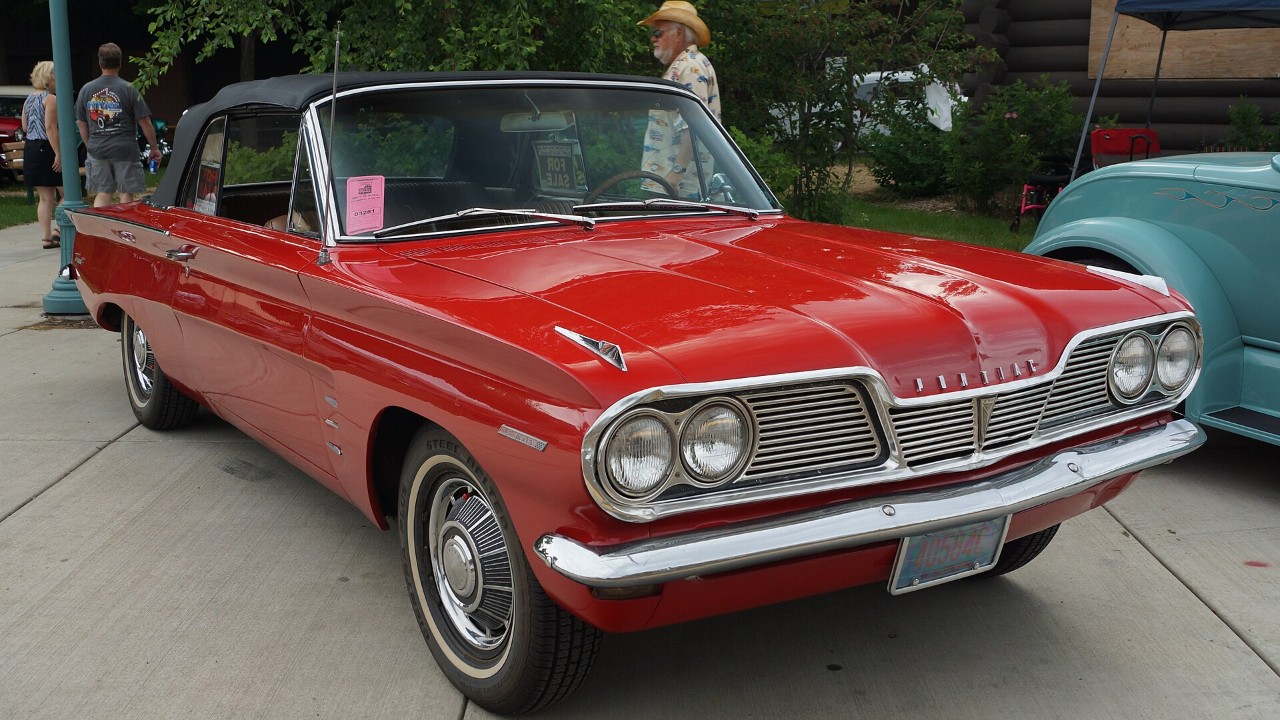
The Tempest was the car that won Motor Trend’s Car of the Year for 1961. However, its layout was unusual for Detroit. A front engine sent power through a curved, flexible driveshaft, known as the “rope drive,” to a transaxle at the rear. Swing axles then let each rear wheel move on its own.
For 1962, the Le Mans package was available from the start of the model year. On the convertible, it cost $177 more than a Tempest Custom convertible. The four-cylinder Trophy 4 was rated at 110 hp, or 155 hp with high compression and a four-barrel carburetor. According to Ate Up With Motor’s Tempest history, only 2,004 V8 Tempests were sold for 1961.
In our opinion, a rear transaxle in a 1962 American compact convertible was a decade ahead of its time.
6. 1986 Dodge 600 ES Turbo convertible
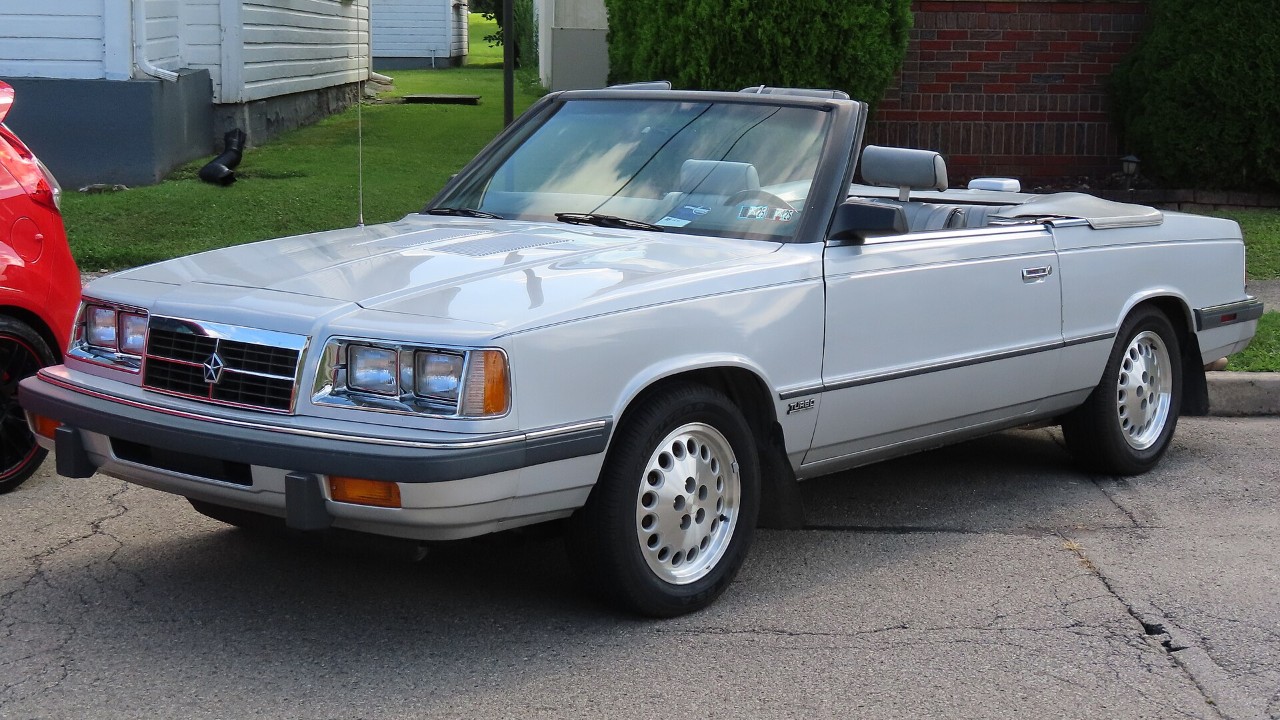
Dodge’s first Konvertibles appeared in mid-1982. The Dodge 400 Konvertible was the brand’s first open car since the 1971 Challenger, and the 600 carried that idea forward. For 1986, the 600 got a new front end that it wore only that year.
The ES Turbo, by comparison, was the sporty version. Its 2.2-liter turbocharged four made about 146 hp in 1986, according to a Curbside Classic profile of a 1986 600ES. That was strong for a front-drive family car with no roof.
Our take: a turbocharged four-seat convertible from a mainstream American brand was a smart bet in the mid-1980s. Today, the 600 ES Turbo is a forgotten chapter in the convertible’s return.
7. 1987 Cadillac Allanté
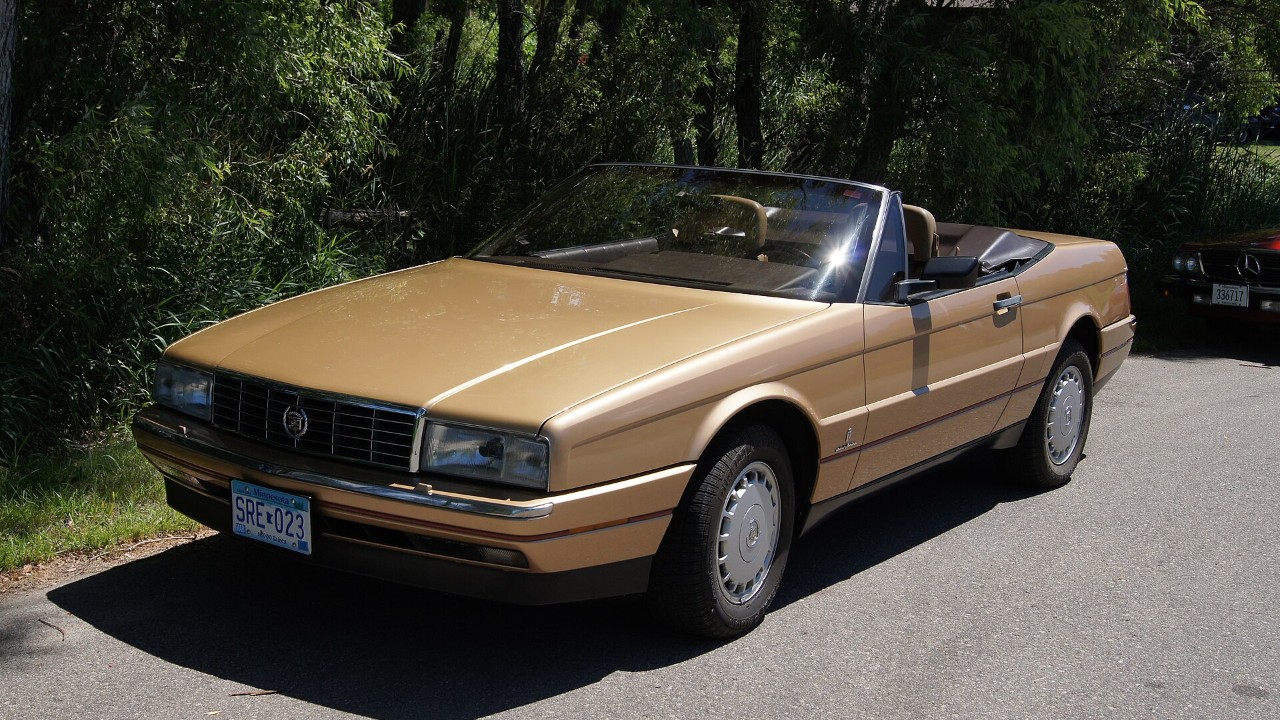
The Allanté opened at a base price of $54,700 in 1987. Buyers got a two-seat roadster with a removable aluminum hardtop as standard, plus Bosch ABS III brakes on all four wheels. Meanwhile, the 4.1-liter V8 made 170 hp.
Its build process was even bolder. Pininfarina designed and built the bodies at a new plant in San Giorgio Canavese, Italy. Then, specially equipped Boeing 747s carried 56 bodies per flight from Turin to Detroit City Airport. Final assembly took place at Hamtramck, about three miles away.
Cadillac built 3,363 Allantés for 1987 and 21,430 by the end of the run in 1993. In our view, the first-year car is the one that shows what Cadillac was trying to do.
8. 1995 Mitsubishi 3000GT VR-4 Spyder
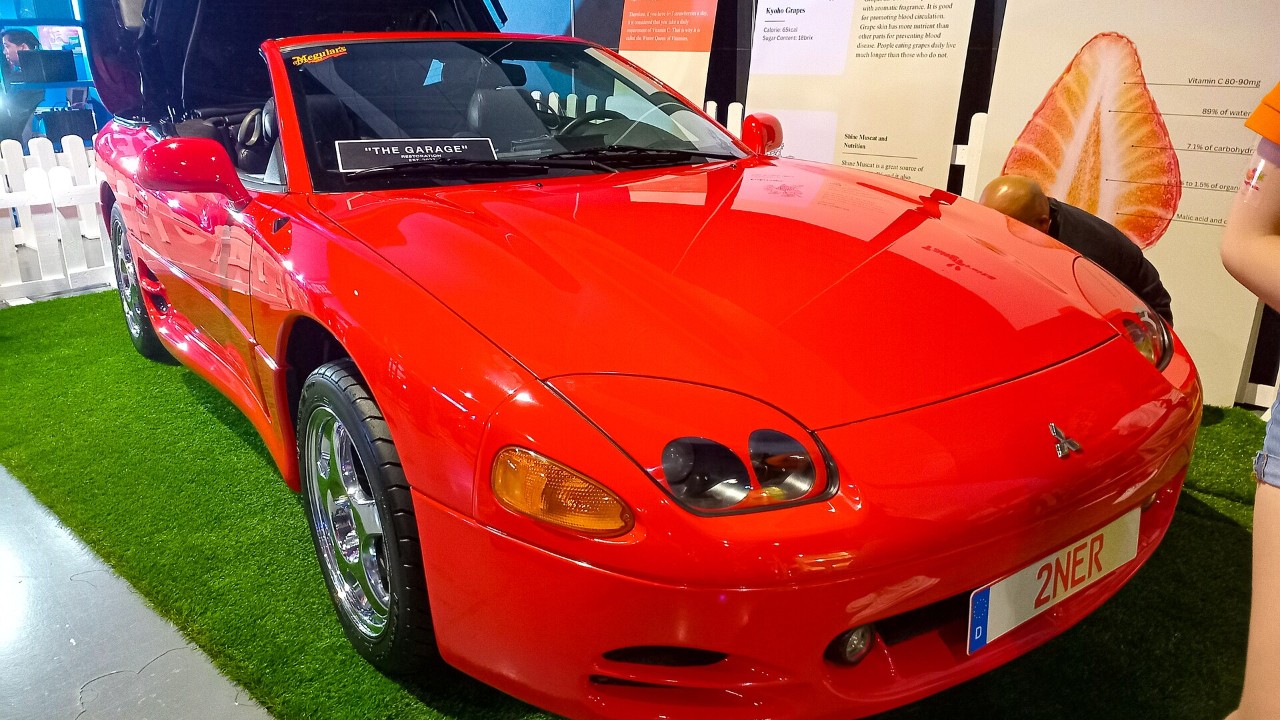
Mitsubishi built the 3000GT in Nagoya, Japan. For 1995 and 1996, the coupe then went to ASC in California for a retractable hardtop. According to Hagerty’s history of the Spyder, ASC first added stiffness to the body before it cut off the roof.
Better yet, the VR-4 had twin turbochargers, all-wheel drive and, after the 1993 update, 320 hp. Hagerty puts production at 1,034 Spyders over the two years. In fact, Motorweek’s review car carried an asking price of $68,766.
Our take: a twin-turbo, all-wheel-drive car with a hardtop that folds away was well ahead of the mid-1990s pack. Few were made, so most people have never seen one with the top down.
9. 1999 Mercedes-Benz SLK230 Kompressor Sport
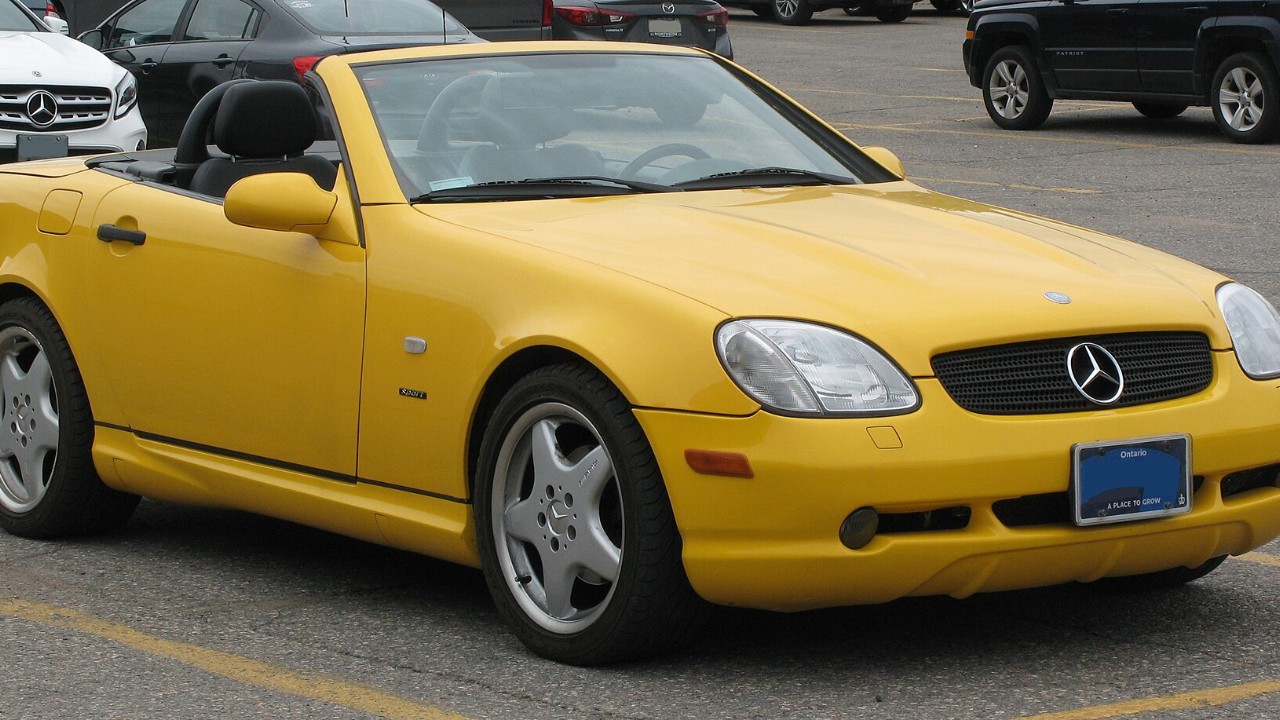
Mercedes-Benz showed the production SLK at the Turin Motor Show in April 1996. Its electrohydraulic steel roof folded into the trunk at the touch of a button. In fact, the Mercedes-Benz archive says the change took just 25 seconds.
The SLK230 Kompressor used a supercharged 2.3-liter four with 193 PS and 280 Nm of torque. Mercedes also quoted 0 to 100 km/h in 7.6 seconds and a 231 km/h top speed. Meanwhile, demand was strong enough that the Bremen plant added 600 jobs. Mercedes also offered an AMG body styling package, sometimes called a sport package.
Mercedes built 311,222 first-generation SLKs. Our take: the SLK made the folding hardtop mainstream, more than 60 years after the Peugeot 401 Eclipse showed the way.
More from Fast Lane Only