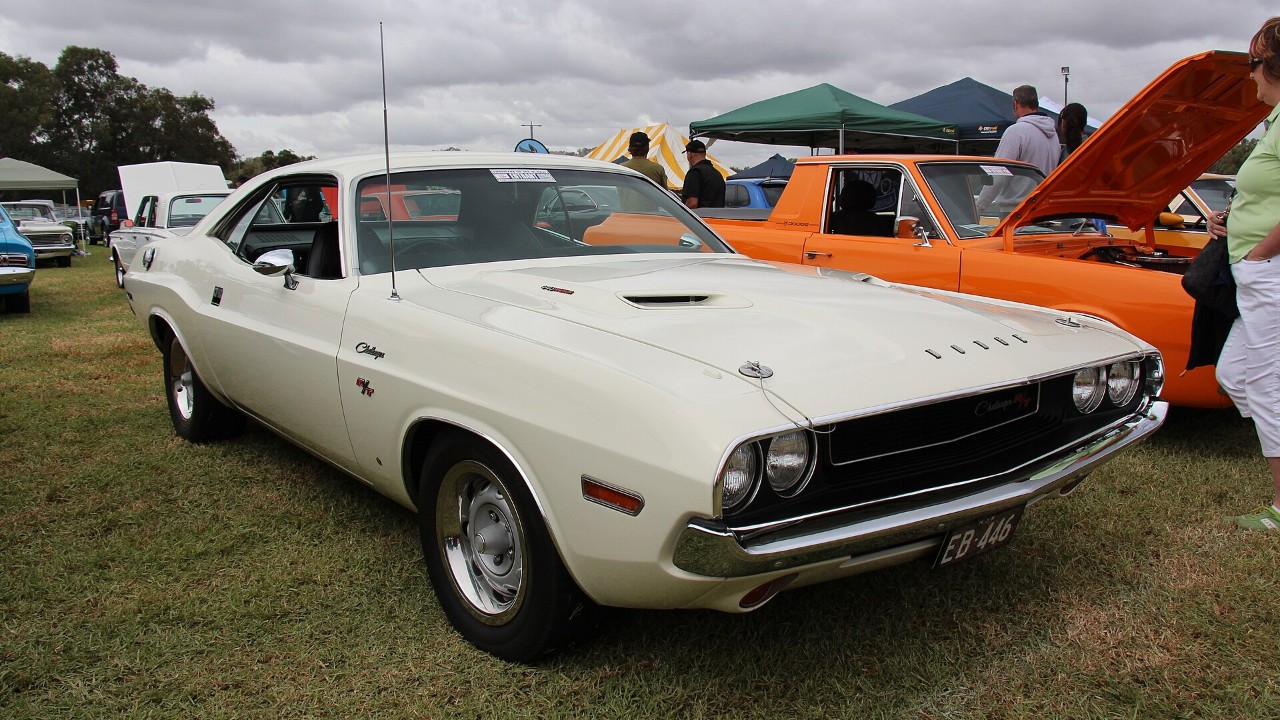
The Vanishing Point Challenger looks like one car on screen, but it was really five. For the 1971 road movie, Chrysler supplied five Alpine White Dodge Challenger R/Ts. Four carried the 440 and a four-speed manual. The fifth had a smaller engine and an automatic, and that mismatch tells you a lot about how the film was made.
Barry Newman played Kowalski, a driver delivering a car from Denver to San Francisco against the clock. The white Dodge gets almost as much screen time as he does. That is why so many fans still argue about what was under the hood.
Most of them guess wrong. The popular answer is a 426 Hemi, yet none of the film’s five cars had one.
How five Challengers ended up in Vanishing Point
Hagerty UK’s history of the film says five Challengers were loaned to director Richard C. Sarafian’s Cupid Productions. A Gold Eagle feature on the movie car also says the cars were on loan from Chrysler.
The deal cost the studio almost nothing. According to Motorious, Chrysler’s practice at the time was renting cars to the studio for one dollar a day. In other words, the factory got a starring role for its new E-body for the price of a cup of coffee.
Who picked the Challenger depends on whom you ask. Motorious credits Richard Zanuck, the 20th Century Fox studio executive, as the first to see the 1970 Challenger as the hero car. By comparison, Hagerty UK says stunt coordinator Carey Loftin chose it. Both accounts agree on the result, though: a white R/T became the face of the film.
Four 440 four-speeds and one odd car out
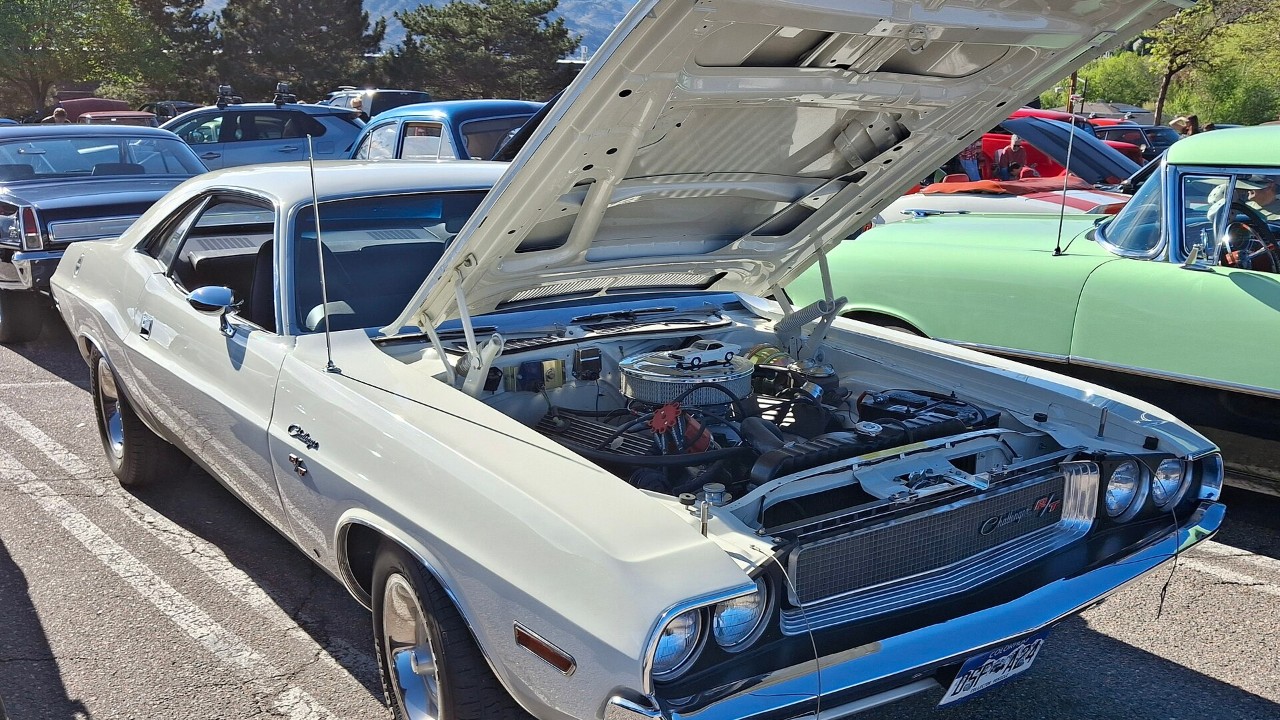
Hagerty UK says four of the five cars had the 440-cubic-inch V8, or 7.2 liters, with a four-speed manual gearbox. Motorious gives the same split and says the fifth car packed a 383 with an automatic transmission. Gold Eagle agrees that four were 440 cars and one was a 383 R/T.
That fifth car is the detail most fans miss. However, none of the sources we read say exactly which shots it filled, so we won’t guess.
The 440s were the right tool for the heavy work. Hagerty’s own model data lists R/T engine choices running from a 335-horsepower 383 to the 440 and the 426 Hemi. RM Sotheby’s catalog for a 1970 R/T convertible describes the 440 Magnum as factory rated at 375 horsepower. Hagerty also notes that buyers could pair those engines with a three-speed manual, a four-speed manual or a three-speed automatic.
Motorious points out that many fans believe the cars had the 426 Hemi. The record says otherwise. The film’s Challengers were 440 and 383 cars, the big-block Magnums that most R/T buyers actually drove home.
Not every Vanishing Point Challenger started out white
Alpine White became the car’s signature, and Motorious says the director chose white so the car would stand out against the landscape. Still, the paint was not entirely original on every car. Gold Eagle reports that at least one car was originally green.
Gold Eagle adds that green paint shows up in some shots of the flat-tire scene. Sharp-eyed fans have spotted that ever since, and it is one of the best clues that the “one car” on screen was really several.
Only one car got serious changes. Hagerty UK says a single Challenger received heavy-duty shock absorbers. That car jumped a creek during a chase scene.
Five cars, one hard shoot
Loftin did the heavy stunt driving, according to Newman’s account in Hagerty UK. The crew shot the stunts against backdrops across Colorado, Nevada and Utah, the magazine says.
That kind of work took a toll. Newman told Hagerty UK, “we really ruined a couple of those cars.” He also said his mechanic reused parts from one car to keep the others running. That is the real reason the film needed five Challengers instead of one hero car.
If you want the details on the production car behind the movie star, our earlier guide to the Challenger R/T 440 years and values covers it. The film cars, by contrast, were working props on a dollar-a-day deal.
Why the Vanishing Point Challenger still matters
Few car films lean so hard on a single machine. The Challenger was brand new in 1970, and RM Sotheby’s notes that the new E-body could take every engine in the Mopar lineup. Vanishing Point put that car on screens in 1971, the year after it arrived.
That is also why the Hemi myth refuses to die. Fans want the hero car to carry the most famous engine. Yet the true story is better, because the film ran on ordinary R/T hardware that a buyer could order from a Dodge dealer. In the end, four of the five Challengers Chrysler sent to the film had the 440 and a four-speed, and the fifth had a 383 and an automatic.
More from Fast Lane Only