The release of police dash cam video from Los Angeles has turned a fatal collision with a skateboarder into a citywide reckoning over how officers drive when they say they are rushing to help. You are not just watching a crash frame by frame, you are being asked to decide what kind of risk you are willing to let police take on your streets. The footage, and the public reaction around it, now sits at the center of a broader debate about pursuit tactics, neighborhood safety, and accountability.
What the dash cam shows in Highland Park
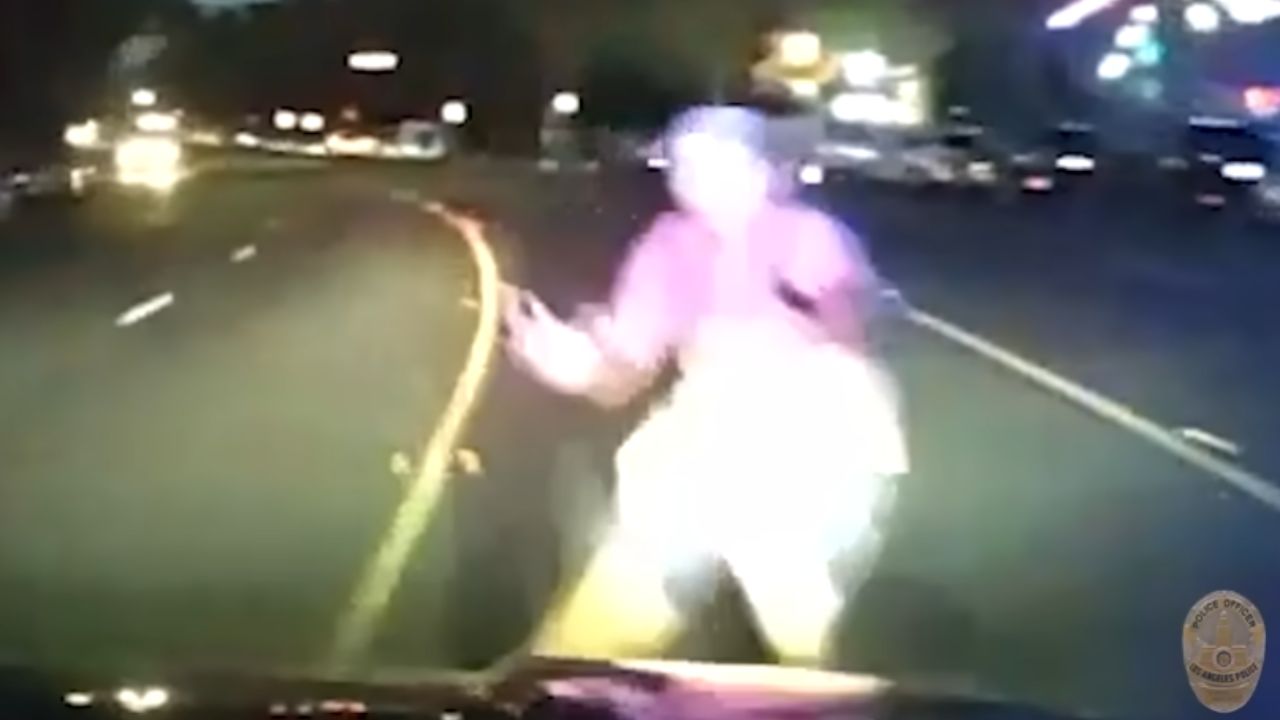
When you watch the recordings from Highland Park, you see more than a traffic collision, you see the split seconds in which a routine response turns deadly. The Los Angeles Police cruiser is moving through a neighborhood street when Gerardo “Jerry” Estrada appears on a skateboard, and the impact that follows is so sudden that it leaves little room for you to believe anyone had time to react. In the official description, the department says that on September 19, 2025, Los Angeles officers fatally struck Gerardo “Jerry” Estrada, 30, a sequence that is captured in a clip introduced with the stark warning, “Warning, Viewers Discretion Is Advised,” and framed as happening “On September” in Los Angeles.
The department later released longer, graphic and disturbing dash and body camera segments that show the cruiser colliding with Estrada in Highland Park, then rolling to a stop as Officers scramble out and find Estrada wedged under a parked vehicle. In one account, the clip is described as “Graphic and” difficult to watch, and confirms that Estrada died at the scene after the LAPD response. A separate breakdown of the same release notes that the video shows a deadly crash involving an LAPD cruiser and a skateboarder in Highland Park, and that the department chose to publish it on a Monday as part of a broader push to show the public what happened to a man described as someone who loved his community in Highland Park.
The human cost on a neighborhood street
If you live near the crash site, the video is not an abstract policy exhibit, it is a replay of trauma on your own block. One neighbor described how, at the time of the collision, there were “a lot of kids under the age of six, most of them, and their parents,” and that “there’s kids everywhere,” a detail that underlines how fragile the margin for error is when a patrol car moves quickly through a residential corridor. That same account notes that people who witnessed the impact are “very shaken up,” a reminder that a single moment of impact can reverberate through families and children who will now associate the sound of sirens with fear rather than help in Sep.
For you as a viewer, the dash cam footage forces you to confront that human cost in real time. One detailed narrative of the recording describes how the camera captures the cruiser traveling along a corridor where a red light is visible in the distance, then shows the moment of impact and the officers’ immediate reaction, including an expletive filled “Oh f—!” from one of the Officers as they realize Estrada is trapped under a parked vehicle, a scene later echoed in a separate account that quotes, “F—, man!” as they scramble to pull him out in Los Angeles and in Estrada.
How the footage reframes pursuit and response tactics
Once you move past the shock of the images, the central question becomes how officers should drive when they are responding to calls in dense neighborhoods. The Highland Park recordings are not labeled as a high speed chase, but they still show a patrol car moving quickly enough that a skateboarder in the roadway has almost no chance to avoid it, which is why critics now fold this case into a larger argument about pursuit style driving in urban grids. A detailed write up of the dash cam describes it as “Disturbing” and emphasizes that LA police fatally struck skateboarder Gerardo “Jerry” Estrada, while also relaying that a department spokesperson used a briefing to explain the officers’ decision making in the seconds before impact in Gerardo.
For you as a resident or commuter, that explanation may not be enough, because the footage itself, including the raw version posted as graphic and disturbing dash and body cam video just released by the LAPD, shows how little separates a routine response from a fatal crash. The full clip, which you can see in a recording that highlights the Nov release of the LAPD material, makes clear that the officers are not chasing a suspect in the traditional sense, yet the speed and limited visibility mirror the risks of a pursuit in Nov. When you combine that with the separate Instagram reel that again labels the material as “Graphic and” disturbing, you are left with a portrait of tactics that may comply with internal policy but still feel out of step with what you expect on a street lined with homes and small businesses in Graphic and.
The power and peril of graphic video in the accountability era
As you decide what to make of this crash, you are doing it in an environment where graphic video is everywhere, and where your social feeds can turn a local tragedy into a national flashpoint in hours. One clip of the Highland Park collision is framed with a “Warning” and “Graphic” label and shared as a short reel that shows the moment a hit and run driver in a Ford Fusion strikes a skateboarder in California, a separate but related case that underscores how vulnerable people on boards or bikes are when drivers, whether civilians or officers, move too fast through crosswalks and intersections in California. Another reel, posted with the caption “WARNING – Graphic video released Monday captured the moment a hit-and-r…,” drew 2990 likes and 303 comments, a metric that shows how quickly thousands of people will engage with a few seconds of violent footage in Jan.
For you, that flood of imagery cuts both ways. On one hand, it gives you direct access to the same raw material investigators and lawyers will study, which can deepen your understanding of how a collision unfolded and whether officers followed policy. On the other, the repetition of clips labeled “Warning, Viewers Discretion Is Advised” and “Graphic” can desensitize you or reduce a person’s final moments to a shareable spectacle, especially when the same phrases are used across multiple reels about Gerardo “Jerry” Estrada and other skateboarders in Warning. The challenge for you as a viewer, and for the city as a whole, is to harness the transparency that video provides without letting the shock value eclipse the harder, slower work of rewriting pursuit and response rules so that a man on a skateboard, or a child on a sidewalk, does not end up under the wheels of a car that was supposed to be protecting them.
More from Fast Lane Only