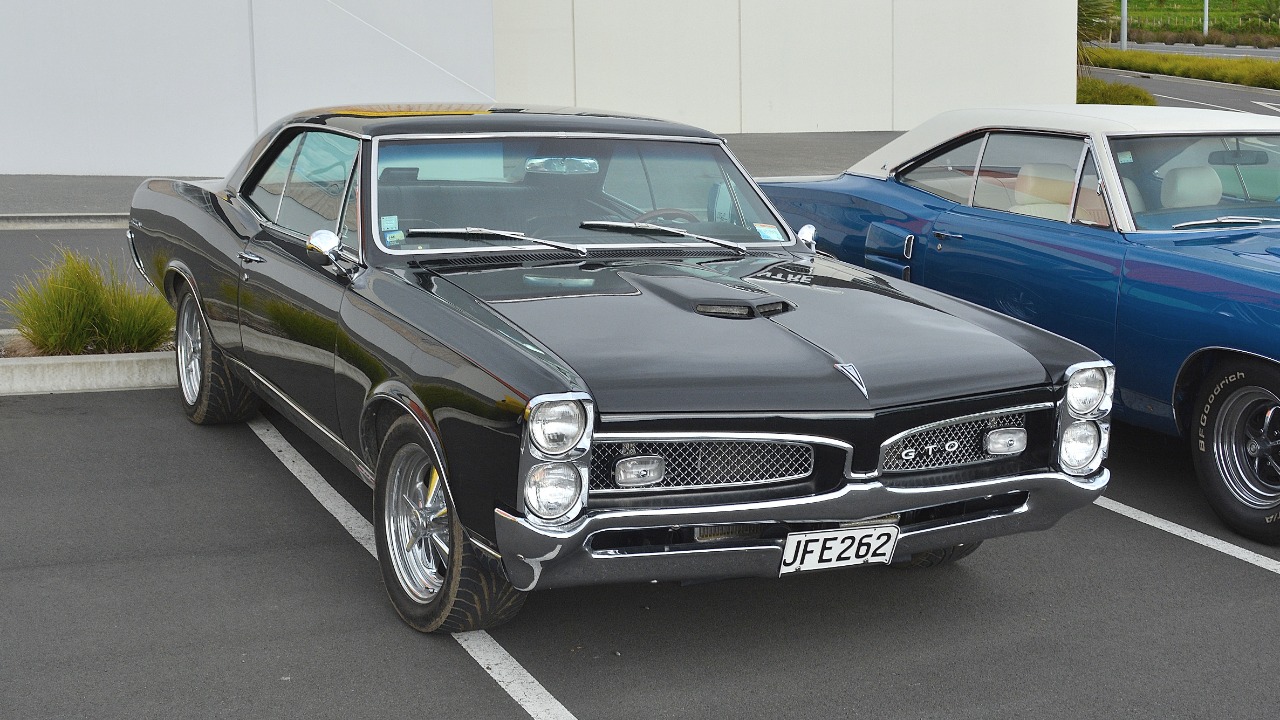
Pontiac’s 1967 GTO arrived at a turning point for American performance, when muscle cars were evolving from scrappy street bruisers into more refined, factory-engineered weapons. The model’s new 400 cubic inch V8, rated as high as 360 horsepower in showroom trim and widely tuned to far more, gave everyday buyers access to performance that had recently belonged to race teams. That single model year helped push street performance forward, and it still shapes how enthusiasts build and drive GTOs today.
More than half a century later, the 1967 GTO remains a benchmark, not just as a collectible but as a platform for modern power. Restored and modified examples, some finished in vivid Tyrol Blue and fitted with 455-cubic-inch stroker engines that produce around 500 horsepower, show how far the original concept can be taken while still honoring its roots.
What happened
By 1967, Pontiac had already turned the GTO from an option package into a standalone model and helped ignite the mid-size muscle car segment. That year, the company retired the earlier 389 cubic inch engine and replaced it with a new 400 cubic inch V8 family. The change was more than a simple displacement bump, as Pontiac reshaped the GTO’s identity around a broader range of power levels and a more sophisticated approach to performance.
The 400 cubic inch engine arrived in several distinct configurations. The base four-barrel version delivered strong street performance while keeping drivability and fuel use within reasonable bounds. Above that, Pontiac offered the High Output (HO) version, which added freer-flowing exhaust manifolds, a more aggressive camshaft profile, and specific tuning that sharpened throttle response. At the top of the range sat the Ram Air package, a limited-production configuration that combined functional hood scoops, revised cylinder heads, and a hotter camshaft aimed squarely at buyers who intended to spend time at the drag strip.
Factory horsepower ratings on paper were conservative by modern standards, yet the 400 cubic inch GTO could be ordered with output that rivaled or exceeded 400 horsepower in real-world tune. The Ram Air specification, with its high-lift cam and improved breathing, was particularly potent once owners exploited the engine’s capacity for aftermarket carburetion and ignition upgrades. Pontiac’s engineering team designed the block, heads, and bottom end with enough margin that tuners could safely chase higher rpm and additional compression.
Chassis and braking hardware evolved alongside the powertrain. The 1967 GTO adopted front disc brakes as an option, a notable improvement over the all-drum setups that dominated earlier muscle cars. The suspension kept the familiar rear live axle and front control arms, but Pontiac refined spring and shock rates and offered heavy-duty components for buyers who chose the higher-output engines. These changes helped the GTO manage its power more effectively on real roads, not just on a straight quarter-mile.
Styling also shifted subtly. The 1967 body retained the coke-bottle profile of the earlier cars, but Pontiac tweaked the front grille, tail lamps, and trim details to give the GTO a more upscale presence. Inside, the car could be ordered with a woodgrain dash, bucket seats, and a full set of round gauges, reinforcing the idea that this was a performance car with a degree of refinement rather than a stripped-out racer.
That combination of power, braking, and comfort set the stage for decades of enthusiast modifications. One striking example is a restored 1967 GTO finished in Tyrol Blue and fitted with a 455 cubic inch stroker V8 that produces about 500 horsepower. In that build, the owner started with a period-correct chassis, then installed a stroked Pontiac V8 that uses modern internals, improved cylinder heads, and upgraded induction to achieve contemporary power levels while keeping the classic engine architecture. The car’s carefully restored bodywork and paint highlight how the original design still stands out, while the upgraded powertrain turns it into a far quicker machine than Pontiac ever sold from the factory. A detailed look at that Tyrol Blue car shows how a 455 stroker GTO can balance show-car finish with serious street performance.
Modern builders often back these high-output engines with updated transmissions and rear axles. Where a 1967 GTO might have left the factory with a 3-speed manual or a 4-speed paired to relatively short rear gearing, contemporary restorations frequently add 5-speed or 6-speed gearboxes that allow a tall cruising gear. This lets the engine spin at lower rpm on the highway, reducing noise and wear while still providing brutal acceleration in the lower ratios.
Suspension and brake upgrades follow the same logic. Enthusiasts typically retain the basic layout, with a front double-wishbone design and rear live axle, but they add stiffer springs, modern gas shocks, thicker anti-roll bars, and disc brakes at all four corners. The goal is to keep the GTO’s character intact while improving body control, steering precision, and stopping distances to match the elevated power output.
Why it matters
The 1967 GTO occupies a key place in the story of American performance because it bridged two eras. Earlier muscle cars often felt like big engines dropped into modestly prepared bodies, while later performance machines leaned into technology, with more sophisticated suspensions, braking systems, and emissions controls. The 1967 GTO sat in the middle, with a big-cube V8 that responded well to tuning and a chassis that could be made to handle real-world driving, not just drag racing.
Pontiac’s decision to move from the 389 to the 400 cubic inch engine signaled a shift toward engines that could support more serious internal upgrades. The 400’s stronger block and improved oiling made it friendlier to higher rpm and larger camshafts. That foundation is one reason the engine remains popular among builders who want to extract 450 to 500 horsepower without resorting to exotic parts. The Tyrol Blue GTO with its 455 stroker V8 is a direct descendant of that thinking, taking the basic Pontiac V8 architecture and stretching it with a longer-stroke crankshaft and modern components to reach 500 horsepower while retaining street manners.
The car also illustrates how the definition of “street performance” has changed. In the late 1960s, a mid-size coupe with 350 to 360 rated horsepower was considered extremely quick. Today, a naturally aspirated 500 horsepower build that idles smoothly and can be driven in traffic is seen as a balanced, usable package. The GTO’s large engine bay, traditional front-engine, rear-drive layout, and robust drivetrain make it an ideal canvas for that evolution.
From a cultural standpoint, the 1967 GTO helped normalize the idea that performance could be aspirational yet accessible. It was not a hand-built exotic or a limited-production homologation special, but a car that could be ordered from a dealership with a choice of colors, interior trims, and option packages, then driven to work during the week and to the drag strip on weekends. That dual-purpose identity resonates strongly with contemporary enthusiasts who want cars that can handle long-distance cruising, local shows, and spirited drives on back roads.
The model year also matters because it arrived just before emissions regulations and insurance pressures began to squeeze factory horsepower ratings. For many collectors, 1967 represents a sweet spot where styling, raw power, and relative simplicity intersected, before the more restrictive early 1970s. That context adds weight to any well-executed 1967 GTO build, particularly one that combines original sheet metal and trim with modern mechanical upgrades.
On the technical side, the GTO’s ongoing popularity has supported a large aftermarket ecosystem. Companies produce reproduction body panels, interior pieces, suspension components, and complete crate engines tailored to the Pontiac V8 platform. The availability of these parts makes it practical to restore a tired car or to build a restomod that looks period-correct but drives like a contemporary performance coupe. The Tyrol Blue 455 stroker car is a visible example of how this ecosystem comes together, from the paint and trim to the engine internals and exhaust system.
There is also a preservation angle. As more 1967 GTOs receive high-power engine swaps and modern running gear, the value of original-spec cars has climbed. Collectors often differentiate between numbers-matching restorations that aim to replicate factory condition and modified builds that prioritize performance. Both approaches rely on the strength of the underlying design. Without a solid, attractive base car, neither group would invest the time and money required for a full restoration or restomod.
For younger enthusiasts, the 1967 GTO provides a tangible link to an era when mechanical simplicity and driver involvement defined performance. The car’s hydraulic steering, analog gauges, and manual transmissions offer a very different experience from modern vehicles with electronic driver aids and digital dashboards. At the same time, the presence of builds that integrate fuel injection, overdrive transmissions, and upgraded brakes shows that the platform can adapt without losing its character.
From a broader industry perspective, the GTO’s legacy can be seen in how manufacturers approach modern performance models. The idea of pairing a strong engine with a relatively practical body, then offering a mix of comfort and speed, is visible in current V8-powered sedans and coupes. While the technical details have changed, the template that Pontiac refined in 1967 remains familiar.
What to watch next
The future of 1967 GTO performance will likely revolve around how owners balance originality with modern capability. As values for unmodified cars continue to rise, there is growing interest in reversible upgrades. Builders are increasingly careful to preserve original frames, body panels, and interior components, even as they install larger engines, coilover suspensions, and updated braking systems. This approach allows a car to be returned to stock configuration if a future owner wants a period-correct restoration.
Engine technology will remain at the center of that conversation. The success of high-output builds like the 455 cubic inch stroker GTO suggests that more owners will pursue similar combinations, using aftermarket blocks, forged rotating assemblies, and improved cylinder heads to reach 500 horsepower or more. At the same time, there is a parallel movement toward subtle upgrades such as roller camshafts, modern ignition systems, and electronic fuel injection that improve drivability and reliability without dramatically changing the car’s character.
Enthusiasts are also watching how evolving fuel and emissions standards might affect classic performance cars. While many regions still allow vintage vehicles to operate with relatively few restrictions, there is increasing discussion about low-emission zones and alternative fuels. Some builders are experimenting with E85-compatible fuel systems or considering hybrid-style assist systems that can be added without cutting into original sheet metal. How widely these solutions spread will shape the next chapter of GTO modification.
Chassis and safety upgrades are another area of focus. As power levels climb, owners are investing in stronger frames, improved subframe connectors, and modern seat belts. Some cars receive discreet roll bars or roll cages that tuck behind interior trim, providing extra protection without dramatically altering the cabin. The goal is to make sure that a 500 horsepower GTO can be enjoyed with confidence on modern roads and at track events.
More from Fast Lane Only