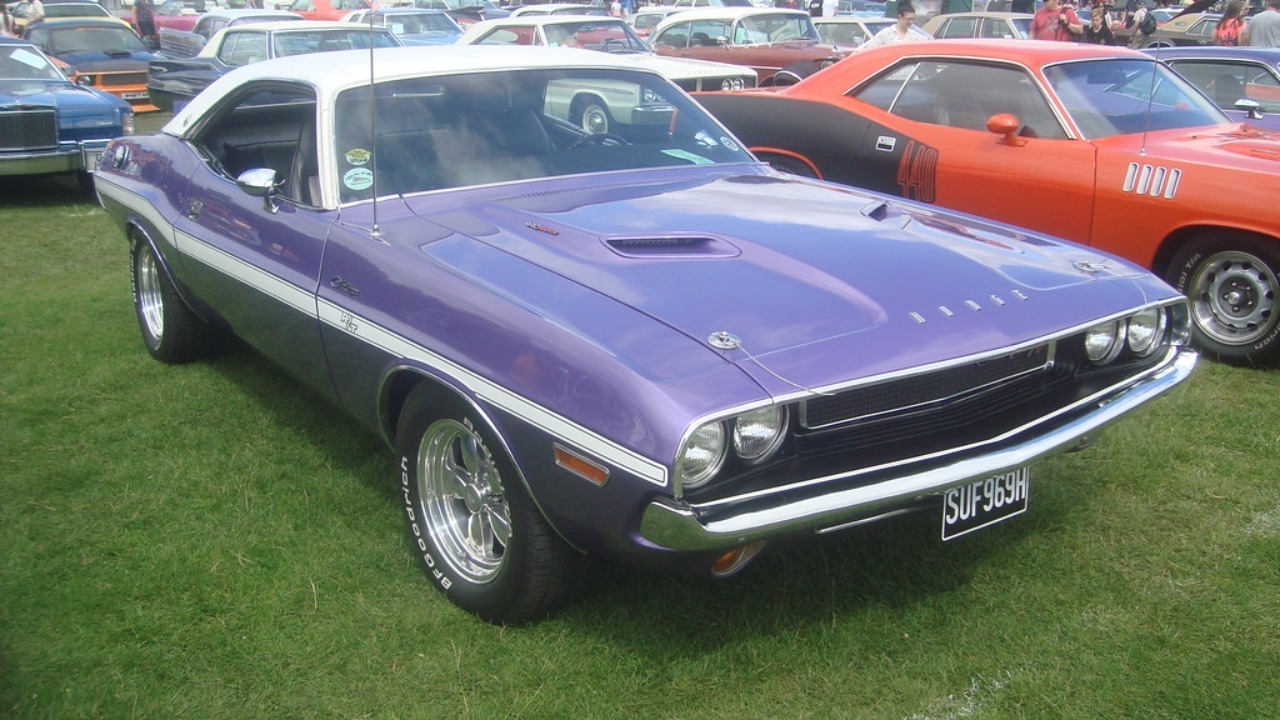
The 1970 Dodge Challenger R/T arrived at the height of Detroit’s horsepower wars as a purpose-built performance machine, and buyers could tailor its character through a rare spread of big-output engines. From small-block agility to thundering Hemi power, the model gave serious drivers a menu of factory options that read like a drag strip wish list. More than five decades later, that strategy still shapes how Dodge sells performance and continues to define why the original Challenger R/T sits near the top of the muscle car hierarchy.
What happened
When Dodge launched the Challenger for 1970, the R/T badge identified the most focused performance version in the lineup. The car rode on Chrysler’s E-body platform, shared with the Plymouth Barracuda, but it wore longer, wider sheet metal that allowed room for a broad selection of engines. The R/T package bundled chassis, appearance, and powertrain upgrades, then let buyers choose how extreme they wanted their car to be.
At the base of the R/T engine ladder sat the 383 cubic inch Magnum V8, rated around 335 horsepower in period. This big-block gave the Challenger enough torque for strong straight-line performance while keeping cost and complexity manageable. For many buyers, the 383 R/T struck the ideal balance between daily usability and weekend drag racing capability, especially when paired with either the four-speed manual gearbox or the heavy-duty TorqueFlite automatic.
Above the 383, Dodge offered the 440 cubic inch Magnum V8, a step up that pushed the Challenger R/T firmly into high-performance territory. The 440 Magnum used a single four-barrel carburetor and a hotter camshaft, delivering roughly 375 horsepower and a broad torque curve. In practical terms, that meant effortless acceleration from low revs and the ability to overwhelm the rear tires with only a modest stab of the throttle. The 440 R/T also benefited from heavy-duty cooling and driveline components engineered to survive repeated hard launches.
For drivers who wanted maximum output from the same basic displacement, Dodge created the 440 Six Pack option. This version of the 440 carried three Holley two-barrel carburetors on an aluminum intake manifold, a combination that improved airflow at high rpm. Officially, the 440 Six Pack was rated at about 390 horsepower, but period testers and racers often reported performance that suggested the factory numbers were conservative. In quarter-mile runs, Six Pack Challengers routinely punched above their published power figures, especially when tuned by experienced owners.
At the top of the R/T engine hierarchy sat the legendary 426 Hemi. Using hemispherical combustion chambers, big valves, and a pair of four-barrel carburetors, the 426 Hemi in Challenger R/T trim carried a factory rating of roughly 425 horsepower. In practice, the engine was closer to a race motor detuned just enough to survive street duty. The Hemi’s high compression, solid lifter camshaft, and heavy-duty internals made it temperamental in traffic but devastating on a drag strip. Only a small fraction of 1970 Challenger R/T buyers checked the Hemi box, which has helped turn surviving cars into some of the most coveted American muscle machines.
The R/T package did more than add power. It typically included upgraded suspension components, stiffer shock absorbers, larger brakes, and performance rear axle ratios that matched the chosen engine. Exterior cues helped signal the car’s intent, with standard R/T stripes, unique badging, and often a twin-scoop or shaker hood that fed cool air to the engine. Inside, bucket seats, a center console, and optional Rallye gauges gave the cockpit a more purposeful feel than base Challenger models.
Transmission choices also shaped how these engines behaved. The four-speed manual, often paired with the iconic Hurst pistol-grip shifter, gave drivers direct control over the powerband and was a favorite among drag racers. The three-speed TorqueFlite automatic, when combined with the right axle ratio and a limited-slip differential, delivered consistent, repeatable launches that made the car easier to exploit at the strip. Many R/T buyers selected the automatic for that combination of durability and simplicity.
Although the Challenger R/T’s production run in its original form was brief, its influence endured. When Dodge marked the Challenger’s half-century milestone, the company highlighted how the 1970 car’s broad engine menu and aggressive styling helped define its identity. Modern retrospectives on the Challenger’s 50th anniversary consistently point back to the 1970 R/T as the benchmark that later versions tried to echo.
Why it matters
The 1970 Challenger R/T’s engine strategy matters because it captured a specific moment in American performance history when manufacturers competed on power figures and quarter-mile times as directly as they now compete on efficiency and technology. Dodge recognized that muscle car buyers were not a single audience. Some wanted an affordable big-block, others demanded near-race-spec hardware, and the R/T engine ladder met each of those expectations without fragmenting the model line.
By offering multiple high-output engines in one package, Dodge turned the Challenger R/T into a configurable performance platform rather than a one-size-fits-all halo car. A 383 R/T could serve as a daily driver with strong acceleration and manageable fuel consumption for the era. A 440 Six Pack or 426 Hemi R/T, in contrast, was effectively a street-legal drag car. That spectrum meant dealerships could sell the same basic car to a broad range of customers, from young enthusiasts to more seasoned racers.
This approach also helped Dodge cultivate a performance image that still shapes its modern lineup. Current V8-powered models, such as the Durango equipped with the 392 Hemi, continue the tradition of pairing large-displacement engines with family-friendly bodies. The decision to bring a 392 Hemi Durango to additional markets shows how the brand still leans on big-cube, naturally aspirated power to stand out, even as the industry shifts toward electrification and downsizing.
For collectors and historians, the 1970 Challenger R/T’s engine choices provide a clear lens on how far manufacturers were willing to go to win the horsepower race. The 426 Hemi, in particular, was expensive to build and certify, and it carried a warranty burden that would be hard to justify under modern regulations. Yet Dodge offered it because the car’s reputation among enthusiasts and on the drag strip translated into showroom traffic and brand loyalty.
The car’s significance also extends to how it influenced later retro-styled performance models. When Dodge revived the Challenger nameplate in the late 2000s, the company deliberately echoed the 1970 R/T’s proportions and visual cues. The wide stance, long hood, and short deck were not just nostalgic styling flourishes, they were an attempt to recreate the original car’s visual promise of power. Modern SRT and R/T variants, with their choice of Hemi V8s, can be traced directly back to the original idea that one body style should support a wide range of serious engines.
From a cultural perspective, the 1970 Challenger R/T became a symbol of unfiltered American performance. Its presence in films, television, and motorsport cemented its status as one of the definitive muscle cars of its era. The combination of bold styling and multiple engine options meant the car could be both a visual icon and a mechanical benchmark. Enthusiasts still debate the merits of the 440 Six Pack versus the 426 Hemi, a sign that the choices Dodge offered in 1970 continue to animate car culture discussions.
The engine variety also affected how these cars are valued today. Hemi-equipped R/Ts command the highest prices, especially with original drivetrains and documentation, but 440 Six Pack and 383 cars have their own appeal. The relative scarcity of certain configurations, such as four-speed Hemi R/Ts or specific color and option combinations, has turned the model into a case study in how factory choices from a single model year can shape collector markets decades later.
Technically, the engines in the 1970 Challenger R/T illustrate the peak of carbureted, pushrod V8 development before emissions regulations and fuel crises forced a retreat from raw output. The 426 Hemi’s hemispherical chambers and big-port heads were designed for high-rpm breathing, while the 440 Six Pack’s triple-carb setup represented a clever way to balance low-speed drivability with top-end airflow. These solutions came from a time when engineers could prioritize performance first, then adapt the rest of the car to cope with the results.
That context helps explain why the 1970 Challenger R/T is still used as a reference point when evaluating modern performance cars. Even contemporary machines with far greater power and sophistication are often compared to muscle cars like the Challenger to convey their character. When a new model is described as having the attitude of a classic big-block coupe, the template in many enthusiasts’ minds is the 1970 R/T with its mix of engine choices and aggressive stance.
What to watch next
Looking ahead, the legacy of the 1970 Challenger R/T raises questions about how Dodge and other performance brands will translate that formula into an era defined by electrification and stricter regulations. The original car’s appeal rested on the availability of multiple high-output, naturally aspirated V8s, a recipe that becomes harder to sustain as emissions and efficiency standards tighten. Future performance models may need to deliver similar choice and character through different technologies.
One likely direction is a shift from displacement-based variety to powertrain diversity. Where the 1970 Challenger R/T offered a ladder of big-block engines, upcoming performance cars may present a range that spans turbocharged smaller engines, plug-in hybrids, and full battery-electric setups. The challenge for Dodge will be to preserve the sense of configurable performance that defined the R/T while using components that comply with modern rules and customer expectations around emissions and fuel costs.
Enthusiasts will be watching how the brand handles the transition from traditional V8s to alternative powertrains without losing the personality that cars like the 1970 Challenger R/T established. That could involve tuning electric or hybrid systems to deliver the instant torque and straight-line acceleration that muscle car buyers expect, along with visual and acoustic cues that evoke the drama of a big-block launch. The goal would be to create new forms of performance that feel spiritually connected to the old cars, even if the hardware is very different.
At the same time, the collector market for original 1970 Challenger R/Ts is likely to remain strong. As modern performance cars move toward quieter, more efficient operation, the raw, mechanical nature of a carbureted Hemi or 440 Six Pack becomes more distinctive. Owners who maintain or restore these cars are not just preserving nostalgia, they are keeping alive a type of driving experience that new vehicles are less able to replicate.
There is also growing interest in restomod builds that blend the visual authenticity of a 1970 Challenger R/T with updated drivetrains, brakes, and suspension. Some builders retain period-correct big-blocks, tuned for modern fuels, while others install contemporary Hemi engines with electronic fuel injection. In both cases, the underlying idea mirrors the original R/T philosophy: one body, multiple levels of performance, tailored to the owner’s priorities.
More from Fast Lane Only