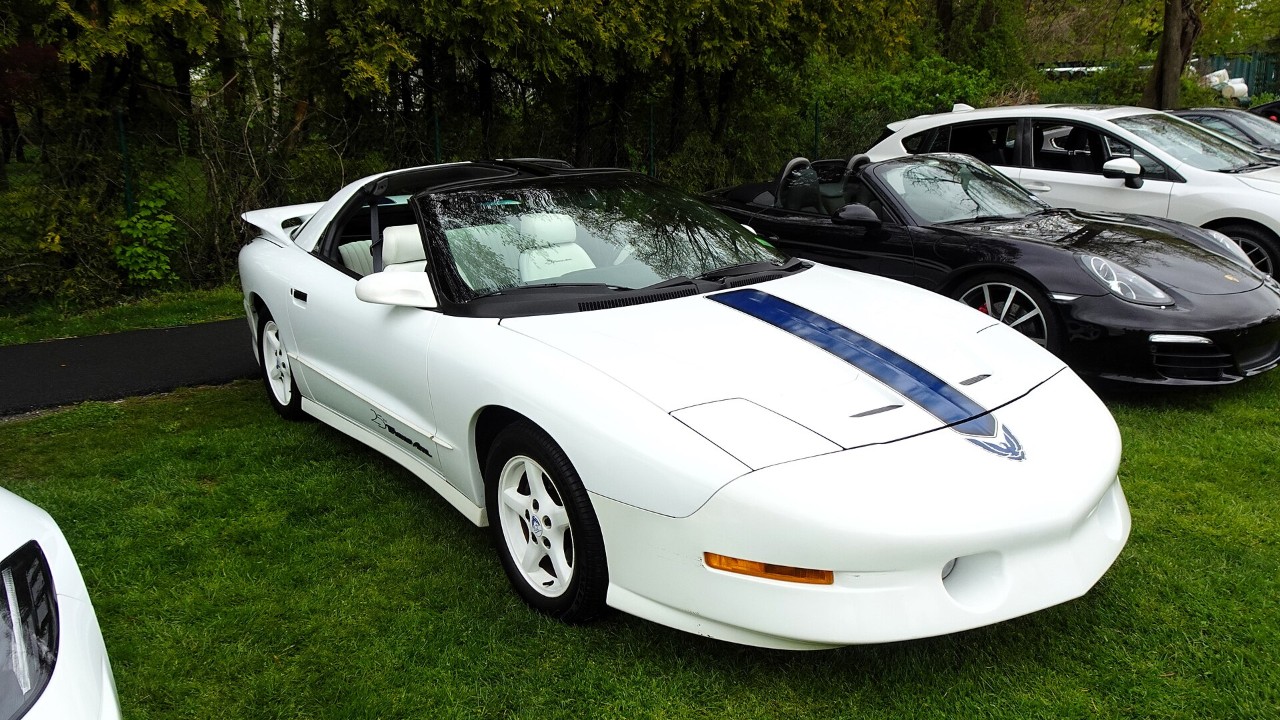
In 1994, Pontiac painted a Trans Am GT white with one blue stripe to mark 25 years of the Trans Am. That throwback says a lot about the Firebird. Every generation kept looking back at the one before, and many of those cars still matter to drivers today.
Pontiac introduced the Firebird on February 23, 1967, as its answer in the pony-car fight. The name then ran through the 2002 model year. Along the way it went from muscle car to Smokey and the Bandit star to fuel-injected sports coupe.
These are our picks for nine Firebirds still relevant today. That verdict is our opinion, based on what each car changed, what it still offers a driver and how it fits the market now. The specs, sales and production numbers come from Hagerty and reference records, and we left out any figure we couldn’t check.
1. 1994 Pontiac Firebird Trans Am GT 25th Anniversary
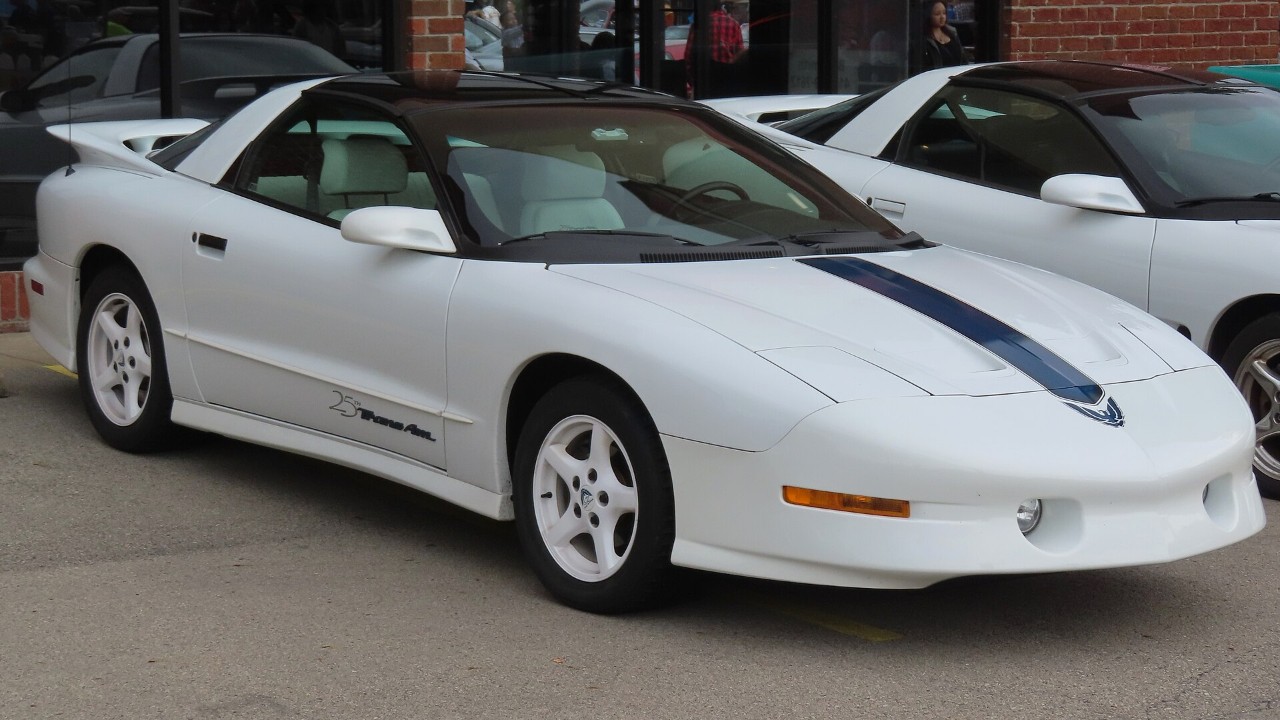
Pontiac sold the Trans Am GT for exactly one model year. From the outside you couldn’t tell it from a regular Trans Am. Its giveaways were fatter 245/50ZR16 tires and a speedometer reading to 155 mph. Then, for 1995, every Trans Am got that hardware, so the GT badge went away.
On top of that, the anniversary trim borrowed its look from the 1970 Trans Am. Think white paint split by one dark blue stripe down the middle. The five-spoke 16-inch wheels were painted white as well, and so was the leather on the seats and doors. Pontiac sold it in coupe, T-top and convertible form, and our photo shows the coupe.
The timing mattered, too. According to Hagerty, Firebird sales hit their low point of 14,112 in 1993. In 1994 they climbed to nearly 46,000. Our take: the Trans Am GT shows how the fourth generation found its feet, and it’s still a usable V8 coupe.
2. 1979 Pontiac Firebird Trans Am 6.6
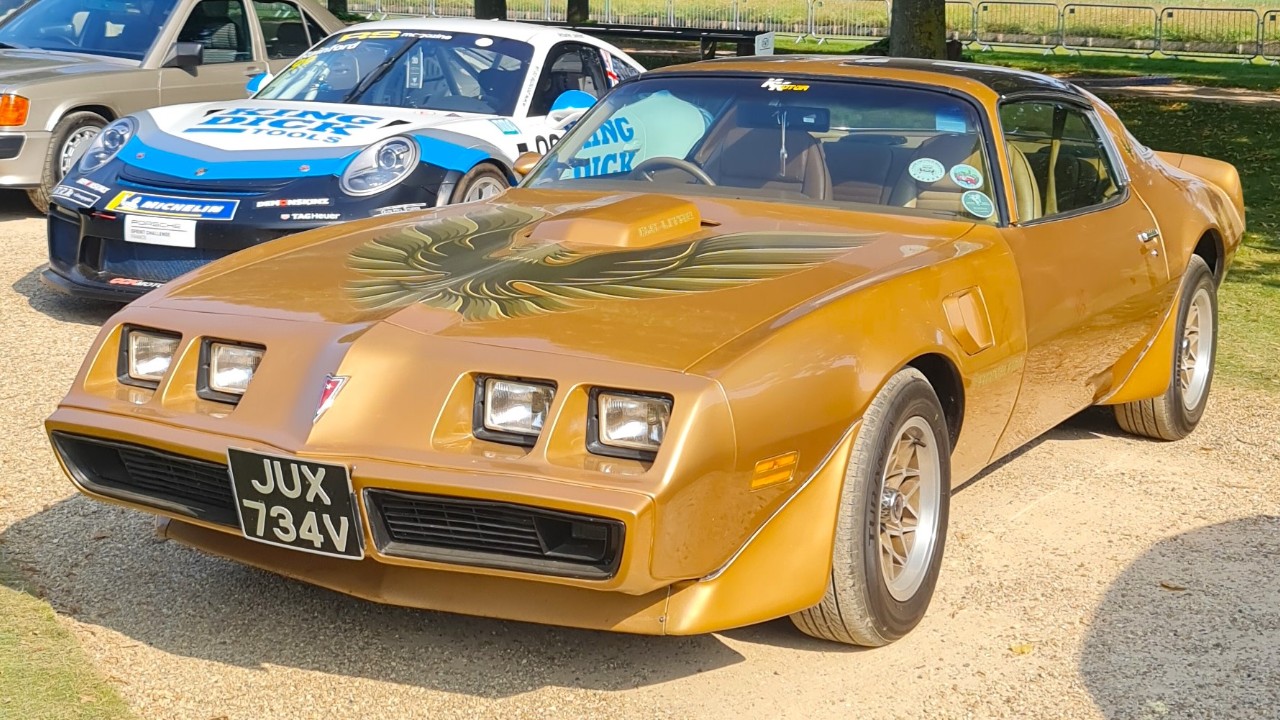
1979 was the Trans Am’s best year. Hagerty puts Trans Am production that year at 117,108, a number it never came close to again. In all, Pontiac sold 211,454 Firebirds in 1979.
The “6.6” on the hood could mean two different engines, though. The standard engine was the Oldsmobile 403, which came only with an automatic. Meanwhile, Pontiac’s own W72 400 came in short supply and required the WS6 handling package with a four-speed. Pontiac rated the W72 at 220 hp.
For 1979, the WS6 package also gained four-wheel disc brakes. Hagerty notes that 1979 marked the end of Pontiac’s 400-cubic-inch V8 production. Our take: a W72 four-speed car is the one to find, because 1979 was the 400’s final year. You can see where that engine family began in our look at the engines Pontiac offered in the 1967 Firebird.
3. 1985 Pontiac Firebird Trans Am H.O.
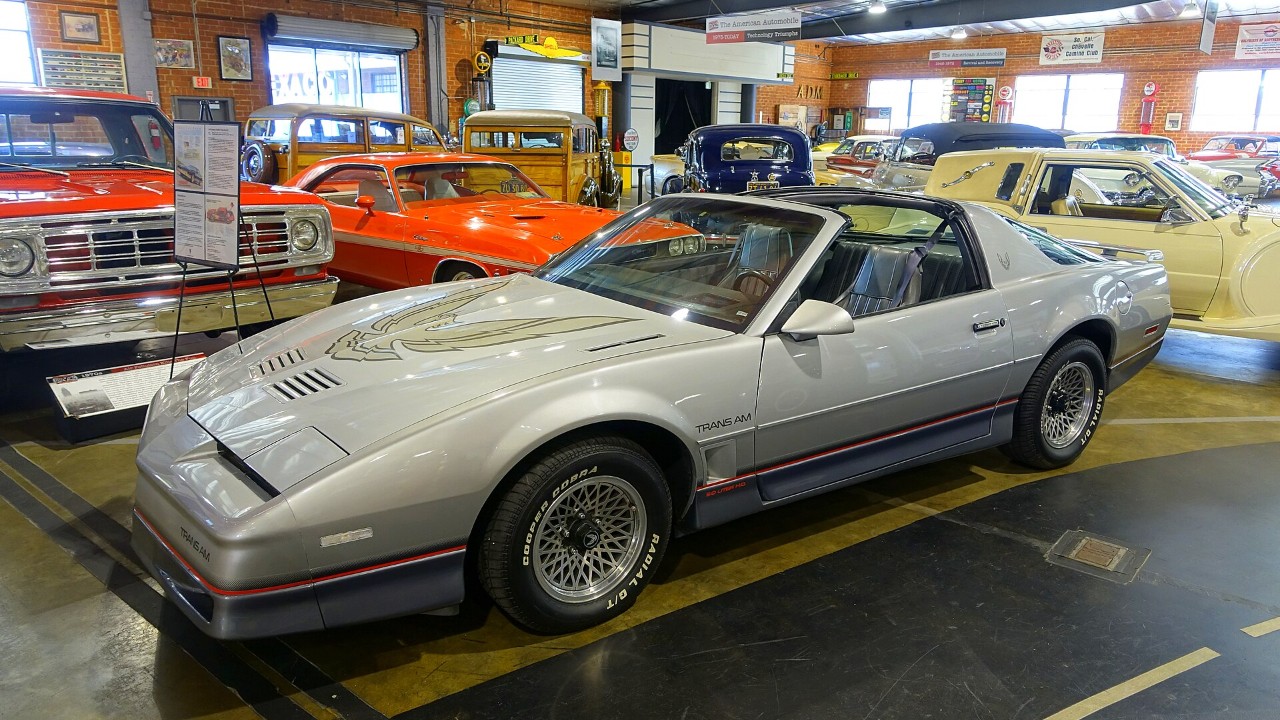
The third-generation Firebird arrived for 1982 with the first factory fuel injection and hatchback bodies in Firebird history. It also weighed nearly 500 pounds less than the 1981 car. However, the H.O. engine in this Trans Am still breathed through a carburetor.
That engine was the L69 305. Pontiac introduced it midway through 1982 at 190 hp, and it was nearly identical to the Camaro Z28’s L69. For 1985, the Trans Am also got a new nose, a flat hood with working vents and an optional wraparound Aero spoiler. At the same time, Pontiac added the 210-hp LB9 tuned-port 305.
The L69 didn’t last. In 1986, only 26 Trans Ams got it, and Pontiac then dropped it over fuel vapor lock problems. In our view, the 1985 H.O. car is the end of the carbureted Trans Am, and that’s history worth keeping. The one in our photo was built on September 29, 1984, and now sits in the Automobile Driving Museum in El Segundo, California.
4. 1969 Pontiac Firebird convertible
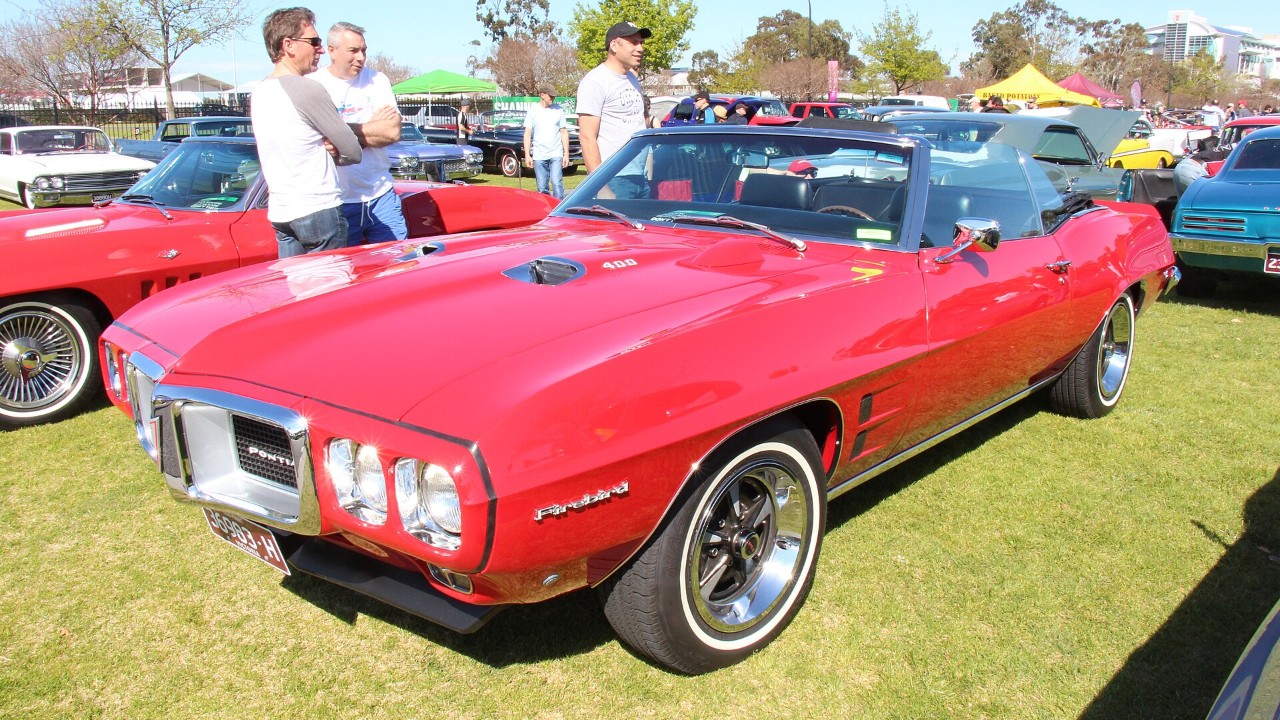
Pontiac offered the Firebird as both a hardtop and a convertible through the 1969 model year. As a result, the 1969 car was the last convertible of the first generation. It also carried the most changes of that run.
The 1969 car also got a major facelift with a new front end. Unlike the GTO, it skipped the Endura bumper. Inside, Pontiac revised the dash and steering wheel and moved the ignition to the steering column. Engine choices ranged up to the 400, offered with Ram Air at 335 hp or Ram Air IV at 345 hp.
The Trans Am package arrived in March 1969 as a $1,083 option. Only eight Trans Am convertibles were made, alongside 689 hardtops, as we covered in our story on the eight 1969 Trans Am convertibles. Our take: a regular 1969 convertible gives you the same open-air shape for far less money.
5. Pontiac Recaro Trans Am
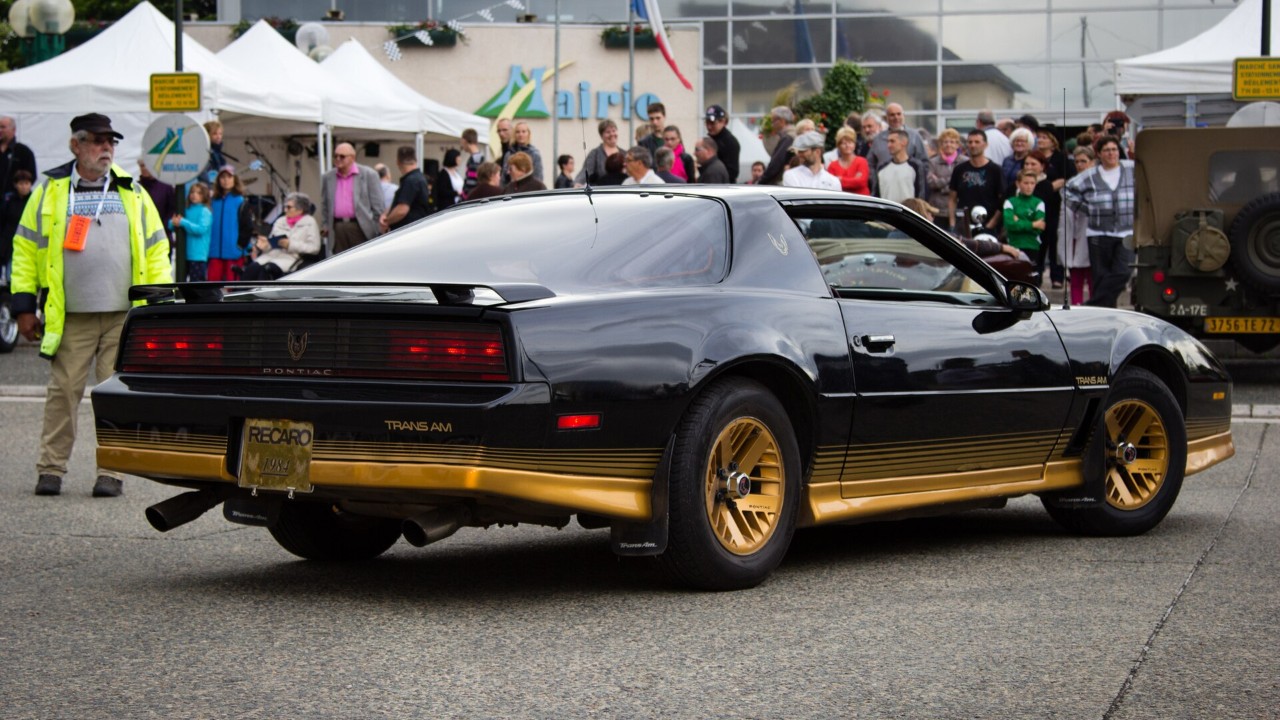
Pontiac built the first Recaro Trans Am for 1982 as a Limited Edition Trans Am S/E. It added about 25% to the Trans Am’s price. In return, buyers got Recaro seats in charcoal Parella cloth, T-tops and the WS6 handling package. Black paint, gold trim and gold-painted 15-inch aluminum wheels finished the look.
The car changed every year after that. For 1983, Pontiac revised it to be built to the owner’s preferences, with tan leather Recaro seats and no T-tops. Then for 1984, the L69 H.O. 305 was the only engine. The gold lower-body paint went away, and Aero ground effects arrived.
Pontiac built 1,321 Recaro Trans Ams in 1984, the last year of the package. In our view, the Recaro car still matters because it put real sport seats into an American coupe. If you shop for one, check that the original Recaro seats are still in the car.
6. 1981 Pontiac Firebird Turbo Trans Am
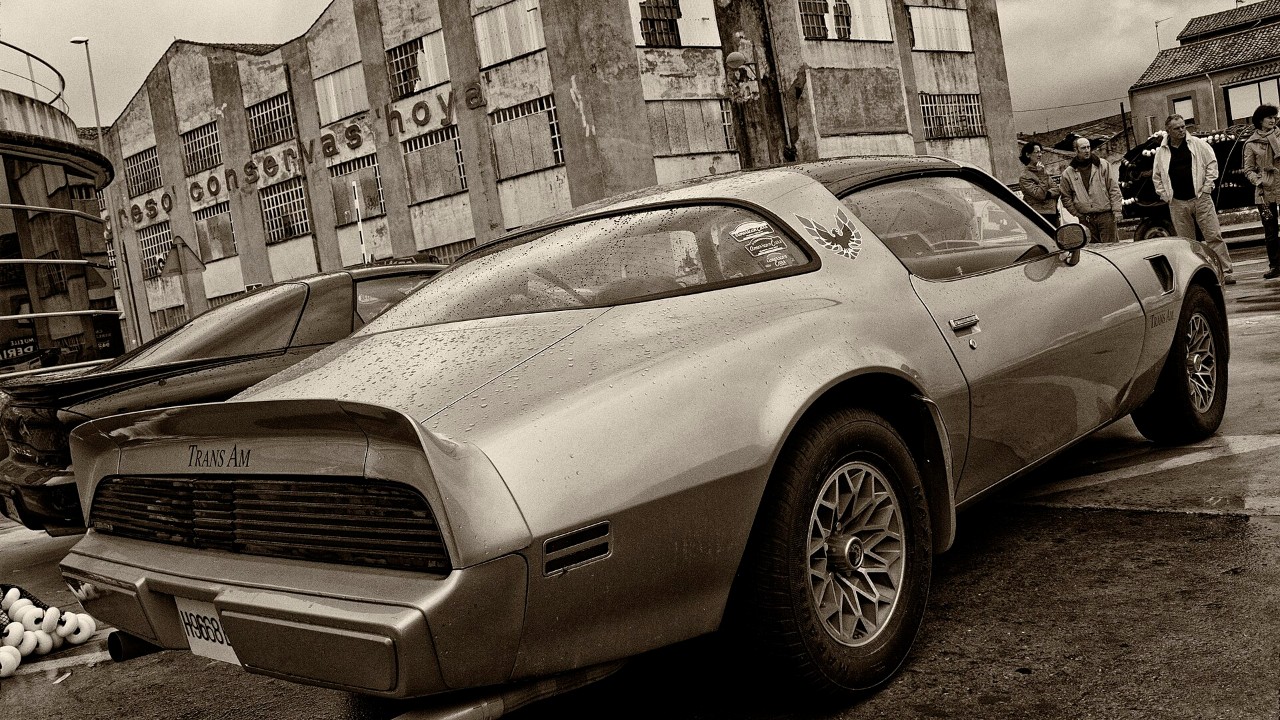
For 1980, Pontiac tried a turbo instead of a bigger V8. According to Hagerty’s Firebird buyer’s guide, the turbo 301 made 210 hp and 345 lb-ft. A Garrett turbocharger added 9 psi of boost, and a knock sensor guarded the engine.
Pontiac also beefed up the block, head gasket and pistons, and it added a high-pressure oil pump. However, the car came only with an automatic and a 3.08 rear gear. As a result, Car and Driver ran the quarter mile in 17.02 seconds. Hagerty says that number put the kibosh on any enthusiasm for the car.
Even so, in our view the Turbo Trans Am points straight at today’s turbo V6 and four-cylinder performance cars. A 1980 Turbo Trans Am was also the first Firebird to pace the Indianapolis 500. Pontiac sold 33,493 Trans Ams in 1981, the final year of the second generation.
7. 1997 Pontiac Firebird coupe
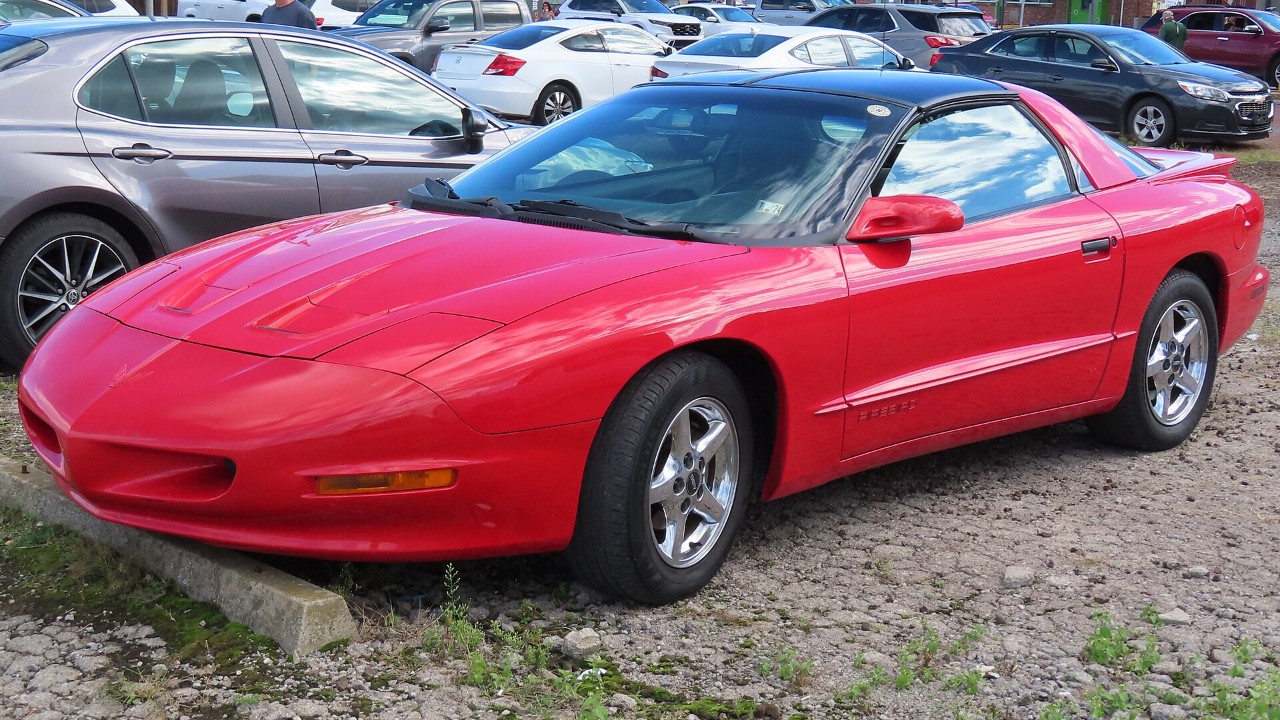
The base Firebird is the one most people forget. By 1996, though, its standard engine was a 3.8-liter V6 with 200 hp. In fact, that’s more than some late-1970s V8 Firebirds made.
For 1997, Pontiac also made air conditioning, daytime running lamps and a digital odometer standard across the range. Buyers could add a 500-watt Monsoon stereo. Meanwhile, V6 cars could get the new W68 sport appearance package.
The next year, the LS1 V8 arrived with 305 hp for the Trans Am and Formula. Our take: a 1997 V6 coupe is an affordable way into a rear-drive Pontiac, and it’s easy to live with. Buy the cleanest one you can find and keep it stock.
8. 1978 Pontiac Firebird Trans Am SE
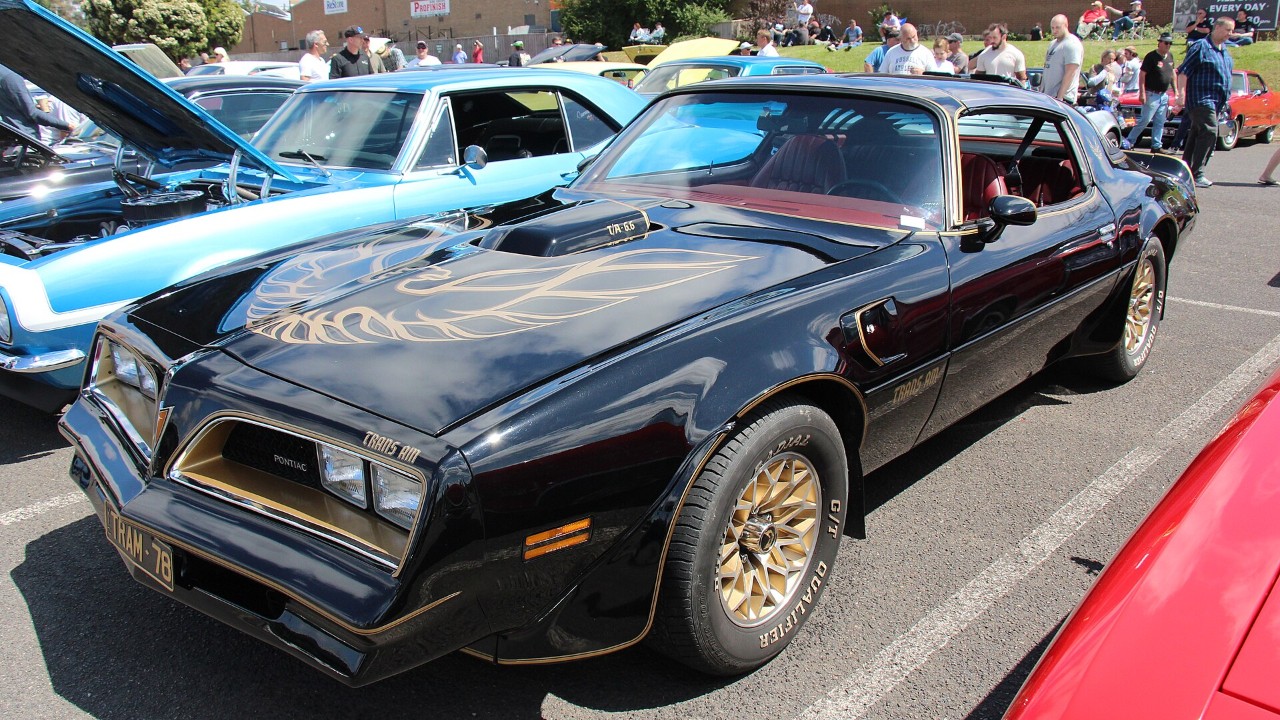
Pontiac revealed the black-and-gold Special Edition in February 1976 at the Chicago Auto Show. Hagerty says Lotus’s John Player Special race livery inspired it. By 1978, the package also came in a gold-and-brown version, and Pontiac built 8,666 of those.
The 1978 Trans Am also got the first WS6 package. It cost $324 and added 15×8 snowflake wheels and a bigger rear sway bar. Under the hood, the W72 6.6-liter V8 now made 220 hp, which Hagerty calls the engine to have.
Midway through 1978, Pontiac also switched the T-tops from Hurst units to Fisher units built by GM. In our view, the SE is still the image most people picture when they hear “Trans Am.” Pontiac built 93,341 Trans Ams in 1978.
9. 1979 Pontiac Firebird Trans Am 10th Anniversary
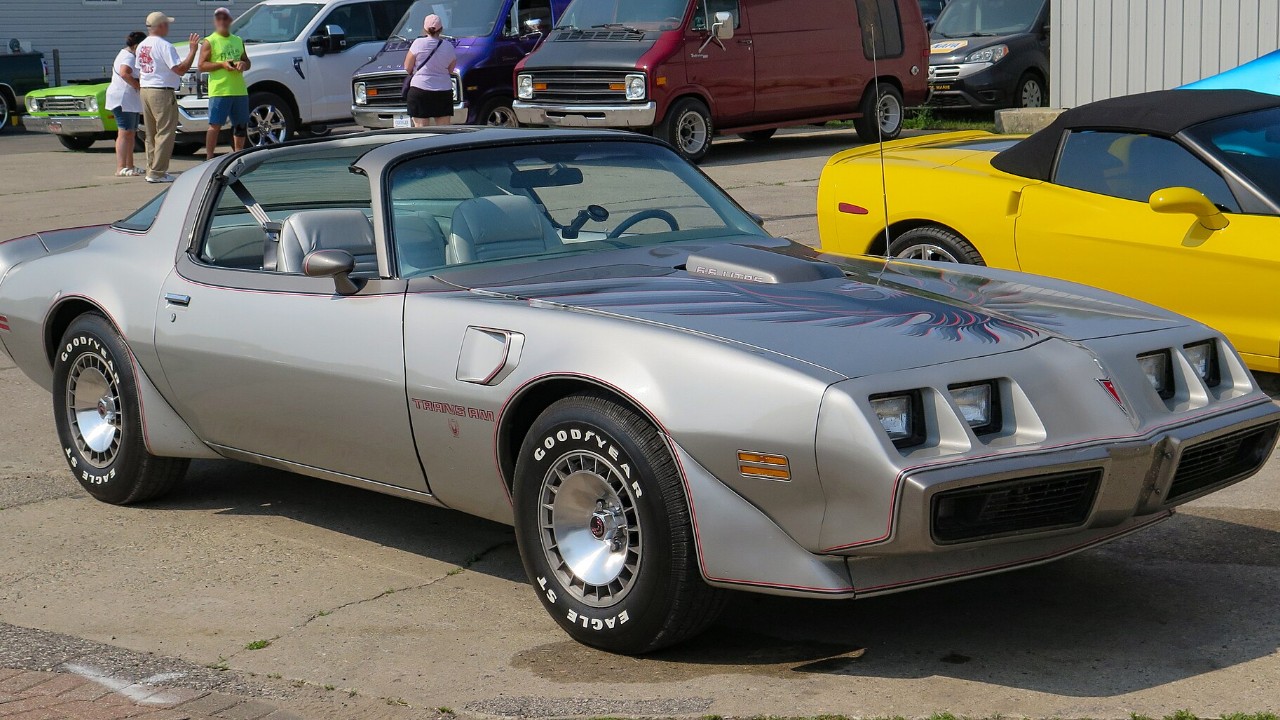
Pontiac marked ten years of the Trans Am with platinum silver paint and charcoal upper accents. The 10th Anniversary car also got mirrored T-tops, silver leather seats and red gauge lighting. For the first time, the hood bird stretched onto the front fenders.
Buyers had two engine choices. They could take the Olds 403 with an automatic or the Pontiac 400 with a four-speed. Of the 7,500 cars Pontiac built, 1,817 had the W72 400. Hagerty puts the base price at $10,620.
In our view, this car still sets the template for every special-edition Trans Am that followed. Two of the 10th Anniversary cars were the actual pace cars for the 1979 Daytona 500.
More from Fast Lane Only