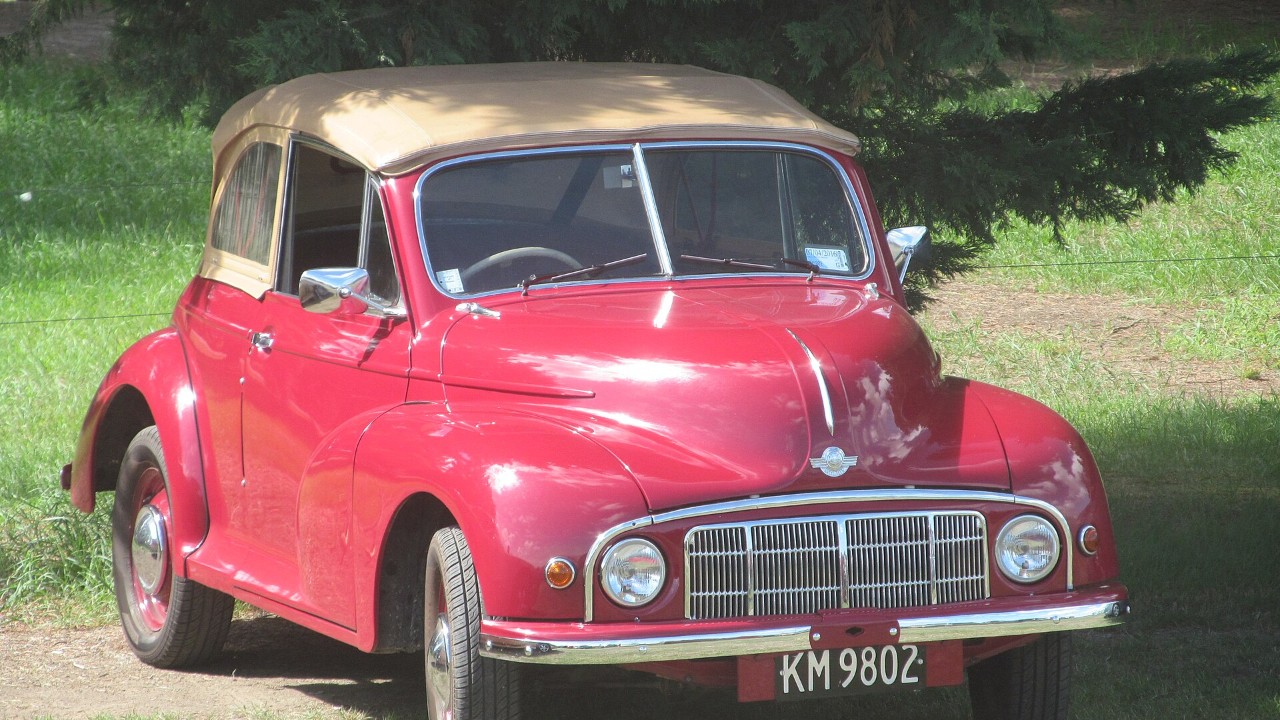
The Morris Minor made its debut at the London motor show at Earls Court in October 1948, and it went on to become the first British car to sell more than a million. In our view, that success said a lot about the years after the war. Buyers needed cars that were cheap to run, easy to park and built to last.
Carmakers across Europe and America answered with fresh ideas, and the Morris Minor was only the start. Some put the engine in the back. Others built the body and chassis as one piece, or gave the family car proper rally pedigree. Many of those ideas sound familiar today, because modern cars use them every day.
These twelve are our picks, and the verdicts are our opinion. We chose cars from the late 1940s and 1950s that look ahead of their time to us, whether in their engineering, their packaging or their simple good sense. The dates, engines and production figures come from museum records, marque histories and period road tests we read for this story.
1. 1948 Morris Minor
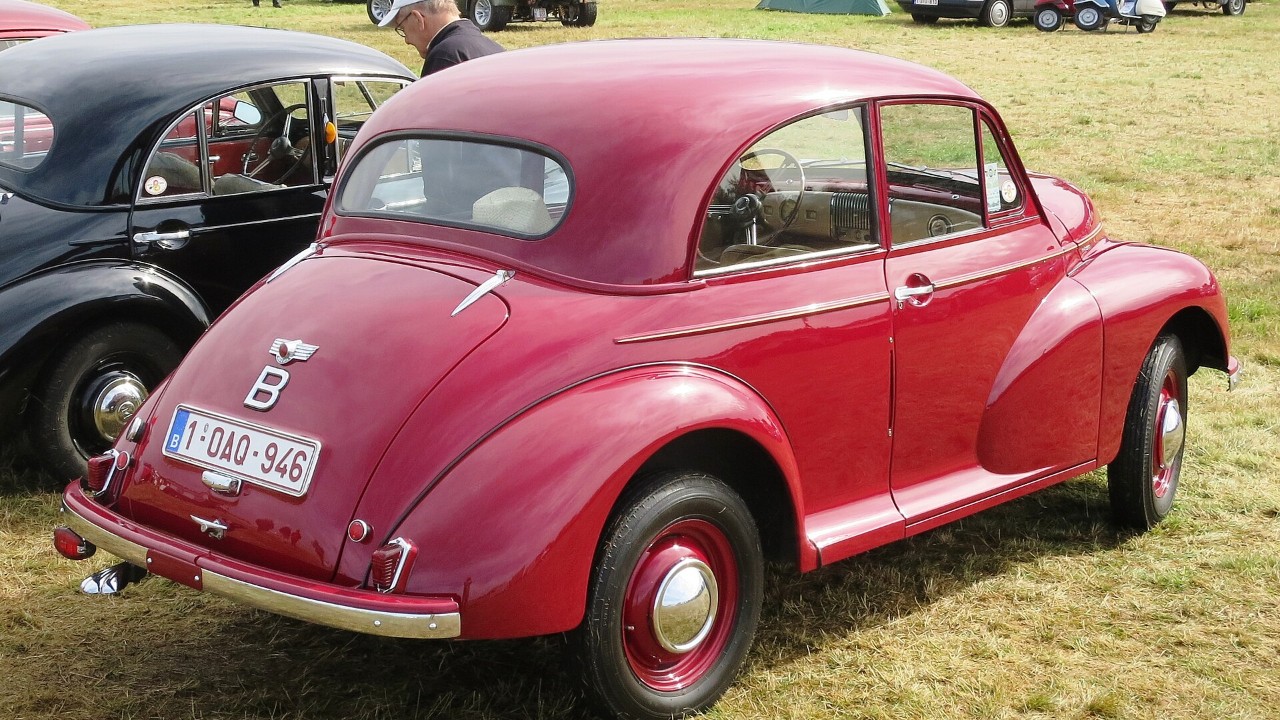
Alec Issigonis designed the Minor, and its roots go back to a 1943 prototype code-named the Mosquito. According to the National Motor Museum, the range “stole the show” at the first postwar Earls Court show in 1948. The museum’s early car cost £359 new.
For a small family car, the engineering was modern. The Morris Minor used unitary construction, rack-and-pinion steering and torsion-bar independent front suspension. On the other hand, the early 919 cc side-valve engine made just 27 horsepower, and the museum’s car needs 24.2 seconds to reach 50 mph. That gap between great chassis and modest engine defined the early cars.
Our take: the Morris Minor feels relevant because it got the basics right. Good steering and a stiff body never go out of style. Production ran all the way to 1971, and the Morris Minor passed a million cars in December 1960. To celebrate, Morris built 350 lilac two-door saloons badged “Minor 1000000.” For a later chapter of the story, see our piece on why the Morris Minor became Britain’s everyman car. We’d happily drive a Morris Minor every day, and that is the best compliment we can pay a design from 1948.
2. 1955 Fiat 600
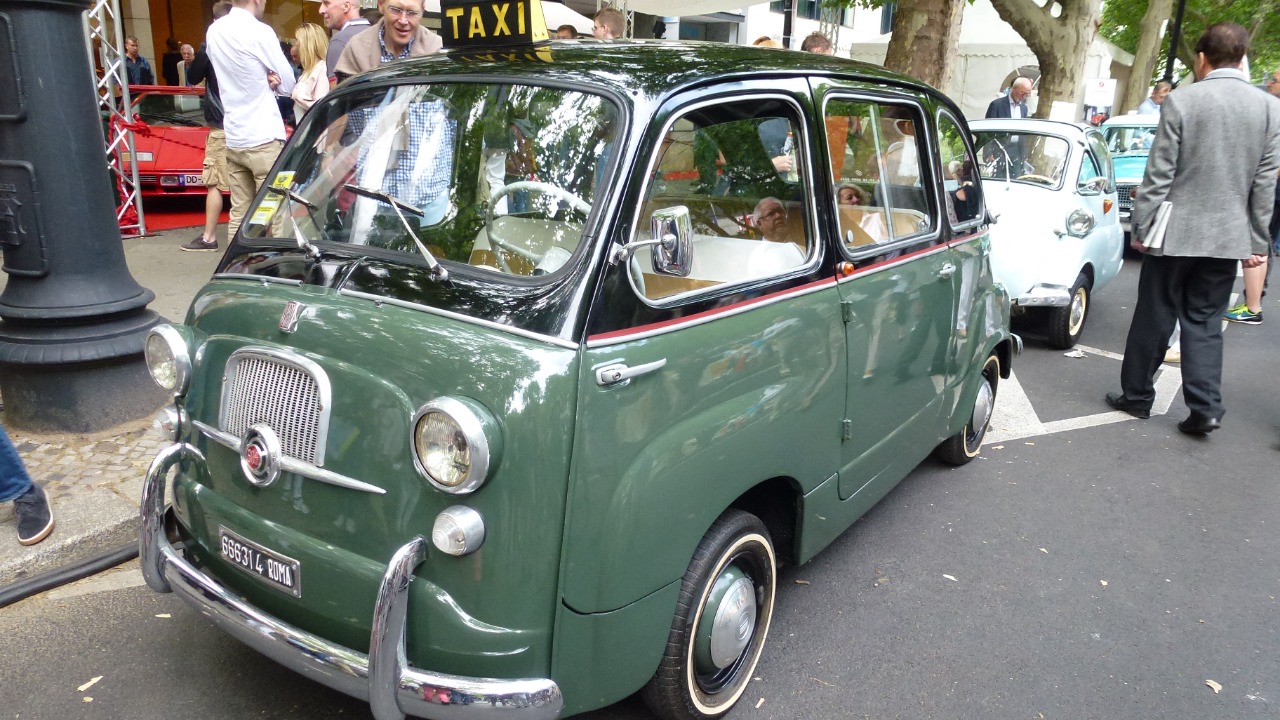
Fiat launched the 600 in 1955, and engineer Dante Giacosa’s little car went on to reshape Italian streets. It carried a 633 cc four-cylinder engine in the back. Fiat built 2,695,197 in Italy alone, at the Mirafiori plant in Turin, before production ended in 1969.
The 600 also spread far beyond Italy. SEAT built it under license in Spain, and Zastava produced related cars in Yugoslavia for decades. Then there was the Multipla, which appeared at the Brussels show in January 1956. Despite its tiny footprint, the six-seat version fitted three rows of seats into a city car.
Our take: the Multipla in particular is a minivan before the word existed. In our view, that is exactly why the 600 family feels so current. We think small cars that carry a lot make more sense than ever in crowded cities. Fiat reached its one-millionth 600 in February 1961, only six years after launch. If you want more on its city-car legacy, read our story on why the Fiat 600 reshaped cities. We’d take a Multipla for the school run any day.
3. 1955 Citroën DS
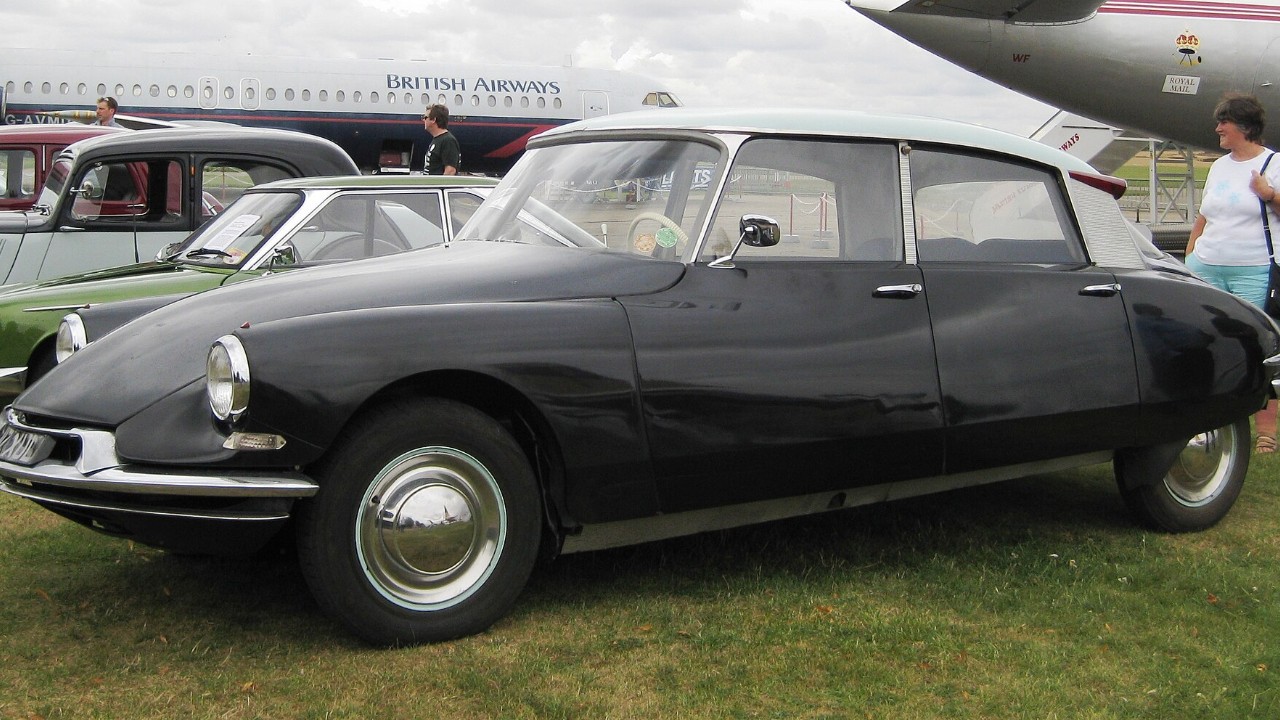
Citroën showed the DS 19 at the Paris Motor Show on October 6, 1955. Visitors placed 743 orders in the first 15 minutes, and the first day’s total reached 12,000. Flaminio Bertoni and André Lefèbvre shaped and engineered the car. Meanwhile, Paul Magès developed its self-leveling hydropneumatic suspension.
The car’s toughness became part of French history. In August 1962, attackers riddled Charles de Gaulle’s DS with bullets at Le Petit-Clamart. Even with two punctured tires, the car escaped at full speed. Later, the 1967 restyle by Robert Opron brought headlights that turned with the steering. Citroën eventually built 1,455,746 examples in six countries.
Our take: the DS is the postwar car that looks most at home next to a modern electric sedan. Its smooth shape and floating ride feel decades ahead of 1955. In addition, its inboard front disc brakes show how seriously Citroën took engineering. We think the DS proves that bold design can also be practical. If you buy one, have a specialist check the hydraulic system before anything else.
4. 1946 Willys CJ-2A
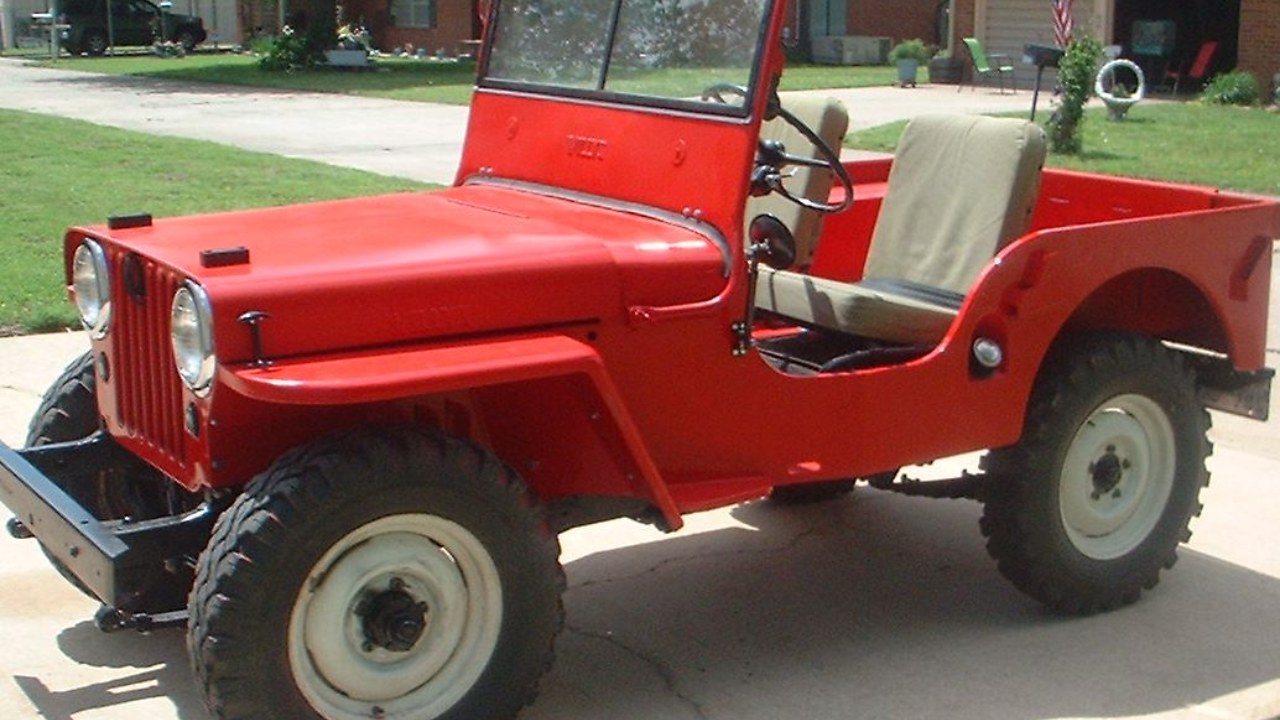
Willys began building the CJ-2A on July 17, 1945, and kept at it until 1949. In that time, it made 214,760 of them. The company sold it as the “Universal Jeep,” and it aimed the truck mainly at farms, ranches and industry. In fact, Willys had registered the name “Agrijeep” in December 1944, though it never used it.
The civilian Jeep differed from the wartime MB in useful ways. It had a tailgate, a spare wheel mounted on the side and larger headlights set flush in a seven-slot grille. A T-90 three-speed gearbox replaced the older unit. Buyers could add front and rear power take-offs, a belt pulley drive, a capstan winch and a rear hydraulic lift. Stock trucks, however, came with only a driver’s seat.
Our take: the CJ-2A put a civilian four-wheel drive within reach of farmers and tradesmen, and you could work it all week and play with it on the weekend. Every modern off-roader owes it something. We love that it was sold as farm equipment first. If you shop for one, check that the grille, tailgate and side-mounted spare are original, since they’re what separate it from a converted military Jeep.
5. 1947 Renault 4CV
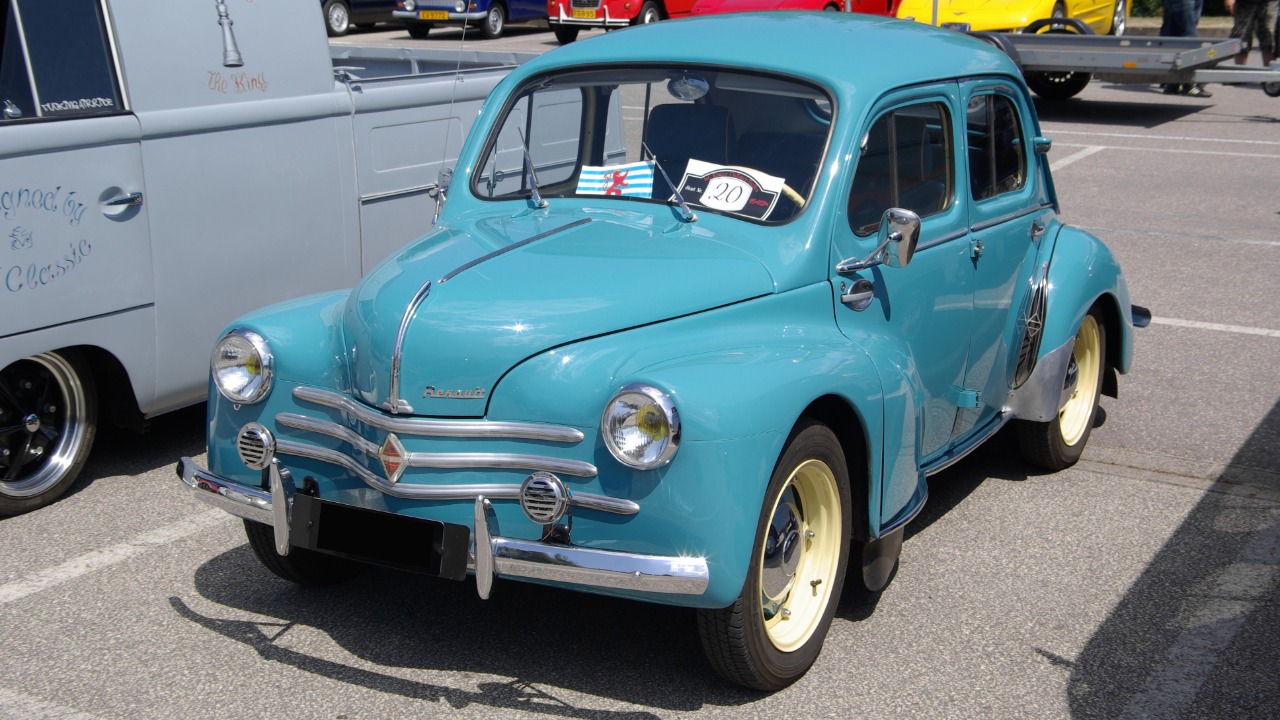
Renault engineers designed the 4CV in secret during the German occupation, when the company was only allowed to build commercial and military vehicles. The car appeared at the 1946 Paris Motor Show. Then, a few weeks before the October 1947 show, volume production began at Billancourt.
Its first engine was a 760 cc four mounted in the rear. In 1950, Renault replaced it with a 747 cc unit making 17 PS. Early cars wore sand-yellow paint left over from Rommel’s Afrika Korps vehicles. As a result, the French nicknamed the car “la motte de beurre,” or the lump of butter.
Our take: like the Morris Minor in Britain, the 4CV gave France an affordable small car when the country needed one most. Renault built 1,105,543 between August 1947 and July 1961. That made it the first French car to sell more than a million. We find its small, rounded body charming, and its tiny size makes it easy to live with in town. In our view, it is the definitive people’s car of postwar France. If you buy one, look for an early car, since those carry the most history.
6. 1948 Bristol 401
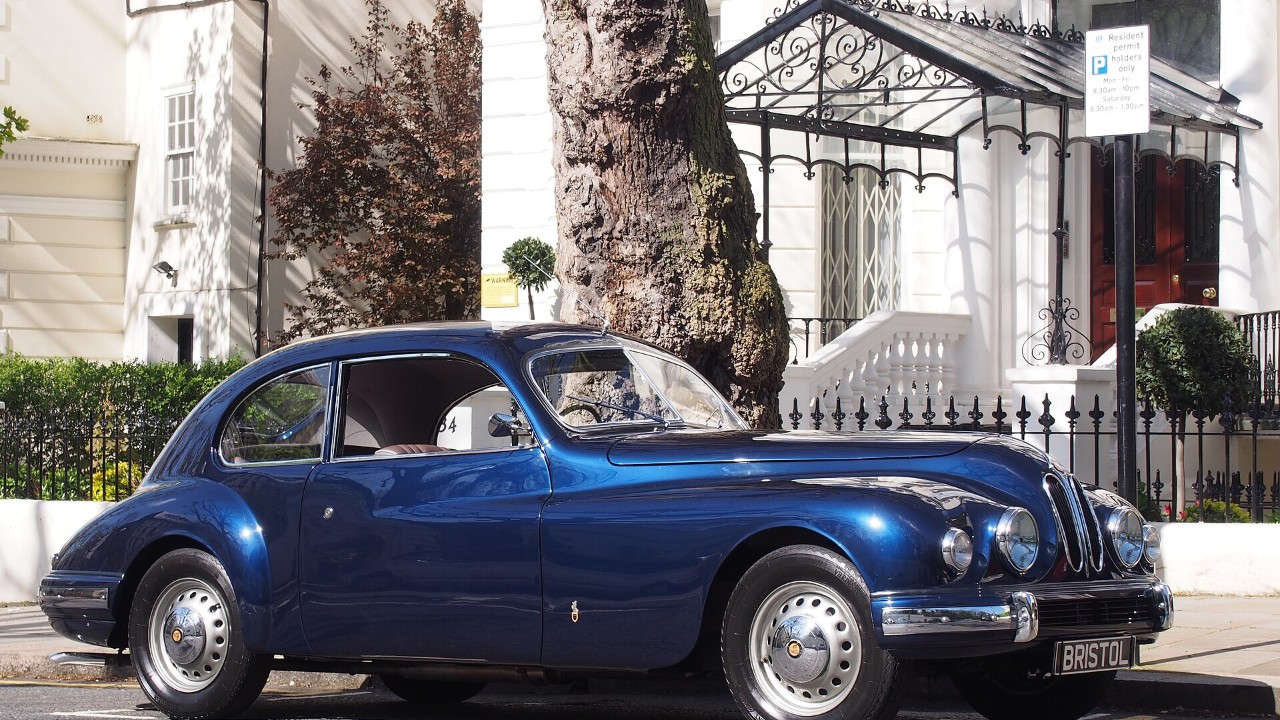
Bristol’s 401 took a very different route from the economy cars on this list. Its 2-litre six-cylinder engine came from the BMW 328’s design, with upgraded Solex carburetors lifting output to 85 bhp. The styling drew inspiration from Carrozzeria Touring in Milan. Bristol built the 401 and its sister models from 1948 to 1953.
The 401 also became Bristol’s biggest seller. The company built 611 of them, its largest run of any model. In 1952, The Motor tested a 401 saloon and recorded a top speed of 97.3 mph. However, that test car cost £3,532 including taxes, which put it far beyond the reach of most buyers.
Our take: the Bristol 401 is the grand tourer for people who value craft over flash. It is fast, smooth and discreet, which sounds a lot like today’s best luxury cars. We like that it was built in small numbers by a company that cared about details. Bristol made just 23 of the 402 convertible version. If you see a 401 at a British show, take a good look at that smooth, rounded body.
7. 1947 Austin A40 Devon
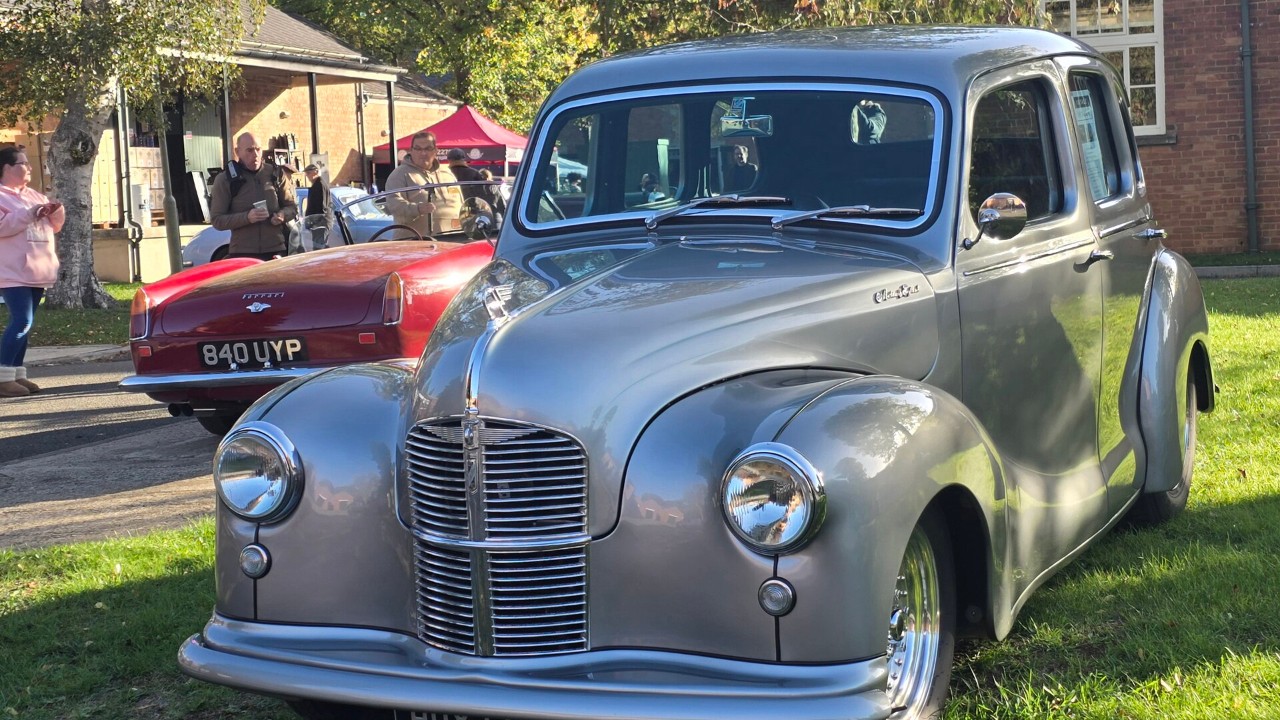
The A40 Devon was Austin’s first postwar saloon, built from 1947 to 1952. It had a 1.2-liter overhead-valve four making 40 bhp at 4,200 rpm. Up front, coil springs gave it independent suspension, while a rigid axle on leaf springs held up the rear.
Austin built more than 450,000 Devons before the A40 Somerset replaced it in 1952. The range also spread well beyond the sedan. There was a van and a pickup, plus a Countryman estate that ran until late 1956. That Countryman had six seats. Its folding rear seat could turn it into a two-seater able to carry a half-ton load.
Our take: the Devon is a reminder that sensible cars sold in huge numbers after the war. It was neither flashy nor fast. Instead, it gave families a modern overhead-valve engine and independent front suspension at a time when those were real upgrades. We think the Countryman is the one to find, because it does the job of a small SUV today. A tidy Devon at a show tells the story of postwar Britain better than a sports car can.
8. 1947 Jowett Javelin
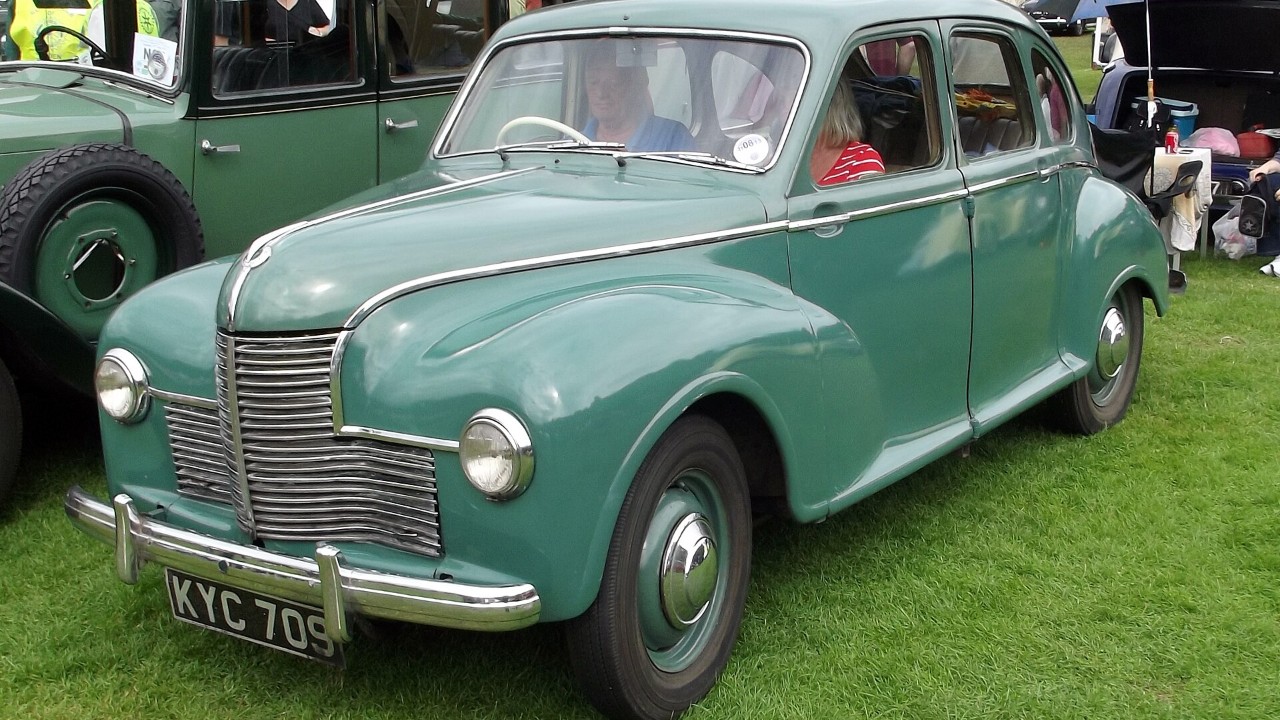
Jowett of Bradford gave Gerald Palmer the chief designer’s job on September 19, 1942. According to a Jowett history marking 70 years of the Javelin, his brief was a car with broad appeal at a cost ceiling of £500. Palmer chose a 1,486 cc flat-four with twin Zenith carburetors, mounted ahead of the front axle.
The rest of the design was just as fresh. The Javelin used unitary construction, independent front suspension and torsion bars. Because the transmission ran beneath the floor, the cabin floor stayed flat and passengers gained legroom. The car proved itself fast, too. In January 1949, a Javelin won the 1.5-litre class at the Monte Carlo Rally. Then, in June, another won the 2-litre class at the Spa 24 Hours.
Our take: a flat-four, a flat floor and aerodynamic styling add up to a car that thinks like a modern one. Sadly, Jowett went into voluntary liquidation in 1954. We’d love to see more Javelins at shows, because few British family cars of the period were this ambitious. If you buy one, find a specialist who knows the flat-four engine well.
9. 1951 Simca Aronde
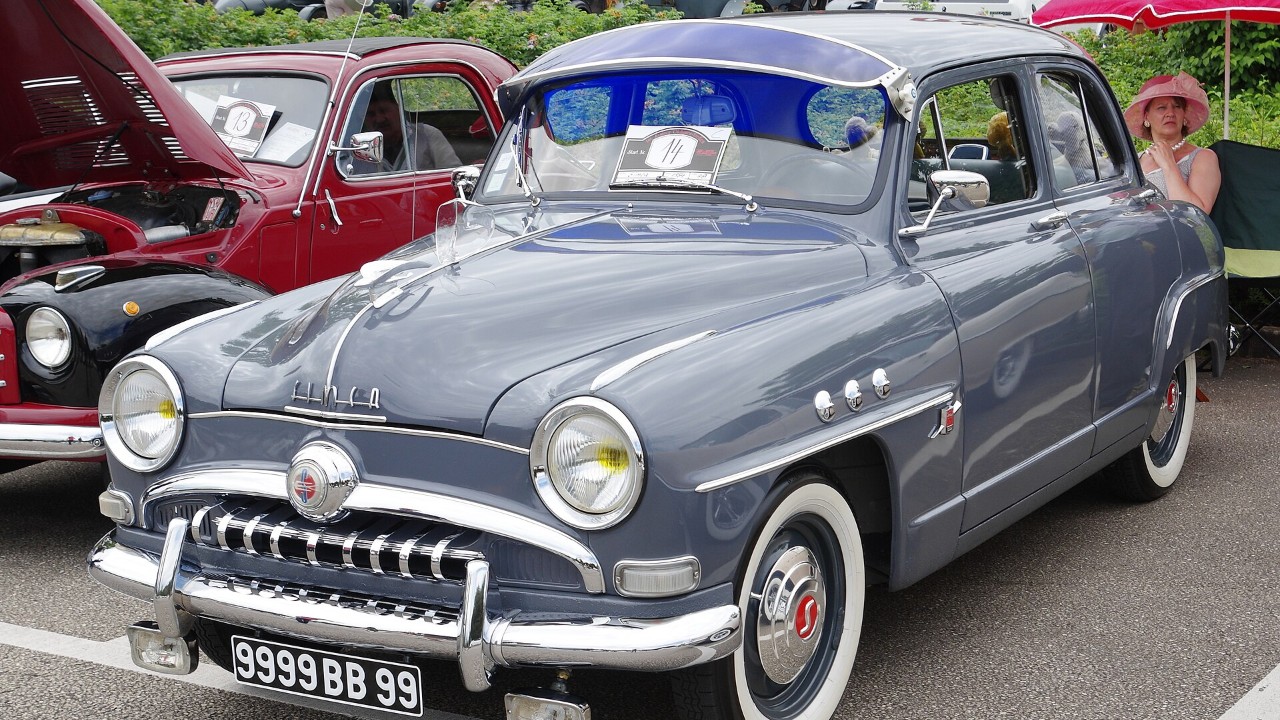
The Aronde was Simca’s first original design. Earlier Simcas borrowed Fiat designs, but the Aronde was new from the ground up and was also the company’s first car with a unibody. Its name means “swallow” in Old French, a nod to the bird in Simca’s logo at the time.
Simca proved the car’s toughness in public. In August 1953, an Aronde completed 100,000 km at the Montlhéry circuit, averaging more than 104 km/h. That run broke more than 30 records. Early cars used a 1,221 cc four rated at 44.5 bhp. Production ran from 1951 to 1964, and Simca built about 1.4 million in total.
Our take: the Aronde shows how quickly a young company could grow up after the war. It went from borrowed designs to a car that set endurance records. In our view, that kind of confidence feels very modern. For more about how the car won French buyers over, read our story on how the Simca Aronde won buyers. We’d pick an early model for its clean, simple lines. Also, an early Aronde carries the 1,221 cc engine from the record-setting years, which adds to the story.
10. 1949 Borgward Hansa 1500

Borgward showed the Hansa 1500 at the Geneva Motor Show in March 1949. Production began in Bremen on October 13 that year. It has a strong claim to being the first all-new model launched by the German car industry after the war.
The Hansa brought a three-box pontoon body, a shape that later became mainstream in Germany and across much of Europe. It also used flashing turn signals instead of the old semaphore arms. Its 1,498 cc four made 48 PS at first, rising to 52 PS in 1952. Later, Borgward added an 1,800 cc version and even a diesel.
Our take: the Hansa looks like the template for a whole decade of European sedans. That pontoon shape soon spread across the continent. We think that makes it one of the most important cars few people remember. The Isabella replaced it in 1954, and that car gets most of the attention today. For us, however, the Hansa is the more interesting one, because it came first. If you ever see one at a European show, take a close look at those flashing indicators, a small detail that every car carries today.
11. 1948 Standard Vanguard
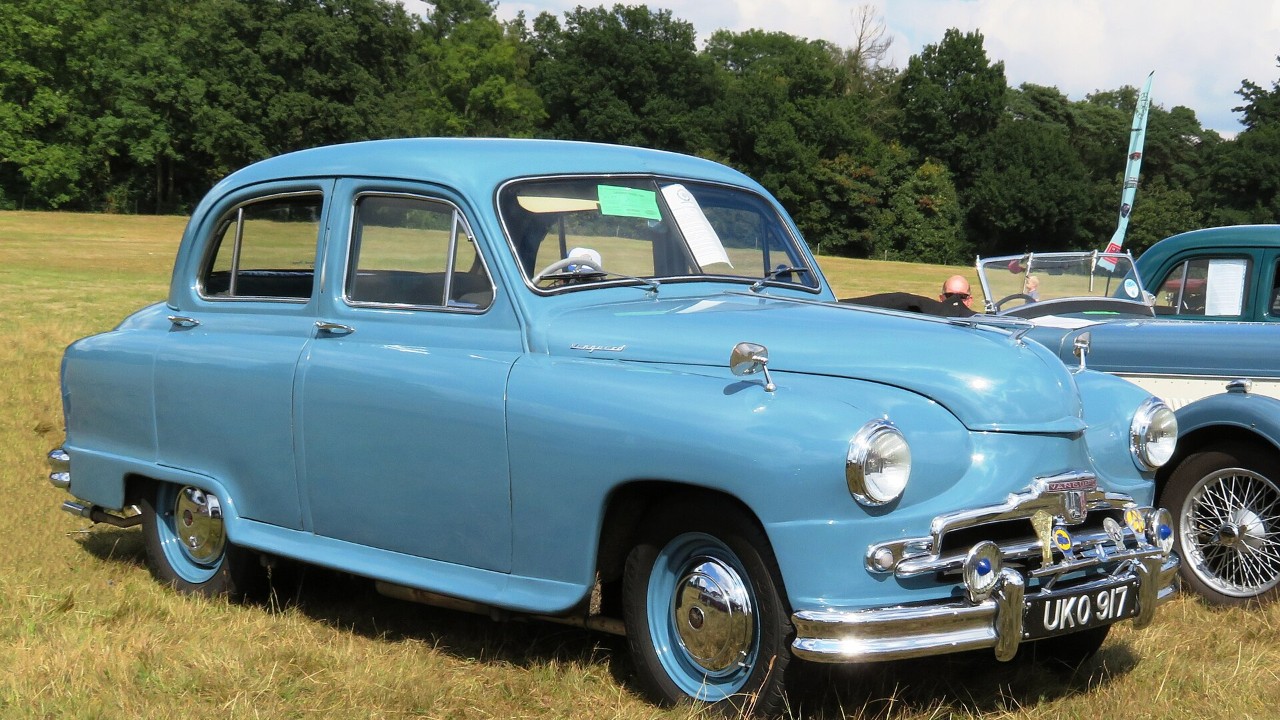
The Motor reviewed the all-new Standard Vanguard in July 1947, and full production began in May 1948. During the war, managing director Sir John Black sent chief engineer Walter Belgrove to study an American Plymouth for styling ideas. According to Lancaster Insurance’s history of the Vanguard, one early advertisement said the car was “for export only during 1948.”
That export push was no accident. To qualify for a steel quota, a British company had to export at least 75% of its output. Even so, buyers at home faced waiting lists that could last three years. Under the hood sat a 2,088 cc four that was essentially the same as the engine in the Ferguson TE20 tractor. It made 68 bhp and drove through a three-speed column shift.
Our take: the Vanguard shows a country rebuilding through exports, and we find that story fascinating. Its rounded “beetleback” body looks friendly today. Standard built 174,799 Phase I saloons. If you find one, the tractor-related engine is part of the charm. In our view, few cars capture postwar Britain’s mix of hope and hard work so well.
12. 1956 Hillman Minx Californian
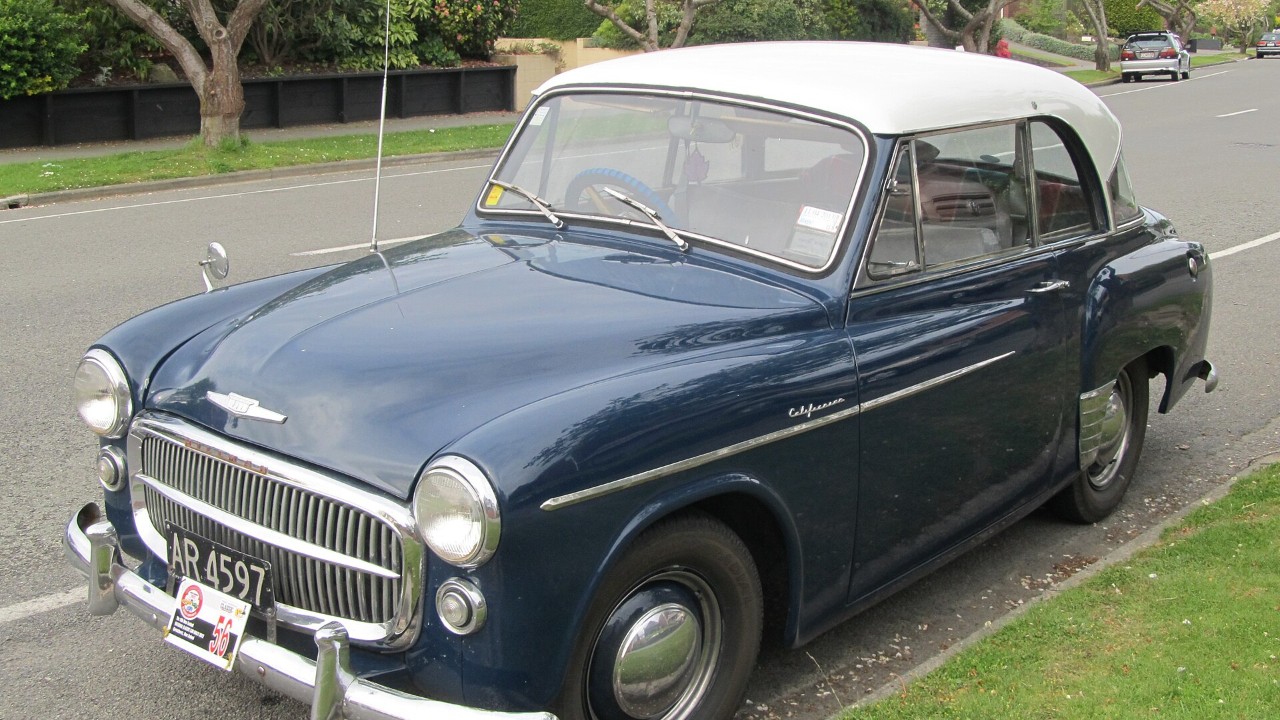
Hillman added the Californian to the Minx range in 1953, and it stayed on sale until 1956. Rootes’s in-house coachbuilder, Thrupp & Maberly, turned the Minx convertible into a pillarless hardtop coupe. The side windows lowered into the body for all-round vision. In fact, even the pillar between the side windows wound down out of sight.
The launch price was £723 12s 6d, plus £15 for a heater. Autocar called it “a good-looker in the modern style,” according to Lancaster Insurance. Meanwhile, the Simanaitis Says blog describes it as Britain’s only pillarless hardtop during its three-year run. The same post notes that the styling was allegedly modeled on the 1949 Plymouth.
Our take: the Californian brought an American idea to a small British car, and it worked. Open all the windows and the whole side of the car opens up to the breeze. That feels very relevant in a world of panoramic roofs and open-air SUVs. Two-tone paint completed the look. Few survive, so we’d stop for one at any show we visited. Meanwhile, if you find a project, check that the wind-down pillar mechanism is complete, because it defines the car.
More from Fast Lane Only