Nash built nearly 192,000 cars in 1950, the best year in its history, and that was the same season the little Nash Rambler arrived. The Kenosha, Wisconsin, company spent the chrome era trying ideas the bigger brands ignored. It sold unit-body sedans, seats that turned into beds and a compact convertible years before compacts were cool.
Not every Nash idea worked, and some of the styling split opinion even then. However, that is exactly why these cars draw a crowd now. Park a 1949 Nash next to a row of Chevrolets and Fords, and people walk straight past the familiar shapes to see what it is.
These seven are our picks for chrome-era Nash models that still stop traffic, and the verdicts are our opinion. We stuck to specific trims and body styles, from the bathtub Airflyte to the last big Ambassador. Every year, engine and figure comes from model histories, period sources and auction records.
1. 1949 Nash 600 Super Airflyte

The 1949 Airflyte looked like nothing else in a showroom. Its rounded “envelope” body sat six inches lower than the 1948 car, and critics nicknamed it the bathtub Nash. The 600 name came from Nash’s claim of 600 miles on a tank, thanks to a 20-gallon fuel tank and economy of 25 to 30 mpg. For 1949, buyers could choose Super, Super Special or Custom trim.
The shape wasn’t just fashion. According to Mac’s Motor City Garage, Nash engineers tested a full-size plaster model in a wind tunnel during the war years. The design reportedly needed much less road horsepower to hold 60 mph than a comparable Buick or Chrysler. Mac’s also lists the 600’s 172.6-cubic-inch flathead six and 112-inch wheelbase.
Our take: the Super is the version we’d want, because it is the honest, everyday Airflyte. It shows the design at its purest, without extra trim distracting from the shape. Meanwhile, the Uniscope gauge pod on the steering column makes the cabin feel like a 1949 vision of the future. In our view, few cars of the era cause more double-takes at a show. If you’re buying, make sure the trim and the Uniscope pod are complete, because a complete car saves a long parts hunt.
2. 1950 Nash Statesman Custom

For 1950, Nash renamed its junior Airflyte. The 600 became the Statesman, and the top trim was the Custom, above the entry-level Super. The body stayed largely the same. Its wheelbase sat nine inches shorter than the Ambassador’s, which kept it light for its size and earned it a reputation for good fuel economy among testers.
The Statesman also kept Nash’s best party trick. Its “Airliner Reclining” front seat came standard on two-door cars and optional on four-doors, and it could fold into a bed. Mac’s says the twin-bed setup was a $39 extra aimed at campers and sportsmen. That same year, Nash began offering GM’s Hydra-Matic automatic on its Airflytes.
Our take: a 1950 Statesman Custom is the rolling proof of Nash’s best year. It sold during the company’s record season, so it represents the brand at its most confident. We love that a family sedan could also serve as a campsite. In our view, the Custom trim is worth the hunt, since the extra brightwork suits that rounded body. Before buying, check the Uniscope wiring, because Mac’s notes that dealer mechanics disliked its tangled harness. A careful seller will know whether the gauges work.
3. 1950 Nash Rambler Custom Landau Convertible
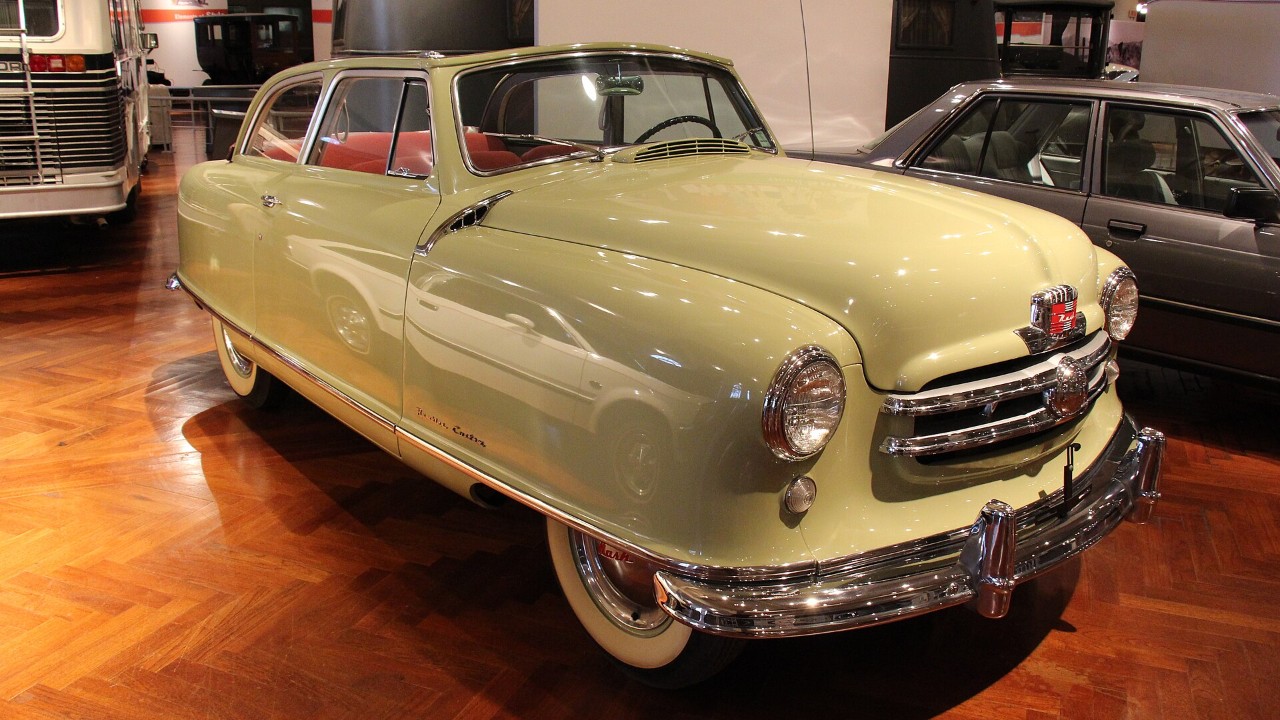
The first Nash Rambler debuted on April 13, 1950, partway through the model year. It came in one body style, a two-door convertible called the Landau. Nash also gave it a clever top. The metal door frames and rear-window frame stayed in place, so they guided the canvas roof as it folded back.
Nash priced it at $1,808 and loaded it with standard equipment. Whitewall tires, full wheel covers, an electric clock and a pushbutton AM radio all came with the car. Power came from a 172.6-cubic-inch L-head six rated at 82 hp. Nash built 9,330 of these convertibles in that short first year, and Mac’s notes that the Rambler wore the Airflyte name even though it rode on a different platform.
Our take: the Landau is one of the smartest product ideas of the 1950s. Instead of selling a stripped-down economy car, Nash sold a small car with big-car comforts. We think that’s why it charms people today. In our view, the fixed-frame top makes it more practical than a typical convertible, too. When you shop, inspect the top’s track and frames, because they are specific to this car.
4. 1953 Nash Rambler Country Club

Nash added a pillarless hardtop to the Rambler line for 1951 and called it the Country Club. It came in Custom and Super trims, alongside a two-door wagon. As a result, the compact Rambler now offered the same open-window look that Detroit’s big hardtops were selling.
For 1953, the Rambler got a restyle, with styling credited to Pinin Farina. The engines changed, too. Manual-transmission cars got a 184-cubic-inch six rated at 85 hp. Meanwhile, cars with the optional Hydra-Matic automatic got a 195.6-cubic-inch six rated at 90 hp. That meant a buyer who wanted the automatic also got the bigger engine.
Our take: the 1953 Country Club is the Rambler we’d pick for looks. The Italian-credited restyle gave it a smoother face, and the pillarless roof makes it look longer than it is. Also, the 90-hp automatic version suits relaxed cruising, which is what this car does best. In our view, it is one of the prettiest small American cars of its decade. If you’re buying, look for one with the Hydra-Matic and the bigger six, since that pairing makes the most sense on today’s roads.
5. 1952–1953 Nash Rambler Greenbrier

The Greenbrier was the dressy Rambler wagon. Nash introduced it for 1952 with upgraded trim and two-tone paint, and it priced the wagon at $2,119. That was a lot of money for a compact in those days, but the Greenbrier gave buyers a wagon that looked like a luxury car in miniature.
The Rambler wagon had already proved that a small car could haul a family. The Greenbrier simply added style to that formula. It kept the Rambler’s compact size, so it stayed easy to park. Meanwhile, its paint and trim set it apart from the plainer wagons in the lineup. By 1954, Nash had also added four-door Ramblers, including a Cross Country wagon on a 108-inch wheelbase.
Our take: we think the Greenbrier is the most charming Nash of all. It is small, colorful and practical, and those three things rarely came together in early-1950s cars. In our view, a correct two-tone Greenbrier will draw more smiles than many bigger classics. We covered more of Nash’s forward thinking in Nash models that were decades ahead of their time. When shopping, confirm the trim is original Greenbrier, since anyone can dress up a plain wagon.
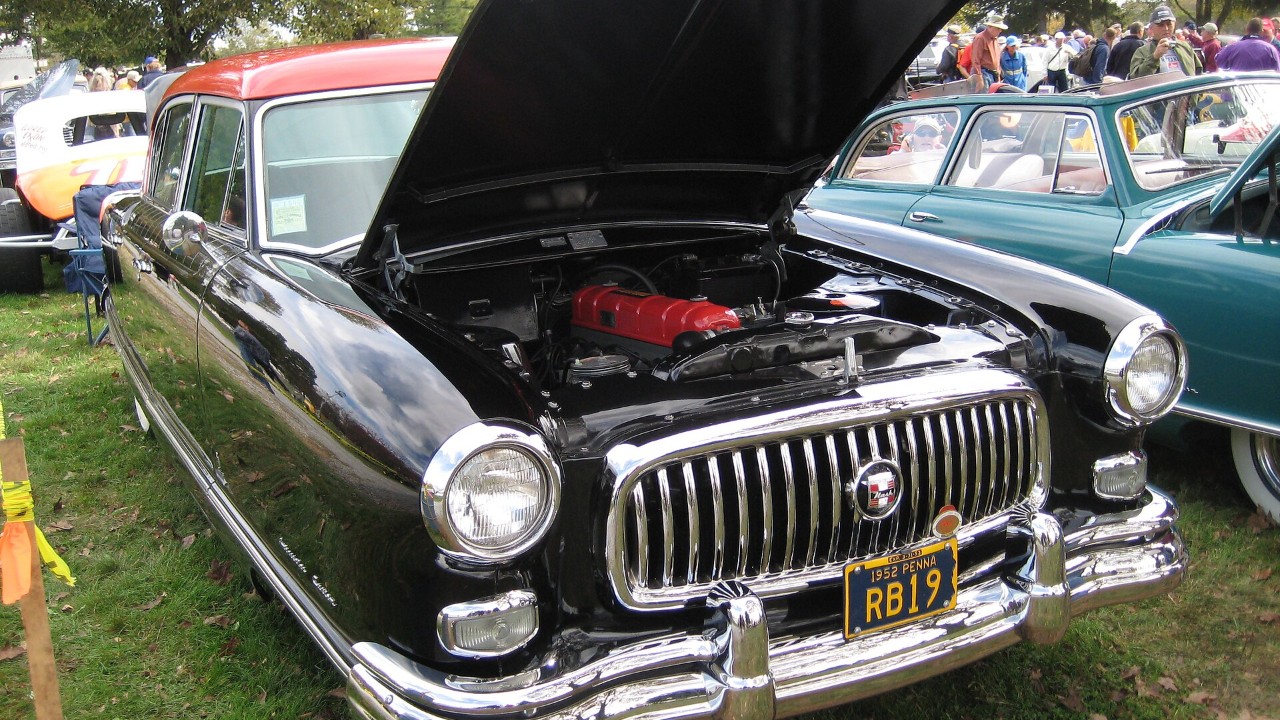
6. 1952 Nash Ambassador Country Club

Nash turned 50 in 1952, and it celebrated with the Golden Anniversary Airflyte. The new big Nash dropped the bathtub look for a crisper notchback shape. Nash publicly credited the styling to Pininfarina, though its own lead designer, Edmund E. Anderson, also shaped the car. The two-door Country Club hardtop came in Custom and Super series.
Under the hood sat the Super Jetfire six, displacing 252.6 cubic inches and rated at 120 hp. That was a clear step up from the 1949–51 Ambassador, which Mac’s lists with a 234-cubic-inch overhead-valve six. Then, for 1953, Nash offered a “Le Mans” dual-carburetor version with 140 hp. We looked at more overlooked Nashes in eight Nashes that deserved more attention.
Our take: the 1952 Country Club is the most elegant big Nash. The Pininfarina connection gave it a European flavor that rivals couldn’t match. We also like how different it looks from the bathtub Airflytes, which were only three years older. In our view, the pillarless hardtop shows the design best, especially in two-tone paint. If you find one, check the Farina badges and the hardtop’s window seals, because both are worth getting right.
7. 1957 Nash Ambassador Custom

The last Nash went out in style. For 1957, the Ambassador wore stacked “4-Beam” headlights, and Nash made them standard. According to Hagerty, 37 of the 48 states allowed four headlights by the start of that model year. Hagerty also quotes Collectible Automobile, which reported that Nash believed enforcement would be nonexistent.
Power came from AMC’s 327-cubic-inch V8. RM Sotheby’s says reliable sources put production of the Custom Country Club at fewer than 1,000 for 1957. The final Nash Ambassador left the Kenosha line in the summer of 1957. After that, the Ambassador name lived on under the Rambler and AMC brands. We traced that next chapter in our story on the 1962 Rambler Ambassador.
Our take: the 1957 Custom is a fitting farewell. It has the quad lights, a V8 and the last Nash badge, all in one car, and that is a lot of history for one driveway. In our view, that history makes it the most collectible big Nash of the decade. RM Sotheby’s sold a factory air-conditioned Custom Country Club for $27,500 at its 2015 Auburn Spring sale.
More from Fast Lane Only