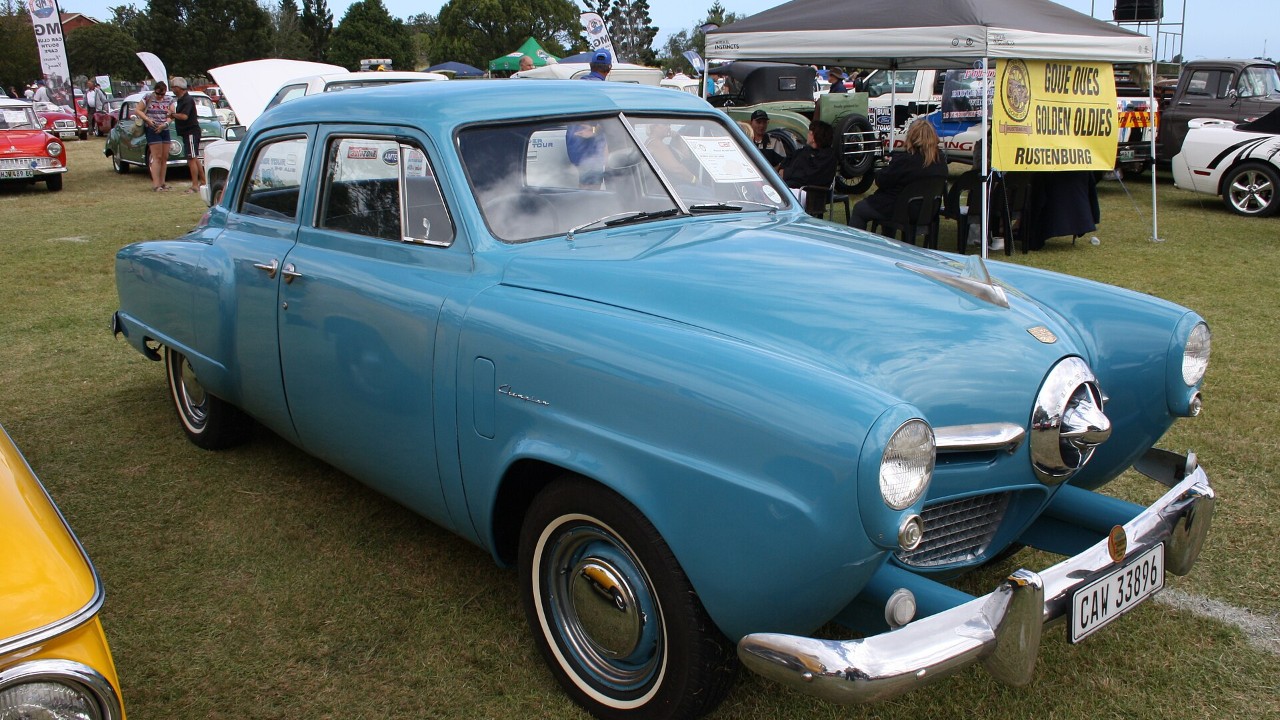
The Studebaker Champion arrived for 1939 and stayed in the lineup until 1958, so it served the South Bend company for two full decades. Its first-year success mattered enormously, because Studebaker badly needed a hit. Yet when people talk about Studebaker today, the conversation usually jumps straight to the Avanti or the Golden Hawk.
As a result, a lot of good cars and trucks sit in the shadows. Some were family sedans, while others were workhorses or clever budget specials. A few were genuinely stylish, but they never got the spotlight the famous models enjoy.
These are our picks for 10 forgotten Studebakers that we love more than the collector market seems to. That judgment is our opinion. However, every engine, price and production figure here comes from the museum records, histories and buyer guides we read for this list.
1. 1950 Studebaker Champion four-door sedan
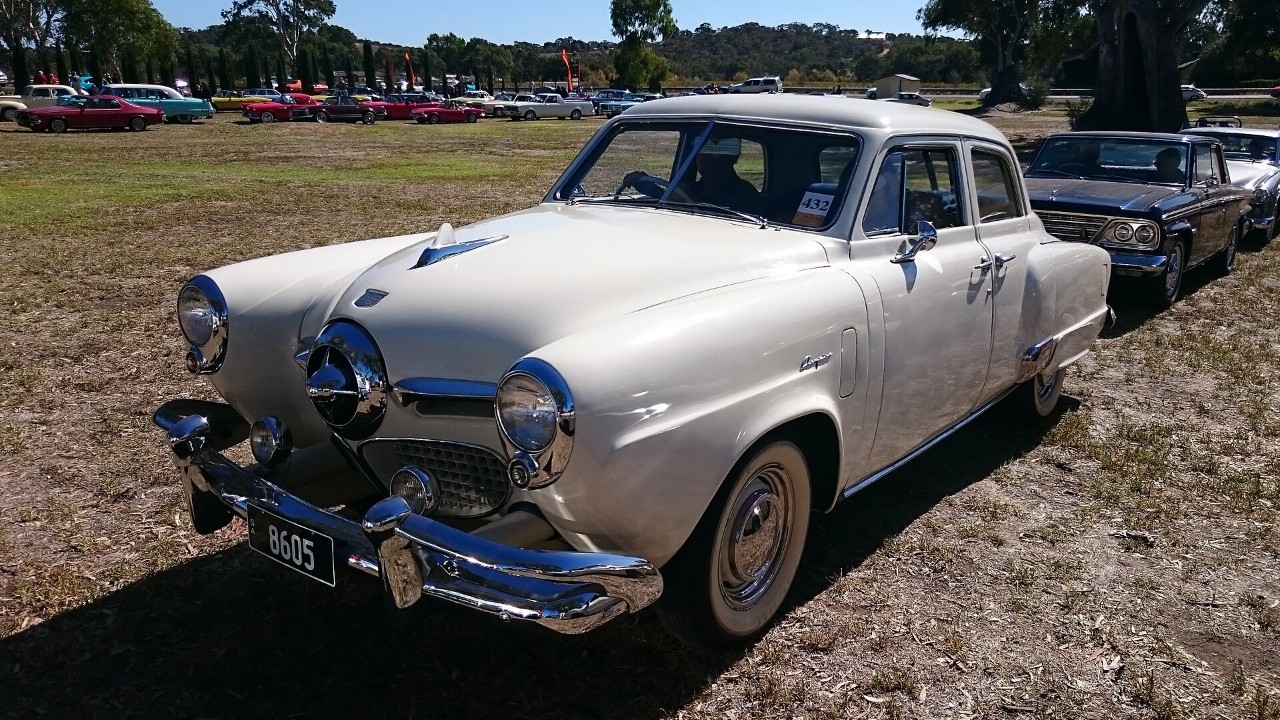
For 1950, Studebaker gave the Champion a new “spinner” grille, and the 1950 cars adopted the three-point front styling fans call the bullet nose. Output from the Champion’s six rose to 85 hp that year. Studebaker also added a Borg-Warner automatic transmission, which was a big step for a low-priced car.
The Champion had always been the volume model. In fact, it made up 65.08 percent of Studebaker’s sales for 1947. By 1950, the formula was simple. You got a light, economical six-cylinder car with styling nobody else in the low-price field could match.
Our take: because it is so unpretentious, the four-door sedan is the most honest way to experience a bullet-nose Studebaker Champion. It is not the flashiest body style, but it shows the car as everyday buyers knew it. If you want a 1950s classic that starts conversations without a six-figure budget, this is a great place to begin.
2. 1955 Studebaker President Speedster
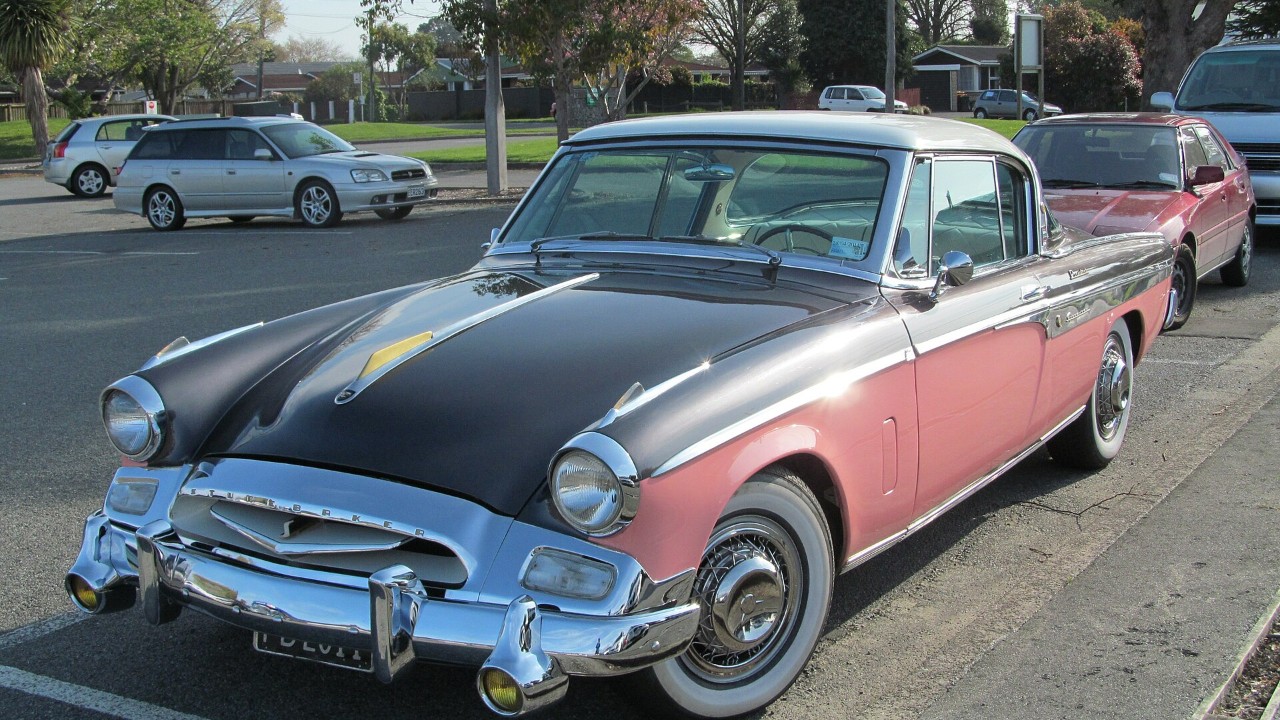
The Speedster was Studebaker’s dressed-up flagship hardtop for 1955. According to a Mac’s Motor City Garage history of the 1955 Speedster, it used a 259.8-cubic-inch Passmaster V8 with 185 horsepower. Dual exhausts, power steering and power brakes came along too. The listed price was $3,253, roughly $800 above a regular President hardtop.
Still, the details are what make it special. Seats wore diamond-pleated leather, and the dash held six Stewart-Warner gauges in a stainless panel. Buyers could also choose from eight color combinations. The most popular pairing, Hialeah Green over Sun Valley Yellow, earned the nickname “Lemon-Lime.” Studebaker built only 2,215 Speedsters before the 1955 model year ended.
In our view, the Speedster deserves the same attention as early Thunderbirds. It also paved the way for the 1956 Hawks in style and features. So whenever one appears at a show, it tends to pull people away from far more expensive cars.
3. 1959 Studebaker Lark VIII hardtop
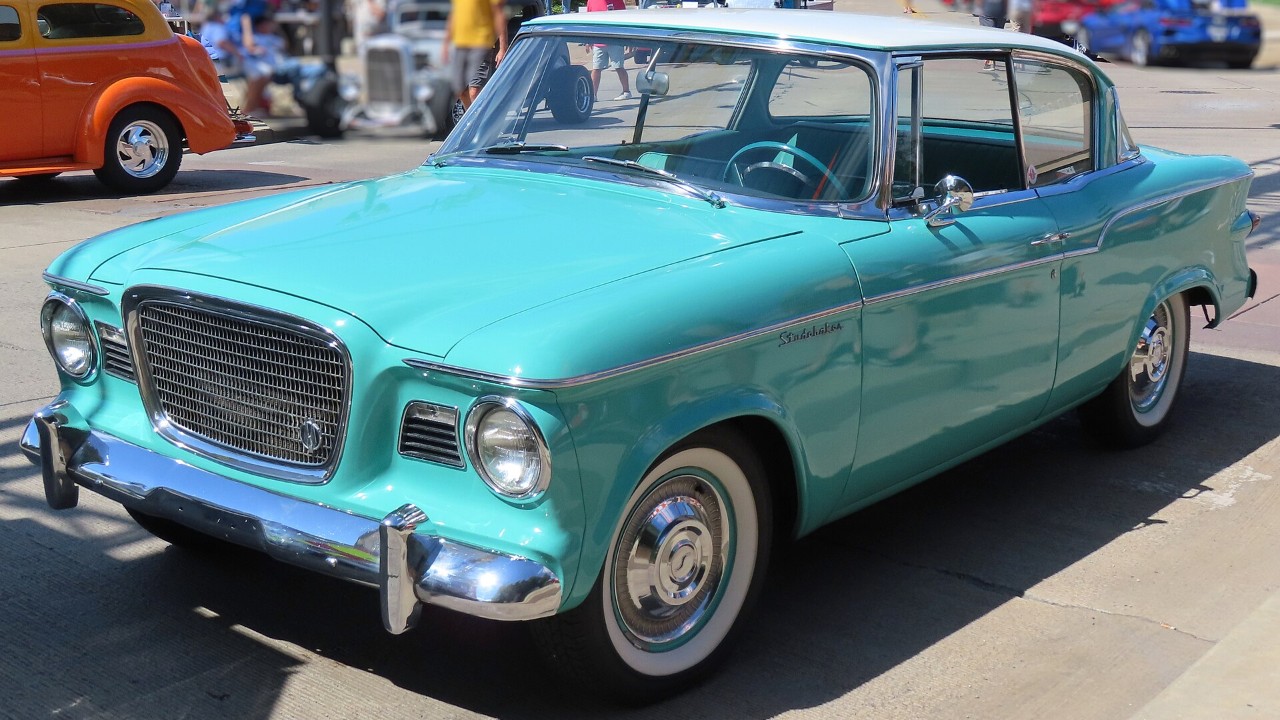
Studebaker built the Lark from its aging 1953–58 sedan and beat the Big Three to market with a compact by nearly a year. According to Mac’s Motor City Garage’s account of the 1959 Lark, engineers cut the wheelbase from 116.5 inches to 108.5. The Lark came in four body styles, including a two-door pillarless hardtop.
Meanwhile, the VIII badge meant a V8 under the hood. That 259-cubic-inch engine made 180 hp. Better yet, for an extra $48, a Carter four-barrel and dual exhausts lifted output to 195 hp at 4,500 rpm. As a result, sales jumped from about 45,000 in the 1958 model year to more than 130,000 for 1959. That turnaround bought Studebaker a few more years.
Our take: a Lark VIII hardtop is the sporty version of the car that bought Studebaker time. It is compact, quick for its day and refreshingly simple. We think it is one of the best-value classics in the whole Studebaker story, especially with the four-barrel option.
4. 1961 Studebaker Champ pickup
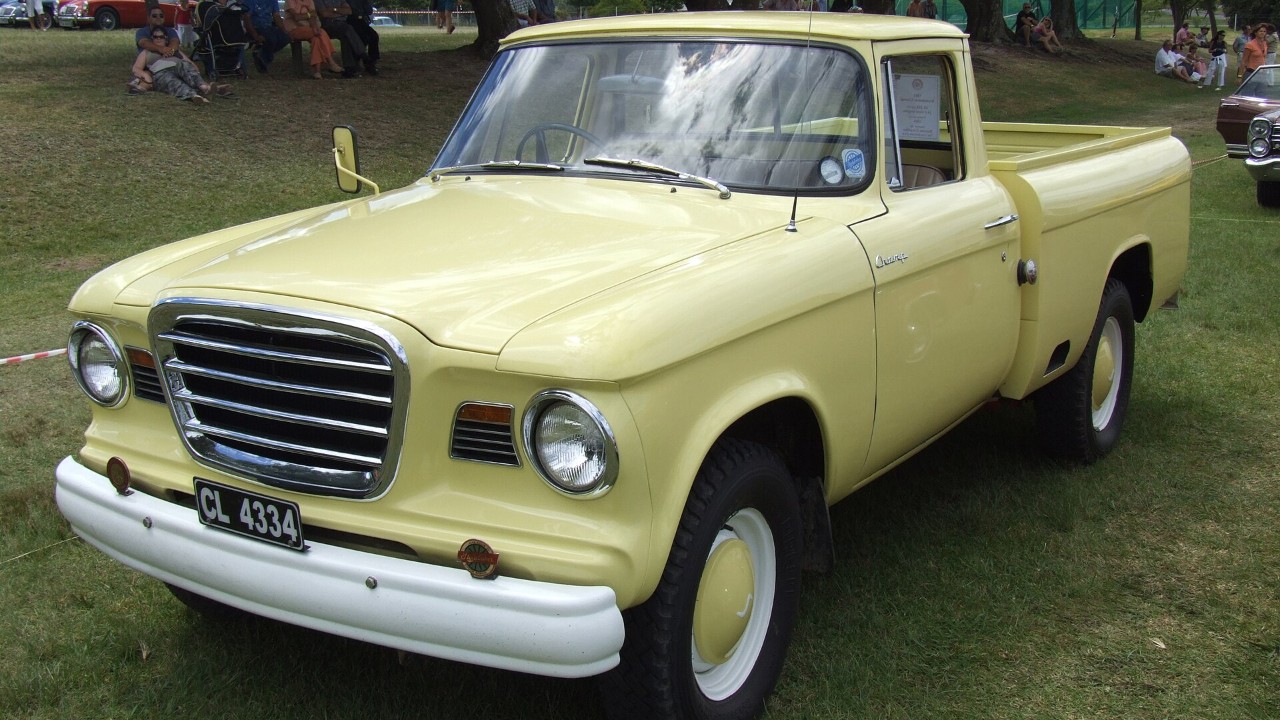
Studebaker built the Champ on a tight budget, so engineers improvised. They took a Lark four-door sedan and cut it in half behind the front doors. Then they modified the front half to fit a truck chassis and stamped only a new rear cab wall. The frame and solid axles came from the E-series trucks, which dated back to 1949.
For 1961, the 170-cubic-inch six switched to overhead valves and rose to 112 hp, so Studebaker dropped its older Big Six. That year also brought the Spaceside bed, a full-width box built on tooling Studebaker bought from Dodge. However, the Champ never offered power steering. We covered the budget story in how the Champ used the front half of a Lark sedan as its cab.
In our opinion, the Champ is the most charming improvisation Studebaker ever made. A sedan face on a pickup body looks friendly and a little odd at once. Because it is so simple, we would happily use one for weekend hauling and parts runs.
5. 1956 Studebaker Sky Hawk
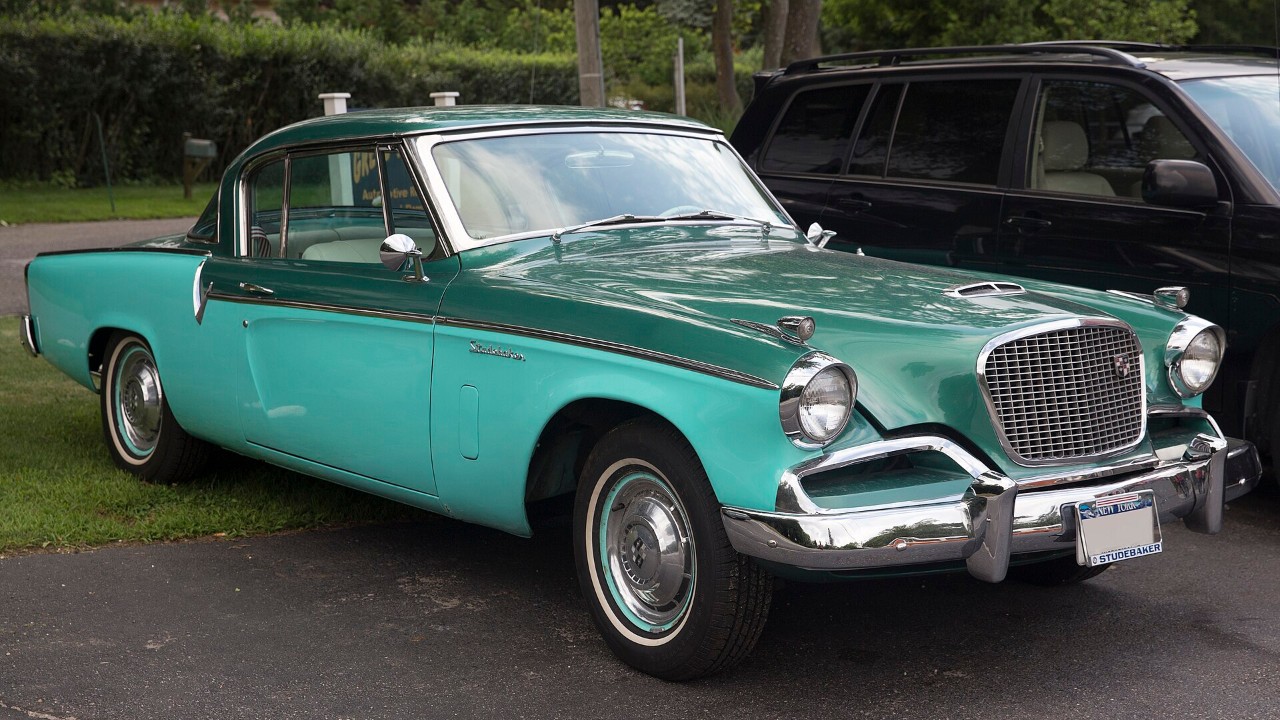
The Golden Hawk gets the glory, but its quieter sibling has a strong case. According to a Mac’s Motor City Garage profile of the 1956 Sky Hawk, the car used a new Studebaker-built 289 V8 with a Carter four-barrel. That engine made 210 hp, compared with 275 hp for the Golden Hawk’s Packard V8.
The Sky Hawk skipped the Golden Hawk’s fiberglass fins, so its lines stayed closer to Bob Bourke’s 1953 original. It also weighed less over the front wheels, because the Golden Hawk ran more than 150 pounds heavier. The Sky Hawk sold for $2,477, nearly $600 less than the Golden Hawk. In the end, it finished as the lowest-selling Hawk for 1956, with 3,050 sales.
Our take: the Sky Hawk is the Hawk for drivers who care about balance more than badges. You can read more about the family in 8 Hawks that never lost their shine. For us, though, this is the one we would actually drive, since it is lighter up front and easier to live with.
6. 1964 Studebaker Lark Cruiser sedan
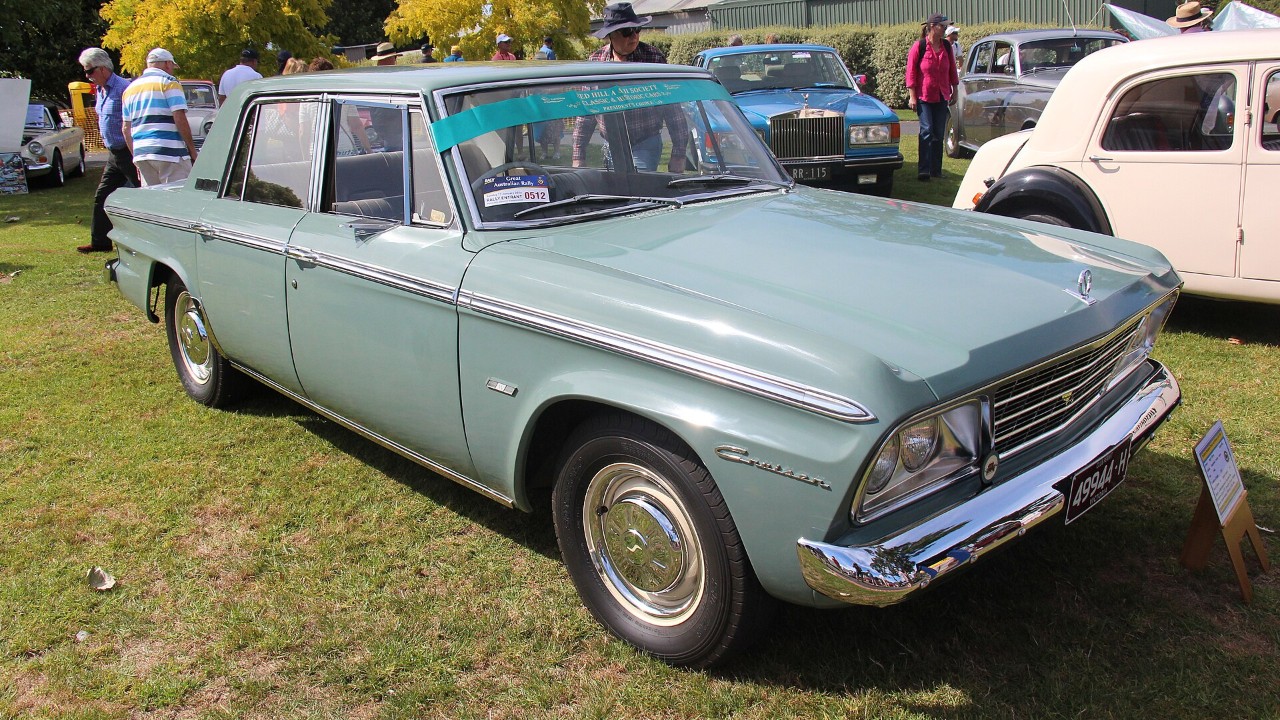
For 1964, designer Brooks Stevens restyled the Lark line with a full-width stamped aluminum grille and a flatter hood, roof and trunk. The result was the most mainstream-looking Studebaker since 1946. The Cruiser remained the top four-door, and engine choices included the Skybolt six and 259 and 289 V8s.
Timing worked against it. Studebaker announced the closure of its South Bend plant on December 9, 1963. The last South Bend car, a 1964 Daytona hardtop, rolled off the line on December 20. Production moved to Hamilton, Ontario, and a Hagerty guide to the Studebaker Lark notes that the company finally succumbed in 1966.
In our view, the 1964 Cruiser is the most handsome sedan Studebaker built in its final years. It combines clean modern lines with a comfortable cabin. However, because it came at such a turbulent time, few people remember it at all.
7. 1950 Studebaker Regal De Luxe Land Cruiser
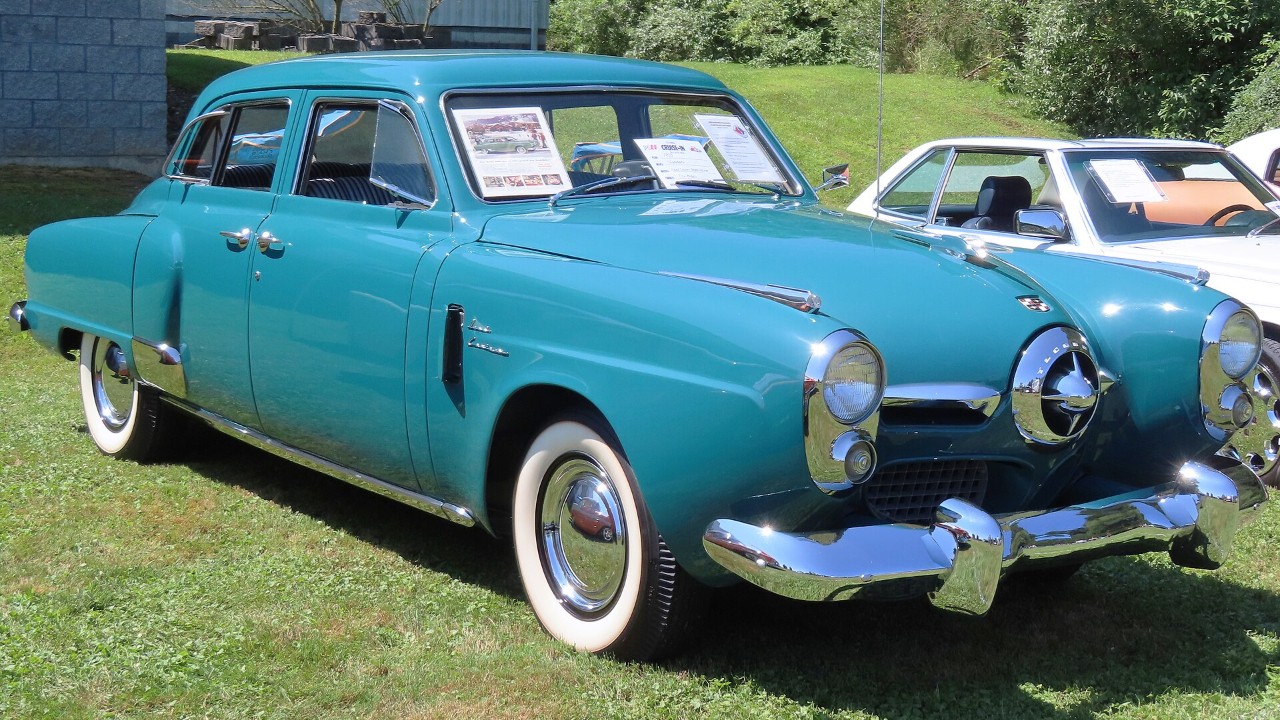
The Land Cruiser was Studebaker’s long-wheelbase sedan, and the nameplate ran from 1934 to 1954. For 1950, it took on the bullet-nose front end that defined the year. Studebaker also cut the price to $2,187, and buyers responded. Over 10,000 more Land Cruisers sold in 1950 than in 1949.
Then, for 1951, Studebaker introduced its first V8, and the Land Cruiser’s sales jumped by almost 12,000 more. That makes the 1950 car an interesting moment in time, since it sits right before a big change. It wears the full bullet-nose look, but it predates the V8 that would soon change the company’s lineup.
Our take: a 1950 Land Cruiser is the bullet-nose Studebaker in its most stately form. The longer body gives the rear passengers real room, and the trim makes it feel special. We would choose one over many better-known 1950 sedans.
8. 1949 Studebaker 2R pickup
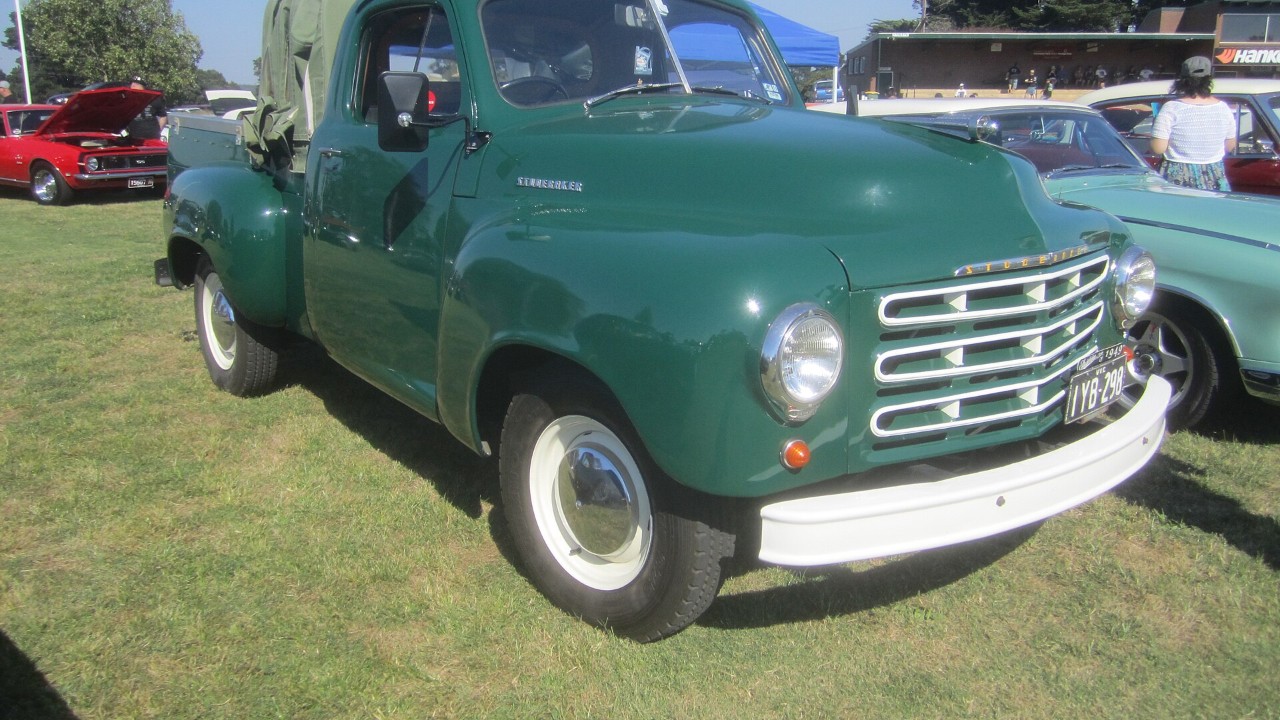
Studebaker introduced the 2R truck in April 1948 as a 1949 model. According to a Curbside Classic history of the 1949 Studebaker 2R, Robert Bourke is the credited designer, and Virgil Exner likely had a hand in it. The 2R had no running boards, and its front fenders blended into the body.
The details were clever, too, because Studebaker thought about owners. A double-wall bed kept inside dents from showing outside, and owners could service the instrument panel from under the hood. Lighter trucks used the 170-cubic-inch Champion six rated at 85 bhp. Studebaker built 63,473 of these trucks in calendar 1949 and about 273,000 2Rs overall, and its trucks reached nearly 5 percent of the market.
In our opinion, the 2R is one of the best-looking pickups of its era. Curbside Classic also argues that Studebaker never designed another all-new truck series after it. So if you want a vintage pickup nobody else at the show has, start here.
9. 1941 Studebaker Champion Custom Coupe
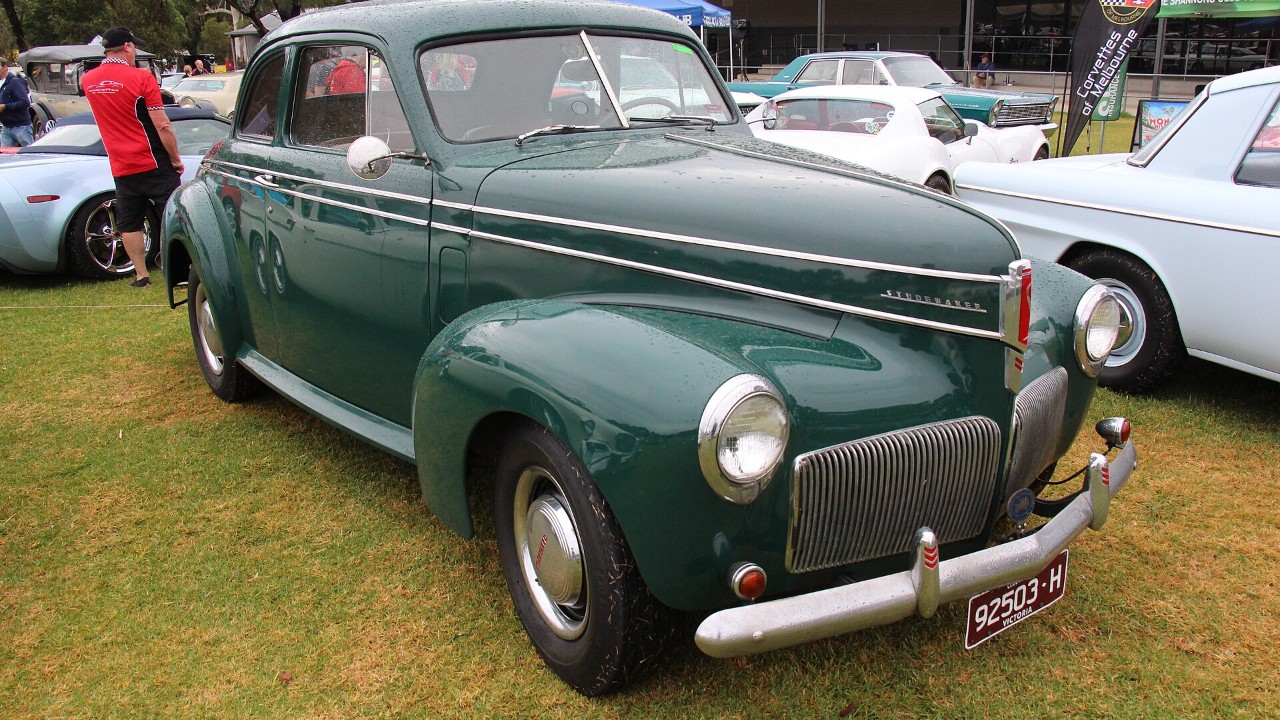
The Champion debuted for 1939 with a 164.3-cubic-inch six rated at 78 hp. By 1941, Studebaker had given the whole lineup a new, more formal body, and the Champion got a wider, lower grille. According to an OldRide history of the 1941 Champion, trims included Custom, Custom DeLuxe and DeLux-Tone.
At the same time, the Custom Coupe was the entry point. It seated three passengers, listed at $710 and had a shipping weight of 2,370 pounds. In all, Studebaker built more than 84,900 Champions for 1941. Those prices put it in direct competition with the Big Three, which was exactly the point.
Our take: the 1941 Custom Coupe shows the Champion formula at its purest. It was light, cheap and handsome, and it gave buyers a real alternative. We think it is a wonderful prewar car for anyone who wants something different from a Ford or Chevrolet, and the Studebaker Champion badge carries real history.
10. 1951 Studebaker Commander State
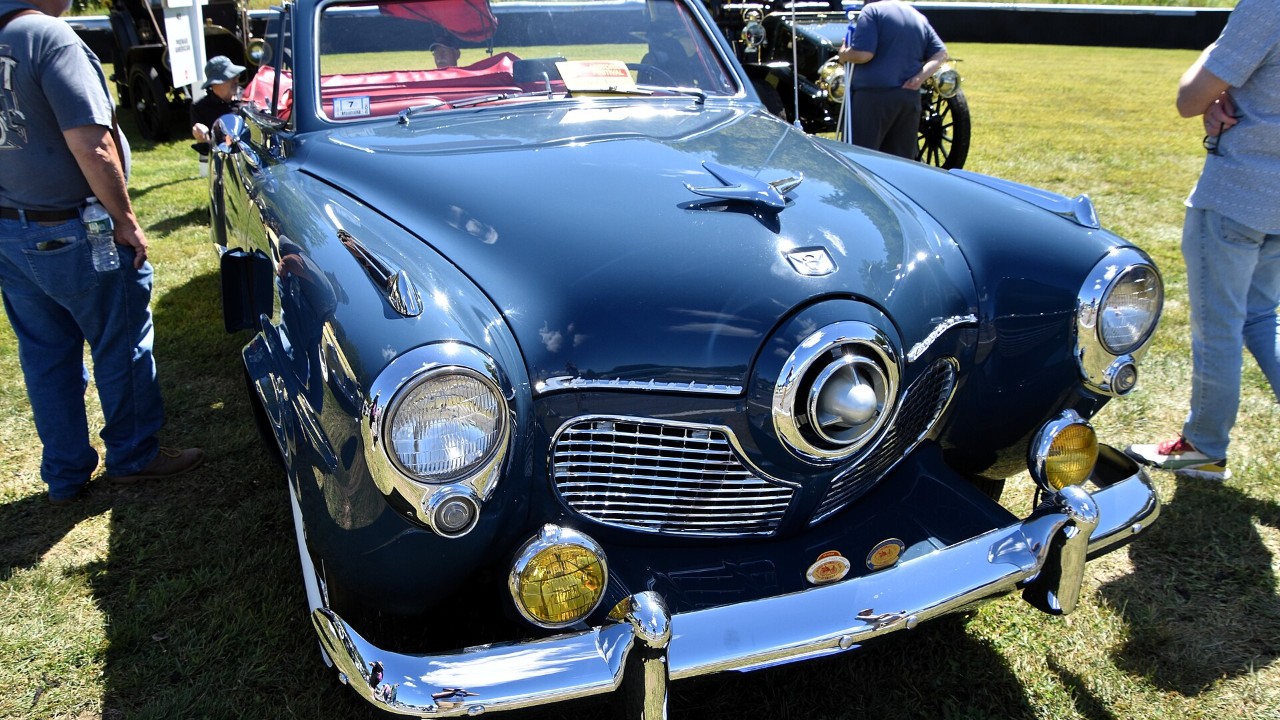
The State was a Commander trim for 1951, the year Studebaker introduced its first V8. According to Hagerty’s valuation profile of the 1951 Commander State, the new V8 used a wedge combustion chamber and displaced 232.6 cubic inches. It produced up to 120 hp, according to Hagerty.
That V8 also had a 7.0:1 compression ratio when it left the factory. Meanwhile, the bullet nose was in its final season, since the controversial look lasted only two years. We traced the engine’s full family tree in 7 Studebaker V8s from the 1951 232 to the supercharged R3.
In our view, the 1951 Commander State is the best of both bullet-nose years. You get the famous face and the new V8 in the same car. For us, that combination makes it the one to find, especially in a well-kept original example.
More from Fast Lane Only