For about two decades, the American personal-luxury coupe sold on long hoods, opera windows and soft velour. Buyers loved the formula. Ford sold 352,000 Thunderbirds in 1978 alone, and the Lincoln Mark coupes became rolling status symbols with designer names on the glass.
Then fuel prices, downsizing and front-drive platforms changed the market. As a result, the genre faded, and the survivors now look like time capsules. Sit in one today and the dash, the roofline and even the keys tell you exactly which year you are in.
These are our picks: ten personal-luxury coupes that, in our view, feel completely frozen in another era. That verdict is our opinion. The production counts, engines and prices come from maker records, auction houses, enthusiast registries and period sources.
1. 1966 Oldsmobile Toronado Deluxe
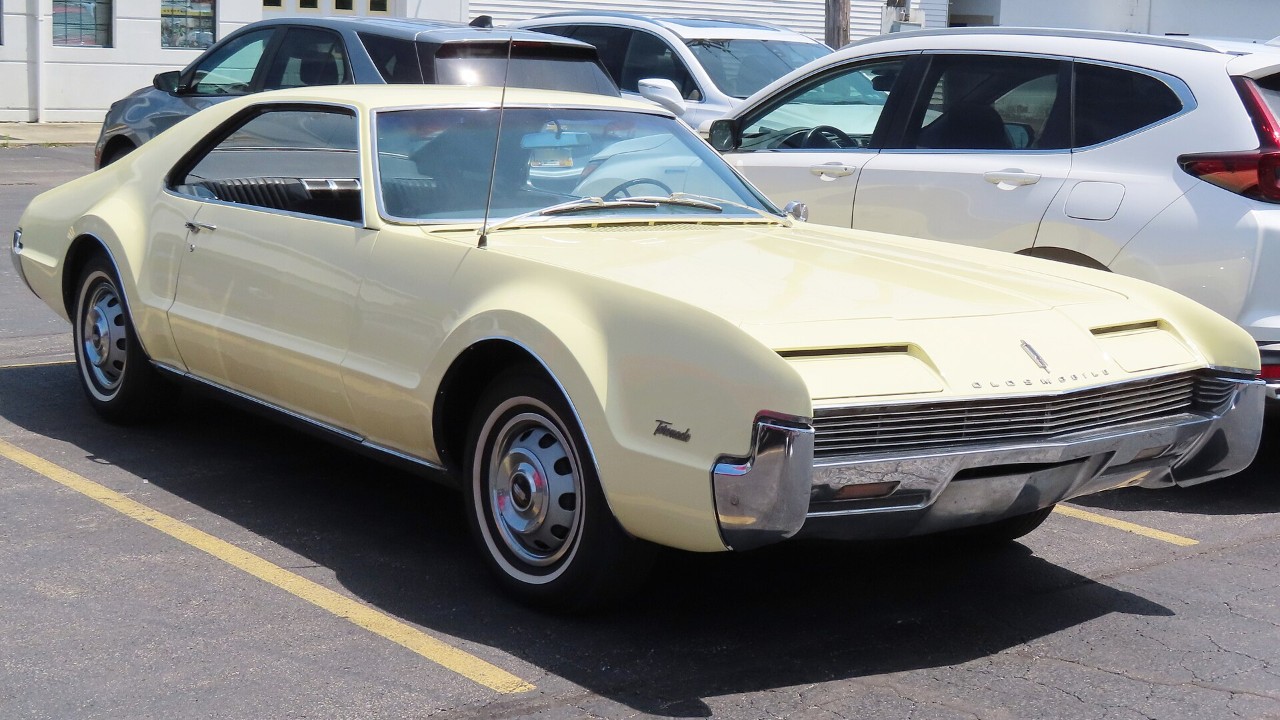
The Toronado opened the modern personal-luxury story with a twist: front-wheel drive. It was the first American-built front-drive car since the Cord 810/812 of 1937, and it won Motor Trend’s Car of the Year for 1966. Oldsmobile built 40,963 of them that first season. For the engineering details, see our explainer on how the Toronado’s chain drive worked.
Power came from a 425-cubic-inch V8 rated at 385 hp, 25 more than the top 4-4-2, according to Hagerty’s look back at a 1966 Deluxe. That car carried cruise control, tilt-telescopic steering, cornering lights and an AM-FM Wonderbar radio. Today Hagerty values a 1966 Toronado between $10,900 and $40,700.
Our take: the hidden headlights and that sheer slab of a hood belong to 1966 and nowhere else. Few cars from the decade look so confident about the future, and that optimism is what freezes it in time. If you find one, the Deluxe trim is the version we would want.
2. 1970 Pontiac Grand Prix SJ
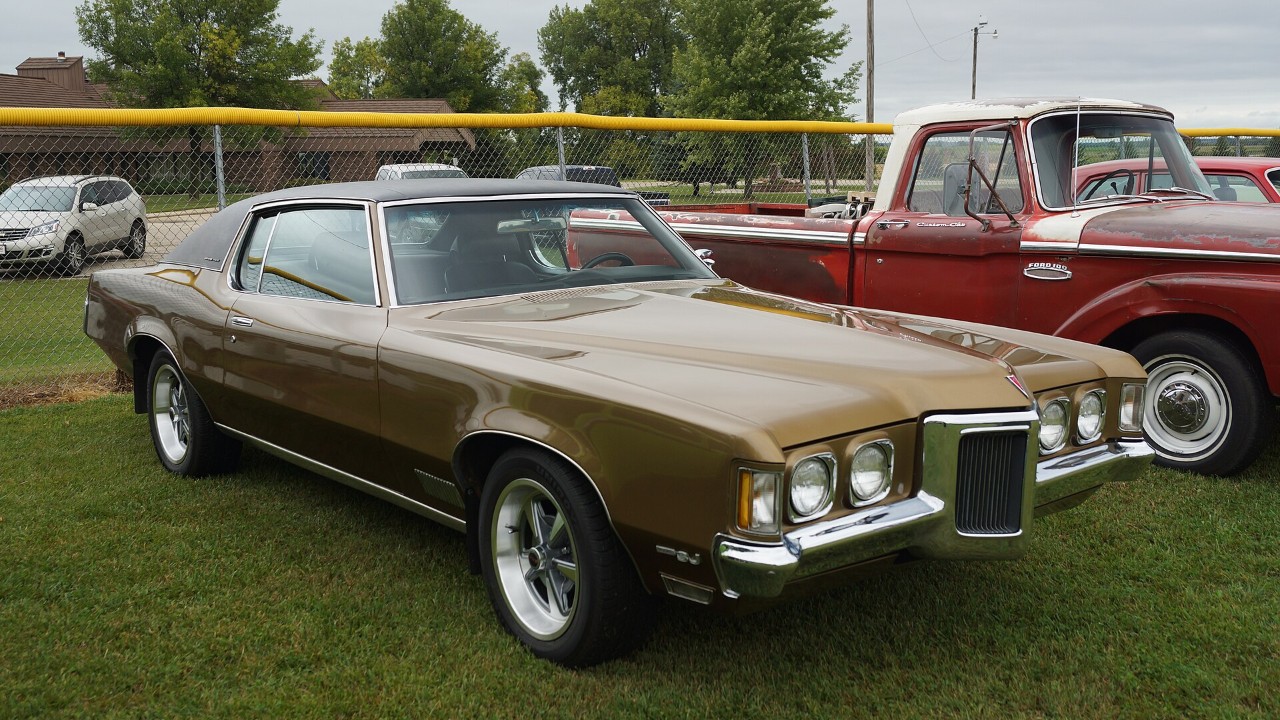
Pontiac redrew the Grand Prix for 1969 on a 118-inch wheelbase, and Old Cars Weekly says it had “the longest hood of any production car in history.” For 1970, the SJ package cost $223 to $244. According to Old Cars Weekly’s Car of the Week, it added SJ badges, a lamp group, larger tires and a new 455 four-barrel V8.
That engine made 370 hp and 500 lb-ft of torque. In other words, the SJ was a luxury coupe with muscle-car numbers. Meanwhile, the cabin wrapped around the driver with what the magazine calls an aircraft-inspired interior. The 1970 updates were small: new taillamps, recessed door handles and script on the rear roof pillar.
In our opinion, the SJ is the most 1970 car on this list. That nose-to-cabin ratio, the pointed grille and the cockpit dash could only come from the year when muscle and luxury overlapped. We also think it deserves more attention than it gets.
3. 1976 Lincoln Continental Mark IV Cartier Edition
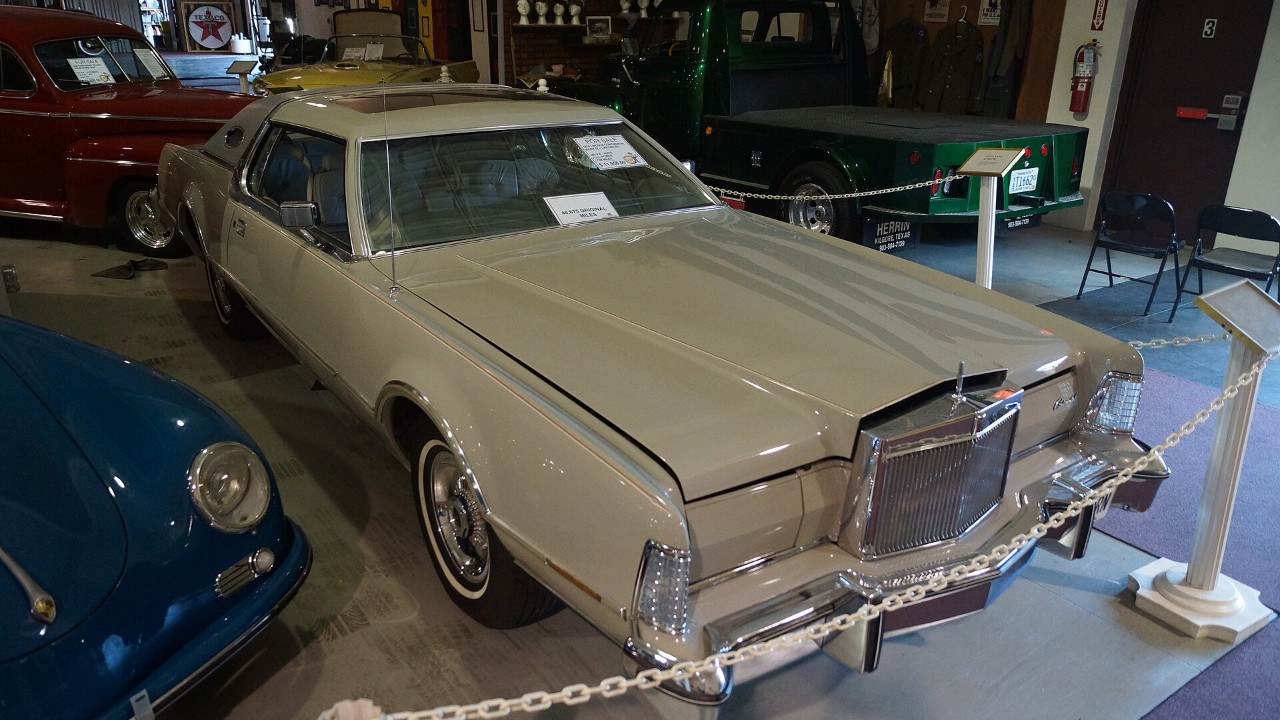
For 1976, Lincoln gave four fashion houses their own Mark IV, and Cartier’s version came in a single scheme. According to Mac’s Motor City Garage, it wore Dove Grey paint, a matching Dove Grey vinyl roof and a Dove Grey interior. The designer’s signature sat in the opera windows. Meanwhile, an engraved gold-plated emblem rode on the dash.
The Designer Series cars went on sale on October 3, 1975, alongside the rest of the Mark IV range. Underneath, all four were mechanically the same. Each used the 460-cubic-inch V8 and a three-speed automatic, and each stretched about 228 inches long. Lincoln built 56,110 Mark IVs for 1976, the final year of the generation.
Our take: a grey-on-grey coupe named after a jeweler is pure mid-1970s. The concept sounds strange now, yet that is exactly the charm. Nobody signs a car’s opera window today. So if you find one with its signed glass intact, you own a small piece of 1976.
4. 1978 Lincoln Continental Mark V Diamond Jubilee Edition
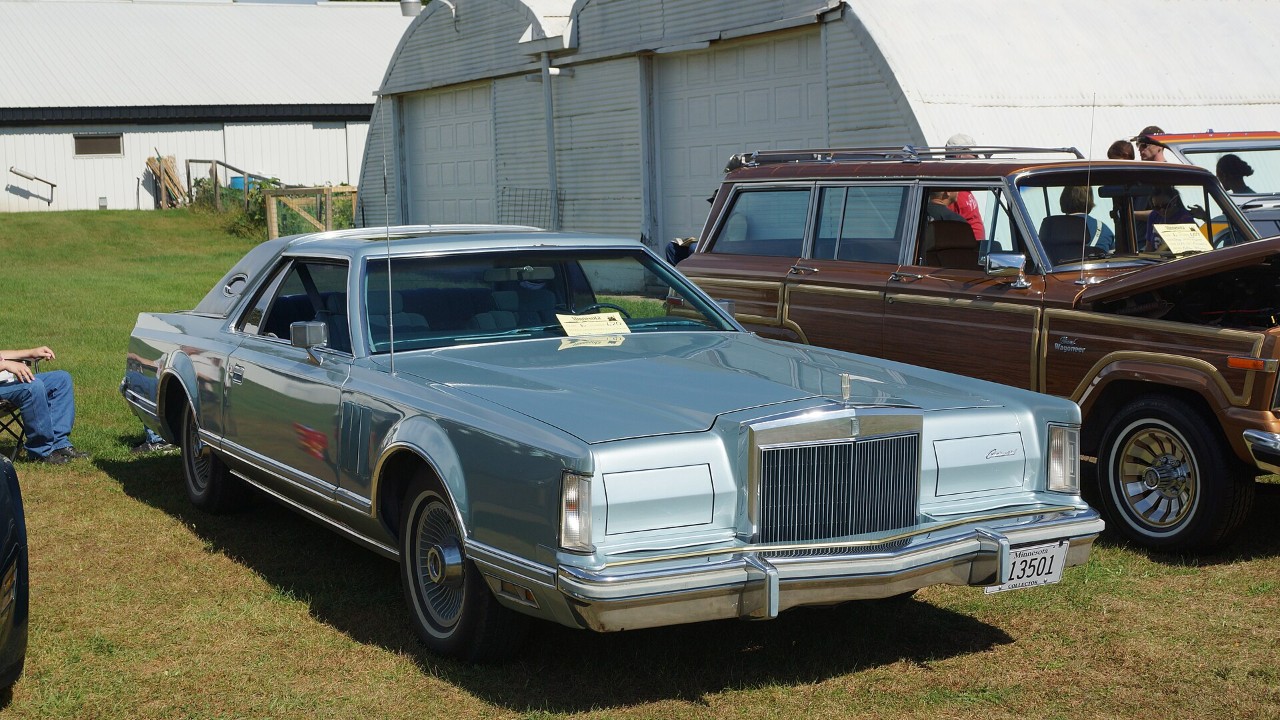
Ford turned 75 in 1978, and Lincoln marked it with the Diamond Jubilee. According to the Lincoln Mark V registry site, Ford’s official production figure is 5,159 cars. Buyers chose Jubilee Gold or Diamond Blue Metallic, each with color-keyed coach lamps.
The real show was the owner’s kit. Each car came with a leather-covered owner’s manual, a Cross pen with a Lincoln star clip and a Knirps umbrella. In the trunk, a leather tool kit from Wright Tool held flares and an engraved flashlight. Owners also got two sets of special keys with wood inserts. Early cars carried a gold-plated dash plaque with the owner’s name. Later ones switched to brushed platinum.
In our view, no car shows late-1970s excess better than this one. An umbrella and a pen as factory equipment tell you everything about the era, and we wouldn’t change a thing. Before you buy, check that the owner’s kit survived, because that is half the appeal.
5. 1979 Ford Thunderbird Heritage Edition
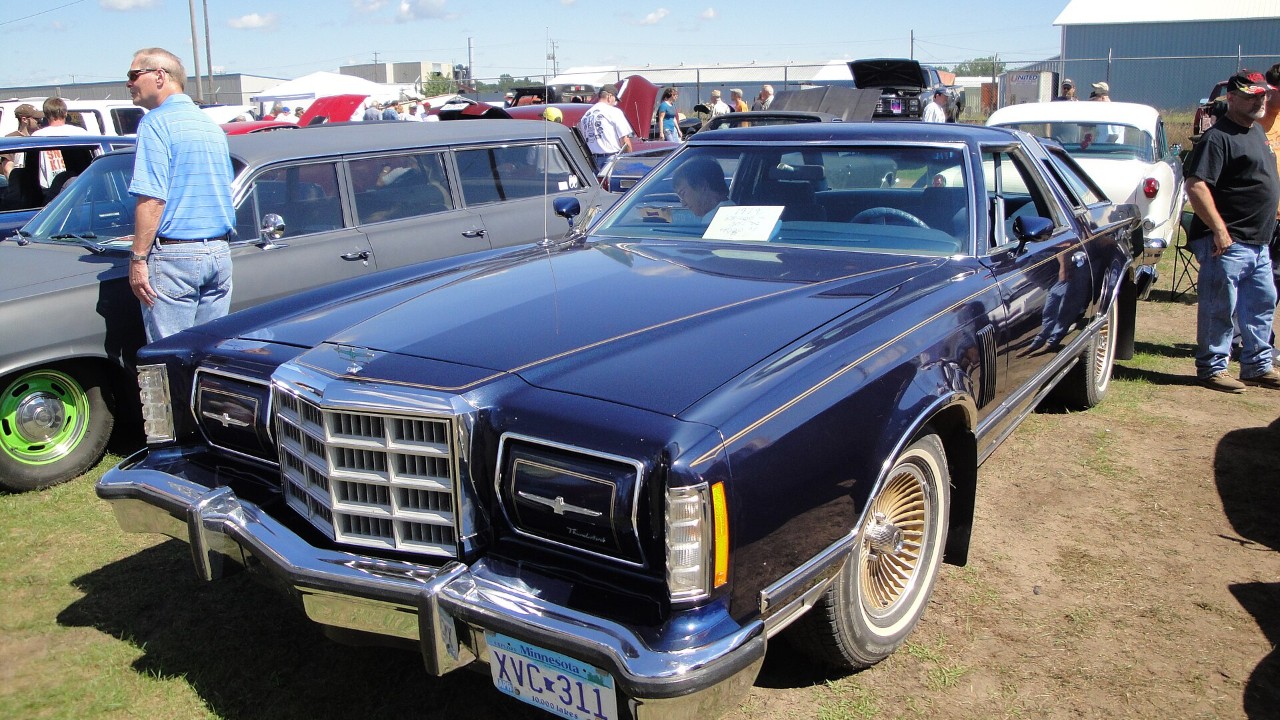
The 1977–1979 Thunderbird was a huge hit. Ford sold more than 318,000 in 1977 and 352,000 in 1978, the best single year in Thunderbird history. For 1979, the Heritage Edition replaced the 1978 Diamond Jubilee package with basically the same optional equipment. Buyers had two colors to pick from, maroon or light medium blue.
Sales slipped to 295,000 in 1979, yet that is still a number modern coupes never touch. Meanwhile, rules were changing under the hood. Ford dropped the 400-cubic-inch V8 for 1979 because of CAFE fuel-economy requirements, leaving 302 and 351 V8s. It was a sign of what was coming for the whole genre.
Our take: the Heritage sits right at the end of the old way of doing things. The wraparound “band” roof, the hidden headlamps and the plush interior feel like the final page of a long chapter. In our opinion, that last-of-its-kind feeling is the reason to look for one.
6. 1980 Chrysler Cordoba LS
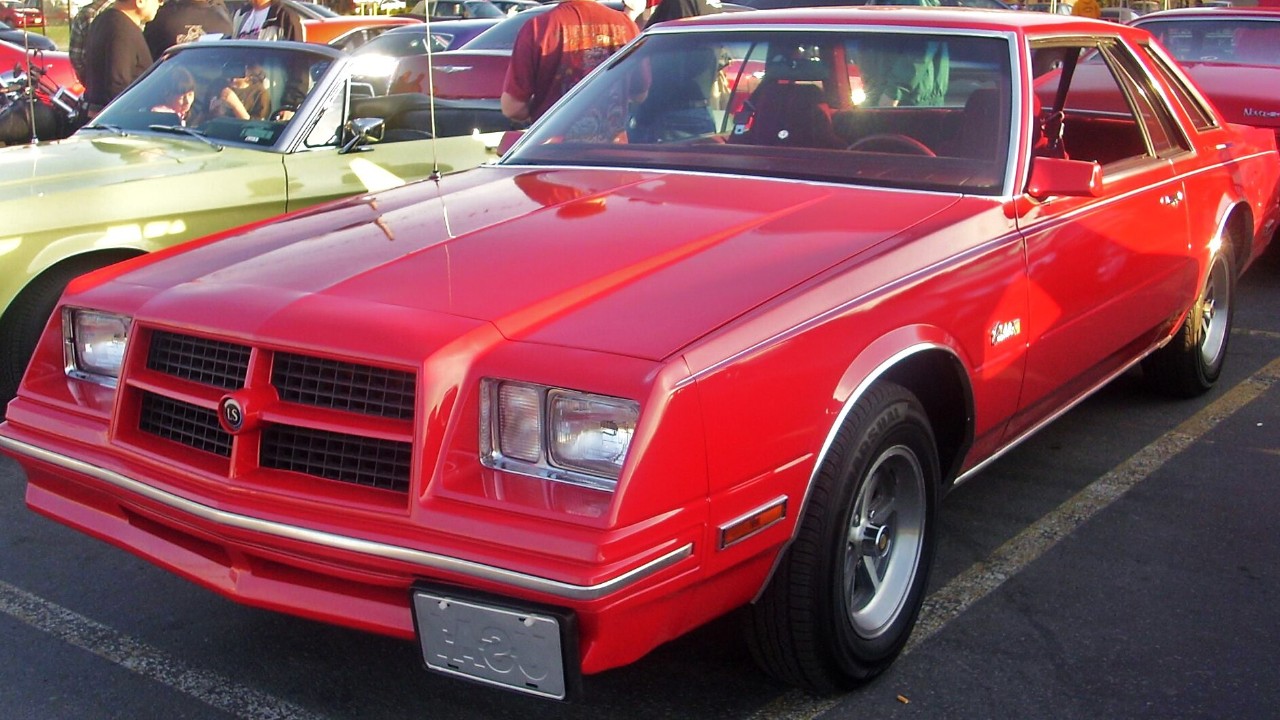
The Cordoba shrank for 1980. It moved from the B-body to the J-body platform, a design first developed for the Dodge Aspen and Plymouth Volare. Mac’s Motor City Garage notes that the wheelbase fell from 114.9 to 112.7 inches. The car also lost six inches of length and more than 400 pounds.
The LS added its own slanted front fascia and a four-segment grille. Buyers could also order velour or Corinthian Leather, the material Ricardo Montalban made famous in Chrysler ads. However, the market was moving away. Cordoba sales peaked at 183,000 in 1977, yet the 1980 total came in just short of 47,000.
In our view, the LS is the most overlooked car here. Its sharp nose tried to look modern, but the formal roof and opera windows kept it in the late 1970s. That tug-of-war is what makes it interesting. A clean LS is worth the search, in our view.
7. 1980 Lincoln Continental Mark VI
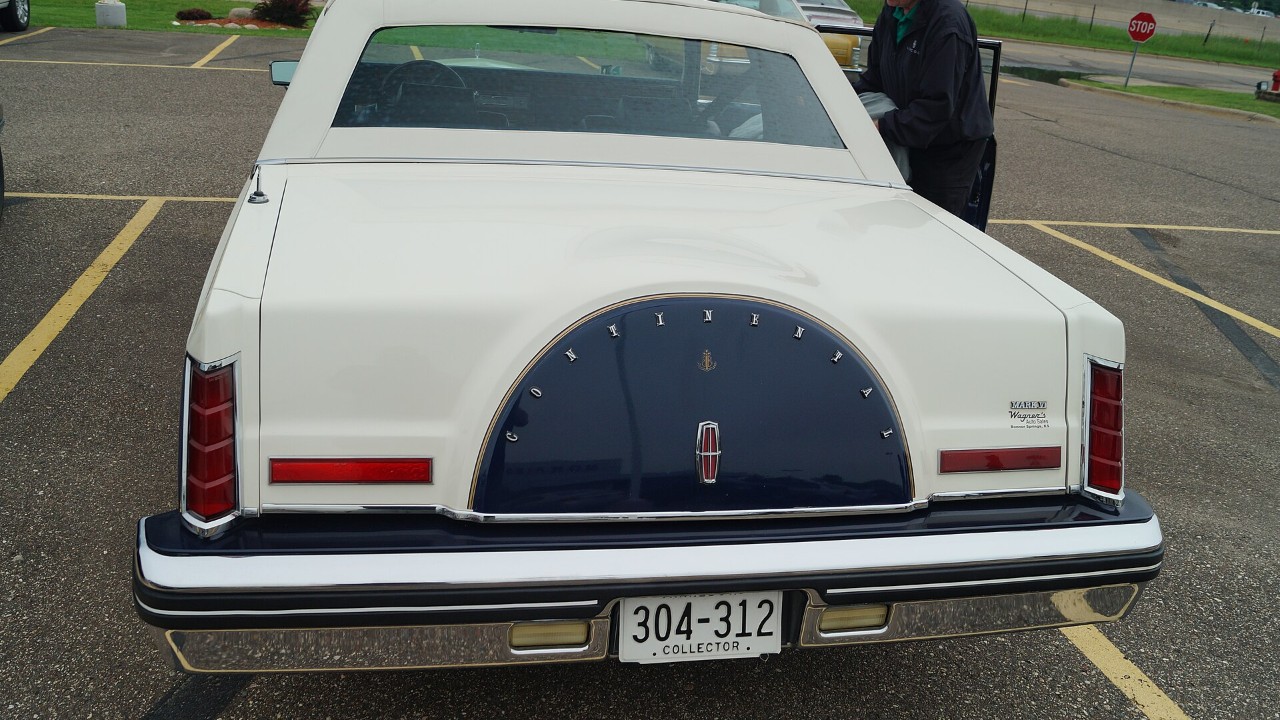
The Mark VI was the Lincoln Mark that broke the coupe-only rule. It rode on Ford’s full-size Panther platform and became the first Mark to offer a four-door sedan, alongside the two-door. Compared with the Mark V, it weighed about 800 pounds less and measured nearly 14 inches shorter.
The standard engine was a 302-cubic-inch V8 rated at 140 hp. It was also Ford’s first V8 with throttle-body fuel injection. In addition, a 351 V8 appeared for 1980 only and then left the lineup. Lincoln built 38,391 Mark VIs for 1980. Designer editions from Cartier, Pucci, Bill Blass and Givenchy carried on, each with its own colors.
Our take: the Mark VI kept the long hood, the oval opera windows and the spare-tire hump in a smaller package. As a result, it looks like a 1970s Lincoln that went on a diet, and we mean that kindly. Our pick would be a coupe, since it keeps the classic Mark shape.
8. 1983 Buick Riviera XX
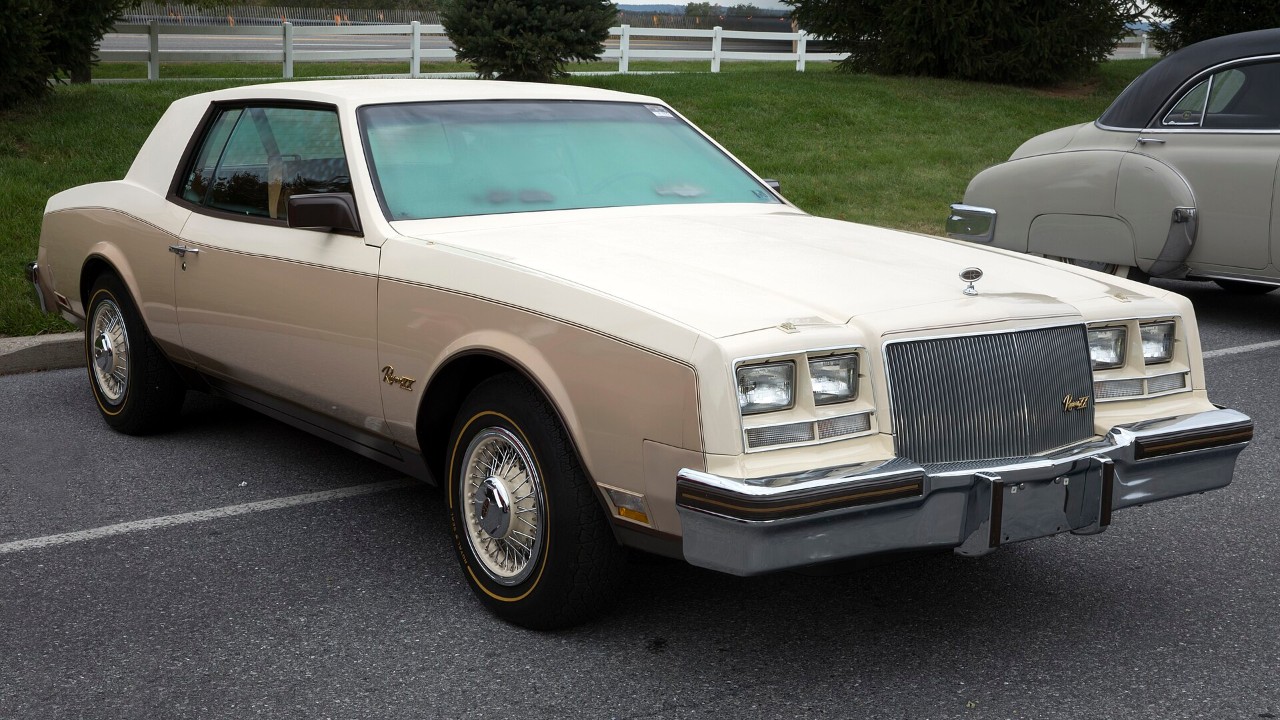
Buick built the Riviera XX to celebrate two decades of the nameplate. According to The Truth About Cars, the run was limited to 500 coupes. Each wore two-tone cream and tan paint, 24-karat gold badges and genuine wire wheels.
Inside, the XX used leather and velour seats with walnut trim. The door panels were especially rare: each one used a single walnut slab, unique to this model. Buick also gave it a slightly revised grille, a preview of the 1984 Riviera that other 1983 trims didn’t get.
In our opinion, the XX is the most early-1980s object in this group. Gold badges, wire wheels and a slab of wood on each door say everything about American luxury at that moment. Finding one of 500 is a long hunt, but the payoff is a car that looks exactly like 1983.
9. 1985 Oldsmobile Toronado Caliente
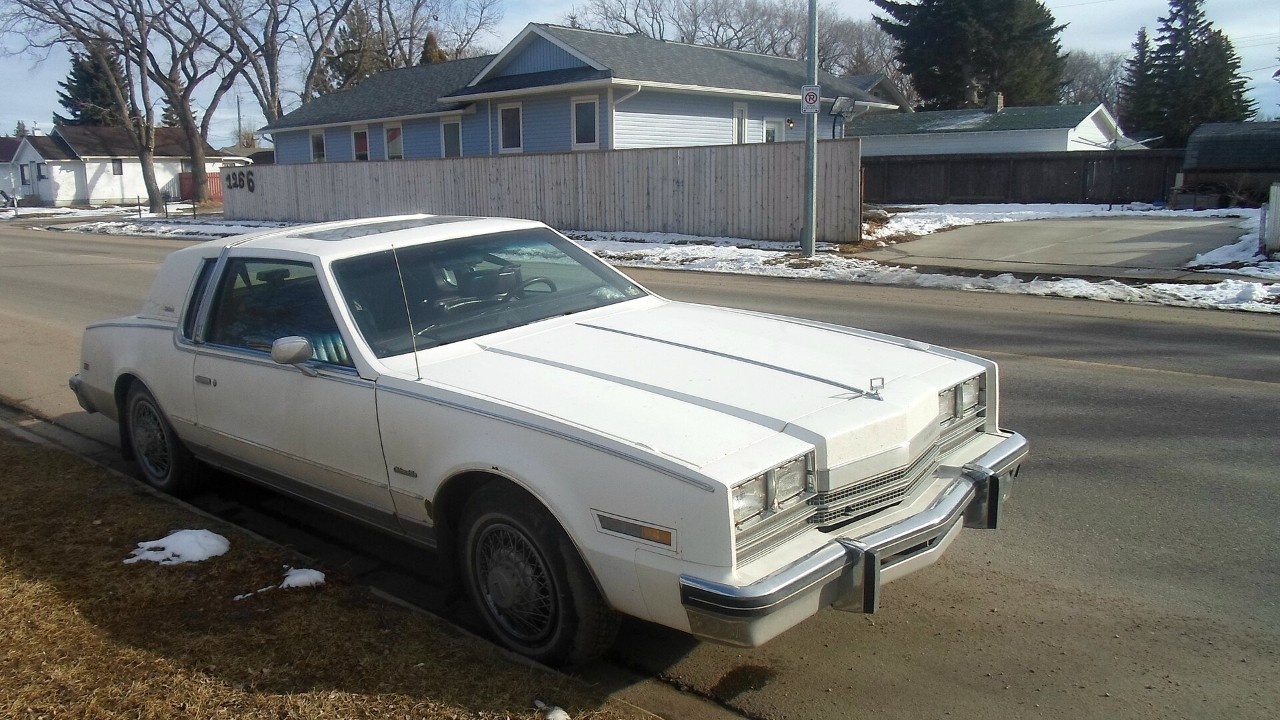
Oldsmobile offered the Caliente only in 1984 and 1985, as the top Toronado. According to Curbside Classic, the package cost $2,195 on a $16,798 base car. It brought a padded landau roof split by a stainless steel band, standard leather and an electronic instrument panel.
The car also talked. A voice information system read out warnings, which was very much a mid-1980s idea of the future. Power in the featured 1985 car came from a 5.0-liter V8 rated at 140 hp and 225 lb-ft. Oldsmobile built about 7,300 Calientes for 1985.
Our take: a digital dash and a talking car under a padded roof is a perfect snapshot of 1985. For other picks from the same family, see our list of Toronados we admire. We would buy the Caliente for the voice alone.
10. 1988 Lincoln Mark VII LSC
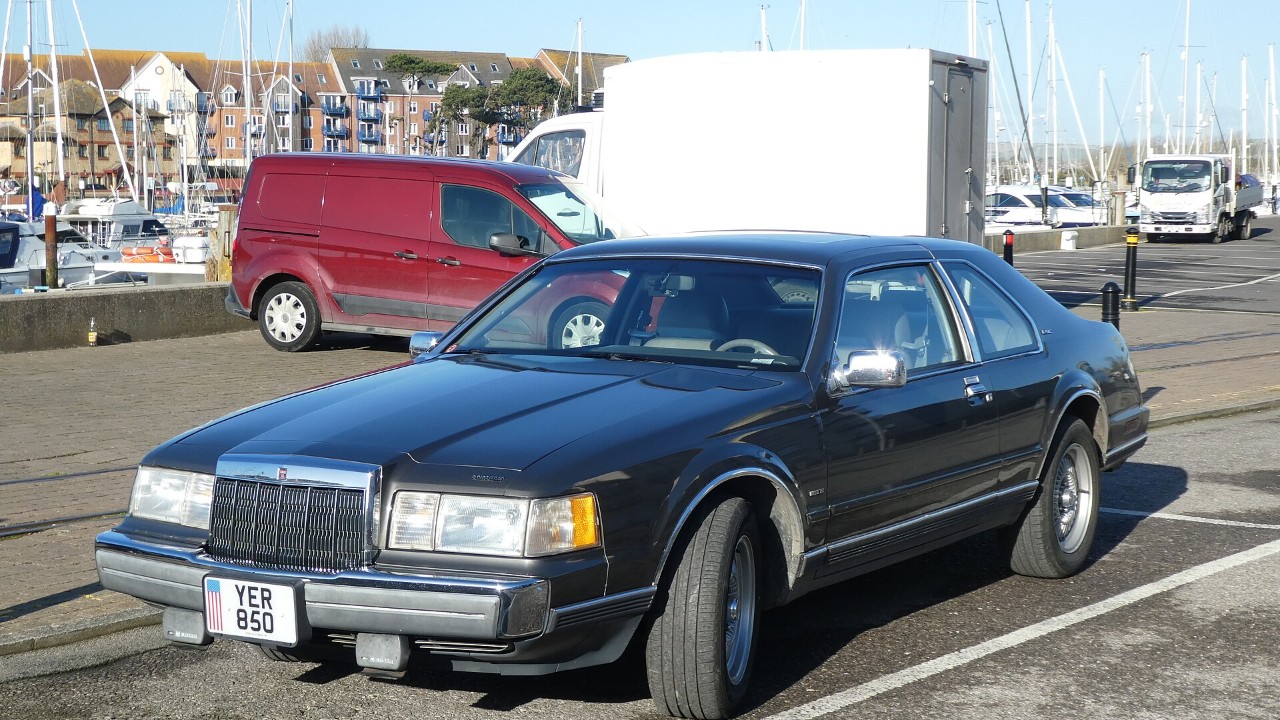
The Mark VII LSC took the formula in a sportier direction. For 1988, it made 225 hp from the 5.0 HO V8, according to the Lincolns Online model history. Anti-lock brakes had become standard on every Mark VII in 1986. For 1988, Lincoln also dropped the base model.
That year was a big one. Lincoln built 38,259 Mark VIIs for 1988, which the page calls an all-time high for the model. The LSC suited buyers who wanted a fast highway car without giving up the leather and the Lincoln badge.
In our view, the LSC is the last chapter of the personal-luxury story, and it looks it. The aero nose and the boxy cabin are pure late 1980s. For more coupes from this world, read our earlier list of personal-luxury coupes few people have seen in person. Today it also makes an easy entry point into the genre for a first-time owner.
More from Fast Lane Only