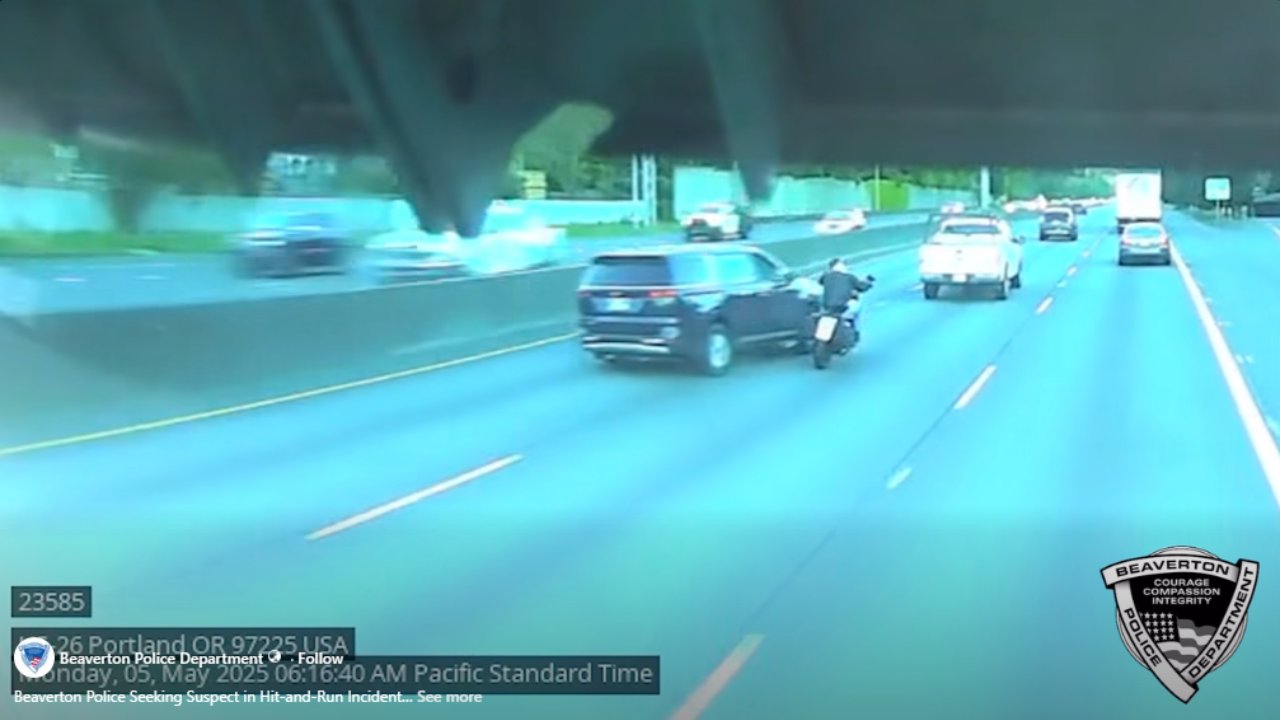
On the Pacific Motorway near Helensvale, a motorcyclist’s morning commute turned into a terrifying lesson in how quickly one driver’s rage can weaponise a vehicle. Dash cam vision captured an SUV repeatedly edging across lane markings, then ramming the rider and sending the bike sliding across the freeway. You can see the entire sequence unfold in seconds, yet the fallout for every driver who shares that road will last much longer.
If you ride or drive on that stretch, the footage is more than just viral content, it is a blunt reminder of how exposed you are when someone decides the rules no longer apply to them. The SUV’s lane tactics, the eventual impact, and the public reaction that followed all point to the same conclusion: you cannot control the temperament of the person beside you, but you can control how you respond, how you record, and how you demand accountability.
How the Pacific Motorway confrontation unfolded
The incident that has gripped drivers began with an SUV and a motorcycle travelling side by side on the Pacific Motorway, with traffic moving at freeway speed and little margin for error. In the dash cam clip, you watch the SUV drift toward the rider, then pull back, only to repeat the move again, a pattern that turns a routine lane change into a calculated squeeze. The sequence escalates until the SUV finally makes contact, knocking the motorcyclist off balance and sending the bike skidding across the asphalt, a moment that has since been replayed thousands of times in Dec footage.
What you see in that clip is not a split-second misjudgment, it is a series of deliberate lane movements that build toward impact. Another version of the same event, shared as a short reel, shows the SUV continuing to swerve at the rider before finally forcing the motorcycle off the freeway entirely, reinforcing how sustained the behaviour was rather than a single lapse. In that edit, the focus is squarely on the repeated lateral moves and the final shove that sends the rider off the sealed surface, a pattern that has been widely described as extreme road aggression in An SUV.
The X‑Trail, the Pacific Hwy and the fine that followed
For investigators, the make and location were never in doubt, because the dash cam clip is tagged with a clear description of an X‑Trail driver colliding with a motorcycle on the Pacific Hwy at Helensvale. That detail matters to you as a road user, because it anchors the event to a specific corridor you might drive every week, and it underlines that this was not a remote back road but a major commuter artery. The description of the X‑Trail, the motorcycle and the Pacific Hwy at Helensvale has been circulated widely through Description footage, making it impossible to dismiss as anonymous hearsay.
Once the clip spread, police confirmed that the SUV driver had been fined, a decision that has sparked its own debate about whether financial penalties are enough when a vehicle is used in this way. In social media threads dissecting the vision, you see pointed questions about whether the driver should have faced charges for dangerous driving, assault or wilful damage, with some commenters explicitly asking if being “only fined” sends the wrong message to anyone tempted to copy those tactics. That frustration is captured in a long chain of reactions that reference the SUV’s conduct, the impact on the motorcycle and the sense that the motorcyclist was not at fault, all of which you can see in the Fined discussion.
Why dash cams and witnesses now shape road justice
If you drive with a camera mounted on your windscreen, this case validates why you invested in it. The entire confrontation, from the first swerve to the final impact, is preserved in a way that leaves little room for competing versions of events, which is exactly why so many people are now fitting their vehicles with dash cams. In the online conversation around this crash, one thread explicitly notes that many vehicles are already fitted with these devices, and that people often forget how easily their behaviour can be replayed later, a point that surfaces repeatedly in the Fraser Thornton exchange.
For you as a rider or driver, that shift has two consequences. First, it gives you a powerful tool to protect yourself if you are targeted, because clear video can support your account and help authorities decide whether someone like this SUV driver should face more than a fine. Second, it should change how you think about your own reactions, because your worst moment behind the wheel can now be clipped, shared and scrutinised by strangers who will not care what your day was like before you merged. The same thread that mentions Fraser Thornton also includes Sarah Macdonald and Paul Fillery discussing how the SUV could have prevented the crash simply by obeying the road rules, a reminder that your best defence is often the most boring one: stay predictable, stay legal and let the camera do the talking if someone else loses control.
Road rage patterns that stretch far beyond Helensvale
As confronting as the Pacific Motorway clip is, it is not an isolated pattern. In Clark County, a separate case on Highway 26 shows a minivan running a motorcyclist off the road in what authorities described as apparent extreme road rage, with the rider again left to absorb the full force of a much heavier vehicle. When you watch that Highway 26 vision, the parallels with the X‑Trail on the Pacific Hwy are hard to ignore, from the aggressive lane positioning to the way the larger vehicle uses its mass to bully the rider, a pattern documented in the Clark County report.
For you, the takeaway is that this is not about one bad driver in Helensvale, it is about a broader culture in which some motorists treat motorcyclists as obstacles rather than equal road users. The Pacific Motorway case, captured in multiple clips and widely shared, shows an SUV using its lane position to intimidate and then strike a rider, while the Highway 26 case shows a minivan doing something chillingly similar on the other side of the world. When you put those incidents side by side, the pattern is clear enough that you cannot dismiss it as coincidence, and it should inform how you scan your mirrors, how you leave escape space and how quickly you disengage when someone behind you starts to close the gap too aggressively.
What you can control when someone else loses it
You cannot legislate another driver’s temper from behind your own steering wheel, but you can decide how you respond when you see the early signs of a situation like the one on the Pacific Motorway. The dash cam clip that shows An SUV repeatedly swerving at the rider before forcing the motorcycle off the freeway is a textbook example of why you should never “stand your ground” in a lane when a larger vehicle starts to crowd you. If you are on a bike, your priority is to create space, even if that means backing off or changing lanes to get out of the conflict zone, a lesson that jumps out when you replay the An SUV sequence.
More from Fast Lane Only