The 1963 Vauxhall VX 4/90 never shouted about its abilities. It was a quietly sharpened version of a family saloon, tuned just enough to satisfy drivers who liked to make progress without attracting attention. That restraint, in its styling and in the way it delivered performance, is exactly what gives the car its appeal more than sixty years later.
Instead of chasing outright speed or glamour, the VX 4/90 refined the ordinary Victor into something discreetly capable. It offered a little more power, better brakes and a more involving driving position, yet kept the sensible proportions and practicality that defined early 1960s Vauxhall models.
The Victor that learned to behave like a sports saloon
The starting point for the VX 4/90 was the FB-generation Victor, a mid-size saloon that sat at the heart of the early 1960s Vauxhall Victor range. Designed as a straightforward family car, the Victor had clean, American-influenced lines and enough space for four or five people, and it was built in large numbers for domestic buyers and export markets. The car formed part of a broader General Motors strategy to offer compact, affordable models in Britain and beyond, and it gave Vauxhall a solid base from which to create something a little more focused.
Product planners saw an opportunity for a slightly more athletic version of this family saloon. The VX four-ninety, often written as VX 4/90, was announced as a performance oriented version of the FB Victor, and it arrived with subtle but meaningful changes to engine, chassis and trim. Where the standard Victor concentrated on value and practicality, the VX 4/90 aimed to add a layer of driver appeal without losing the everyday usefulness that made the underlying car successful.
The engineering changes were not radical in isolation, yet together they shifted the character of the car. Factory records and period technical summaries describe a higher compression engine and revised breathing that lifted output, while the chassis gained firmer suspension settings and improved braking hardware. Rather than chasing headline acceleration figures, the focus was on stronger mid-range response and more confidence at typical British cruising speeds.
That incremental approach matched the tastes of many buyers at the time. Drivers who had grown up with side-valve saloons and gentle acceleration suddenly found themselves able to cover ground more briskly, yet without the cost or extravagance of a full sports car. The VX 4/90 sat neatly in that gap between the sensible Victor and the more overtly sporting machinery from other makers.
Subtle upgrades, not a full makeover
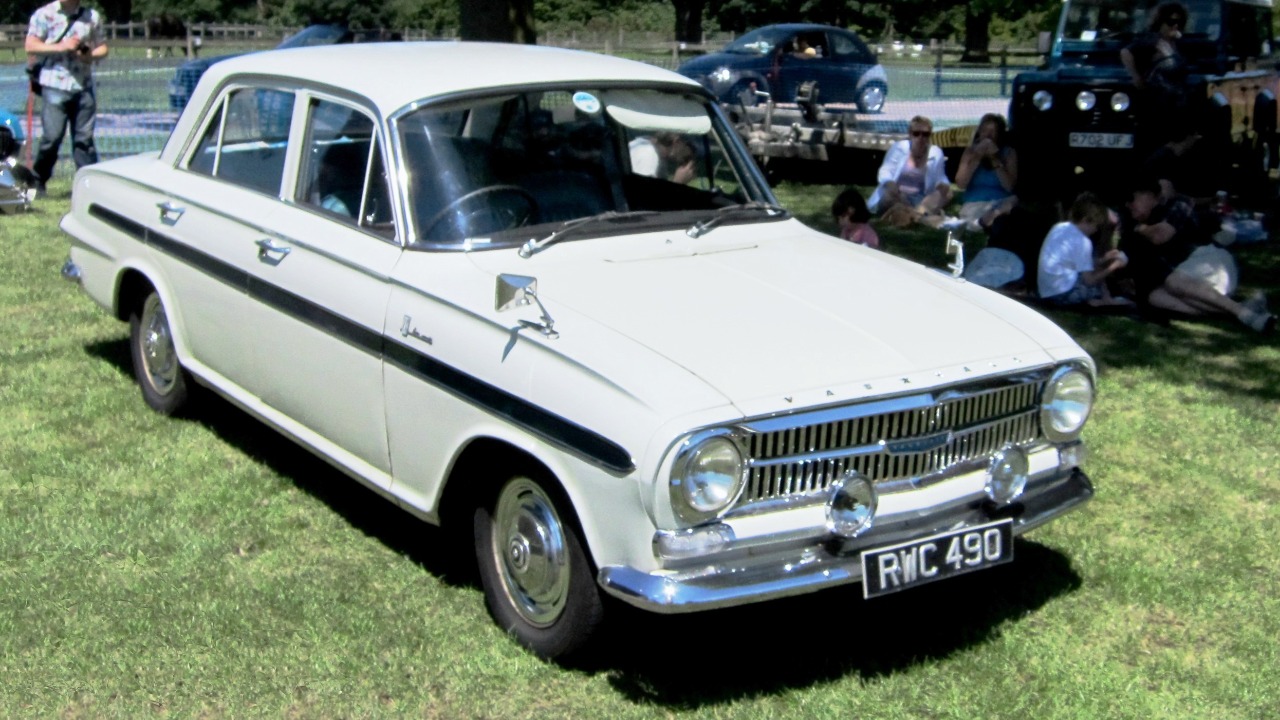
Contemporary road tests and later classic reviews agree that the VX 4/90’s appeal lay in its detail improvements rather than a wholesale redesign. The car kept the basic Victor body shell and proportions, which preserved the generous glass area and practical cabin, but added small cues that hinted at its extra ability. A distinctive side stripe, a vertical bar grille and discreet badging gave the car a slightly crisper look without turning it into a boy racer special.
Under the skin, the changes were more significant. According to period specifications collated in Vauxhall VX4/90 FB reference material, the sporting version gained front disc brakes with a servo to reduce pedal effort, a meaningful upgrade over the drums of the standard car. The braking improvement alone transformed driver confidence, especially on wet British roads where fade and long stopping distances were common complaints about older designs.
Other VX4/90 improvements included a floor-mounted transmission and servo front disc brakes, and these changes worked together to make the car feel more modern and more in tune with keen drivers. A floor shift in place of a column lever gave a more precise, mechanical action, and it brought the driving position closer to that of contemporary sports saloons. The combination of better brakes and a more engaging gearchange allowed the modest power increase to be used more effectively, which mattered more in daily driving than any theoretical top speed.
The engine itself benefited from a higher compression ratio compared with the basic Victor unit. Technical notes on the FB Series Victor and VX4/90 record that the increased capacity coincided with a further increase in the compression ratio of the standard engine from 8.1 to 8.5, reflecting both a search for improved performance and the availability of better fuels. In VX 4/90 tune, that same basic four-cylinder unit was given a little more spark and breathing, enough to sharpen throttle response and give the car a livelier feel without compromising reliability.
Despite these upgrades, Vauxhall resisted the temptation to give the VX 4/90 an aggressive exhaust note or exaggerated styling. The car still looked like a sensible saloon in most colours, especially in subdued hues that blended into traffic. That restraint is a key part of why the model retains a certain charm. It promised a more enjoyable drive to those who knew what the subtle badges and grille meant, yet it did not advertise its intent loudly.
From quiet saloon to rally stage outsider
Although the VX 4/90 was conceived as a road car, it did not take long for its modest performance upgrades to attract attention from competitors. Period accounts of early Vauxhall rally history describe two Vauxhall VX 4/90 rally cars, one of them partially stripped for competition use, that illustrate how privateers and the factory experimented with the model in motorsport. Enthusiast commentary on those cars asks, in plain terms, what gave the VX4/90 its sporty edge over standard Vauxhalls, and the answer lay in the combination of stronger engine, better brakes and more focused gearing.
That rally involvement was never on the same scale as the works efforts of larger manufacturers, yet it showed that the platform could take hard use. The Vauxhall VX 4/90, first introduced in 1961, was Vauxhall’s performance oriented version of the Victor, and it gave the brand a foothold in club-level events at a time when saloon car rallying was growing in popularity. The car’s robust mechanical layout, with simple rear-wheel drive and a straightforward four-cylinder engine, made it relatively easy to prepare for rough stages.
Later histories of the Victor line note that by the time of the FC (101) series, the model had racked up 238,000 sales and had gained a higher profile in race and rally competitions. That broader competition record helps place the VX 4/90 in context. It was an early sign that Vauxhall could build a family car with enough inherent strength and balance to be adapted for motorsport, even if the company did not pursue that path as aggressively as some rivals.
On the road, the same qualities that appealed to rally entrants also benefited ordinary drivers. Contemporary test reports described the VX 4/90 as a sporting saloon with every essential in place, praising its ability to cover distance briskly without fuss. The car was not the fastest in its class, but it offered a satisfying blend of pace, comfort and discreet styling that suited buyers who wanted more than the base Victor but did not want to pay for an exotic badge.
A restrained answer to a changing market
To understand why the VX 4/90 stayed understated, it helps to look at the broader Vauxhall range and the company’s position within General Motors. Earlier in its history, Vauxhall had built sports cars and more flamboyant machines, yet by the early 1960s its lineup had shifted toward practical saloons and estates. A detailed look at a 1962 Vauxhall Victor estate in a Storage Yard Classic feature points out that prior to its acquisition by GM, Vauxhall’s lineup had included quite a few sports cars, but that era had largely passed by the time of the FB Victor.
Within that context, the VX 4/90 represented a compromise. It allowed Vauxhall to inject some of the old sporting spirit into a mainstream product without challenging the corporate hierarchy or stepping on the toes of more overtly performance oriented brands in the GM family. The car remained a Victor at heart, with the same basic dimensions and cabin layout, but it signalled to enthusiasts that Vauxhall still cared about driving enjoyment.
Export considerations also shaped the car’s character. The Victor and its derivatives were widely exported, with some markets selling the car under different names or through different dealer networks. A forum discussion of the Vauxhall Victor and VX4/90 from 1961 to 1964 notes that the car was widely exported, although sales in the United States ended after 1961 when Pontiac, Oldsmobile and Buick introduced compact home-grown competitors. In that environment, a modestly tuned saloon with sensible styling made more sense than a radical sports model that might have struggled to find buyers across varied markets.
Domestically, the VX 4/90 faced competition from other British saloons that were beginning to embrace performance. The Victor is described in one retrospective as another of those British cars with a history of contrasts, initially a strong seller and later a symbol of missed opportunities. Against that backdrop, the VX 4/90 can be seen as an attempt to keep the Victor relevant to drivers who might otherwise have looked to more overtly sporting brands for excitement.
Yet Vauxhall never tried to turn the VX 4/90 into a halo car. The model remained a derivative of the main Victor line, priced within reach of middle class buyers and marketed as a slightly more spirited choice rather than a separate performance sub-brand. That decision kept volumes relatively low, which in turn has made surviving examples more interesting to collectors.
Living with a discreet classic in the twenty first century
Today, the 1963 Vauxhall VX 4/90 occupies a niche within the classic car world. It appeals to enthusiasts who appreciate its understatement and its link to a period when British manufacturers were experimenting with making family cars more engaging. A recent AI Listing Summary for a 1963 example described the FB-generation Vauxhall VX 4/90 as being in exceptional condition after a comprehensive restoration, and presented it as an opportunity to acquire a rare and well preserved classic. The language used in that listing reflects how the market now views the model: not as a headline-grabbing performance car, but as a scarce and characterful survivor.
Owners who drive similar era Victors and VX 4/90s today often talk about the effort involved in keeping a 1963 car on the road. A video interview titled “Why Bill drives a RARE 1963 Vauxhall Victor” captures one owner describing the reality as a lot of pain, a lot of agony and a lot of money, yet the tone remains affectionate. That mix of frustration and loyalty is common among classic car owners, and it is particularly pronounced with cars like the VX 4/90 that do not have the aftermarket support or parts availability of more famous classics.
The underlying mechanical simplicity of the Victor platform helps. The FB series used conventional rear-wheel drive, a straightforward four-cylinder engine and simple suspension, which means that many repairs can be tackled by skilled home mechanics or specialist workshops. Technical notes on the FB Series Victor and VX4/90 highlight how incremental changes such as the move from a compression ratio of 8.1 to 8.5 were achieved without abandoning the basic engine architecture. That continuity makes it easier to source compatible parts from later models or from the broader Victor family.
Yet the very understatement that defined the VX 4/90 when new now contributes to its scarcity. Many cars were used hard as everyday transport, then scrapped when rust or mechanical wear made repairs uneconomical. Unlike high profile sports cars, few were tucked away as investments. As a result, the surviving population is small, and finding good body shells or original trim can be a challenge.
Owners who succeed in preserving these cars often emphasise their usability. A well sorted VX 4/90 can keep up with modern traffic at moderate speeds, and its light controls and good visibility make it less intimidating to drive than some heavier, more powerful classics. The car’s modest dimensions and practical saloon layout also make it easier to store and maintain than larger luxury models from the same era.
Why understatement became the VX 4/90’s enduring strength
Looking back, the 1963 Vauxhall VX 4/90 can be seen as a lesson in how small, thoughtful changes can transform the character of a mainstream car. By starting with the solid base of the Victor and adding a little more power, better brakes and a more involving driving position, Vauxhall created a saloon that appealed to drivers who valued subtlety over spectacle.
The car’s restrained styling meant that it did not dominate magazine covers or poster collections. Instead, it earned a quieter reputation among those who drove it and maintained it. The presence of two Vauxhall VX 4/90 rally cars in early competition history, one partially stripped for events, shows how that reputation extended into motorsport circles, even if only at a modest level. The model proved that a car did not need flared arches or loud colours to be enjoyable on a twisty road or a gravel stage.
That same quality makes the VX 4/90 attractive to a certain kind of collector today. In a classic car scene filled with attention grabbing shapes and big engines, a tidy 1963 VX 4/90 offers something different. It invites closer inspection rather than instant recognition. Those who know the significance of the side stripe, the vertical bar grille and the VX 4/90 badges understand that this is more than just another old Victor. Those who do not may simply see a neat, well preserved British saloon from the early 1960s.
Understatement also means that the car can still be used without causing a stir. A VX 4/90 parked on a residential street or at a local supermarket attracts interest from enthusiasts, but it does not draw the kind of attention that can make owning more exotic classics stressful. For many owners, that balance between distinctiveness and discretion is part of the appeal.
The model’s story sits within a broader narrative about Vauxhall and its place in British motoring history. The Victor line, from the FB through the FC (101) and beyond, charted the company’s efforts to serve family buyers while occasionally flirting with performance and motorsport. The VX 4/90 was one of the earliest and most honest expressions of that ambition, a car that did not pretend to be something it was not, yet quietly offered more enjoyment to those who sought it.
More from Fast Lane Only