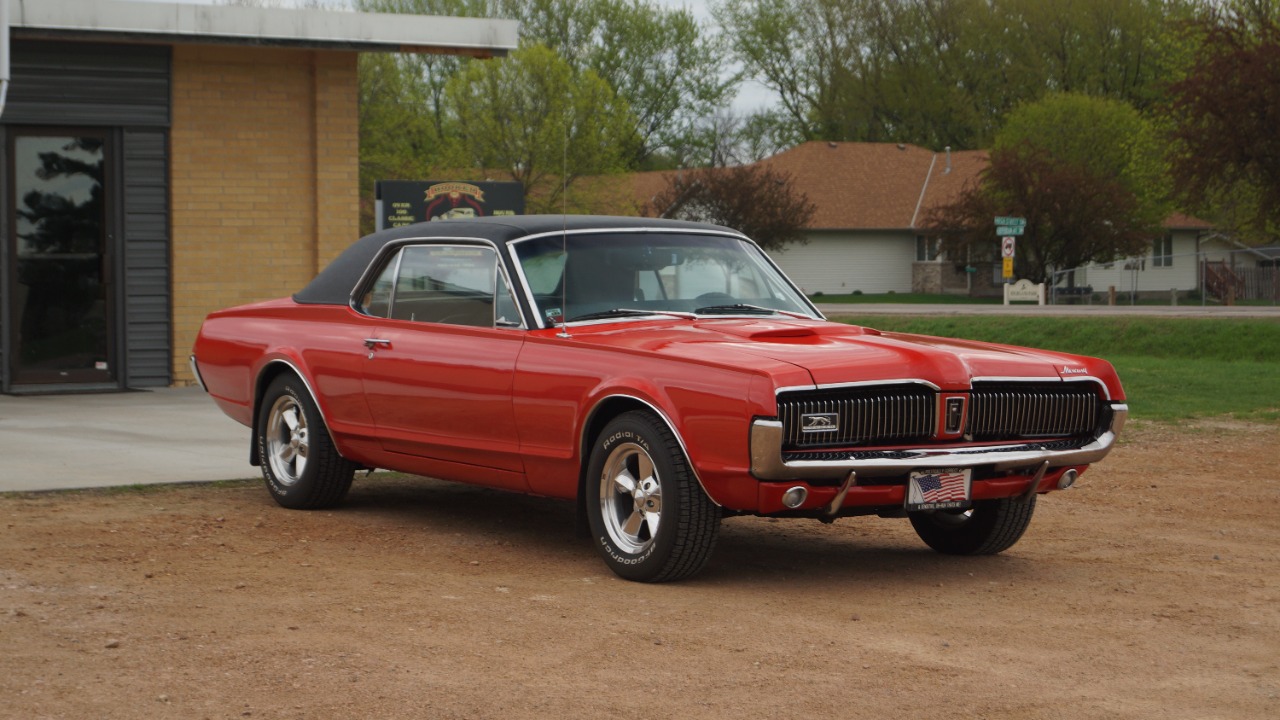
When the Mercury Cougar debuted for the 1967 model year, many observers assumed they already understood what it was.
After all, the car shared much of its underlying architecture with the wildly successful Ford Mustang. It came from the same corporate family, used many of the same mechanical components, and entered the rapidly growing pony car market only a few years after the Mustang had created the segment.
To some critics, the Cougar looked like little more than a premium Mustang wearing different sheet metal.
That assumption didn’t last long.
While the Mustang provided the foundation, Mercury transformed the formula into something distinctly different. The Cougar emphasized refinement, sophistication, and upscale features in ways that set it apart from its Ford cousin. It appealed to a different audience, offered a different driving experience, and ultimately established an identity strong enough to stand on its own.
The car became an immediate success, won major industry awards, and helped define Mercury’s image for years to come.
More importantly, it proved that sharing a platform did not automatically create a duplicate vehicle.
The 1967 Cougar started life as a Mustang relative.
It quickly became something much more interesting.
Mercury Needed Its Own Pony Car
The success of the Mustang caught the attention of every division within the Ford Motor Company.
Introduced in 1964, the Mustang became an overnight sensation. Sales exceeded expectations, competitors rushed to develop rivals, and the pony car segment rapidly expanded.
Mercury dealers naturally wanted a similar vehicle.
However, simply rebadging a Mustang wasn’t the answer.
Mercury occupied a unique position within Ford’s hierarchy. The division traditionally targeted buyers seeking more sophistication and comfort than mainstream Ford products offered, but without the expense associated with Lincoln.
Any Mercury pony car would need to reflect those values.
Executives recognized an opportunity.
Instead of competing directly against the Mustang, Mercury could create a more mature and upscale interpretation of the same basic concept.
That idea became the Cougar.
The Mustang Was Only the Starting Point
Although the Cougar shared its platform with the Mustang, Mercury’s designers made substantial changes.
The wheelbase was slightly longer, contributing to improved proportions and a more refined appearance. Unique body panels ensured the Cougar looked entirely different from its Ford counterpart.
The styling immediately communicated a different personality.
Where the Mustang projected youthful energy, the Cougar emphasized elegance.
The body appeared longer and more formal. The roofline felt sophisticated rather than sporty. Every major exterior panel was designed specifically for the Mercury.
The goal wasn’t imitation.
The goal was differentiation.
Mercury wanted buyers to see the Cougar as a separate automobile, not simply an upgraded Mustang.
Hidden Headlights Changed Everything
Perhaps the most recognizable feature of the original Cougar was its front end.
Mercury equipped the car with hidden headlights concealed behind a distinctive grille.
When the lights were off, the grille appeared clean and uninterrupted. When activated, the headlight doors moved aside to reveal the lamps.
The effect was dramatic.
Hidden headlights were generally associated with more expensive automobiles and helped give the Cougar an upscale image. They immediately distinguished the car from the Mustang and many other pony cars on the market.
The design also reinforced Mercury’s marketing message.
This wasn’t intended to be a basic sporty coupe.
It was a premium pony car.
The hidden headlights became one of the Cougar’s defining characteristics and remain among the most beloved features of the 1967 model today.
The Interior Targeted a Different Buyer
The differences between the Cougar and Mustang became even more apparent inside.
Mercury focused heavily on creating a refined cabin environment.
Additional sound insulation reduced road noise. Higher-quality materials enhanced the interior’s appearance and feel. Woodgrain accents and upscale trim elements contributed to a more luxurious atmosphere.
The dashboard emphasized sophistication rather than youthful sportiness.
Buyers stepping from a Mustang into a Cougar immediately noticed the distinction.
The Mercury felt more expensive.
That perception was exactly what Mercury wanted.
The division wasn’t trying to attract the same customer as Ford.
It was targeting someone seeking a higher level of comfort and prestige.
Sequential Taillights Added Character
Another distinctive feature helped establish the Cougar’s identity.
Mercury equipped the car with sequential rear turn signals.
Rather than illuminating simultaneously, the taillights flashed in sequence, creating a visually impressive effect that stood out on the road.
The feature had previously appeared on larger Mercury models and helped connect the Cougar to the rest of the division’s lineup.
It also added a touch of sophistication that buyers appreciated.
Small details often have a significant impact on perception.
The sequential taillights reinforced the idea that the Cougar was designed to be special.
Combined with the hidden headlights, they created a memorable visual signature.
V8 Power Was Standard
One of the most important distinctions between the Cougar and many competitors involved the engine lineup.
Unlike the Mustang, which offered six-cylinder engines in its lower-priced versions, the Cougar launched with V8 power as standard equipment.
This decision positioned the car as a premium offering from the beginning.
Buyers weren’t purchasing an entry-level sporty coupe.
They were purchasing a more substantial automobile with performance credentials built into the package.
Engine options ranged from capable everyday V8s to increasingly powerful versions designed to satisfy performance enthusiasts.
The availability of strong powerplants ensured the Cougar offered more than just luxury.
It delivered genuine performance as well.
The GT Package Added Muscle
For buyers wanting additional performance, Mercury offered the GT package.
The option included a larger V8 engine, upgraded suspension components, and various appearance enhancements.
The GT transformed the Cougar into a serious performance machine capable of competing with many respected muscle cars of the era.
Yet even in GT form, the Cougar maintained its refined personality.
Mercury carefully balanced comfort and performance.
The result was a car that could deliver strong acceleration without sacrificing the qualities that distinguished it from more aggressive competitors.
This balance became one of the Cougar’s greatest strengths.
Buyers Responded Immediately
The Cougar’s blend of style, luxury, and performance proved enormously successful.
Consumers embraced the concept almost immediately.
More than 150,000 examples were sold during the model’s first year, an impressive achievement for an all-new vehicle entering a highly competitive segment.
The car’s success demonstrated that Mercury had correctly identified a market opportunity.
Not every buyer wanted the raw youthful image associated with some pony cars.
Many appreciated a more mature interpretation of the formula.
The Cougar delivered exactly that.
Its strong sales ensured the model would become a permanent part of Mercury’s lineup.
Motor Trend Confirmed Its Success
The automotive press also responded positively.
The Cougar earned the prestigious Motor Trend Car of the Year award for 1967.
Winning such recognition helped validate Mercury’s approach.
Industry observers recognized that the Cougar wasn’t merely another variation of an existing product.
It represented a thoughtful reinterpretation of the pony car concept.
The award enhanced the vehicle’s credibility and reinforced its position as one of the most important new cars of the year.
For Mercury, the honor represented a major achievement.
It Helped Define Mercury’s Future
The Cougar’s impact extended beyond sales numbers and awards.
The car became one of Mercury’s most important nameplates and helped shape the division’s identity for decades.
Its success demonstrated that Mercury could create vehicles with distinctive personalities rather than simply occupying the space between Ford and Lincoln.
The Cougar gave the division a true flagship performance model.
More importantly, it established a formula that combined style, comfort, and performance in a uniquely Mercury way.
That approach influenced future products throughout the lineup.
Collectors Appreciate Its Original Mission
Today, enthusiasts often celebrate the 1967 Cougar because it represents something increasingly rare.
It wasn’t designed merely to fill a gap in the marketplace.
It was designed with a clear purpose and a distinct identity.
Collectors appreciate the hidden headlights, sequential taillights, elegant styling, and premium character that made the car unique.
Many also recognize that the Cougar succeeded because it avoided becoming a simple Mustang clone.
Instead, Mercury created a vehicle with its own personality.
That individuality continues to resonate more than half a century later.
More Than Shared Parts
The 1967 Mercury Cougar began with the same basic architecture as the Mustang, but the similarities only tell part of the story.
Mercury’s designers, engineers, and marketers transformed that foundation into something aimed at a completely different audience. The Cougar offered greater refinement, more upscale styling, and a level of sophistication uncommon among pony cars.
Those differences mattered.
They gave the car its own place in the market and helped ensure its success.
The Pony Car That Grew Up
Looking back, the 1967 Cougar succeeded because Mercury understood that not every performance-minded buyer wanted the same experience.
Some wanted youthful excitement.
Others wanted confidence, comfort, and elegance alongside their horsepower.
The Cougar delivered the second option.
Its hidden headlights, premium interior, standard V8 power, and sophisticated styling made it far more than a dressed-up Mustang.
It became one of the most successful and influential vehicles Mercury ever built.
And in the process, it proved that sharing a platform doesn’t mean sharing an identity.
More from Fast Lane Only